


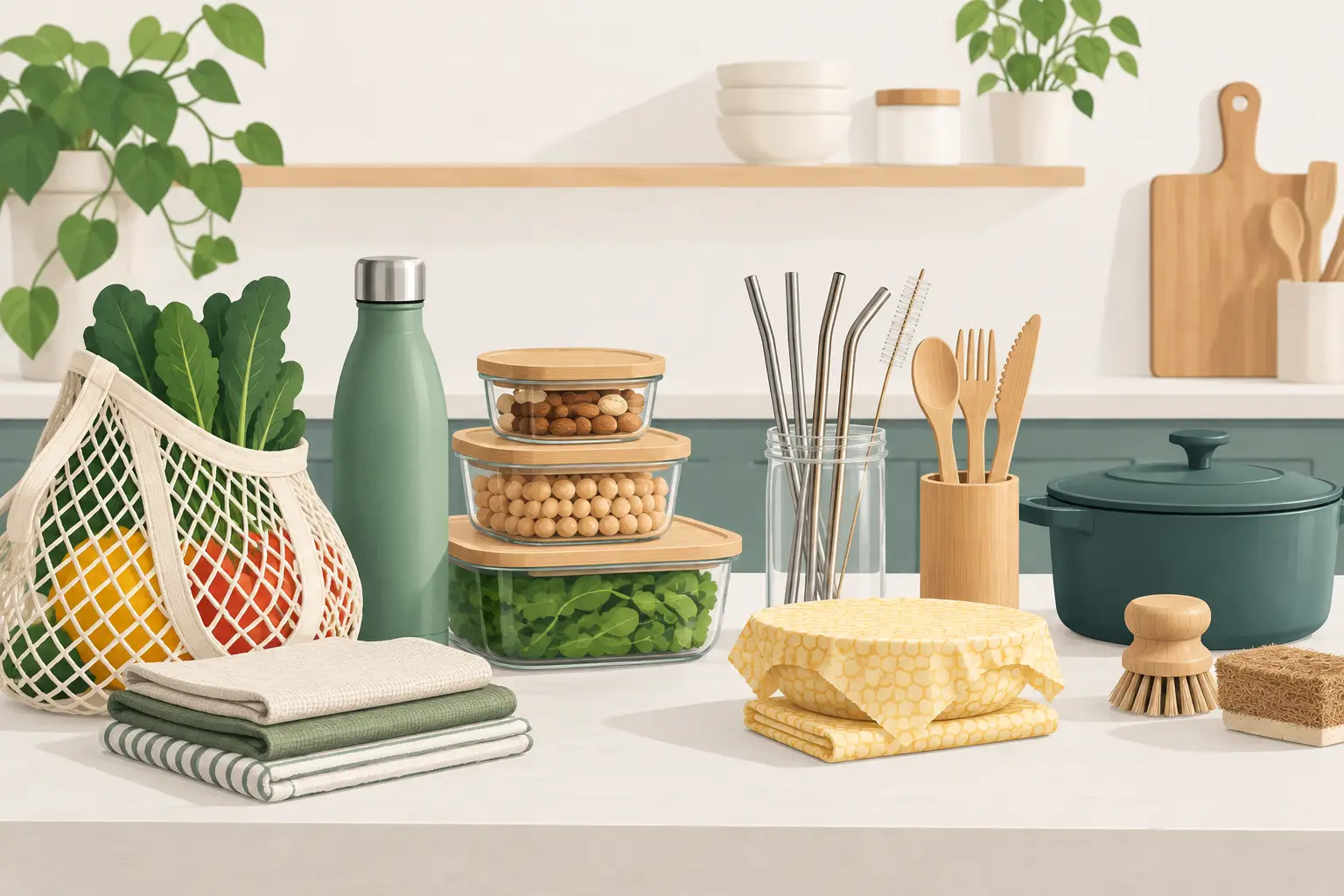
A kitchen bin tells the truth quickly. Disposable sponges, empty washing-up bottles, cling film and paper towels can pile up even in a home that recycles carefully. The best zero waste kitchen swaps are not about creating a picture-perfect pantry or throwing away everything you own. They are simple replacements for the things you use often, chosen because they work well and last.
Start with what is already in your cupboards. Use it fully, repair what can be repaired and replace it only when it reaches the end of its useful life. This slower approach is kinder to your budget and avoids turning low-waste living into another form of unnecessary consumption.
Best zero waste kitchen swaps for daily use
1. Choose a solid dish soap
A plastic bottle of washing-up liquid is one of the easiest kitchen habits to change. A firm solid dish soap can clean plates, pans and glasses with a rich lather, while arriving without the recurring plastic bottle.
Look for a bar that is made for dishes rather than hands alone. It should cut through everyday grease without leaving your crockery cloudy or your hands uncomfortably dry. A well-made tallow dish soap is especially satisfying here: the bar is hard, long-lasting and built around traditional cleansing fats. Keep it on a draining dish beside the sink so it can dry between uses.
This is a small swap with a visible result. One bar replaces a steady stream of bottles and makes the washing-up area feel calmer, too.
2. Replace synthetic sponges with a natural scrubber
Many bright kitchen sponges are made from plastic-based foam and shed as they wear. When your current ones are finished, try a wooden washing-up brush with replaceable head, a natural-fibre scrubber or a compostable cellulose sponge.
There is a trade-off. Natural scrubbers may not last as long as a dense synthetic sponge, particularly if they are left soaking in water. Rinse them after use, squeeze them dry and allow air to circulate. For burnt-on food, use a tougher brush or a metal scourer reserved for suitable pans rather than attacking every surface with one tool.
3. Keep washable cloths within reach
Paper towel is convenient because it is always there. A small stack of cotton cloths makes the reusable choice just as easy. Keep a basket of clean cloths in a drawer and a second, ventilated container for used ones.
Old tea towels, worn cotton T-shirts and napkins can all become practical cleaning cloths. Use one for wiping counters, another for drying hands and a separate cloth for messier jobs. Washing cloths regularly matters more than buying the perfect set. A clean, dry cloth is more hygienic and more pleasant to use.
4. Use a reusable cover before reaching for cling film
Cling film is useful, but it is rarely the only option. Plates placed over bowls, lidded containers, washable bowl covers and beeswax wraps can handle most leftovers, packed lunches and half-used vegetables.
Beeswax wraps are lovely for cheese, herbs and sandwiches, but they are not ideal for raw meat or very hot food. Glass containers with secure lids are better for wet leftovers and batch cooking. The most sustainable choice depends on the food, not on a single product being asked to do everything.
5. Store food in jars and containers you already have
Before buying matching storage jars, save sturdy glass jars from pasta sauce, coffee or condiments. They are useful for dry goods, homemade dressings and refrigerator odds and ends. A strip of masking tape and a date is often enough to prevent food being forgotten at the back of the shelf.
For freezer portions, use containers designed with room for food to expand. Not every glass jar is suitable for freezing, and overfilling can lead to cracks. Reused tubs can be useful too, though glass and stainless steel generally have a longer working life when cared for.
6. Carry produce bags and one reliable shopping bag
Loose fruit and vegetables need little packaging of their own. A few washable produce bags are useful for mushrooms, leafy greens and smaller items, but they are optional. Often, placing produce directly in your basket is the lowest-waste route.
The key is remembering what you own. Keep a folding bag by the front door or in the car, and return produce bags to it after washing. A reusable bag only becomes the better option when it is used again and again.
7. Buy dry staples with a refill habit
Rice, oats, lentils, pasta, nuts and dried fruit are often available with less packaging through refill shops, market stalls or larger bags. Refill shopping can reduce waste, but it works best when it suits your routine. A special journey across town for a handful of lentils may not be practical every week.
Begin with two or three staples your household already buys often. Label containers clearly, rotate older food to the front and avoid buying more than you can use while it is fresh. Less packaging is valuable, but preventing food waste is the greater win.
8. Brew loose tea or use a reusable infuser
Tea bags can seem harmless, yet some contain plastic fibres and come individually wrapped. Loose tea in a tin or paper packet, brewed with a simple stainless-steel infuser, makes a gentler everyday ritual and can reduce the throwaway extras.
If tea bags are what you will genuinely use, choose plastic-free versions where possible. The point is not to make a cup of tea complicated. It is to make the easier habit slightly less disposable.
9. Swap disposable kitchen roll for cloth napkins
Cloth napkins are not reserved for dinner parties. They are practical for toast crumbs, family meals and everyday hands. Choose cotton or linen in a colour or pattern you enjoy, because the things we find beautiful tend to stay in use.
Keep paper towel for the occasional task where it is genuinely useful, such as draining very greasy food or dealing with a particularly unpleasant spill. A lower-waste kitchen has room for practicality. Perfection is not the measure of care.
10. Compost food scraps where you can
Composting turns peelings, coffee grounds and plant-based scraps into something useful rather than sending them to landfill. Depending on where you live, this may mean a council food-waste caddy, a home compost bin or a shared community scheme.
A small countertop caddy with a washable lid makes the routine easier. Empty it frequently, rinse it promptly and line it only if your local collection guidance recommends it. Avoid guessing what belongs inside: meat, dairy, compostable packaging and cooked food are accepted differently from one service to another.
11. Make leftovers visible, not aspirational
The most effective zero-waste kitchen swap may be a shift in routine. Put leftovers at eye level in clear containers, add dates and choose one evening each week for a flexible meal of soups, omelettes, toasted sandwiches or grain bowls.
This does not need to be fussy. A roasted vegetable, a little cheese and yesterday’s rice can become lunch rather than an overlooked container. Good storage helps, but a simple plan is what keeps food from becoming waste.
12. Choose durable tools over novelty gadgets
A good wooden spoon, a sharp knife, a solid grater and a dependable saucepan will serve a kitchen better than a drawer full of single-purpose gadgets. When replacing an item, favour materials that can be repaired, sharpened, recycled or composted at the end of a long life.
Wood needs occasional oiling. Carbon steel can require drying promptly to prevent rust. Stainless steel costs more at first but may outlast cheaper alternatives by years. These are worthwhile trade-offs when a tool is used daily.
Build a kitchen that is easier to care for
The best zero waste kitchen swaps should reduce friction, not add it. Place the dish soap where your hand naturally reaches. Keep cloths near the sink. Put leftovers where they will be seen. Create systems that fit the rhythm of your home, whether you are feeding a busy family or cooking for one.
At Luna Natural Soap Co., we believe everyday care can be both practical and considered. A plastic-free solid dish soap, made with purpose and used to the last sliver, is a quiet example of that principle.
Choose one swap that solves an annoyance you meet every day. Let it earn its place in your kitchen before moving on to the next. Small habits, repeated with care, are where lasting change begins.