

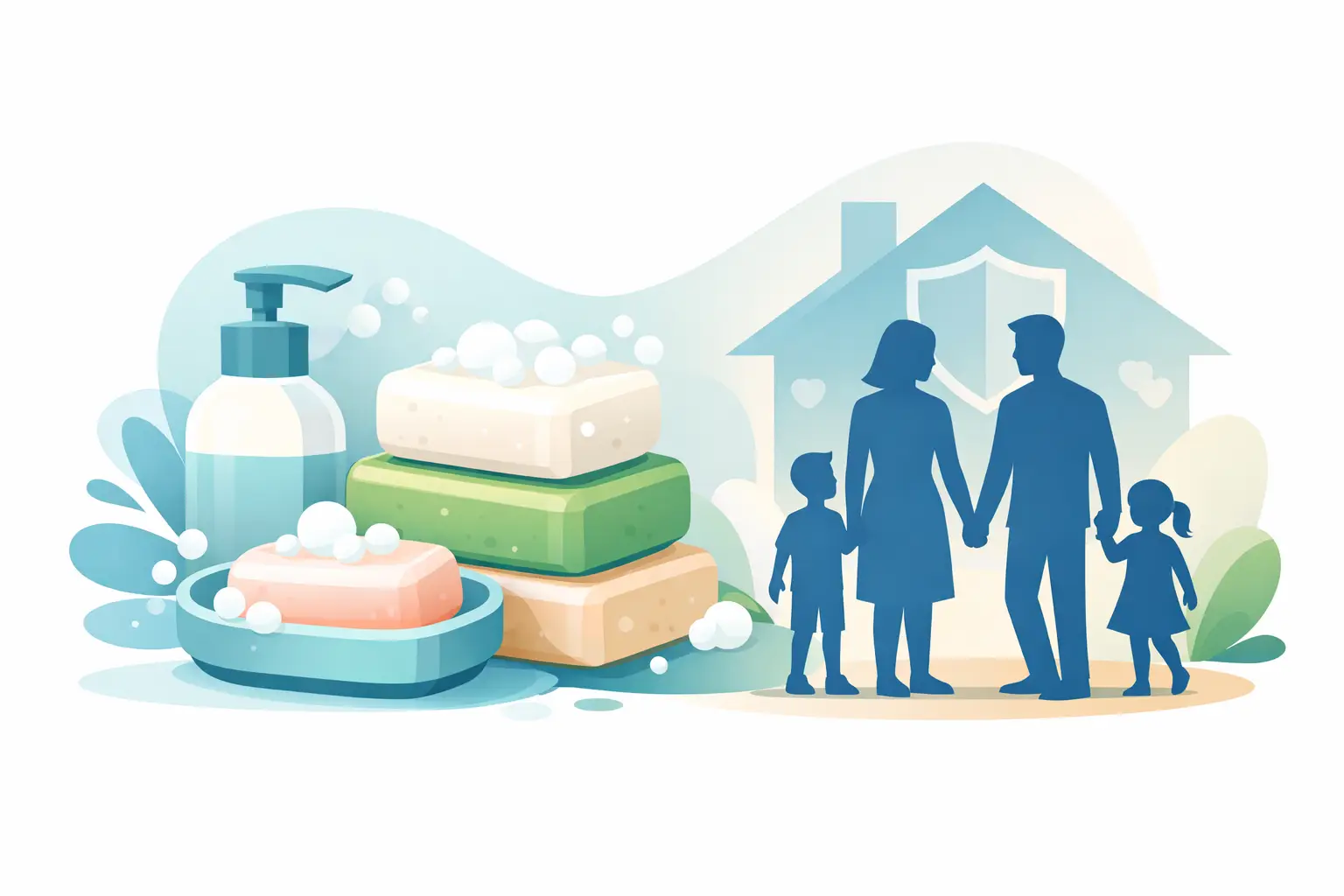
One child leaves the bar in a puddle. Another uses it with muddy hands. Then someone in the house asks the question every family eventually asks – are soap bars hygienic for families? It is a fair concern, especially when one bar may be shared between adults, children and anyone with dry or sensitive skin.
The short answer is yes, soap bars can be hygienic for family use when they are used and stored properly. The longer answer is more useful, because hygiene at the sink is shaped by a few practical details: how the bar drains, how many people are sharing it, whether someone is unwell, and how the soap is made.
Are soap bars hygienic for families in everyday use?
For most households, a well-kept soap bar is a perfectly hygienic way to wash hands and body. Soap works by lifting oil, dirt and microbes from the skin so they can be rinsed away with water. That cleansing action matters more than the fact that the cleanser happens to be solid.
A common worry is that germs simply sit on the surface of the bar and pass from person to person. In reality, ordinary use does not make a soap bar inherently unsafe. The surface is rinsed repeatedly, and the act of lathering and washing removes what is on the skin. In a typical family bathroom, the bigger hygiene issue is usually standing water, a grubby soap dish or poor handwashing technique – not the bar itself.
That said, all soap bars are not equal. A hard, well-cured bar that dries between uses tends to stay cleaner and last longer than a soft bar that turns mushy. Traditional soapmaking also has a role here. A firm bar with a stable lather is simply easier to use well.
What actually affects hygiene more than the bar itself
Families often focus on the format when the real issue is how the soap lives in the bathroom. A soap bar left sitting in water will become soft, messy and less pleasant to share. A bar stored on a draining dish, by contrast, dries out between uses and remains tidy.
The number of users matters too. A family of two using one bathroom bar is different from a busy household with children coming in from the garden, sports kit and school bags dropped by the door. In higher-traffic homes, it often makes sense to keep separate bars for different spaces – one by the kitchen sink, one in the family bathroom, perhaps one for the shower.
There is also the question of what the bar is being used for. Handwashing after the loo or before meals is one thing. A facial bar for someone with reactive skin is another. Good family hygiene sometimes means not sharing everything, even if sharing is technically safe.
The role of storage
If you want a soap bar to stay hygienic, let it dry properly. That means a soap dish with drainage, not a flat ledge where water collects underneath. It also helps to keep the bar away from constant spray in the shower if possible.
Drying matters for practical reasons as much as hygienic ones. A bar that hardens between uses lasts longer, feels cleaner in the hand and is less likely to develop that soggy, overhandled feel people tend to dislike.
The role of formulation
For family use, a gentle formula can be just as important as hygiene. Many people moved to liquid hand wash assuming it was the cleaner option, only to find constant washing left their hands tight, flaky or irritated. Skin that is stripped too often can become uncomfortable quickly, especially in colder weather or in homes where children already have dry patches or eczema-prone skin.
A well-made traditional soap bar, particularly one designed to cleanse gently rather than aggressively, can support everyday washing without leaving skin raw. This is where ingredient quality matters. Bars made with nourishing fats and a careful cure often feel very different from harsh, detergent-heavy cleansers.
When a family should avoid sharing one bar
There are moments when a more cautious approach is sensible. If someone in the household has a contagious skin infection, a stomach bug, a cold sore around the body area being washed, or a broken skin condition that needs extra care, separate personal products are the better choice.
This is not because soap bars are uniquely risky. It is because shared personal items in general are best avoided when someone is ill or managing an active infection. The same common sense applies to towels, flannels and razors.
Families may also prefer separate bars if one person has very sensitive skin and needs a simpler formula without essential oils, exfoliants or stronger botanicals. Hygiene is only one part of the picture. Skin comfort matters too.
Soap bars and children
Children are often the reason this question comes up at all. Parents want something that is simple, gentle and clean, without turning bath time into a debate about what everyone has touched.
In practice, soap bars can work beautifully for children if the bar is mild and the routine is straightforward. Keep it in a draining dish, encourage a quick rinse before and after use, and replace it when it becomes too small or grubby. For younger children, adults can lather the soap in their own hands or on a washcloth first if that feels easier.
For school-age children, a bar at the sink can actually support better habits. It is visible, easy to use and does not rely on a plastic pump that stops working at the worst possible moment. The key is supervision early on, so children learn to wash properly rather than simply tap the soap and run.
Are liquid soaps more hygienic?
Sometimes, but not always. A pump bottle reduces direct contact with the product, which can feel reassuring in a busy home. That can be useful in certain situations, especially for guests or in a household where someone is unwell.
But the idea that liquid automatically means cleaner is too simplistic. Pump tops get touched constantly. Bottles gather residue. Refilled containers are not always cleaned before topping up. And for many families, heavily fragranced liquid wash used many times a day can be rough on the skin.
So the better question is not whether liquid or bar soap wins universally. It is which product your household will use properly, store properly and tolerate well. A bar that dries cleanly and is used with good handwashing habits is often more than enough.
Choosing a family soap bar that feels clean to use
If you are buying a bar for shared family use, look for one that is firm, well made and gentle on skin. Hard bars usually hold up better in a busy bathroom. Mild formulations are kinder for frequent handwashing. Overpowering fragrance can be off-putting, especially in mixed households where not everyone wants the same scent lingering on the skin.
Traditional bars made with skin-compatible fats often suit family life well because they cleanse effectively while feeling more comforting on dry hands. At Luna Natural Soap Co., that is part of why we value slow, traditional methods and carefully rendered tallow. A thoughtful formula does not just wash. It supports the skin barrier, which matters when the whole family is washing often.
This does not mean every household needs one universal bar. Some families like a simple unscented bar for the main sink and a more specialised bar in the shower. Others prefer one gentle option for everyone. Both approaches can work.
Practical hygiene habits that make all the difference
The cleanest family soap routine is usually the least complicated one. Rinse the bar after use if it looks soiled. Store it somewhere it can drain. Replace old slivers before they become awkward to handle. If someone is ill, give them their own soap and towel for a while.
It also helps to think in zones. A kitchen bar will pick up different use from a bathroom bar. A shower bar used on the body may not be the one you want at the basin for frequent handwashing. Small adjustments like these tend to solve most concerns without fuss.
And if a shared bar still does not feel right for your household, that is fine too. Hygiene is practical, but it is also personal. The best routine is the one your family will keep.
Soap bars are not an old-fashioned compromise. Used well, they are clean, effective and often kinder to both skin and the home. For families trying to balance hygiene, sensitive skin and less plastic in the bathroom, that is a very sensible place to start.