

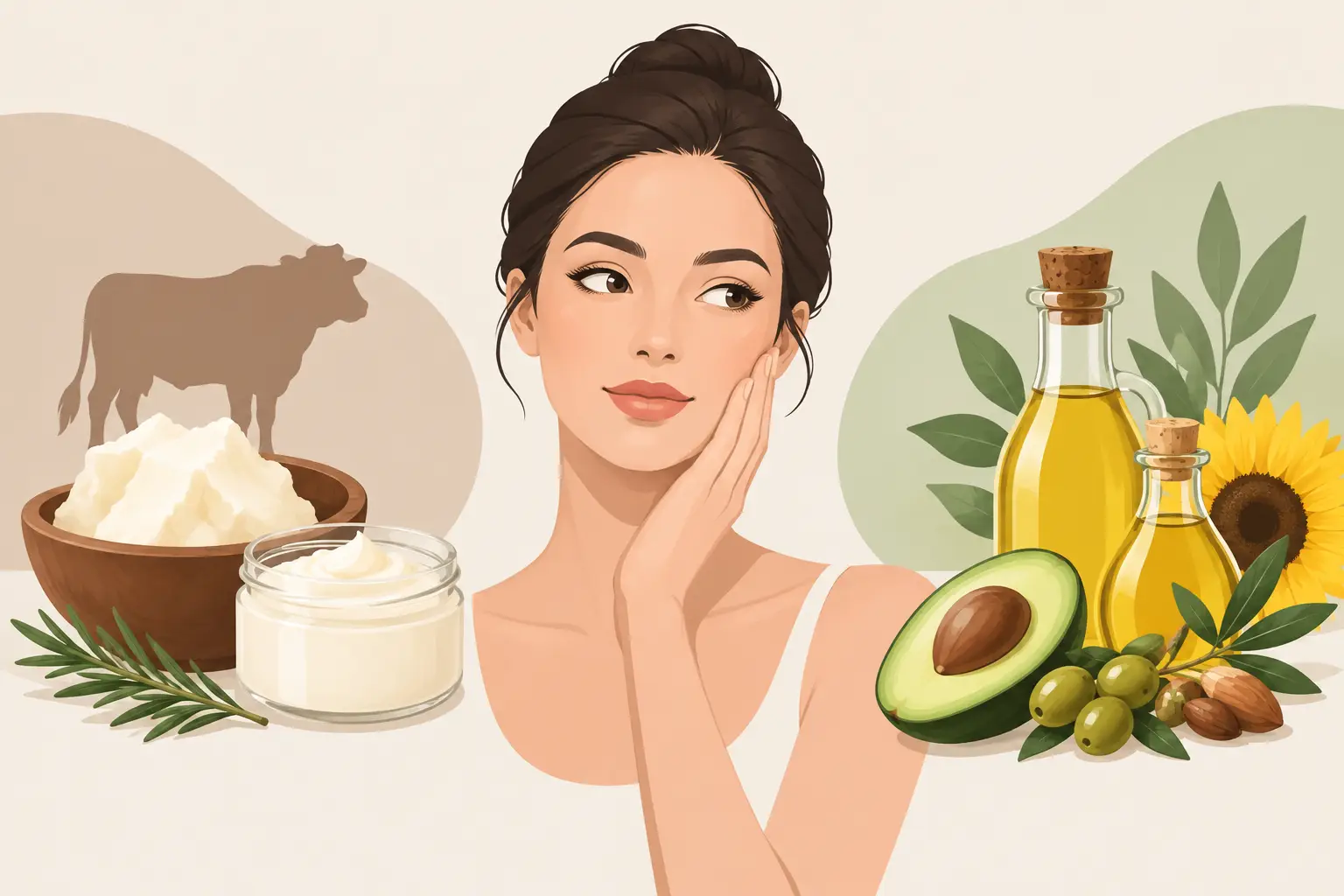
A bar of soap can look simple, yet the ingredient choice behind it changes how it feels in your hands, how it cleanses and whether you reach for it again when your skin feels tight. The question of beef tallow versus plant oils is not about declaring one ingredient universally better. It is about understanding what your skin needs, what the formula is designed to do and what sits comfortably with your values.
For dry, sensitive or easily unsettled skin, harsh cleansing can make the daily ritual feel like a compromise. A carefully made tallow soap offers a traditional alternative: a firm bar, creamy lather and a skin feel that is often more comfortable after rinsing.
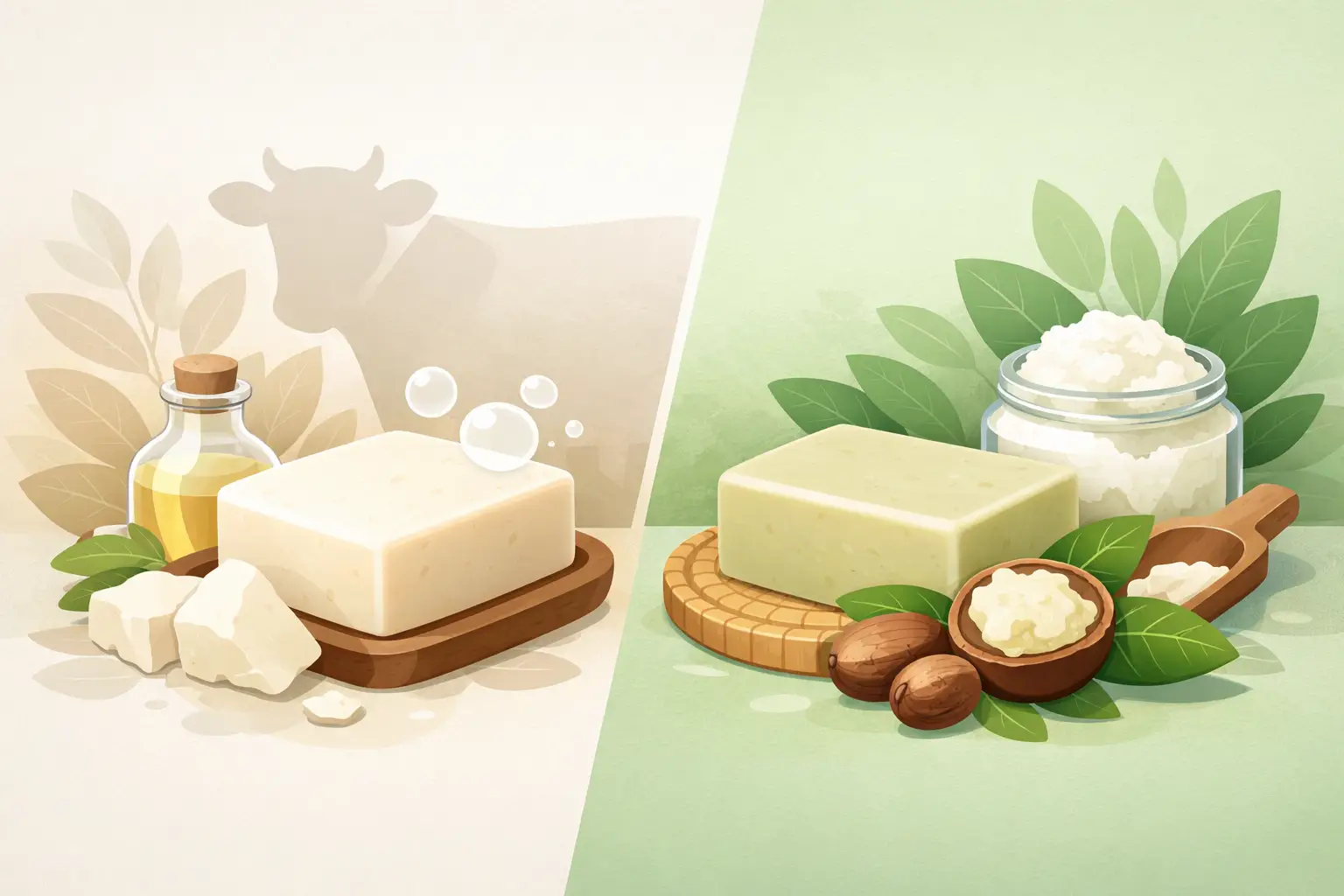
Beef tallow versus plant oils: the real difference
Beef tallow is purified rendered fat from cattle. In traditional soapmaking, it has long been valued for producing a hard, long-lasting bar with a rich, cushiony lather. Its fatty-acid profile includes palmitic and stearic acids, which contribute to firmness and creaminess, alongside oleic acid, known for its softening feel.
Plant oils cover a much wider field. Olive, coconut, sunflower, rapeseed, castor, shea and palm oils all behave differently in a formula. Coconut oil can bring big bubbles and strong cleansing power; olive oil is often chosen for a gentler, silkier character; high-linoleic oils can feel light and conditioning. There is no single “plant oil soap”. The finished bar depends on the exact oils, their proportions and the maker’s method.
That distinction matters. Comparing tallow with a generic plant-oil blend is less useful than comparing two well-formulated bars made for the same purpose. A soap heavy in coconut oil may feel very different from a tallow-and-olive-oil bar, even if both are natural and handmade.
What each ingredient brings to a soap bar
Tallow’s strength is balance. It creates a dense, stable lather rather than an airy foam, and gives cold-process soap the firmness needed to last well at the sink or in the shower. This is practical luxury: a bar that does not turn soft after a few uses, yet still feels creamy as it cleanses.
Because tallow closely resembles some of the lipids found in human skin, many people with dry or mature skin find tallow-based skincare especially comforting. Tallow also naturally contains fat-soluble vitamins including A, D, E and K. In a wash-off product such as soap, the overall formula and gentle cleansing profile remain the main considerations, but the ingredient’s naturally nourishing character is still part of why it has endured for generations.
Plant oils offer their own useful qualities. Olive oil can make a mild, smooth bar. Castor oil supports lather. Cocoa butter and shea butter add hardness and a more conditioning feel. Coconut oil is excellent at cutting through grease, which can be valuable in a kitchen soap, but a high percentage may be too stripping for some faces and hands.
Neither tallow nor plant oils automatically make a soap gentle. The recipe, cure time and amount of excess oil left in the finished bar all influence its feel. Traditional cold-process soap also needs time to cure properly. That patience allows water to evaporate, creating a harder bar and a more refined lather.
Soap is not the same as a facial oil
This is where skincare conversations can become muddled. Once fats and oils are turned into soap through saponification, they have changed. The finished product is designed to lift away dirt and oil with water. It is not the same as applying pure tallow, olive oil or sunflower oil directly to the face.
For cleansing, a thoughtfully formulated soap may suit many people beautifully. For leave-on care, skin can have very different needs. Those prone to congestion may prefer a lighter texture, while very dry skin may welcome a richer balm. Patch testing is sensible, especially if your skin is reactive or you are introducing a new product.
Which is kinder to sensitive skin?
There is no honest one-word answer. Sensitive skin can react to fragrance, essential oils, strong surfactants, over-cleansing, a damaged skin barrier or a particular botanical ingredient. The presence of tallow or plant oil alone does not predict how someone’s skin will respond.
A tallow soap can be a lovely choice for skin that dislikes that squeaky-clean feeling. Its creamy lather and substantial bar format are often appealing for dry hands, legs and body skin. Many people also appreciate its uncomplicated heritage: fat, lye, water and carefully chosen natural additions, made slowly.
Plant-oil soap can be equally gentle when made with a balanced recipe. An olive-oil-rich bar, for example, can feel very mild. Yet a plant-oil soap built around aggressive cleansing oils may not suit someone whose skin already feels dry. Read beyond the front label. “Natural” does not always mean mild, and “oil-based” does not always mean moisturising once it has become soap.
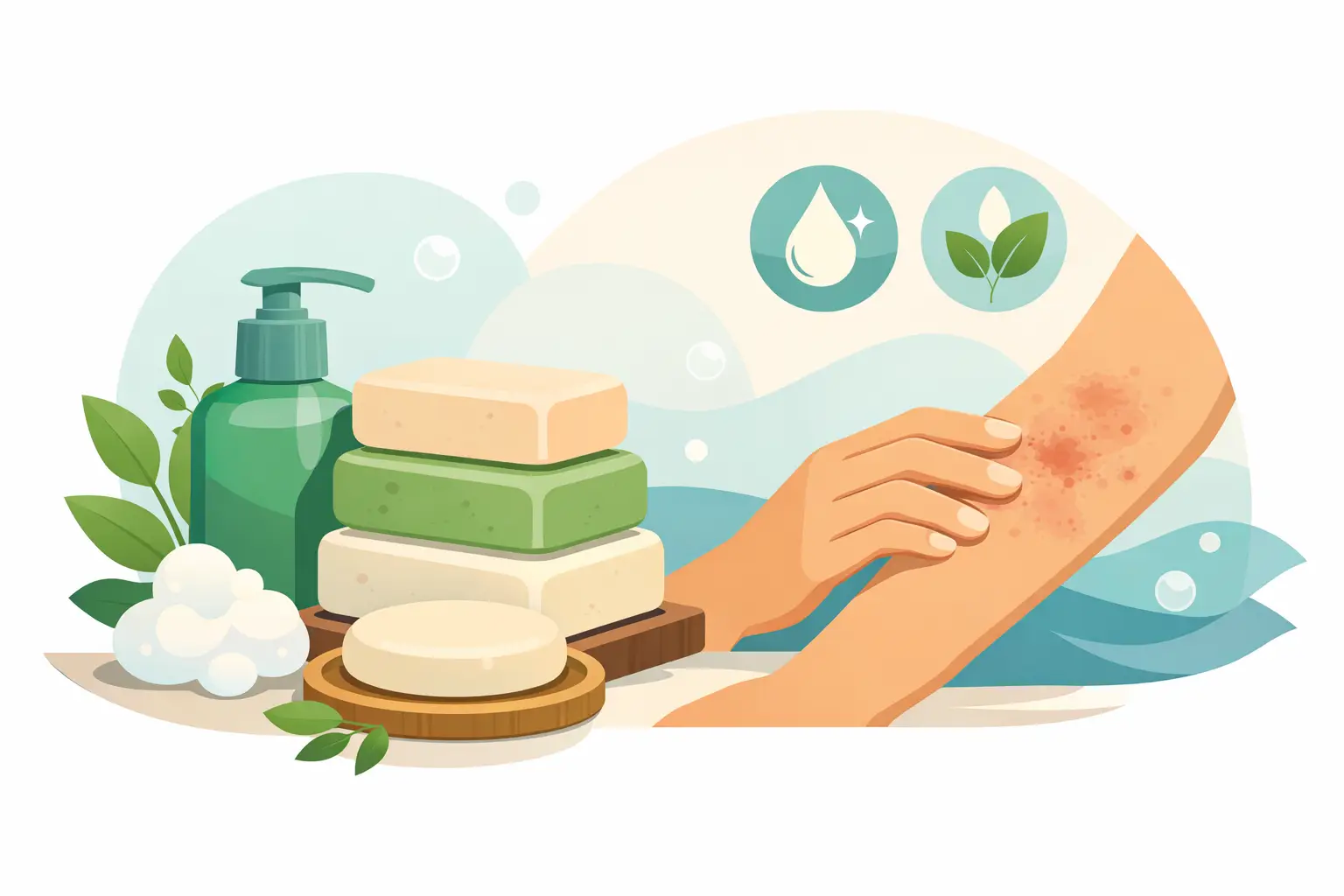
If you live with eczema, persistent irritation or broken skin, keep your routine simple and follow advice from a healthcare professional. Fragrance-free, minimal formulas and a separate moisturiser after washing are often more helpful than constantly changing products in search of a miracle.
The sourcing question is more nuanced than it seems
Choosing between animal and plant ingredients is personal. For some households, vegan formulation is essential. For others, using tallow from locally raised, grass-fed cattle feels like a more responsible use of a material that might otherwise be discarded.
Tallow can support a circular approach when it is sourced as a by-product of the food system and rendered carefully into a useful, long-lasting ingredient. At Luna Natural Soap Co., tallow is slow-rendered in-house and sourced from local and regenerative farmers where possible. That gives greater visibility over what goes into each bar, rather than treating tallow as an anonymous commodity.
Plant oils have environmental stories too. Their impact varies according to crop, growing conditions, processing, transport, labour practices and land use. An ingredient being plant-derived does not make it impact-free, just as an animal-derived ingredient is not automatically unethical. Traceability, thoughtful sourcing and using ingredients with purpose matter more than easy labels.
Packaging belongs in this conversation as well. A long-lasting naked bar or plastic-free wrapped soap can reduce the stream of bottles around the bath and kitchen sink, whatever fats it contains. The most sustainable product is often one you use fully, enjoy consistently and do not replace before it is needed.
How to choose the right bar for your routine
Start with your skin after washing. If it feels comfortable, clean and calm, the bar is doing its job. If it feels tight, itchy or stripped within minutes, the formula may be too cleansing for you, or you may need to use soap less often on certain areas.
For dry or mature skin, look for a creamy bar made with tallow or a balanced blend of tallow and gentle plant oils. For hardworking hands and household washing-up, a firmer, more cleansing formula may be exactly what you need. For oily or blemish-prone skin, avoid assuming that stronger cleansing will solve the problem. Over-washing can leave skin feeling out of balance.
Also consider the small details: a soap dish that drains well, a bar kept dry between uses and a simple moisturising step afterwards. These habits make a handmade bar last longer and help your skin get the most from a gentler routine.
The best choice is not the ingredient with the loudest claim. It is the bar made with care, used with intention and kind enough that your skin feels comfortable long after the water has gone cold.