

A soap scent can change the character of an ordinary wash. Bright citrus can make a morning shower feel clearer; lavender can soften the pace of an evening bath. Yet the best aromatherapy soap scents are not simply the strongest or sweetest. They are the ones that feel good to use, suit your skin, and turn a practical daily ritual into a small moment of care.
For sensitive or dry skin, scent deserves the same thought as any other ingredient. A beautifully made bar should cleanse with a rich, gentle lather while leaving the skin feeling comfortable, not tight. The aroma should be present enough to enjoy, but never overwhelm the room or linger uncomfortably on the skin.
What makes a soap scent truly aromatic?
Aromatherapy is often used as shorthand for any scented bath product. There is a difference, though, between a perfume-led bar and one scented thoughtfully with botanical essential oils. Essential oils carry the natural aromatic character of a plant – floral, herbaceous, resinous, citrusy or fresh – and can create a more grounded sensory experience.
That does not mean natural automatically means suitable for everyone. Essential oils are concentrated ingredients. Skin that is reactive, eczema-prone, very dry, or already irritated may be happier with an unscented bar, or with a formula scented very lightly. The right choice depends on your skin, your preferences, and how often you use the soap.
The base of the bar matters just as much as the scent. A traditionally made tallow soap offers a firm bar and a creamy lather, helping to make cleansing feel less stripping than harsh detergent-based washes. When a nourishing base and a considered scent work together, the result feels like care rather than camouflage.
The best aromatherapy soap scents by mood
Lavender for a quieter evening ritual
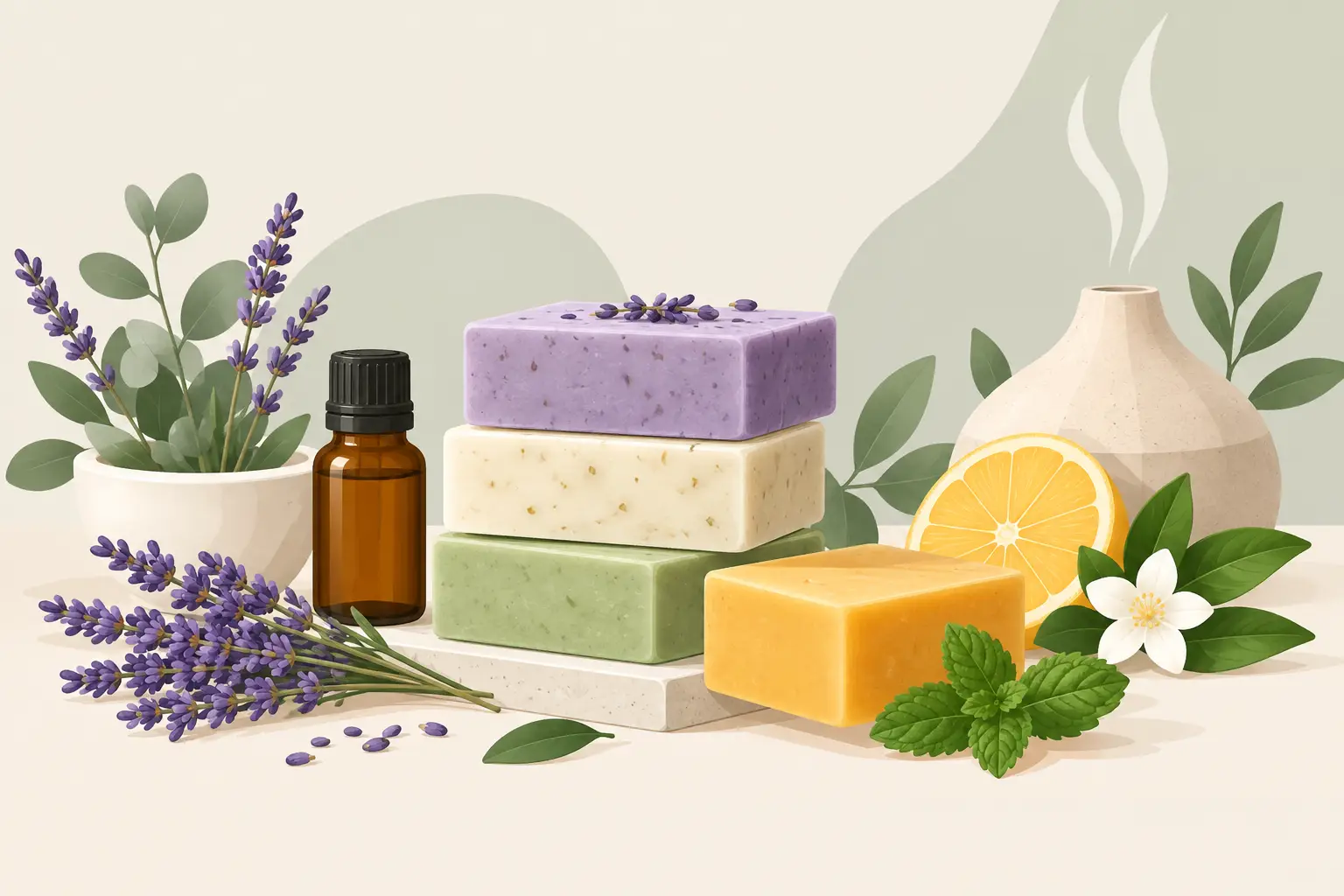
Lavender remains a favourite for good reason. Its soft, herbal-floral aroma feels familiar and clean without being overly sweet. It is especially lovely in an evening shower, after gardening, or beside the bath when the day has felt noisy.
Look for lavender that smells like the plant itself: slightly green, gently floral and calm. A bar that smells of sharp synthetic perfume can quickly become cloying. For many people, a modestly scented lavender soap is the most dependable choice for everyday use.
Peppermint and spearmint for freshness and focus
Mint brings a crisp, awake feeling to the washroom. Peppermint has a cool, bracing edge, while spearmint is softer and sweeter. Blended with herbs such as rosemary, eucalyptus or nettle, it can feel particularly refreshing after exercise or on a warm morning.
Mint is not always the best fit for delicate facial skin or very reactive skin, as its fresh character can feel intense. Use it where it suits you most – perhaps as a hand and body bar – and choose a simpler, gentler bar for the face if needed. An herbal mint soap can be a wonderful practical option for those who enjoy a clean, invigorating start to the day.
Citrus for a bright, clean start
Sweet orange, lemon, grapefruit and bergamot give soap a sunny lift. Citrus scents are often associated with freshly cleaned spaces, so they work beautifully in kitchen and hand soaps as well as in a morning shower. Orange is rounded and cheerful; lemon is sharper; grapefruit has a lightly bitter sparkle.
The trade-off is that citrus aromas can fade more quickly than deeper botanical notes, particularly in handmade soap. That is not a flaw. A quieter scent often reflects a restrained, thoughtfully formulated bar rather than an overloaded fragrance. If you want citrus with more staying power, seek a blend balanced by rosemary, cedarwood or a gentle spice.
Eucalyptus and rosemary for a clear, herbaceous feel
Eucalyptus has a distinctive cool, camphor-like aroma, while rosemary is green, woody and bright. Together, they create the kind of scent that makes a shower feel freshly aired. This is a good family for anyone who finds florals too soft and citrus too sweet.
These oils are powerful, so balance is essential. A well-made bar should smell clean and botanical, not medicinal or eye-wateringly strong. They are usually better suited to body and hand washing than the delicate eye area.
Geranium and rose for gentle floral warmth
Floral soap need not smell powdery or old-fashioned. Geranium brings a leafy, rosy note with a little brightness, while rose can feel rich, comforting and quietly luxurious. These scents suit a slow bath, a guest soap dish, or a gift chosen for someone who appreciates small daily pleasures.
Floral aromas vary greatly between makers. If you prefer a natural, less perfumed finish, choose a bar where the flower is paired with an earthy note such as clay, oat, lavender or a touch of wood. This adds depth and keeps the scent from becoming too sugary.
Cedarwood and frankincense for a grounded finish
Wood and resin notes make a handsome alternative to fruit and florals. Cedarwood is dry, warm and gently smoky. Frankincense has a softly resinous depth that feels contemplative without being heavy. These are excellent scents for a late shower, particularly in colder months, or for anyone drawn to less conventional bathroom fragrances.
A cedarwood or frankincense bar can also make a thoughtful gift because it tends to feel considered and unisex. As with all aromatherapy soap, subtlety is key. The best bars smell inviting at the sink, then leave only a light trace after rinsing.
How to choose a scent for sensitive skin
If your skin is prone to dryness, redness or discomfort, start with the simplest approach. Choose a soap made with a skin-supportive base, use lukewarm rather than hot water, and pat skin dry after washing. Fragrance is optional, not a requirement for an enjoyable ritual.
When trying a scented bar for the first time, use it on the hands or body before making it part of a facial routine. Stop using it if your skin stings, itches, feels hot or develops a rash. If you have diagnosed eczema, allergies or a persistently troubled skin condition, an unscented product is often the more cautious choice, and professional advice can help where symptoms are ongoing.
It is also worth reading the full ingredient list. “Natural fragrance” does not always tell you which aromatic ingredients are present. Clear ingredient information makes it easier to identify what your skin enjoys and what it does not. This is one reason traditional small-batch makers can feel reassuring: the formula, the oils and the purpose of the bar should be easy to understand.
Let the season guide your soap shelf
Scent preferences are personal, but they often shift with the light, weather and rhythm of the year. In spring and summer, citrus, mint and rosemary can feel especially welcome. In autumn and winter, lavender, geranium, cedarwood and frankincense bring more warmth to a simple wash.
There is no need to collect a drawer full of bars. Two or three well-chosen soaps are enough: perhaps one unscented or lightly scented bar for everyday sensitive-skin care, one fresh herbal bar for morning showers, and one more indulgent floral or woody scent for the bath. Keeping bars dry between uses will help them last longer and preserve their aroma.
At Luna Natural Soap Co., the focus is always on the whole bar: carefully rendered grass-fed tallow, traditional cold-process methods, purposeful botanicals and plastic-free care. Scent should complement that craftsmanship, not distract from it.
The most satisfying soap is rarely the one that announces itself from across the room. Choose a scent that makes you pause, breathe and look forward to using the bar again. That quiet pleasure is more than enough reason to make room for it by the sink.