

The bathroom bin usually tells the truth. Empty toothpaste tubes, shampoo bottles, disposable razors, cotton pads, pump dispensers – all small on their own, all constant. If you are looking for the best plastic free bathroom swaps, the goal is not perfection. It is choosing products that work well enough to keep using, because the most sustainable routine is the one that fits real life.
A good swap should do three things. It should reduce waste, feel pleasant to use, and hold up in a damp, busy room. That last part matters more than people think. Plenty of low-waste products sound lovely on paper, then go mushy on the sink edge or make everyday tasks harder than they need to be. The better options are simple, durable, and quietly effective.
What makes the best plastic free bathroom swaps worth it
The strongest swaps are usually the least dramatic. They replace something you already buy often, and they do it without asking much from you. Soap bars, safety razors, refillable glass jars, bamboo brushes – these are not novelty purchases. They are practical staples with less throwaway packaging attached.
There is also a quality question here. Plastic-free does not automatically mean better. A badly formulated shampoo bar that leaves hair waxy is not a good choice, however worthy the packaging looks. A harsh soap that strips dry skin is not progress either. For most households, the best route is to start with products that are gentle, long-lasting, and easy to store.
Best plastic free bathroom swaps to start with
1. Trade bottled hand and body wash for a proper soap bar
This is often the easiest win. A well-made soap bar removes the bottle, the pump, and a surprising amount of clutter. It also tends to last longer than many people expect, especially if it is cured properly and kept dry between uses.
The important detail is formulation. If your skin is dry, sensitive, or easily irritated, not every bar will suit you. Look for traditionally made bars with skin-supportive fats and simple ingredients rather than aggressively fragranced alternatives. For many people, a rich bar made with tallow is a particularly comfortable shift because it cleanses effectively while supporting the skin barrier instead of leaving that tight, squeaky feeling behind.
2. Swap shampoo bottles for a solid shampoo bar
Solid shampoo can work beautifully, but this is one area where hair type matters. Fine hair, curly hair, hard water, and colour-treated hair can all respond differently. The best bars rinse clean, lather well, and do not leave residue.
If you are new to them, expect a short adjustment period rather than an overnight miracle. Storage makes a difference too. Keep the bar on a draining dish, not in a puddle. A good shampoo bar can replace two or three bottles, but only if it has the chance to dry out properly.
3. Replace shower gel with a body bar that feels indulgent
People often assume a bar is a compromise. It need not be. The best body bars feel generous – firm in the hand, creamy in lather, and comforting on the skin. This is where craftsmanship shows. A thoughtfully made bar can turn a routine shower into something slower and calmer, without the waste of another plastic bottle.
If your household shares products, choose a scent and texture that feels broadly appealing. Oatmeal, gentle herbal blends, and clean botanical notes tend to be easy starters.
4. Move from plastic razors to a safety razor
This is one of the most effective long-term swaps, though it is not always the fastest to love. A metal safety razor removes the constant cycle of disposable handles and cartridges, and replacement blades are small and recyclable in the right facility.
There is a learning curve. The razor has a little more weight, and you need a lighter touch. For some, that means a few tentative shaves at first. Still, once the technique clicks, many people find the shave closer and less irritating. Pairing it with a rich soap or shaving bar helps the razor glide and reduces drag.
5. Swap plastic toothbrushes for bamboo or replaceable-head options
A toothbrush is tiny, but it is one of the most regularly discarded bathroom items. Bamboo brushes are an easy alternative, and some people prefer replaceable-head systems if they want the lower waste without changing the handle each time.
This is a classic case of it depends. Bamboo feels natural and simple, but it does need to dry properly. In a very humid bathroom, mould can be an issue if it is stored badly. Keep it upright and ventilated, not sealed in a damp travel cup.
6. Choose toothpaste tablets or powder over tubes
Toothpaste tubes are awkward to recycle, which makes this a useful place to cut plastic. Tablets and powders now come in glass jars, tins, or compostable refills, and they travel well.
Taste and texture are the sticking points for many people. Some formulas are chalkier than standard paste, and not everyone enjoys that. If you have children or strong flavour preferences, it may take a few tries to find one you actually look forward to using. That is normal. Function first, ideals second.
7. Replace plastic loofahs with natural fibre options
Synthetic shower puffs shed microplastics and wear out quickly. Natural loofahs, sisal mitts, and organic cotton cloths are a cleaner alternative and often feel better on the skin.
The trade-off is maintenance. Natural fibres need rinsing and drying thoroughly or they can become unpleasant fast. If your bathroom has poor airflow, a washable cloth may be the easiest option.
8. Swap cotton pads for reusable cloth rounds
For removing make-up, applying toner, or cleansing around the eyes, reusable cotton or bamboo rounds make sense. They reduce single-use waste and usually feel softer too.
The only real question is laundry. If you are already washing towels regularly, adding a small mesh bag of cloth rounds is hardly a burden. If you know you will resent the extra washing, use fewer disposables first and build from there.
9. Use a solid dish soap if your bathroom includes hand-washed accessories
It may not sound like a bathroom swap at first, but many households wash soap dishes, razors, and grooming tools by hand. A solid dish soap in a tin or ceramic pot replaces another plastic bottle and works well in small spaces.
This kind of practical product suits a low-waste home because it solves a daily job without fanfare. At Luna Natural Soap Co., that same thinking runs through the range – useful, well-made bars and household essentials with plastic-free packaging and no unnecessary fuss.
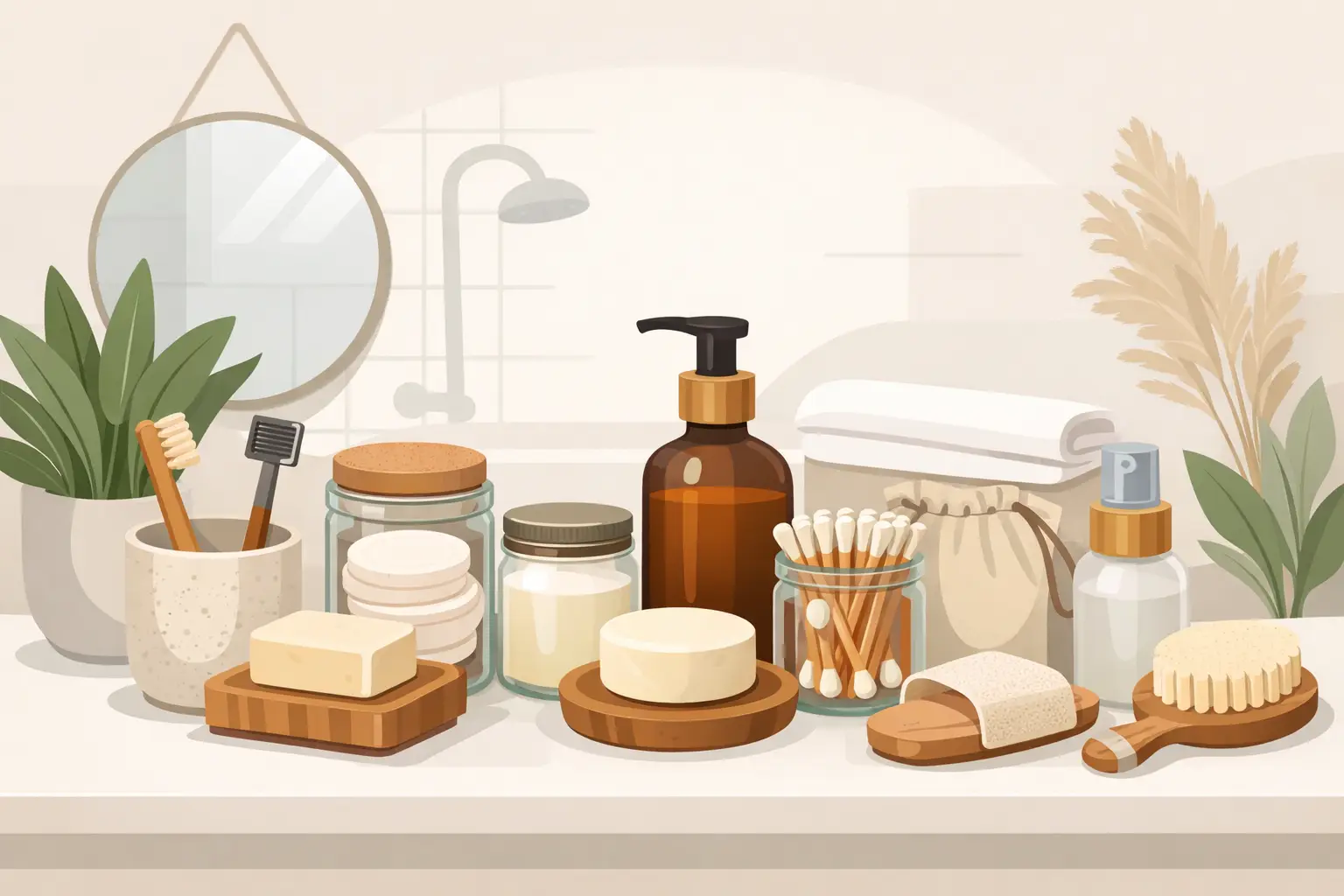
10. Decant everyday essentials into glass, aluminium, or ceramic
Not every product is easy to buy plastic-free from the start. When that is the case, refillable containers still improve the feel and lifespan of your routine. Glass apothecary jars, aluminium tins, and ceramic dishes reduce visual clutter and encourage you to buy better, not more.
This is especially helpful for bath salts, cotton buds in paper packaging, reusable rounds, and soap ends. It does not remove packaging entirely, but it does create a calmer system and helps you notice what you actually use.
11. Switch to wooden nail brushes, soap dishes, and combs
Bathroom accessories are easy to overlook because they are not replaced often. Yet plastic soap trays, combs, and nail brushes all add up over time. Wooden or bamboo versions bring in natural materials that suit the room and often last longer when cared for properly.
Again, moisture is the deciding factor. Wood should be allowed to dry, not left sitting in water. Choose pieces with drainage or hang them where possible.
12. Buy less, but buy bars that are made to last
This final swap is less about one product and more about habit. The best plastic free bathroom swaps are not random purchases gathered from ten different places. They are a small set of dependable items you repurchase because they perform well.
That might mean one gentle soap for face and body, one shampoo bar that suits your hair, one razor that will last for years, and a handful of washable accessories. Fewer products. Better materials. Less waste at every stage.
How to make plastic free bathroom swaps stick
Start where you already have friction. If your shower is crowded with half-used bottles, begin there. If you are forever buying disposable razors or cotton pads, start with those. The smartest change is usually the one that solves an annoyance while cutting waste.
It also helps to change storage at the same time as the product. Even the best bar fails if it sits in water. Even a beautiful bamboo brush will not last if it lives in a damp drawer. A draining dish, a hook, a dry shelf, a simple jar – these small practical details are what make low-waste routines feel easy rather than worthy.
Be honest about your household as well. A family bathroom needs resilient products that children, guests, and tired adults can use without special instructions. That is why uncomplicated bars and sturdy accessories tend to outperform more delicate alternatives.
A more thoughtful bathroom, one swap at a time
There is something quietly luxurious about a bathroom with fewer bottles and better things. A bar that lathers richly. A razor with weight to it. A soap dish that keeps the sink clear. Less noise, less waste, and no sense of doing without.
If you are choosing your next swap, pick the one you will still be pleased to use on an ordinary Wednesday morning. That is usually the right place to begin.