

When skin is mid-flare, even washing your hands can feel like a bad decision. Tightness. Stinging. That rough, angry feeling that seems to worsen the moment water touches it. If you are searching for the best soap for eczema flare ups, the real question is simpler: what will cleanse without pushing already stressed skin further off balance?
That matters because eczema-prone skin is not just dry. Its barrier is often compromised, which means moisture escapes more easily and irritants get in faster. A soap that feels fine on resilient skin can be far too much during a flare. The right bar should do one job well – cleanse gently – while leaving the skin as calm and comfortable as possible.
What makes the best soap for eczema flare ups?
The best soap for eczema flare ups is usually the one that does less, not more. It should rinse away dirt, sweat and daily build-up without heavy fragrance, aggressive detergents or a long list of additives that make sensitive skin work harder.
In practice, that means looking closely at the formula rather than the marketing. Words like natural, gentle or clean can sound reassuring, but they are not guarantees. Some natural ingredients are lovely for robust skin and still too stimulating for an active flare. Essential oils are a good example. They may smell beautiful, but when the skin barrier is already disrupted, even plant-based fragrance can sting.
A good eczema-friendly cleanser tends to have a short, thoughtful ingredient list. It often includes fats or oils that support softness, and it avoids the stripped, squeaky-clean finish that many people were taught to associate with cleanliness. For eczema, squeaky usually means stressed.
Ingredients that tend to help
For many people, the most comfortable bars are built around simple, nourishing fats and minimal extras. Traditional soapmaking can work well here, especially when the formula is balanced for skin comfort rather than a dramatic cleanse.
Tallow is one ingredient worth understanding. Properly rendered, high-quality tallow is rich and skin-compatible, with a fatty acid profile that many people find supportive when their skin feels dry, flaky or reactive. It is also naturally rich in vitamins A, D, E and K. In a well-made bar, it can help create a creamy lather that cleanses gently rather than aggressively.
Colloidal oatmeal is another ingredient often associated with calmer skin. It can help soften and soothe, which is why it appears so often in products made for dry or eczema-prone skin. Goat milk is also popular, largely because it lends a creamy feel and can make a bar feel milder in use.
There is a trade-off, though. Even helpful ingredients need the right context. A bar packed with botanicals, clays, scrubs or strong essential oils may still be too busy for a flare-up, even if it contains oatmeal or nourishing fats. The quieter the formula, the easier it usually is for sensitive skin to tolerate.
Ingredients worth avoiding during a flare
Fragrance is often the first thing to cut back on. That includes synthetic perfume and, for many people, essential oils too. Lavender, peppermint, citrus and tea tree are common in natural skincare, but common does not always mean calming. During a flare, less scent is usually better.
Harsh surfactants can also be a problem, particularly in liquid cleansers marketed as deeply cleansing or antibacterial. They may remove oil effectively, but eczema-prone skin generally needs some of that natural protection left in place.
Physical exfoliants are another poor fit. Seeds, salt, pumice and rough particles can create more friction when the skin is already inflamed. Likewise, highly astringent ingredients such as some clays or charcoal may feel too drying if the skin is cracked or tender.
Preservatives, colourants and foaming boosters are not automatically bad, but they can increase the chance of irritation in very reactive skin. If you know your triggers, trust them. Eczema is personal. What one person swears by may be exactly what another person needs to avoid.
Bar soap or liquid cleanser?
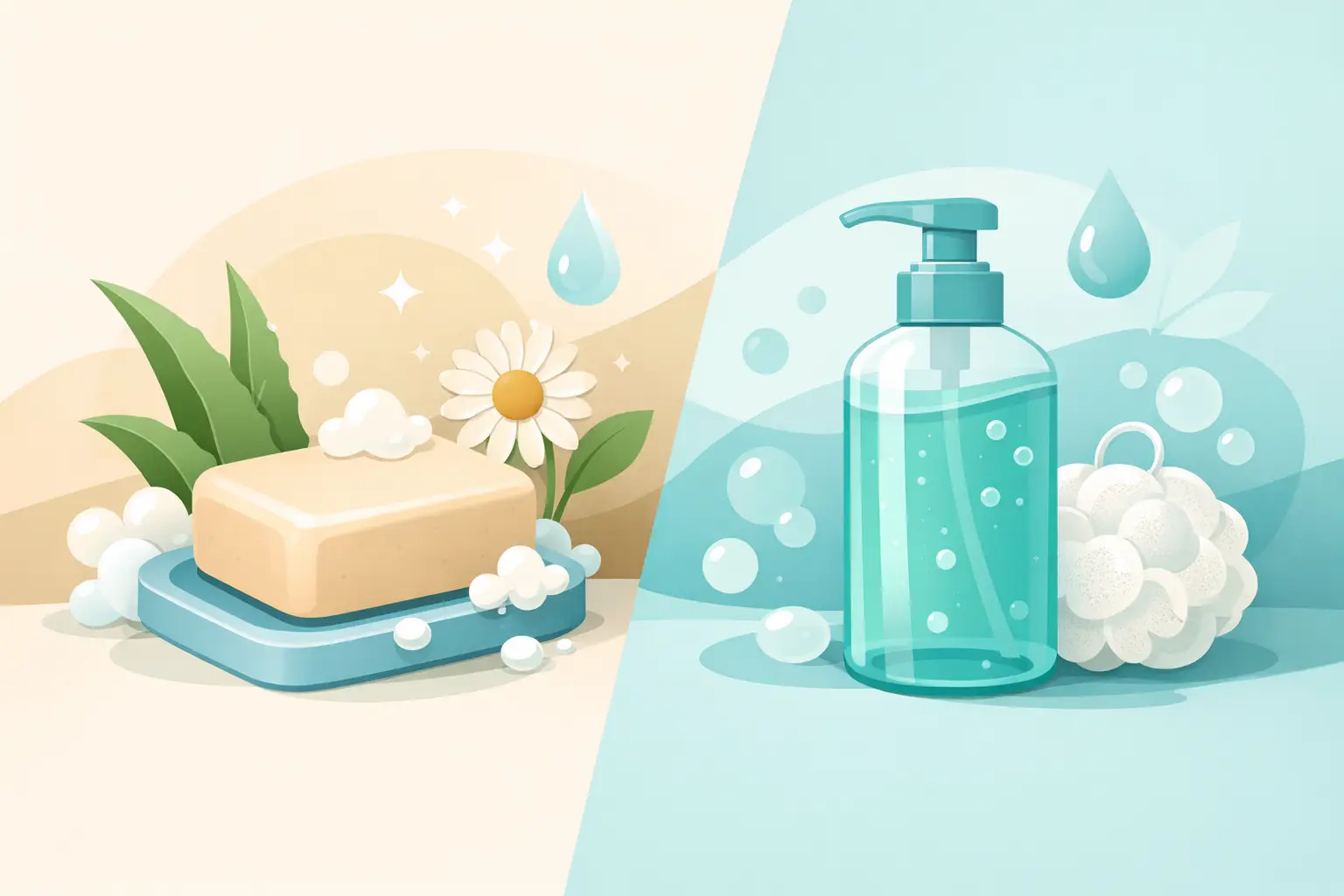
This is where it depends. Many people assume liquid cleansers are always gentler, but that is not necessarily true. Some are based on strong detergents and long ingredient lists. A well-formulated solid bar can actually be the simpler, kinder option.
The key is not whether it is a bar or a bottle. It is how it is made. A traditional cold-process bar with a nourishing fat profile and no added fragrance may suit eczema-prone skin far better than a perfumed shower gel labelled sensitive. On the other hand, if your skin reacts to true soap specifically, a very mild non-soap cleanser may feel better for face or body during severe flares.
For many households, the answer is to keep both in mind. Use the gentlest option for the most reactive areas, and do not assume one format is universally superior.
How to use soap when eczema is flaring
Even the best soap for eczema flare ups can only do so much if washing habits are making things worse. Technique matters.
Keep water lukewarm rather than hot. Hot water can feel relieving in the moment, but it tends to strip the skin and worsen dryness afterwards. Use the cleanser only where you truly need it – hands, underarms, feet and any areas that need freshening up. You do not always need a full-body lather every day, especially in winter or during an active flare.
Lather gently with your hands instead of a rough cloth or sponge. Then rinse thoroughly and pat dry with a soft towel. Do not rub. The next step is just as important as cleansing: apply a rich, plain moisturiser while the skin is still slightly damp. That helps trap water in the skin before it evaporates.
If you are dealing with hand eczema, this routine becomes even more important. Frequent washing is often unavoidable, but switching to a gentler bar and moisturising after every wash can make a noticeable difference over time.
What to look for on the label
A good label should feel clear, not theatrical. Look for plain language, recognisable ingredients and a formula that matches what your skin actually needs.
If your skin is actively flaring, an unscented or fragrance-free bar is often the safest place to start. Look for nourishing base ingredients such as tallow, olive oil or oatmeal, and be cautious with bars that promise intense exfoliation, detoxifying effects or very strong scent.
It is also worth paying attention to how and where the soap is made. Small-batch makers who understand their ingredients and process often formulate with more intention. At Luna Natural Soap Co., for example, our bars are made using traditional methods and slow-rendered tallow from trusted local sources because ingredient integrity matters, especially when skin is asking for calm rather than novelty.
When soap is not the whole answer
Sometimes people spend ages hunting for the perfect cleanser when the bigger issue is everything around it. Central heating, stress, wool jumpers, over-washing, laundry products and weather shifts can all contribute to a flare. Soap matters, but it is one piece of the picture.
If a product burns every time you use it, stop using it. If your eczema is severe, weeping, infected or not settling, speak to a pharmacist or GP. Gentle skincare can support the barrier, but it is not a substitute for medical advice when skin is significantly inflamed.
That said, choosing a calmer cleanser can remove one common source of daily irritation. And that is often where relief starts – not with a miracle product, but with fewer triggers, steadier habits and ingredients that respect the skin you are in.
The best soap for eczema flare ups is rarely the fanciest one on the shelf. It is the bar that cleanses softly, keeps the formula simple and helps your skin feel a little more comfortable after every wash. When skin is struggling, that kind of quiet, dependable care is more than enough.