


Skin can become less forgiving with time. A bar that once left you feeling fresh may now leave your face tight, your hands rough, or your legs uncomfortably dry. The best soaps for mature skin do not promise to turn back the clock. They cleanse without asking already delicate skin to work harder.
Mature skin is not one skin type. It may be dry, oily, sensitive, reactive or happily balanced. But as natural oil production and cell renewal can slow over time, many people notice a greater need for comfort, softness and dependable barrier care. The right cleansing bar is a modest but meaningful place to start.
What mature skin needs from a soap
Cleansing should remove the day, not remove every trace of the skin’s own protective oils. That distinction matters. When a cleanser is too harsh, skin may feel squeaky-clean immediately afterwards, then tight, flaky or itchy an hour later.
For mature skin, look for a bar that creates a creamy lather and leaves the skin feeling clean but comfortable. A well-made, traditionally cured soap with thoughtfully chosen fats can offer this balance. It should feel like care, not correction.
It also helps to keep the rest of the formula uncomplicated. Mature or sensitive skin can become less tolerant of heavily fragranced products, strong essential-oil blends and long ingredient lists full of unnecessary extras. A beautiful scent is a pleasure, but it should never come at the expense of comfort.
Choose nourishing fats, not detergent-heavy formulas
Not all cleansing bars are made in the same way. Many commercial bars rely on strong detergents and are designed to deliver abundant foam at a low cost. Foam alone is not a measure of quality. In fact, the most satisfying bar for dry or mature skin often has a dense, silky lather rather than a mass of bubbles.
Tallow is particularly valued in traditional skincare because its fatty-acid profile is compatible with the skin’s natural lipids. When it is carefully rendered and made into a properly cured soap, it creates a firm bar with a rich lather and a comforting after-feel. Grass-fed tallow also naturally contains fat-soluble vitamins including A, D, E and K.
Olive oil can bring a gentle, conditioning quality, while coconut oil is often included for cleansing and lather. Coconut oil has its place, but a bar built too heavily around it may feel drying for some people. The balance of the full recipe matters more than any single fashionable ingredient.
Consider milk, oats and simple botanicals
Goat milk soaps are often a lovely option for mature skin. Milk contributes a creamy, indulgent lather and is especially appealing when the skin feels dry or dull. Colloidal oatmeal or finely milled oats can add a soft, soothing character that suits easily irritated skin.
Botanicals deserve a practical view. Calendula, lavender and gentle herbs may make a bar feel special, but they are not a substitute for a sound base formula. If you know your skin reacts to fragrance or essential oils, choose unscented or minimally scented options first. Natural does not automatically mean non-irritating.
The best soaps for mature skin by concern
The best choice depends on what your skin is asking for now. A single bar can be wonderful for the body yet less suitable for a reactive face, so it is worth choosing according to use as well as ingredients.
For dry, tight or flaky skin
Choose a superfatted cold-process bar made with nourishing fats, ideally with a simple ingredient list. Superfatting means that some oils remain in the finished soap rather than being fully turned into soap, helping to create a more conditioning wash.
A tallow and goat milk bar, or a tallow bar with oats, is often a sensible place to begin. Follow with moisturiser while the skin is still slightly damp. Even the gentlest soap is only one part of a routine, and mature skin usually benefits from replacing moisture after washing.
For sensitive or eczema-prone skin
Keep the formula plain. Fragrance-free is usually the safer choice, particularly during a flare or when the skin is cracked. Avoid exfoliating particles, strong mint, citrus oils and bars marketed as intensely cleansing.
Patch test any new product on a small area first, even when the ingredients are familiar. If eczema is severe, persistent or weeping, seek advice from a pharmacist, GP or dermatologist. A handcrafted soap can be a comforting daily choice, but it is not a medical treatment.
For mature skin that still feels oily
Oiliness does not cancel out the need for gentleness. Over-cleansing can leave skin feeling stripped, which may encourage it to produce more oil. Choose a balanced bar that rinses cleanly without the harsh, dry finish associated with aggressive cleansers.
Clay can suit some people who enjoy a deeper cleanse, but it is best used with restraint. If your cheeks are dry while your forehead is oily, use a gentler bar across the face and reserve a more cleansing option for the body or occasional use.
For hands that show every wash
Hands often reveal dryness first, especially after years of washing up, gardening, work and winter weather. A creamy tallow soap can make frequent handwashing feel less punishing, but technique matters too. Use lukewarm rather than hot water, pat dry rather than rubbing vigorously, and apply hand cream straight afterwards.
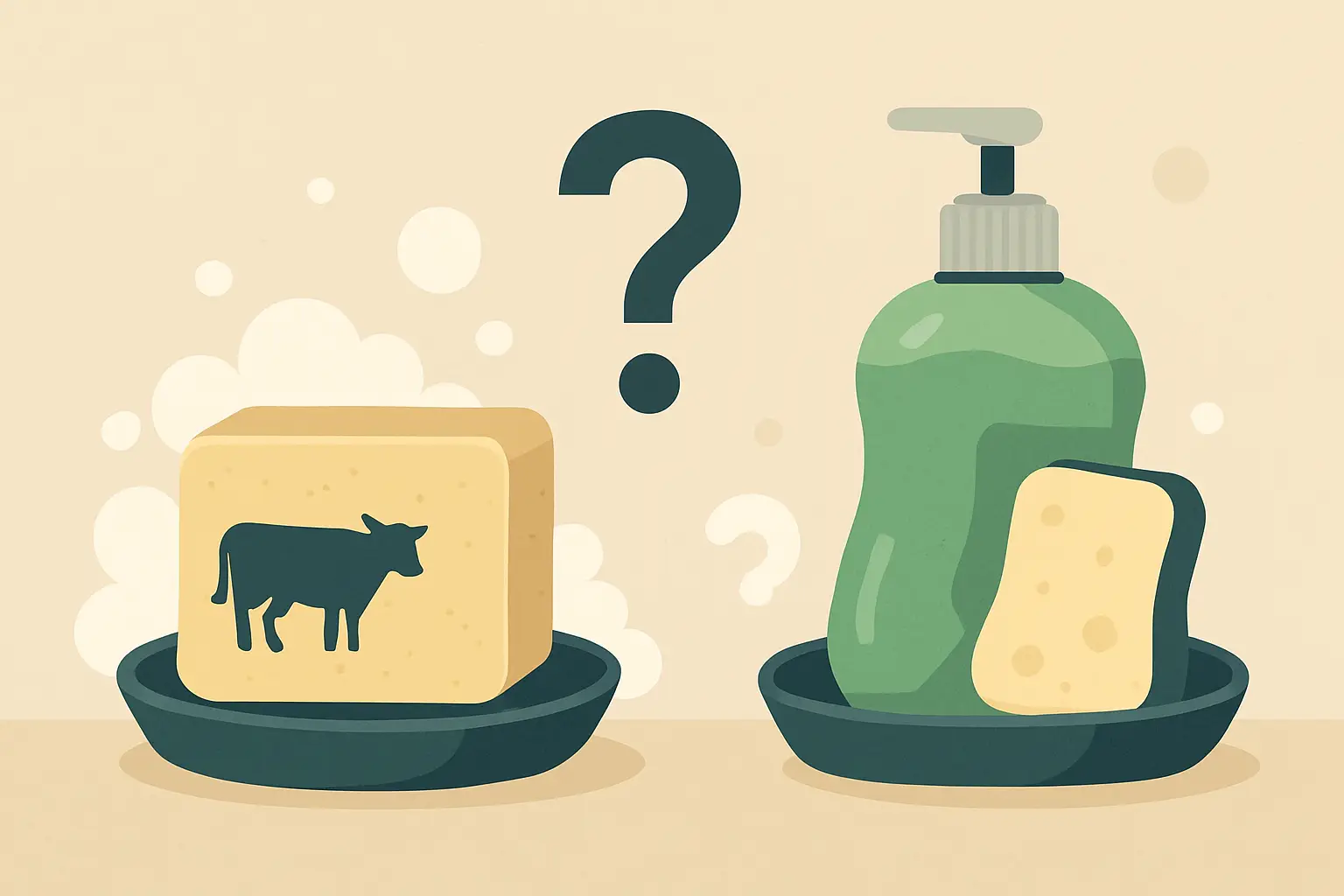
A solid dish soap is useful at the sink, but it is not intended as a hand cleanser. Keeping the jobs separate helps protect the skin while reducing plastic bottles around the home.
A note on facial cleansing
Traditional soap is naturally alkaline, while facial skin has an acidic surface environment. Plenty of people use a mild, well-formulated soap bar on their face with no problem, especially if their skin is dry and they rinse promptly. Others find that even a gentle bar causes tightness or redness over time.
There is no prize for forcing a product to work. If your face feels comfortable, calm and soft after cleansing, your routine is likely serving you well. If it stings, flakes or feels tight, use the bar for the body and choose a gentler non-soap cleanser for the face instead. This is not a failure of the bar or of your skin. It is simply useful information.
How to make a good bar last longer
A beautifully made soap should be used well. Let it dry between washes on a draining dish, away from standing water. This keeps the bar firm, helps it last longer and avoids the soft, wasteful sludge that collects at the bottom of a soap dish.
Use a washcloth sparingly if your skin is fragile. The cloth itself can provide enough exfoliation, so there is rarely a need for gritty scrubs. Mature skin tends to respond better to consistent gentleness than to occasional aggressive polishing.
At Luna Natural Soap Co., bars are made in small batches with slow-rendered, locally sourced grass-fed tallow and plastic-free packaging. That care is not only about a more considered bathroom shelf. It is about choosing ingredients and methods that respect real skin and make good use of valuable local resources.
Read the label with a clear head
Terms such as natural, clean and handmade can be useful starting points, but they do not tell the whole story. Read the ingredients. Look for recognisable fats and oils, a modest approach to fragrance, and a maker who can explain how the bar is produced and sourced.
Be cautious with dramatic promises too. Soap is rinsed away, so its most honest job is to cleanse gently and leave the skin feeling comfortable. A bar cannot replace sun protection, treatment prescribed for a skin condition, or a moisturiser designed to stay on the skin. It can, however, stop your cleansing step from becoming the source of the problem.
The kindest choice is often the simplest one: a properly cured bar, a soft towel, lukewarm water and a moisturiser you enjoy using. When your skin feels settled after washing, you have found something worth keeping.