


If your skin feels tight after washing, stings when you apply moisturiser, or seems to flare up for no obvious reason, your cleanser may be part of the problem. That is usually the real question behind can bar soap help skin barrier concerns. Not whether a bar is old-fashioned or modern, but whether it leaves skin calm, comfortable and able to hold on to moisture.
The short answer is yes, bar soap can help support the skin barrier – but only if the bar is well formulated, properly cured and made with skin compatibility in mind. A harsh bar can do the opposite. So the conversation is not really bar versus bottle. It is about ingredients, method and how your own skin responds.
What the skin barrier actually needs
Your skin barrier is the outermost layer that helps keep water in and irritants out. When it is working well, skin feels supple and steady. When it is under strain, skin can become dry, rough, red or reactive.
That barrier depends on a careful balance of natural oils, water and structural lipids. Cleansing always affects that balance to some degree. Even a good cleanser removes more than dirt. The goal is not to strip the skin back to nothing. The goal is to cleanse without pushing already stressed skin further.
This is why people with dry, sensitive or eczema-prone skin often notice their cleanser before anything else. If washing leaves your face or body feeling squeaky, that is not usually a sign of health. It is often a sign that too much has been taken away.
Can bar soap help skin barrier health?
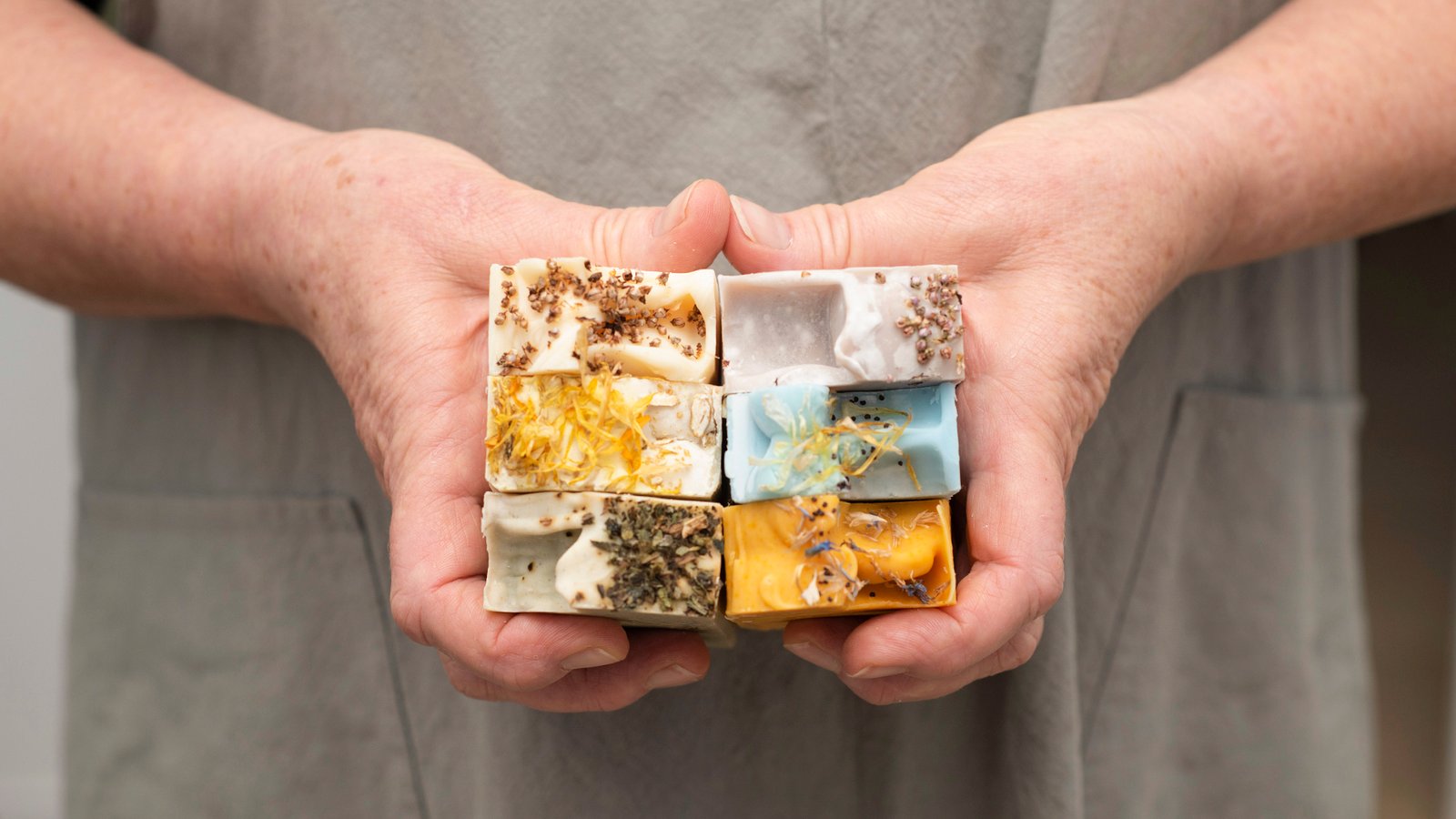
Yes, it can – especially when the bar is rich in nourishing fats, free from aggressive detergents and made for gentle daily use. A thoughtfully made soap bar can cleanse effectively while leaving behind a softer, more conditioned feel than many people expect.
Traditional cold-process soap has a very different feel from many mass-produced cleansing bars. It is made through saponification, where oils or fats react with lye to create soap and naturally occurring glycerine. That glycerine matters. It attracts water and can help skin feel less parched after washing.
The choice of fats matters too. Bars made with skin-loving ingredients such as tallow, olive oil, castor oil or oatmeal can feel notably more comforting on dry skin than bars designed simply to foam hard and rinse fast. Tallow in particular has long been valued for its compatibility with the skin. It contains fatty acids that closely resemble those found in our own skin barrier, which is one reason many people find it soothing rather than disruptive.
That does not mean every natural bar will suit every person. Essential oils, exfoliants and even some botanical additions can be too much for very reactive skin. But a simple, well-balanced bar can absolutely play a supportive role.
Why some bar soaps damage the barrier instead
The reputation bar soap carries did not appear from nowhere. Many people remember bars that left skin taut, chalky and uncomfortable. In those cases, the issue was not the bar format itself. It was the formula.
Some soaps are highly cleansing, low in conditioning ingredients and designed more for durability than skin comfort. Others use fragrance levels that can irritate delicate skin. Some are not cured properly, which can affect how mild they feel in use.
There is also the question of pH. True soap is generally more alkaline than skin. For some people, that is manageable, especially when the formula is rich in quality fats and used alongside a good moisturising routine. For others, particularly those with an already impaired barrier, frequent washing with a poorly suited soap may lead to more dryness or irritation.
That is where the trade-off sits. A bar can be beautifully simple, plastic-free and effective. But if your barrier is badly compromised, even a good soap may need to be used thoughtfully – perhaps once daily, perhaps only on the body, perhaps followed immediately with a rich balm or cream.
What to look for in a barrier-friendly bar
If you are trying to choose a bar that may help rather than hinder your skin barrier, keep your standards high. The best bars tend to be uncomplicated and purposeful.
Look first at the fat base. Tallow is particularly valued for dry and sensitive skin because it produces a firm, creamy bar with a rich lather and a nourishing skin feel. Oatmeal can offer a gentle, soothing touch. Goat milk is often chosen for comfort and softness. Olive oil contributes mildness, while castor oil supports lather without making the formula feel aggressive.
Also pay attention to what is not included. Heavy synthetic fragrance, harsh detergents and a long list of unnecessary additives can be a red flag if your skin is already unhappy. Simple formulas are often easier to live with.
A good maker should also be clear about process. Traditional cold-process methods, proper curing time and careful ingredient sourcing all matter. They are not just romantic details. They affect how the bar performs on the skin.
Who may benefit most from using bar soap
People with dry, mature or easily irritated skin often do well with a creamy, traditional bar, especially if they have been using foaming washes that leave the skin feeling stripped. Many customers who switch to a richer artisan bar notice that their skin feels less itchy after bathing and less dependent on constant reapplication of lotion.
It can also suit people trying to simplify their routine. If your skin does not enjoy a shelf full of actives and heavily scented products, a well-made soap bar can bring things back to basics in a helpful way.
And for eco-conscious households, there is another practical advantage. A solid bar usually means less plastic, less packaging and less waste. That does not improve the skin barrier on its own, of course, but it does make the daily ritual feel more aligned with a slower, more considered way of living.
When bar soap may not be the best option
There are moments when caution is wise. If your skin is cracked, actively flaring or painfully reactive, simplify everything. In that state, even a gentle soap may feel like too much, particularly on the face.
Some people also find that their facial skin prefers a non-soap cleanser while their body does very well with a nourishing bar. That is perfectly reasonable. The skin on the face is often more reactive, and there is no prize for forcing one product to do every job.
Babies, people with severe eczema and anyone under dermatological care may need a more tailored approach. A patch test is sensible, and if your skin tends to react unpredictably, less fragrance and fewer extras are usually best.
How to use bar soap without stressing the barrier
Even the right bar can be undermined by the wrong habits. Very hot water, long showers and vigorous scrubbing can undo much of the benefit. If you want your cleanser to support your skin barrier, wash with warm rather than hot water, use your bar gently and stop chasing that squeaky-clean feeling.
After washing, pat the skin dry instead of rubbing. Then apply moisturiser while the skin is still slightly damp. That simple step helps trap water in the upper layers of the skin and makes a noticeable difference over time.
It also helps to be selective about where you cleanse. Most people do not need to soap every inch of the body every single day. Areas that sweat more may need daily cleansing, while arms and legs may do better with a lighter touch, especially in colder weather.
A more useful way to judge your soap
Forget the marketing terms for a moment and pay attention to your skin the day after use. Does it feel calm or tight? Soft or itchy? Balanced or shiny and parched at once?
Those signals matter. Barrier-friendly skincare is rarely about dramatic promises. It is about steady comfort. A good bar soap should leave your skin feeling clean, yes, but also settled.
That is why traditional, well-made bars continue to earn a place in modern routines. When crafted with nourishing fats, careful curing and respect for sensitive skin, they can be both indulgent and practical. If you are looking for a slower, simpler approach, a thoughtfully made bar from a maker such as Luna Natural Soap Co. may be a kinder place to start than another harsh cleanser in a plastic bottle.
Your skin barrier does not need perfection. It needs consistency, gentleness and fewer things working against it.