

Can children use tallow soap? For many families, the answer can be yes – provided the bar is simply made, used gently and suits that particular child’s skin. Children do not need a long list of fragranced washes and foaming products. Their skin often does better with fewer ingredients, lukewarm water and a calm, consistent routine.
Tallow soap has a place in that approach. Properly made, cold-process tallow soap creates a firm bar with a creamy, satisfying lather. It can cleanse away everyday dirt without the sharp, stripped feeling some detergent-heavy body washes leave behind. But no soap is universally right for every child, especially when skin is very dry, broken or actively irritated.
Why tallow can suit young skin
Tallow has been used in traditional soapmaking for generations. It makes a durable bar with a mild, cushiony lather, and its fatty-acid profile is often appreciated by people looking for a less complicated way to cleanse. At Luna Natural Soap Co., we slowly render organic, grass-fed tallow in-house and make our bars in small batches, because ingredient quality and process both matter.
For children, the appeal is often in what a well-made tallow bar leaves out. A straightforward bar may avoid harsh synthetic detergents, unnecessary dyes and overpowering perfume. That is useful when you are trying to work out what your child’s skin actually tolerates.
Tallow is naturally rich in fat-soluble nutrients, including vitamins A, D, E and K. In a finished soap, however, the main job is cleansing. It should not be presented as a treatment for eczema, allergies or any skin condition. Think of it as one gentle part of a sensible skin routine, not a cure in a bar.
Can children use tallow soap every day?
It depends on their age, skin type and how dirty they actually get. A child who has spent the afternoon climbing trees, playing football or painting at the kitchen table may need a proper wash. On quieter days, a warm flannel and water may be enough for much of the body.
Soap, including natural soap, is alkaline. Used too frequently or left sitting on the skin, it can contribute to dryness in some children. For most families, using a mild bar on hands, feet, underarms and visibly dirty areas is a balanced approach. There is rarely a need to soap a child from head to toe every single day.
Keep baths short and comfortably warm rather than hot. Hot water can be more drying than the bar itself. Rinse well, pat skin dry rather than rubbing, and apply a plain moisturiser afterwards if your child’s skin tends to feel tight or rough.
For babies and toddlers
Newborn skin is especially delicate, and very young babies often need little more than water for routine bathing. If you wish to introduce soap, choose an unscented, minimal-ingredient bar and use it sparingly. Avoid the eye area and do not use a body bar as shampoo unless it has been specifically formulated and tested for that purpose.
Toddlers are more likely to get grubby, but the same principle holds: less is usually more. A gentle wash after muddy play is sensible. A heavily scented bubble bath followed by several fragranced products is more likely to complicate sensitive skin.
For school-age children
Older children can usually use a simple tallow soap as part of their normal wash routine, particularly on hands and body. This is also a good age to teach a practical habit: lather in hands or on a soft cloth, wash the areas that need it, rinse properly and place the bar somewhere it can dry.
A bar that dries between uses lasts longer and stays pleasant to use. It is a small household ritual, but it also helps children understand that good skincare need not mean disposable plastic bottles and a bathroom shelf full of products.
Choosing a tallow soap for a child
The ingredient list matters more than a fashionable claim on the front of the label. A child with sensitive skin is generally best served by an uncomplicated, fragrance-free bar. Essential oils are natural, but natural does not automatically mean suitable for every young person. Strong mint, citrus, spice or floral oils may be lovely for an adult shower and still be too stimulating for a child’s skin.
Look for soap made with a clear purpose: gentle cleansing, not dramatic fragrance or a novelty colour. Cold-process soap needs time to cure, which allows the bar to harden and perform as intended. Responsible makers should be open about their ingredients and avoid promising medical results.
If your child reacts easily, consider these practical questions before trying a new bar:
- Is it free from added fragrance and colourants?
- Does your child have known allergies to any botanical, oil or milk ingredient in the formula?
- Is the skin currently cracked, weeping, infected or severely inflamed?
- Can you introduce only one new product at a time?
Those details make it easier to identify what is helping and what is not. Swapping several products at once can turn a simple routine into a guessing game.
Patch testing and first use
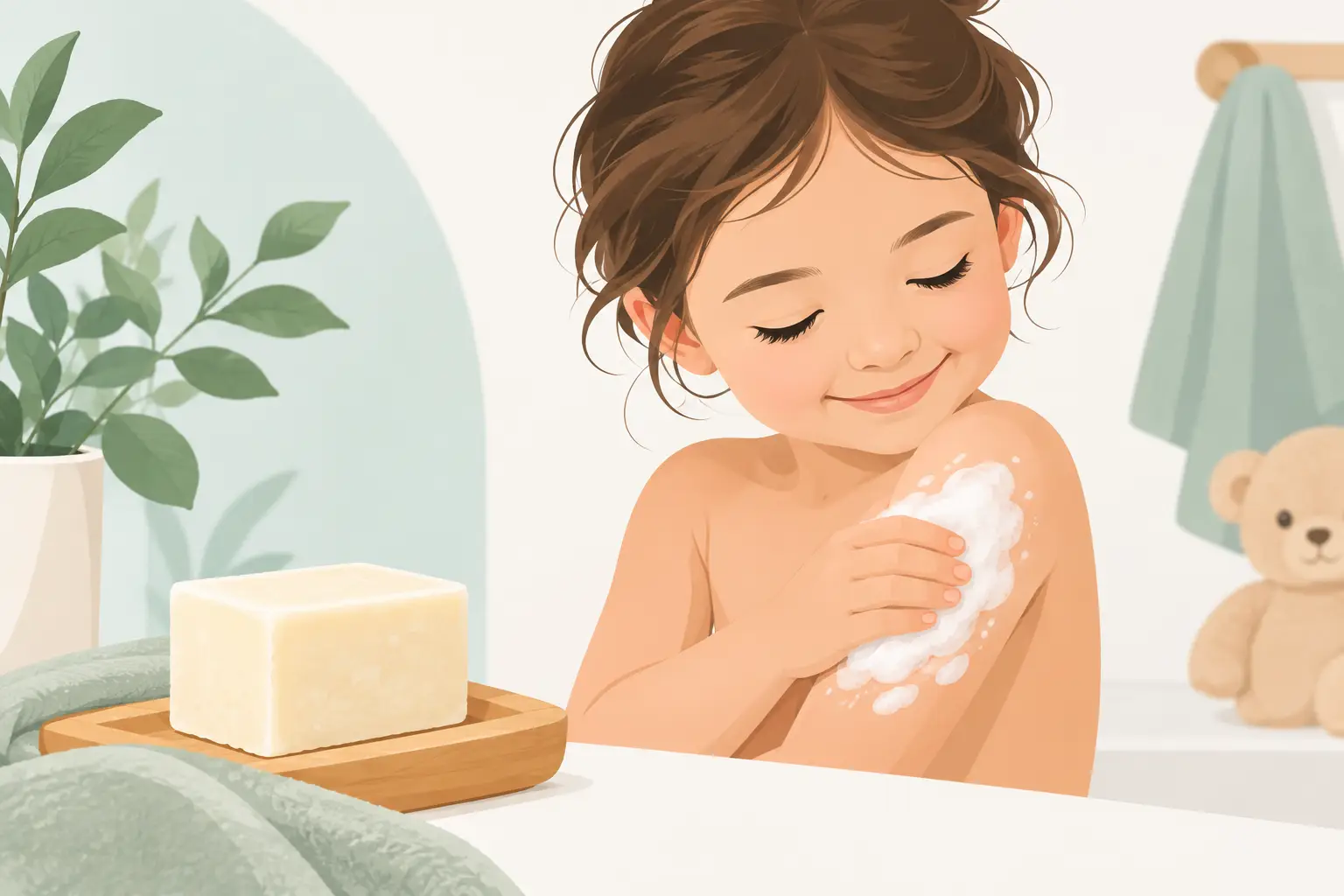
A patch test is a useful precaution, particularly for a child with reactive skin. Make a small lather, apply it briefly to a small area such as the outer arm, rinse and observe the skin over the next day or two. Do not patch test on skin that is already sore or broken.
If there is stinging, redness, itching, a rash or worsening dryness, stop using the product. Wash the area with water and seek advice from a pharmacist, GP or relevant clinician if symptoms are persistent, severe or worrying. A family history of allergies, diagnosed eczema or recurrent rashes is a good reason to ask a healthcare professional for individual guidance before changing products.
Even when the first use goes well, start slowly. Use the soap once or twice a week, then assess how the skin feels. Comfortable skin is the goal – not the biggest lather or the strongest scent.
When tallow soap may not be the best choice
A gentle tallow bar can be a thoughtful option, but it is not automatically the answer for every household. Children with active eczema may have a care plan that recommends a particular soap substitute or emollient cleanser. In that situation, follow the advice already given by their healthcare professional rather than replacing prescribed or recommended care with a natural bar.
The same applies to skin infections, open cuts and unexplained rashes. Soap can sting compromised skin, and a new product can make it harder to judge what is causing a flare. Pause experimentation until the skin has settled or you have clinical advice.
Some families also prefer vegan products, while others may avoid tallow because of personal, cultural or religious reasons. There is no need to force a fit. The best cleanser is one that aligns with your family’s values and leaves your child’s skin comfortable.
A simpler bath-time standard
Children’s skincare does not need to be elaborate to feel considered. Choose a bar with a short, understandable ingredient list. Use a little, rinse it away and let skin tell you whether the routine is working. Soft, comfortable skin and a child who is not itching or complaining after the bath are better measures than any trend.
A thoughtfully made tallow soap can turn an ordinary wash into a quieter, lower-waste ritual. Start gently, stay observant, and let simplicity earn its place in your family bathroom.