

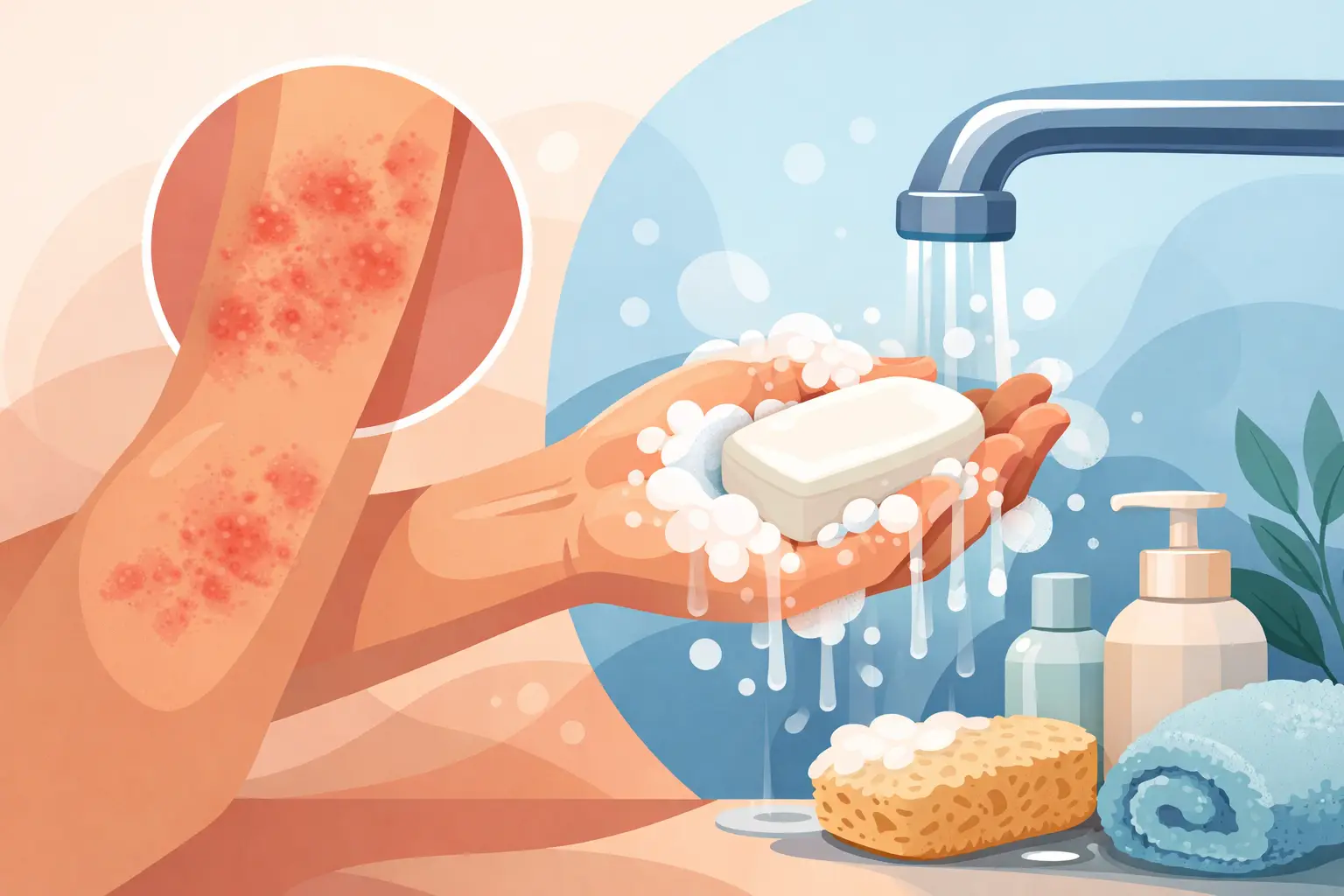
A shower should not leave skin feeling tight, hot or desperate for moisturiser. Yet for many people with eczema, cleansing is one of the moments most likely to bring on discomfort. So, can eczema sufferers use soap? Often, yes – but the type of cleanser, how it is used and the condition of the skin that day all make a real difference.
Eczema is not one single experience. Some people manage occasional dry, itchy patches; others live with painful cracking, weeping skin or recurring flares. There is no universal bar that suits every person. The aim is not to cleanse more aggressively. It is to remove daily grime while asking as little as possible from an already vulnerable skin barrier.
Can eczema sufferers use soap? It depends on the bar
Traditional soap is made when oils or fats are combined with an alkali. The finished bar cleans well, but soap is naturally alkaline. Healthy skin has a mildly acidic surface, so some people with eczema find any true soap bar too drying, particularly on the face, hands or during an active flare.
That does not mean every person with eczema must avoid every soap bar forever. Skin tolerance varies. A carefully made, well-cured bar with a simple ingredient list may feel far more comfortable than a heavily fragranced wash full of strong detergents. Others will do better with a fragrance-free soap substitute or emollient cleanser recommended by their pharmacist, GP or dermatology team.
The most useful question is not whether a product is labelled ‘natural’, ‘gentle’ or ‘for sensitive skin’. It is whether your skin remains calm after using it. If it stings, leaves a squeaky-clean feeling, increases itching or makes moisturiser burn afterwards, it is not the right cleanser for you right now.
Why eczema-prone skin reacts so easily
Your skin barrier works rather like a wall: skin cells form the structure, while natural lipids help hold moisture in and irritants out. With eczema, that barrier can be less effective. Water escapes more easily, and everyday triggers – heat, friction, fragrance, sweat, cleaning products and some preservatives – may get through more readily.
Cleansing can add to that pressure. Hot water and frequent washing remove surface oils. Strong surfactants can strip the skin further. Fragrance, including essential oils, may be perfectly pleasant for one person and an unwelcome trigger for another.
This is why more lather is not necessarily better. A rich lather can feel luxurious, but it is not proof that a cleanser is kinder to eczema. What matters is how clean the skin feels afterwards, without tightness or a lingering film of irritation.
What to look for in a cleansing bar
A short, transparent ingredient list gives you a better starting point than vague marketing promises. For eczema-prone skin, plain is often a strength. Consider a bar without added fragrance or colour, especially if you know perfume has caused trouble before.
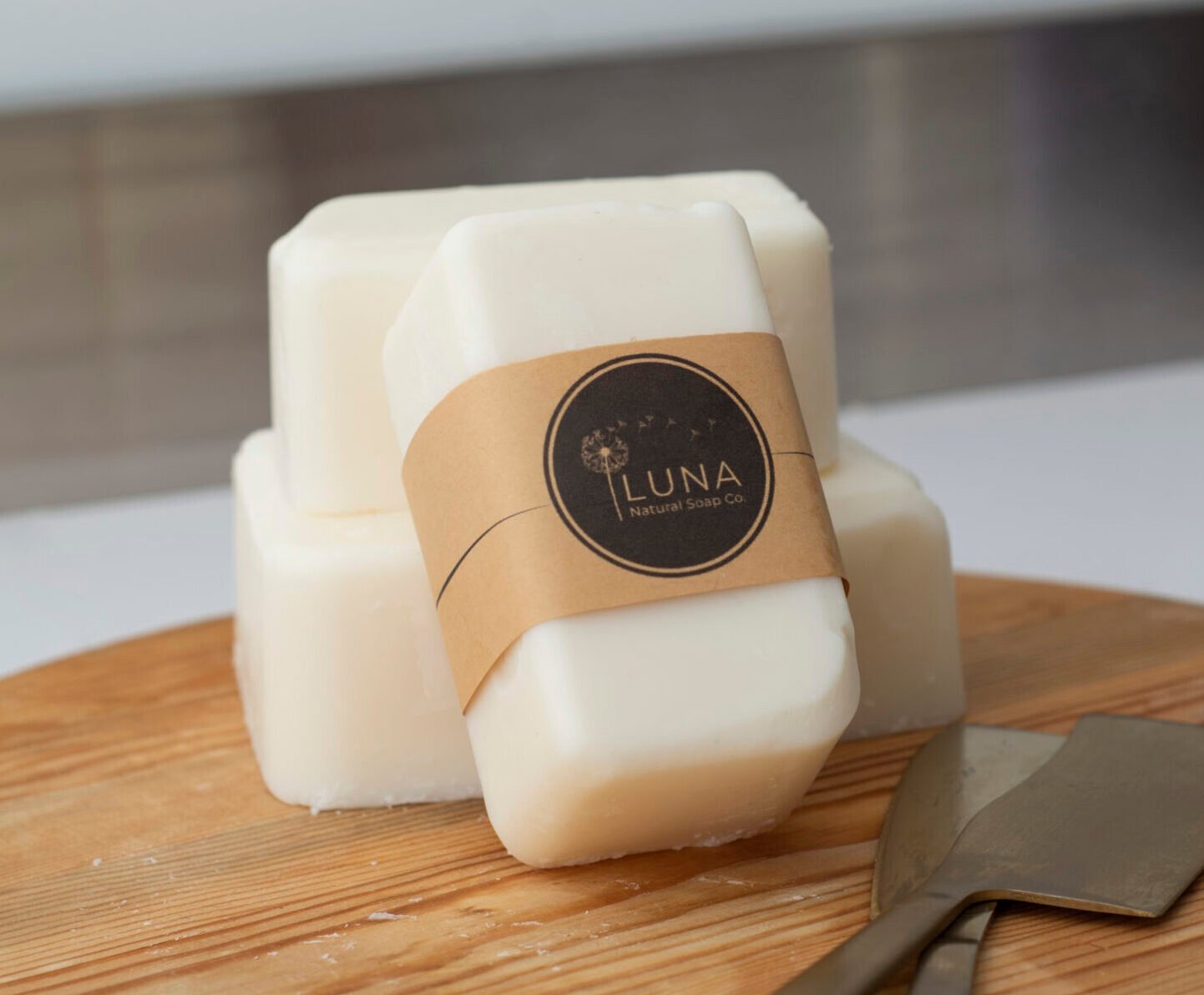
Traditional bars made with nourishing fats may feel less drying than harsher cleansers, particularly when they are properly formulated and cured. Tallow is valued in traditional skincare for its naturally occurring fatty acids and skin-compatible feel. At Luna Natural Soap Co., tallow is slowly rendered in-house from locally sourced, grass-fed fat, then made into small-batch bars with care rather than rushed through an industrial process. That attention to ingredients matters, but it does not replace individual patch testing or medical advice.
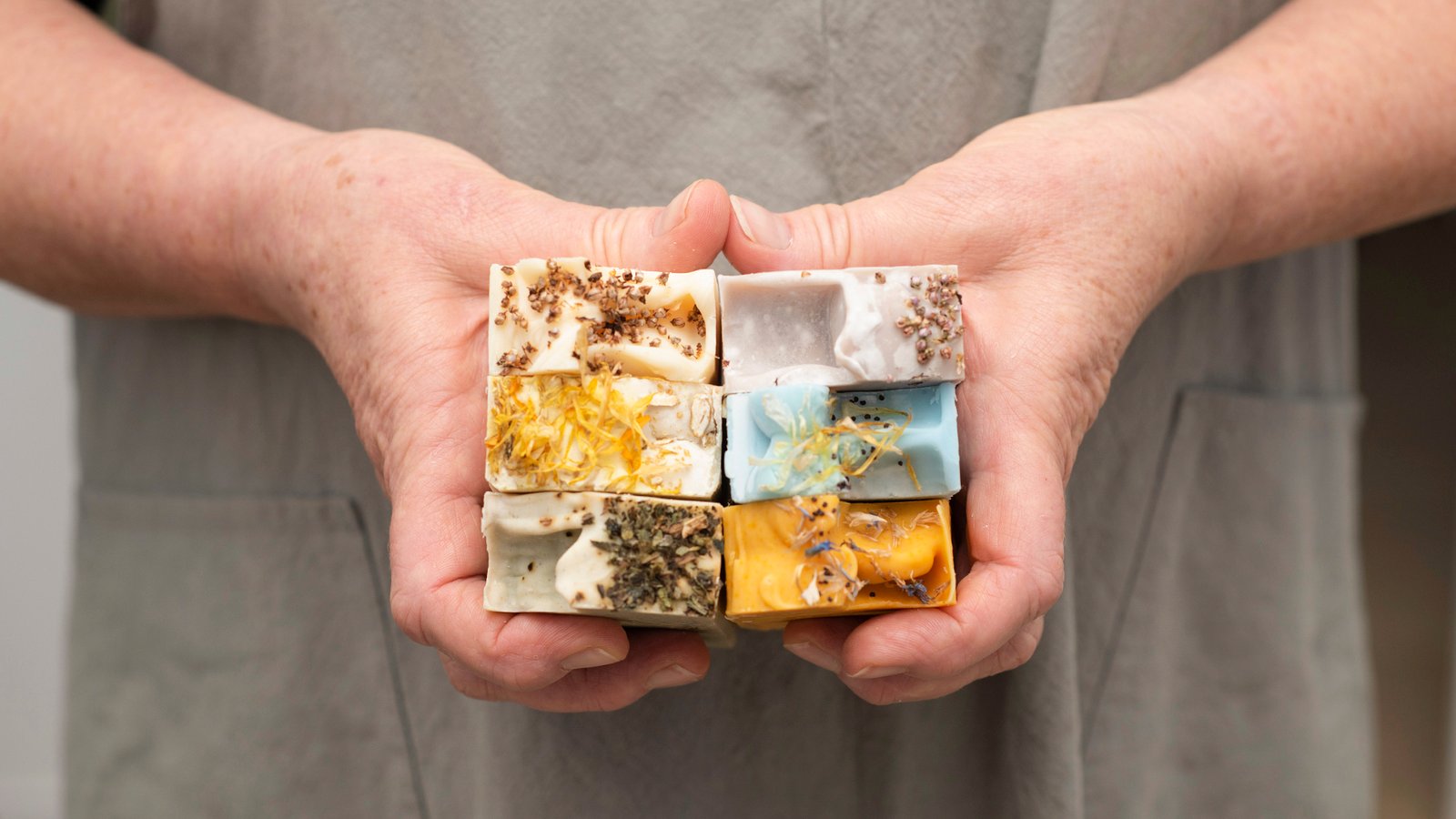
Oatmeal can be another ingredient people seek out for dry-feeling skin. Still, even a simple oat bar is not automatically suitable for everyone. If you have a known oat allergy, avoid it. If your skin is cracked or inflamed, use caution with any new product.
It can also help to distinguish between a soap bar and a syndet bar. Syndet means synthetic detergent, though the name need not sound alarming. Many dermatology-recommended cleansing bars are syndets formulated to be closer to the skin’s natural pH. For some eczema sufferers, these are the most reliable option, especially for daily use or active disease.
When to avoid soap altogether
There are times when experimenting with a new bar is simply not worth it. Avoid using soap on skin that is raw, bleeding, weeping, infected-looking or intensely inflamed. A clinician may advise using an emollient as a soap substitute during these periods, alongside any prescribed treatment.
Signs that need medical attention include spreading redness, warmth, swelling, crusting, pus, worsening pain, fever or a flare that is not settling with your usual plan. Eczema can become infected, and a different cleanser will not solve that.
Babies and children deserve extra caution too. Their skin is delicate, and eczema care should be guided by a health professional, particularly if rashes are persistent, severe or affecting sleep.
A gentler way to wash eczema-prone skin
Technique matters as much as the product. Keep baths and showers warm rather than hot, and aim for a brief wash. Long, steamy showers can feel soothing in the moment but may leave dry skin worse afterwards.
Use cleanser where it is genuinely needed: hands, underarms, groin and feet. On arms, legs and the torso, plain water may be enough on many days unless you are visibly dirty, sweaty or have used sunscreen. Do not scrub with flannels, exfoliating gloves or body brushes when your skin is unsettled.
After washing, pat skin dry with a soft towel instead of rubbing. Then apply a generous, fragrance-free emollient while the skin is still slightly damp. This helps reduce water loss and is often the most valuable step in an eczema-friendly routine.
If you use a bar, let it dry between uses on a draining dish. A firm, dry bar lasts longer and stays more pleasant to use. More importantly, avoid sharing bars where eczema has broken the skin, as this may increase the chance of passing on bacteria.
Patch test with patience
A patch test cannot guarantee that a product will never irritate you, but it can reduce the chance of discovering a problem after washing your whole body. Try the product on a small, intact area such as the inner forearm for several days. Watch for itching, burning, redness, dryness or tiny bumps.
Introduce only one new product at a time. When a flare happens, it is tempting to change everything at once. That makes it difficult to identify the trigger and can create more work for already stressed skin. A simple routine is easier to understand: one cleanser if needed, one dependable emollient, and prescribed treatment used exactly as advised.
Remember that reactions are not always immediate. Contact dermatitis can develop after repeated exposure, even to an ingredient you have used before. If you suspect a product is causing problems, stop using it and speak with a pharmacist, GP or dermatologist. Allergy testing may be appropriate for recurring or unexplained flares.
The practical answer for everyday skin
Some eczema sufferers can use soap, particularly a simple, low-fragrance bar used sparingly and followed promptly by an emollient. Others are better served by a non-soap cleanser or an emollient wash. Neither choice is a failure of your skincare routine; it is simply listening to what your skin needs.
Choose comfort over a complicated ritual. The best cleansing routine is the one that leaves your skin feeling clean, calm and supported enough to get on with your day.