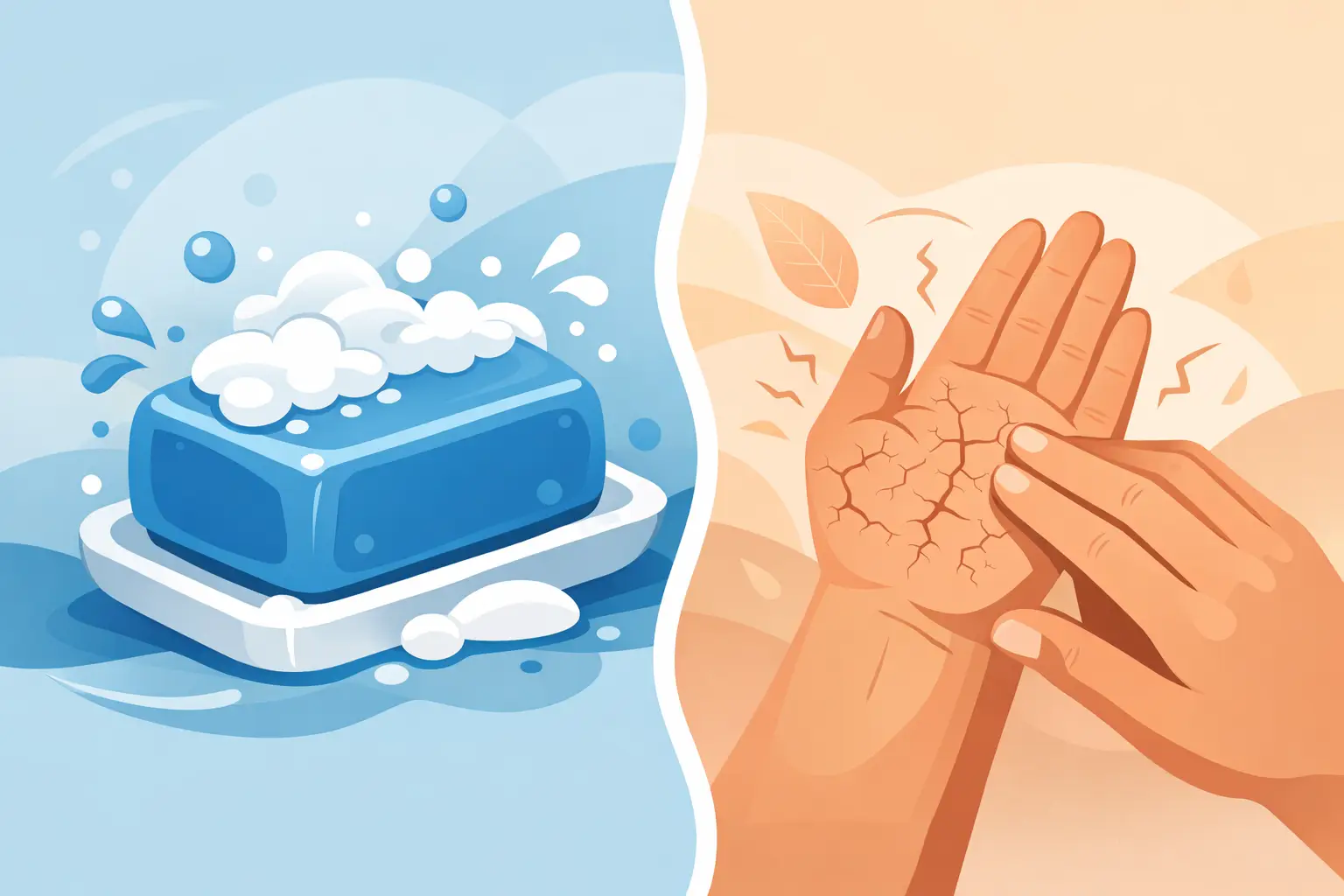


If your skin feels tight after a shower, it is rarely because you are doing anything wrong. It is usually the cleanser. Many modern bars and body washes are built to strip quickly, rinse squeaky-clean, and perfume the whole bathroom. That “clean” feeling can be your skin barrier asking for help.
Cold process tallow soap sits at the other end of the spectrum. It is traditional soapmaking, done slowly, with fats that your skin recognises and a process that keeps the bar naturally rich. For dry, sensitive, eczema-prone, or simply seasonally grumpy skin, that difference can feel immediate.
What is cold process tallow soap?
Cold process tallow soap is real soap made by combining fats (in this case, tallow) with a lye solution. The chemical reaction is called saponification. It turns oils and fats into soap and naturally occurring glycerin.
“Cold process” does not mean the soap is made cold. It means the maker does not force the cook with sustained external heat, as in hot process methods. Instead, the soap is poured into moulds and left to set, then cured for weeks. That cure time matters. Water evaporates slowly, the bar becomes harder, and the lather and feel refine.
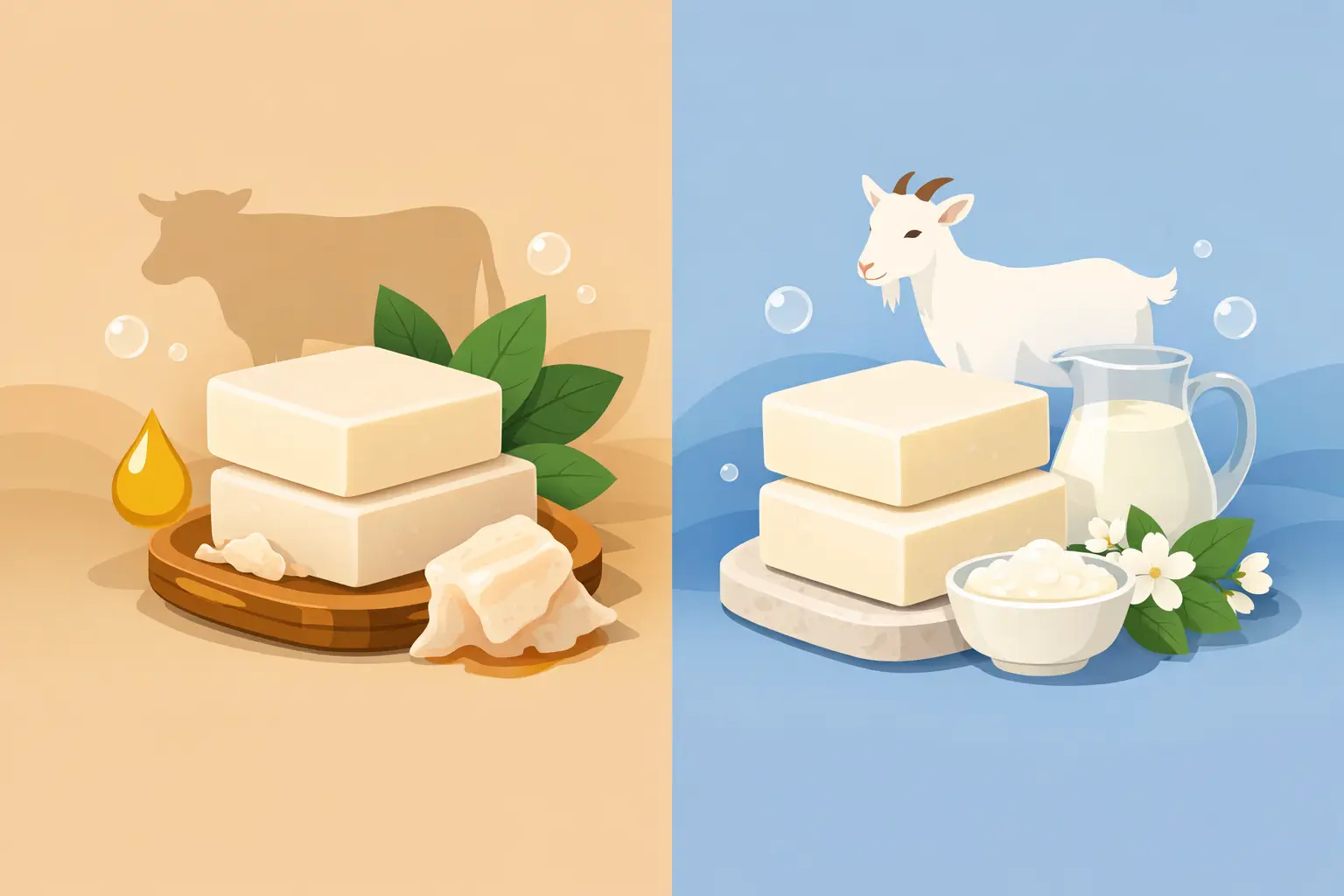
Tallow is rendered beef fat, ideally from grass-fed animals and handled with care. In skilled hands it becomes a clean, stable base that creates a firm bar, a creamy lather, and a gentle wash that does not leave skin feeling parched.
Why tallow works so well for “real skin”
People often assume the best skincare must be plant-based or lab-innovated. Sometimes that is true. But skin comfort is not about trends, it is about compatibility.
Tallow is structurally similar to the lipids found in human skin. That does not make it a miracle ingredient, and it will not “cure” chronic skin conditions. It does mean it can be an exceptionally sensible choice for cleansing when your priority is barrier support and calm.
A well-made tallow bar can feel different in three practical ways.
First, it tends to cleanse without that tight, over-cleansed finish. If you live with dry patches, post-wash itch, or that uncomfortable winter dullness, a bar that leaves skin feeling comfortable is not a luxury. It is daily relief.
Second, tallow contributes to a creamy, cushioned lather. Creamy lather is not just aesthetics. It often signals a bar that is less harsh in feel, especially when the formula is balanced and cured properly.
Third, tallow is naturally rich in fat-soluble vitamins often associated with skin function, including vitamins A, D, E, and K, as well as B12. In a wash-off product, you should keep expectations grounded. Still, many people find that tallow-based cleansing supports a softer, more settled look and feel over time because it is not constantly disrupting the barrier.
Cold process vs hot process: why the method matters
Both cold process and hot process soaps can be excellent. The choice is about texture, finish, and what the maker is optimising for.
Cold process soap is prized for its smoothness and longevity when cured properly. The slower set and long cure can produce a bar that is harder, lasts longer in the shower, and feels more refined on the skin. It also allows more flexibility in working with delicate ingredients and achieving a consistent, even bar.
Hot process soap is cooked through saponification more quickly. It can be ready sooner, but the finished bar often has a more rustic texture. Some people love that. Some prefer the silkier, more uniform feel of cold process.
If you are buying for sensitive skin, the biggest factor is not the romance of the method. It is formulation and curing. An under-cured bar can feel soft, dissolve quickly, and be more irritating. A well-cured bar, whether hot or cold process, is usually milder and longer-lasting.
The quiet hero: naturally occurring glycerin
One of the most overlooked benefits of traditional soap is glycerin. In cold process soap, glycerin is produced naturally during saponification and remains in the bar.
Glycerin is a humectant, meaning it attracts water. In simple terms, it helps skin feel less stripped and more comfortable after washing. Many commercial cleansing products remove glycerin for use elsewhere, then add synthetic humectants back in. That is not inherently bad. It is just a different approach.
For people who are sensitive, minimal routines often work best. A cleanser that does not fight your skin is a strong start.
“But is it drying?” It depends
This is where honesty matters. Soap is alkaline by nature. Skin is slightly acidic. For some people, especially those with severely compromised barriers, any true soap can be too much.
Cold process tallow soap is often gentler in feel because of the fatty acid profile and the presence of glycerin, but it is still soap. If your skin flares easily, you may do better using the bar on the body while keeping facial cleansing simpler, or using it once a day rather than morning and night.
It also depends on what else is in the formula. Essential oils, strong botanicals, and heavy fragrance can be irritating even when the base is beautifully made. If you are buying for eczema-prone skin, look for restrained scenting or an unscented bar, and keep exfoliants mild.
What to look for when buying cold process tallow soap
Not all tallow is equal, and not all bars are formulated with sensitive skin in mind.
Start with sourcing. Grass-fed, locally sourced tallow from farms with regenerative or high-welfare practices is not just a feel-good detail. It is part of quality control and transparency. A maker who can tell you where the tallow comes from is usually taking the craft seriously.
Next, look at how the tallow is rendered. Slow, in-house rendering tends to produce a cleaner-smelling, more consistent ingredient. Poor rendering can leave a lingering odour or impurities that affect the finished bar.
Then consider the balance of fats. A bar made with only one fat can be lovely, but many of the best soaps blend tallow with complementary oils for lather and conditioning. What you want is a bar that feels creamy, rinses clean, and does not leave you needing to moisturise simply to recover.
Finally, curing time is non-negotiable. A properly cured bar is harder, lasts longer, and is generally more pleasant on the skin. If a maker talks openly about curing, you are in safer hands.
How to use it for best results (and make it last)
A small change in how you use a bar can change everything.
Let the lather do the work. Wet the bar and build a creamy lather in your hands, then apply. If you have reactive skin, avoid scrubbing the bar directly on dry patches.
Keep water temperature reasonable. Very hot water can undo the gentle benefits of a mild cleanser. Warm is enough.
Store it properly. A firm, well-draining soap dish helps the bar dry between uses, which reduces mushiness and makes it last. If you are switching to bars for sustainability, this one habit is the difference between a bar that lasts ages and one that disappears in a week.
If you are gifting, include the dish. It turns a nice bar into an actually usable routine.
Why people switch for sustainability, then stay for skin comfort
Plastic-free swaps often begin with good intentions and end with disappointment because the product feels like a compromise. Cold process tallow soap does not have to be that way.
A well-made tallow bar is dense and long-lasting, which reduces packaging and shipping frequency. When it is produced in small batches with waste minimisation in mind, it fits naturally into a lower-waste home without asking you to accept a mediocre cleanse.
There is also a circular economy argument that resonates with many households. Tallow uses a traditional ingredient that might otherwise be discarded, turning it into something useful and genuinely premium. Done well, it is less about novelty and more about respect for materials.
If you are looking for a maker that leans into traditional methods, in-house rendering, and plastic-free packaging, Luna Natural Soap Co. is one example worth browsing: https://Www.lunasoap.ie.
A note for families, sensitive skin, and fragrance
If you are buying for a household, keep fragrance expectations realistic. Strong scent is not a marker of quality. For children, sensitive adults, and anyone prone to flare-ups, gentle and lightly scented is often the smartest choice.
If you love an aromatic shower, reserve the more fragranced bars for hand washing or occasional use, and keep your daily body bar simple. Skin tends to prefer consistency over constant experimentation.
The same goes for “active” ingredients. Oatmeal and certain clays can be soothing, but heavy exfoliation in a soap bar can aggravate already unhappy skin. When in doubt, choose comfort first, then add extras later.
The closing thought
The best cleanser is the one your skin does not have to recover from. If cold process tallow soap helps you step out of the shower feeling calm, comfortable, and properly clean, that is not hype. That is your skin recognising a better baseline.