

If you have ever picked up two handmade bars and wondered why one feels silkier, looks smoother, or seems gentler on dry skin, the answer often starts with the making method. In the cold process vs hot process soap debate, the difference is not just about how soap is cooked. It shapes the look of the bar, the feel of the lather, the time it needs to mature, and sometimes how it performs for sensitive skin.
For shoppers who care about ingredients, skin comfort, and traditional craft, this matters. Soap is not simply soap. Method changes character.
Cold process vs hot process soap: what is the actual difference?
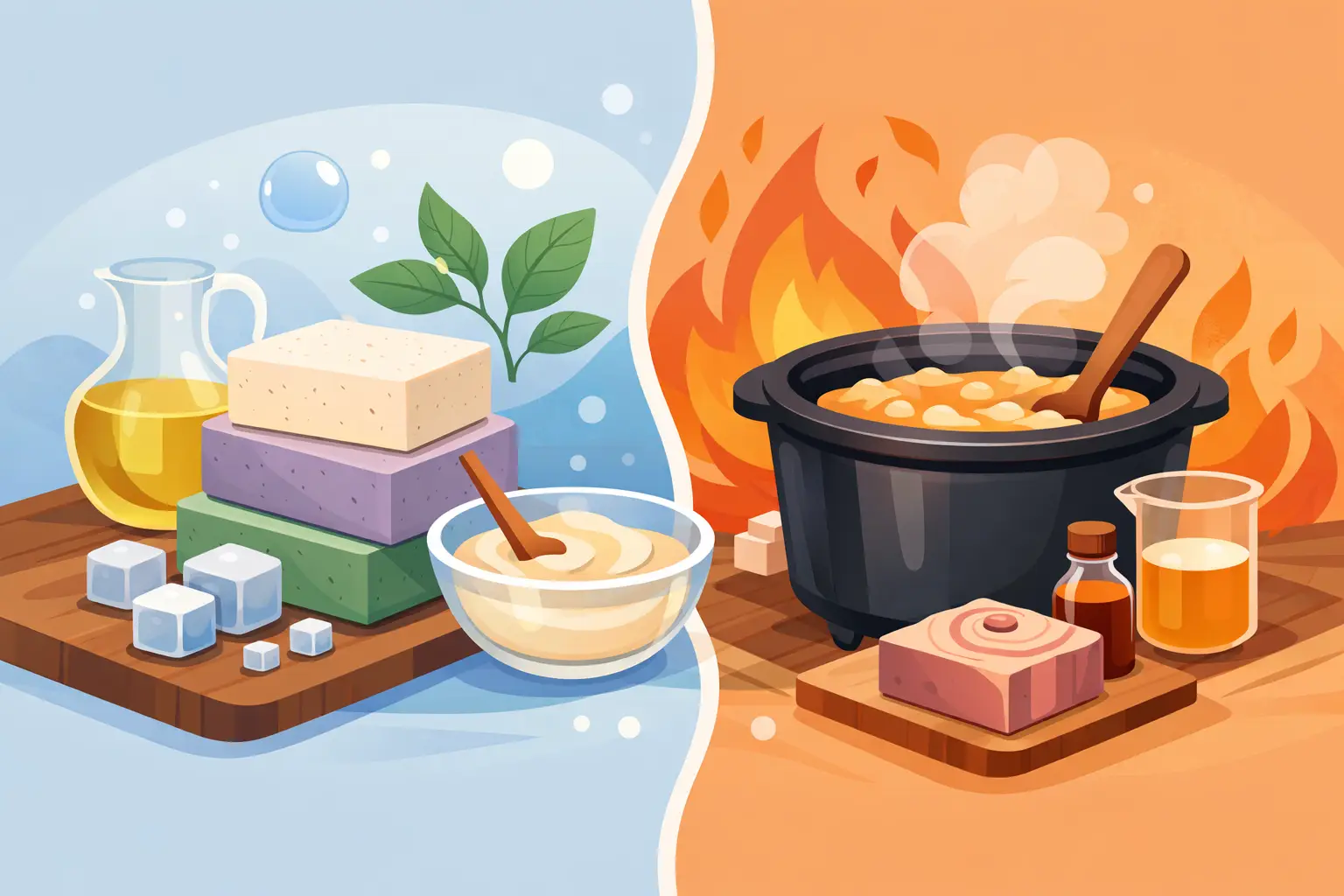
Both methods combine oils or fats with a lye solution to create true soap through saponification. That part stays the same. The split happens in how much heat is used and when the soap finishes that reaction.
Cold process soap is made by blending oils and lye, then pouring the mixture into a mould while it is still fluid. The soap continues to saponify in the mould and over the next day or so, then cures for several weeks. That long cure is not wasted time. It allows water to evaporate, creating a harder, longer-lasting bar with a more refined feel.
Hot process soap goes through the same starting point, but the batter is then cooked. Heat speeds up saponification before the soap is spooned into the mould. Because the reaction is more complete at that stage, the bar can often be used sooner. It still benefits from drying time, but the waiting period is usually shorter.
That sounds like a small technical detail. It is not. It affects nearly everything you notice when you use the bar.
Why the method changes the finished soap
Cold process bars tend to have a smoother finish and a more elegant appearance. Swirls hold well. Layers stay distinct. The texture is usually cleaner and more uniform. For artisan soapmakers, this method offers more control over detail and design.
Hot process bars often look more rustic. The cooked soap thickens quickly, so it is harder to create delicate patterns or a perfectly smooth surface. Some people love that homespun look. It speaks to old-world craft. Others prefer the polished look of cold process.
The feel on skin can differ too, though not always in a dramatic way. A well-made bar from either method can cleanse beautifully. But cold process soap often feels a little more refined in daily use, particularly after a full cure. The lather can be creamier, the bar firmer, and the experience more luxurious.
That matters if you are washing frequently or if your skin runs dry, reactive, or tight after cleansing.
Cold process soap and sensitive skin
For people with eczema-prone, dry, or easily irritated skin, ingredient quality matters first. Method comes just behind it. A poor formula is still a poor formula, no matter how it is made. But when the ingredients are carefully chosen, cold process offers clear strengths.
Because the soap is not force-cooked to finish, the maker has more flexibility in crafting a balanced, gentle bar with a thoughtful superfat level. That means a portion of nourishing oils or fats remains unsaponified in the final soap, helping soften the cleansing feel.
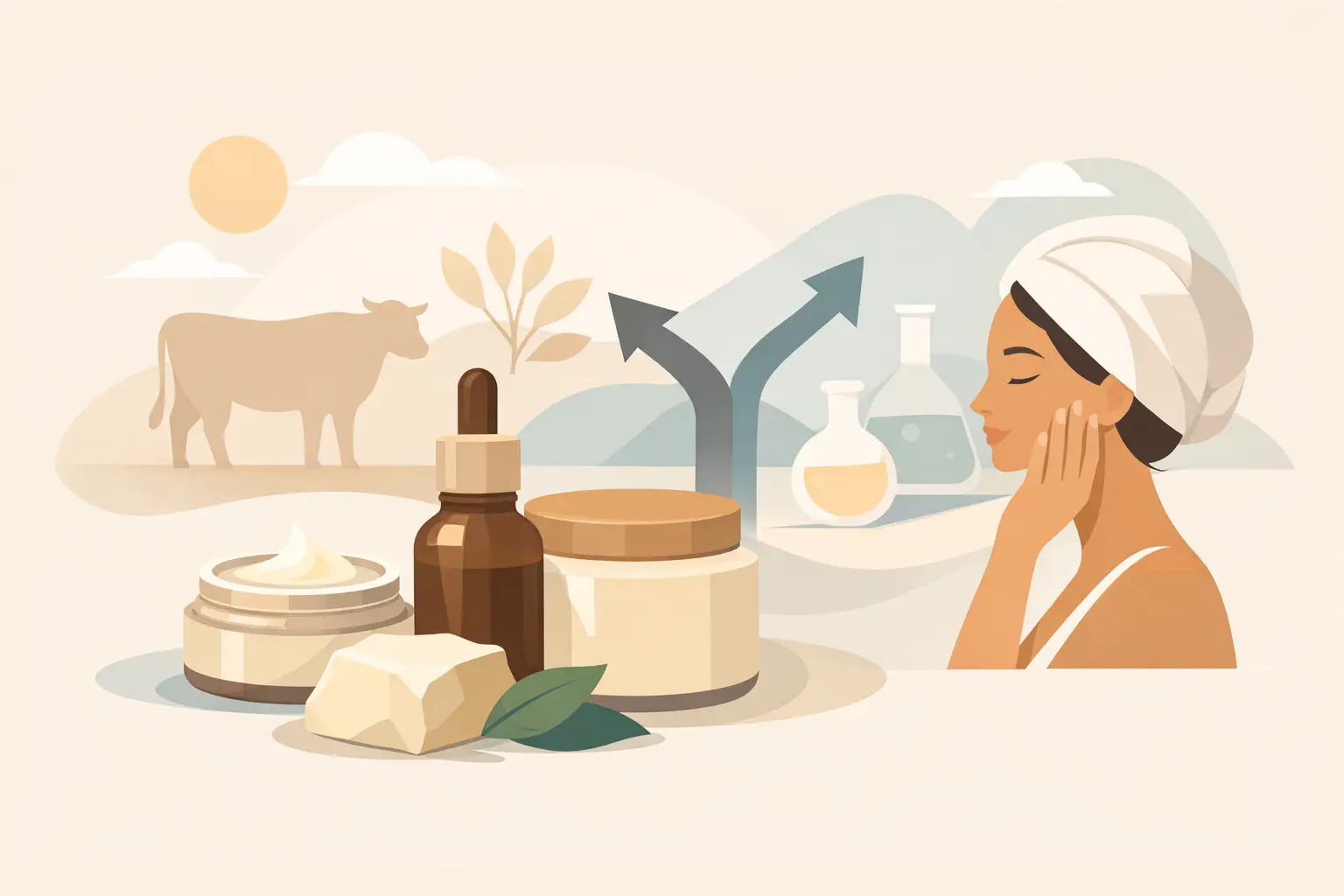
This is one reason traditional cold-process tallow soap has earned such lasting loyalty. Tallow creates a hard, creamy bar with a stable lather and a skin feel that many people describe as comfortable rather than stripping. For real skin – the dry kind, the unpredictable kind, the skin that flares when faced with harsh cleansers – that comfort is not a luxury. It is the whole point.
A long cure also helps. As water evaporates and the bar matures, the soap becomes milder in use and lasts longer at the sink or bath. Patience improves the product.
Where hot process soap has the edge
Hot process is not a lesser method. It simply serves a different purpose.
Its main advantage is speed. Because cooking pushes saponification along, the soap can be ready much sooner than cold process. For small makers testing batches, creating practical household bars, or working with simpler rustic formulas, that can be useful.
Some makers also like hot process because fragrance and certain additives can be introduced after most of the lye reaction is complete. In some cases, that may help preserve the character of more delicate ingredients. Even then, results vary. Heat can be helpful in one formula and less ideal in another.
Hot process can also produce excellent cleansing bars for kitchen use, utility washing, or customers who value function over finish. If your priority is a straightforward, hardworking bar rather than intricate design, it makes sense.
So when people ask which is better, the honest answer is the one that suits the purpose best.
Cold process vs hot process soap for appearance, lather and longevity
This is where everyday users notice the difference fastest.
Cold process soap usually wins on visual finish. If you are buying a premium artisan bar as part of your self-care routine or as a gift, that matters. A smooth, well-cured bar feels considered. It looks beautiful on the basin and pleasant in the hand.
In lather, both methods can perform well, but formula matters more than process alone. Tallow, olive oil, coconut oil, castor oil, goat milk, clays and botanicals all influence the final result. Still, cold process bars often develop a more balanced, creamy lather over time because of their longer cure.
On longevity, cold process again tends to come out ahead, especially when the bar has been cured properly. Harder bars generally dissolve more slowly and hold up better between uses. That is good for value and better for reducing waste.
Hot process soap can be perfectly durable, but if it is made with a softer formula or sold too fresh, it may wear down faster. That is not a rule. It is simply common enough to be worth knowing.
The ingredient question matters more than the trend
There is a tendency in skincare to chase the newest format, scent or story. Handmade soap deserves a slower lens. Ask what is in the bar. Ask how it is sourced. Ask whether the maker understands skin, not just aesthetics.
A cold process soap made with low-grade oils and heavy fragrance will not suddenly become gentle because the method sounds traditional. In the same way, a hot process soap made with excellent fats and care can still be a very good bar.
For many people, especially those choosing soap for children, partners, or stressed skin, the best place to look is the full picture. Consider the fat base, the cure time, the presence of irritating additives, and whether the maker is transparent about the process.
That is where traditional, small-batch soapmaking stands apart. A maker who renders tallow in-house, sources locally, and cures bars properly is making decisions that affect quality long before the soap reaches your bathroom shelf.
Which one should you choose?
If you want a bar for daily bathing, facial cleansing for tolerant skin types, or a gift that feels beautiful and premium, cold process is often the better fit. It offers a smoother finish, a more polished feel, and excellent potential for a mild, skin-supportive bar when paired with the right ingredients.
If you want a practical soap quickly, enjoy a rustic handmade look, or need a hardworking bar for household use, hot process may be exactly right. It is especially useful where speed and simplicity matter more than fine detail.
For sensitive or dry skin, many people prefer a well-formulated cold process bar, particularly one built around nourishing fats such as tallow and allowed to cure fully. That combination tends to offer the firmness, creamy lather and gentle cleanse people are looking for.
At Luna Natural Soap Co., this is why traditional cold-process methods remain central to our approach. They suit the ingredients we believe in, the slower standards we keep, and the real skin concerns our customers bring to us.
A final word on tradition and trust
The cold process vs hot process soap question is worth asking, but it is not really about picking sides. It is about understanding what kind of bar you are bringing into your home.
Good soap should do more than cleanse. It should feel honest. It should reflect care in the ingredients, patience in the process, and respect for the skin it is made for. If a bar leaves your skin calm, comfortable, and ready for the day ahead, that is usually a sign you have chosen well.