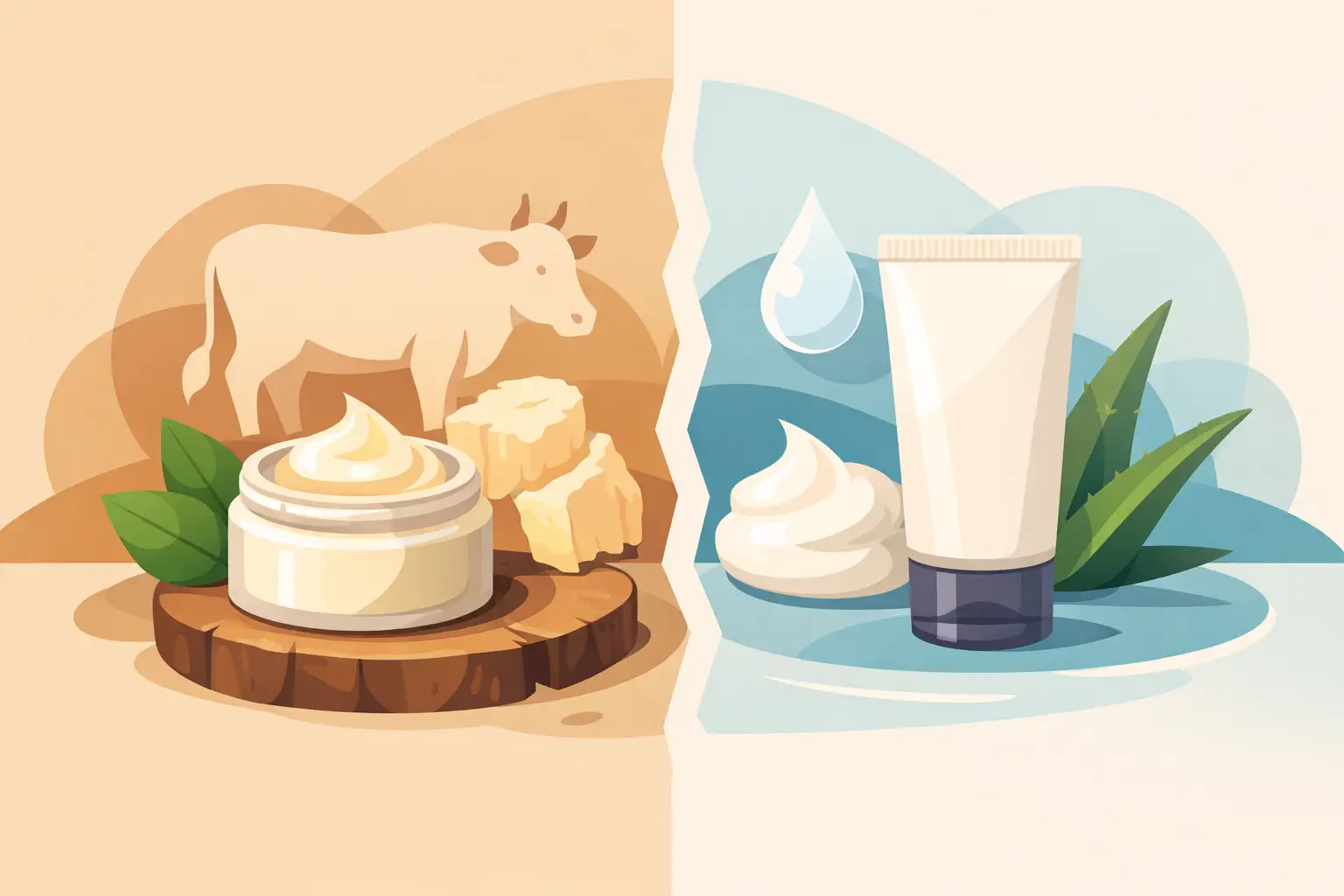



If you have ever picked up a handmade bar and wondered why one soap feels dense, creamy and long-lasting while another is bright, decorative and quick to make, you are already asking the right question. Cold process vs melt and pour is not just a maker’s debate. It affects ingredients, skin feel, bar quality, and whether a soap suits dry or sensitive skin.
For anyone trying to choose more carefully – especially for real skin concerns, family use, or lower-waste living – the method matters. Not because one is always better, but because they do different jobs.
Cold process vs melt and pour: what is the actual difference?
Cold process soap is made from scratch. Oils and fats are combined with a lye solution, and saponification turns those raw ingredients into true soap. Once poured into a mould, the bar hardens over a day or two, then cures for several weeks so excess water can evaporate and the bar becomes milder and firmer.
Melt and pour starts with a pre-made soap base. That base has already gone through saponification before the maker buys it. To make a bar, the base is melted, colour, scent or extras may be added, and then it is poured into a mould to set.
That single difference changes almost everything. With cold process, the soapmaker controls the full formula from the very beginning. With melt and pour, the maker is working from someone else’s finished base.
Why the process matters for skin
When people shop for natural soap, they often focus on the ingredient list first. That makes sense. But the process behind the bar tells you a great deal about how those ingredients behave.
In cold process soapmaking, the maker chooses each fat or oil for a reason. Tallow, olive oil, coconut oil, castor oil or shea butter each bring different qualities to the finished bar – hardness, lather, gentleness, conditioning. There is also control over superfatting, which means keeping a measured portion of nourishing oils unsaponified in the bar. For dry or compromised skin, that matters.
Melt and pour can still be pleasant to use, but the skin feel depends heavily on the base selected by the manufacturer. Some bases include added humectants such as glycerine, which can feel lovely and give that translucent look many people recognise. Others may contain detergents, stabilisers, or synthetic additives to improve melting, clarity, shelf life or performance.
That does not make melt and pour inherently poor quality. It simply means the maker has less control, and the customer often gets less transparency.
Ingredient control and transparency
For customers who read labels carefully, this is usually where the gap becomes clear.
A traditional cold process maker can tell you exactly what went into the bar and why. If a soap is made with grass-fed tallow, goat milk, oats or botanicals, those choices are part of the original formulation rather than decorative additions stirred into a ready-made base. That level of control is especially valuable for people avoiding unnecessary fragrance, harsh surfactants or ingredients that can aggravate delicate skin.
With melt and pour, the ingredient list begins with the base itself. Even when the final bar is handmade, the foundation may include ingredients the individual maker did not create and cannot alter. If you are buying for eczema-prone, reactive or very dry skin, that distinction is worth paying attention to.
The look and feel of the finished bar
Melt and pour has a visual charm of its own. It is ideal for bright colours, embedded shapes, layered designs and translucent bars. It sets quickly and gives a polished appearance with relatively little waiting time. That is one reason it is popular for hobbyists, gifts and decorative soaps.
Cold process has a more grounded beauty. The finish is often creamier, more matte, and more artisanal. Natural clays, botanicals and milks behave differently in this method, creating bars that look handmade in the best sense – honest, tactile, and full of character.
The feel in use can be different too. A well-formulated cold process bar tends to feel richer and more substantial in the hand. It often produces a dense, creamy lather rather than a light, quick foam. For everyday washing, especially in colder weather or hard water areas, many people notice that difference immediately.
Curing time, longevity and value
One of the biggest trade-offs in cold process soapmaking is patience. Proper cold process soap needs time to cure, often four to six weeks, sometimes longer. That is not wasted time. During curing, water evaporates, the bar hardens, and the soap becomes milder and longer-lasting.
Melt and pour is fast. Once it cools and hardens, it is ready to use. For makers, that speed is convenient. For customers, though, speed does not always mean better value.
A well-cured cold process bar is usually firmer and can last longer in the shower, provided it is stored dry between uses. Melt and pour bars often contain more added glycerine and can attract moisture from the air, a feature known as sweating. In a damp bathroom, they may soften more quickly.
So if you are comparing the shelf price alone, you may miss part of the picture. A slower-made bar can still be the better buy if it lasts well and supports the skin more comfortably.
Cold process vs melt and pour for sensitive skin
This is where nuance matters. Not every cold process soap is gentle, and not every melt and pour bar is irritating. The formula still counts.
That said, cold process gives a skilled maker more room to build a bar specifically for sensitive skin. They can choose skin-compatible fats, avoid aggressive cleansing profiles, use minimal fragrance, and formulate for a balanced, creamy wash. Tallow is especially valued here because its fatty acid profile is remarkably compatible with the skin barrier. It creates a hard, long-lasting bar with a rich lather and a calm, conditioned after-feel.
For someone dealing with dryness, tightness or skin that flares easily, that formulation freedom is meaningful. It allows soap to be made with purpose rather than decoration as the main event.
Melt and pour can suit some people perfectly well, particularly if they want a simple hand soap or a novelty gift bar. But for ongoing facial or body use on troubled skin, many customers prefer the simplicity and integrity of a carefully formulated cold process bar.
Craftsmanship, sustainability and what you are really buying
When you buy cold process soap from a traditional maker, you are often paying for more than a finished product. You are paying for formulation knowledge, ingredient sourcing, curing time, small-batch production and a method that cannot be rushed.
That matters for sustainability too. Brands that make soap from scratch can make deliberate choices around local ingredients, lower-waste production, plastic-free packaging and circular use of raw materials. When those values are built into the process, they are not simply added as a marketing layer.
Melt and pour can still be handmade, and there is room for creativity in that craft. But it does not offer the same level of ingredient sovereignty or process transparency. For customers who care about regenerative farming, traditional methods and knowing what touches their skin, cold process often feels more aligned.
At Luna Natural Soap Co., that is exactly why we work with traditional cold process methods and slow-rendered tallow. It gives us full control over what goes into each bar and what stays out.
Which should you choose?
If you want decorative soap, quick results, or a playful gift, melt and pour has its place. It is accessible, versatile and visually striking.
If you want a soap made from the ground up, with thoughtful fats, a proper cure, and a formula built around skin comfort, cold process is usually the stronger choice. That is particularly true for adults and families trying to move away from harsh cleansers, unnecessary additives and throwaway bathroom products.
The best choice depends on what you value most. Appearance, speed and novelty point one way. Ingredient control, traditional craftsmanship and skin-first formulation point the other.
For many people, especially those with dry or sensitive skin, that answer becomes quite simple once they have used both. A bar that is slower to make but kinder to live with is often the one they return to.
Soap should not feel complicated. It should feel honest, nourishing and worth keeping by the sink or in the shower every single day. When you understand the method, choosing the right bar gets easier – and your skin usually tells you the rest.