

That forgotten bar at the back of the bathroom cupboard probably will still wash your hands. The better question is whether it will still feel good on your skin.
Bar soap does change over time. It can lose scent, harden, fade in colour, or become less pleasant to use. But unlike many liquid products, it does not usually “go off” in a dramatic way. A well-made bar often lasts far longer than people expect, especially if it has been kept cool and dry.
Does bar soap expire over time or just get old?
The short answer is yes, bar soap can expire over time, but expiry does not always mean unsafe. More often, it means the bar is past its best.
Traditional soap is made through saponification, where fats and oils react with lye to create soap. Once that process is complete, there is not much free water left in a properly cured bar, and that matters. Less water means a less friendly environment for spoilage than you would find in many creams, washes, or lotions.
That said, not all bars age in the same way. A mass-produced bar with synthetic fragrance and stabilisers may sit on a shelf for years with little obvious change. A natural handmade bar made with rich fats, botanicals, clays, milk, or essential oils may be more sensitive to heat, humidity, and time. That is not a flaw. It is often the trade-off of using simpler ingredients and traditional methods.
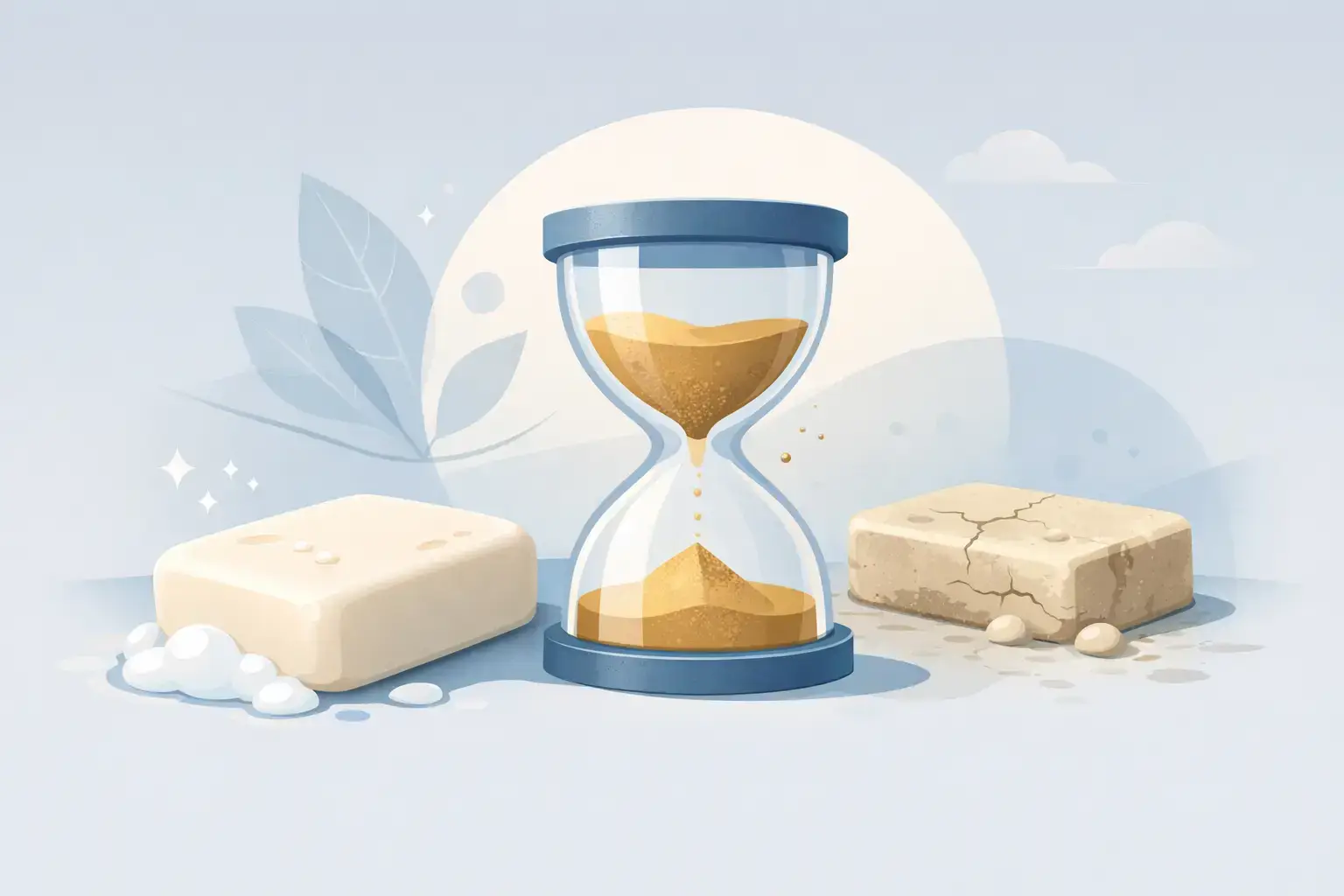
If a bar is old, the main changes tend to be sensory. The scent softens. The lather may feel different. The bar can become very hard, or in some cases develop orange spots if some oils have oxidised. It may still cleanse, but the experience is no longer the one the maker intended.
How long does bar soap actually last?
A typical bar soap can remain usable for years if stored well, but its best-use window is usually shorter.
For many handmade natural soaps, using the bar within 12 to 24 months is a sensible guide. That gives you the best chance of enjoying the full scent, texture, and skin feel. Some bars may stay lovely beyond that, particularly those made with stable fats and cured properly. Others, especially bars with delicate essential oils or fresh additives, may show their age sooner.
This is one reason small-batch soap has a different feel from factory-made products. It is crafted for quality and skin comfort, not engineered for the longest possible warehouse life. For customers who choose natural bars because they want gentle cleansing, fewer synthetic additives, and a more honest ingredient list, that trade-off usually makes sense.
Signs a bar soap is past its best
If you are wondering whether to keep using an old bar, trust your senses.
A faded scent on its own is not usually a problem. Essential oils and natural fragrances are volatile, so they tend to soften over time. A bar that smells weaker than it once did may still be perfectly fine.
Texture matters more. If the soap has become extremely dry and brittle, it may crumble rather than lather well. If it feels oddly sticky despite being stored dry, that can be a sign something is off. Discolouration is also worth noticing. Natural bars can darken or mellow with age, which is normal. But bright orange spots, often called rancidity spots, suggest some oils have oxidised.
Then there is smell. A stale, sour, or distinctly unpleasant odour is a good reason to let the bar go. Soap should smell clean, mild, herbal, earthy, or unscented depending on the formula. It should not smell spoiled.
Visible mould is less common on a properly made bar soap than people assume, but it can happen if a bar is left sitting in water or stored in a damp spot for long periods. If you see fuzzy growth or anything that looks truly suspect, do not try to rescue it.
Why natural bars can change faster
This is where ingredient quality and formulation matter.
Handcrafted bars made with nourishing fats and minimal synthetic stabilisers often offer a gentler, more skin-supportive cleanse. They can be a very good choice for dry, sensitive, or eczema-prone skin because they avoid the stripped, tight feeling some detergents leave behind. But natural ingredients are still real ingredients. Essential oils evaporate. Botanicals fade. Unsaturated oils are more prone to oxidation than highly processed alternatives.
Tallow-based soaps are often especially stable because well-rendered tallow is a firm, balanced fat that creates a hard bar with a rich lather. It also tends to age gracefully when handled properly. That is one reason traditional soapmakers have relied on it for generations. The bar stays solid, lasts well in use, and can remain beautifully practical without chasing trends.
Even so, storage still matters. A beautifully formulated bar can be shortened by steam, direct sunlight, or a soggy soap dish.
Does bar soap expire over time if it has already been opened?
Opened bars usually age faster, but not because they have touched the air once or twice. The real issue is repeated exposure to water and humidity.
Every time a bar sits in a puddle or stays in a steamy shower corner, it softens a little. Over time that affects texture, scent, and lifespan. This is not the same as an unopened bar resting in a cupboard. So if you are comparing a spare bar stored in its box with one that has been in daily use for six months, the used one will nearly always feel older.
For family bathrooms, this is worth keeping in mind. A good soap dish with drainage makes a real difference. So does storing spare bars somewhere cool and dry rather than beside the bath.
How to store bar soap properly
Soap likes simple conditions. Keep spare bars in a cool, dry cupboard away from direct sunlight and strong heat. If the bar came in a breathable cardboard box, that is often a good place for it. Airtight plastic is not always ideal for long periods, especially if any moisture is trapped.
Once a bar is in use, let it dry between washes. A draining dish or soap ladder helps the bar stay firm and last longer. If you buy several bars at once, rotate them sensibly instead of opening everything at the same time.
This approach is practical, but it also protects the quality you paid for. A carefully made artisan bar is meant to be used and enjoyed, not left to sweat on a windowsill.
Is expired bar soap bad for your skin?
Sometimes yes, sometimes no. It depends on what “expired” looks like.
A bar that is simply older, drier, and less fragrant is not necessarily harmful. It may just be less enjoyable. But if oils have gone rancid, or the bar smells odd, or it has been stored badly and looks contaminated, it is not worth the risk, especially for sensitive skin.
People with dry or reactive skin often notice subtle changes quickly. A bar that once felt creamy and calm may start to feel harsher if its balance has shifted with age. That does not mean old soap is toxic. It means the skin experience may no longer be as gentle as intended.
If you are using natural soap to support a compromised skin barrier, freshness matters more. This is one of those areas where “still usable” and “worth using on delicate skin” are not always the same thing.
When to replace a bar instead of finishing it
If the soap still smells normal, looks clean, and performs well, there is usually no reason to waste it. But there are moments when replacing it is the wiser choice.
If the scent has turned unpleasant, if orange spots are spreading, if the bar has visible mould, or if it suddenly irritates your skin, stop using it. The same goes for bars stored in damp conditions for a very long time. Saving a few pounds is not worth an unhappy skin flare.
For many households, the easiest habit is to buy a sensible amount, store bars well, and use them within a year or so. That keeps your soap in its sweet spot – firm, fragrant, and kind to skin.
A good bar soap is made to last, but it is also made to be used. If you choose traditional, thoughtfully formulated bars, use them while they are fresh enough to show their best qualities. Your skin will notice the difference. If you are looking for small-batch, traditionally crafted options, Luna Natural Soap Co. shares the same belief at https://Www.lunasoap.ie.