

If your hands sting after washing, the problem is often not handwashing itself. It is how often you wash, how hot the water is, how long the lather sits on the skin, and what is left behind afterwards. A thoughtful eczema handwashing routine with bar soap can make a noticeable difference, especially when your skin already feels tight, flaky or prone to cracking.
For eczema-prone hands, every wash is a balancing act. You need clean hands. You also need to protect a skin barrier that is already under strain. That is why the best routine is rarely the most aggressive one. It is the gentlest effective approach, done consistently.
Why handwashing so often triggers eczema
Hands do hard work. They meet water, weather, cleaning products, paperwork, hand sanitiser, washing-up liquid and constant friction. For skin with eczema, that repeated exposure can wear down the barrier quickly.
When the barrier is weakened, water escapes more easily and irritants get in faster. The result can be dryness, itching, redness and those small splits around knuckles and fingertips that seem to appear overnight. Soap can either help keep this under control or push skin further into distress, depending on the formula and the way it is used.
This is where people often get stuck. They assume all bar soap is harsh, or that only liquid cleansers are suitable. In reality, it depends on the bar, the ingredients and the full routine around it. A well-made bar with skin-compatible fats and a simple ingredient list can feel very different from a heavily fragranced, detergent-led product.
Building an eczema handwashing routine with bar soap
The routine itself should be simple enough to repeat every day. If it is fussy, it will not survive a busy household, nursery run or workday.
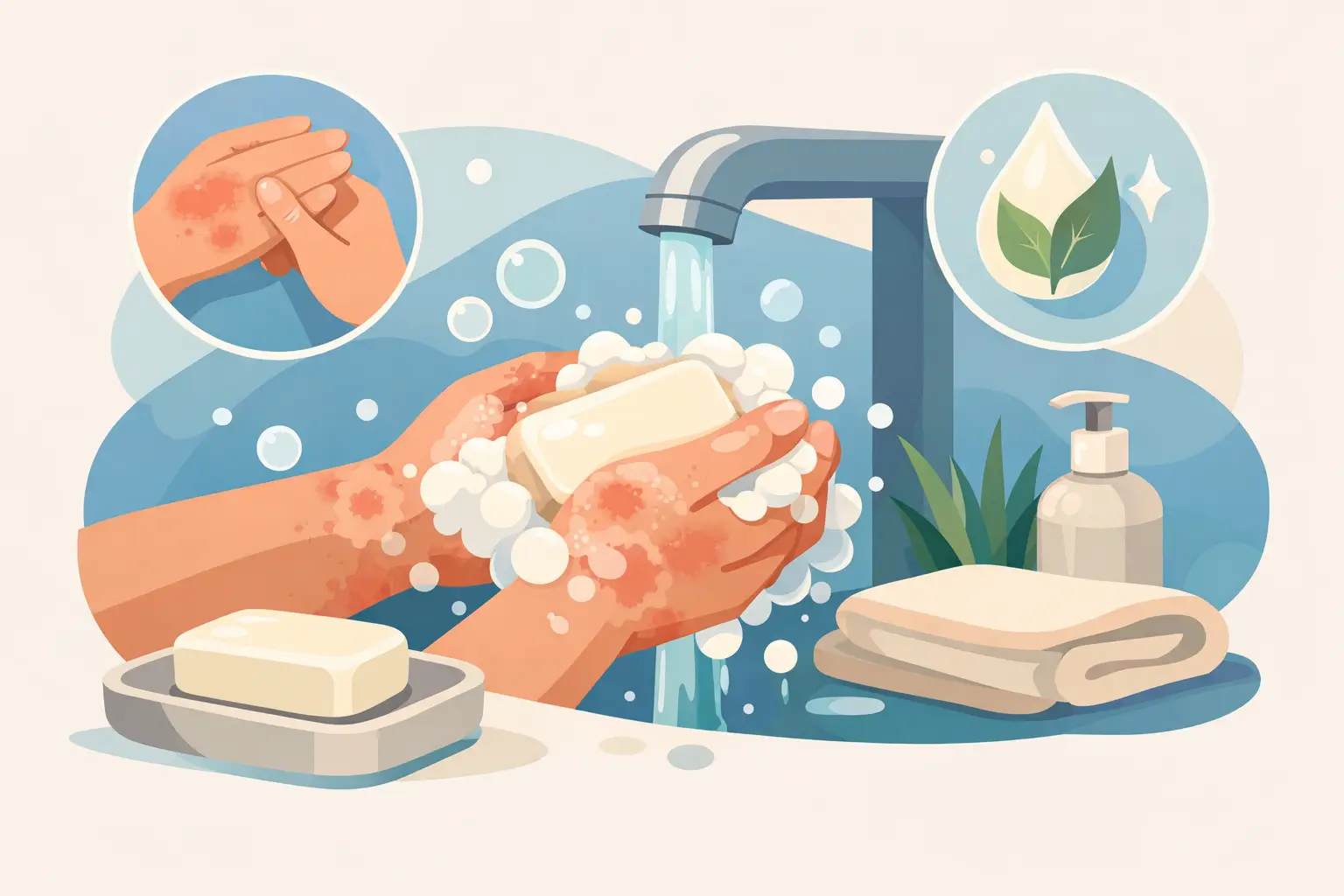
Start with lukewarm water, not hot. Hot water feels satisfying in the moment, but it strips the skin faster and can leave hands more inflamed afterwards. Wet the hands briefly, then work the bar between your palms just enough to create a light lather. You do not need a thick foam for the wash to be effective.
Clean for around 20 seconds, focusing on palms, backs of hands, between fingers and around nails. If your skin is very sore, keep the pressure light. Scrubbing will not improve hygiene, but it can worsen irritation.
Rinse thoroughly so no residue remains. Then pat your hands dry with a soft towel. Patting matters. Rubbing creates extra friction, and eczema-prone skin rarely benefits from more of that.
The final step is the one most people skip when they are in a rush – apply a rich, plain moisturiser straight away while the skin is still slightly damp. This helps trap water in the upper layers of the skin and supports barrier recovery after each wash.
Choosing the right bar soap for eczema-prone hands
Not every natural bar is automatically gentle, and not every unscented bar is automatically soothing. Ingredient quality matters, but so does the fat profile of the soap and the way it is made.
Bars made with nourishing fats such as tallow tend to suit dry, easily irritated skin because they cleanse without that squeaky, stripped feeling. Traditional cold-process soapmaking can also help preserve the character of the ingredients, which often translates to a creamier, more cushioned wash.
For eczema-prone hands, simpler is usually better. Look for bars without aggressive fragrance, strong essential oil blends or exfoliating additions that can catch on broken skin. Oatmeal can be comforting in the right formula, but if your hands are actively cracked, even a mild texture may feel too much. In flare-prone periods, a plain, creamy bar is often the safer choice.
This is also where handcrafted soap can stand apart from mass-market bars. A carefully formulated artisan bar is often made with the skin experience in mind, not simply the lowest production cost. At Luna Natural Soap Co., that focus on traditional methods, in-house rendered tallow and small-batch formulation reflects a slower, more considered approach to cleansing for real skin.
What to avoid in your routine
Sometimes the biggest improvement comes from removing the habits that keep aggravating your hands.
Very hot water is a common culprit. So is washing for longer than necessary, especially when anxiety around germs creeps in. You need proper hand hygiene, of course, but prolonged washing is rarely kinder or more effective.
Another issue is switching constantly between soap and alcohol sanitiser. Sanitiser has its place when soap and water are not available, but repeated use can be punishing on eczema-prone skin. If you are at home, or near a sink, washing with a gentle bar and moisturising afterwards is often the steadier option.
Be cautious with household jobs too. If you wash your hands carefully and then spend twenty minutes with washing-up liquid or bathroom cleaner, the benefits disappear quickly. Gloves for wet work are not glamorous, but they are often essential.
How often should you wash if you have hand eczema?
This is where nuance matters. Washing less is not the answer if your hands genuinely need cleaning. The goal is not fewer necessary washes. It is fewer unnecessary ones, and better recovery after each one.
Wash after using the loo, before eating or preparing food, after coming home, after handling rubbish, and whenever your hands are visibly dirty. Outside of that, pause before washing out of habit alone. If your hands are not soiled and you have already washed recently, another full wash may not be needed.
For people with active hand eczema, frequency can tip the balance. Ten gentle washes with proper moisturising may still be easier on the skin than five harsh ones with no aftercare. Technique and product choice count for a great deal.
The best time to repair the skin barrier
Daytime handwashing is about damage limitation. Evening care is where repair can really begin.
After the final wash of the day, apply a thicker layer of moisturiser or balm than you would use in the morning. Pay attention to fingertips, cuticles and knuckles. These areas dry first and heal slowest. If your skin is very cracked, cotton gloves overnight can help keep the product in place and reduce moisture loss.
This part of the routine is especially useful in winter, during allergy seasons, or whenever central heating is on full blast. Cold air outside and dry indoor heat can make eczema-prone hands feel perpetually one step behind.
When bar soap works well – and when it may not
A good bar soap can be a strong choice for eczema-prone hands if it is mild, well-formulated and followed by moisturiser. It is practical, long-lasting and often a better fit for people trying to reduce plastic in the bathroom without compromising on skin comfort.
That said, there are times when even gentle soap may sting. If your hands are weeping, bleeding or extremely inflamed, almost any cleanser can feel uncomfortable. In those moments, you may need to shorten contact time further, simplify every other product in your routine, and speak to a pharmacist or GP if symptoms are not settling.
There is also the question of fragrance. Some people with eczema tolerate lightly scented natural soap perfectly well. Others do better with no added scent at all. Skin can be particular. The right choice is the one your hands can live with consistently.
A routine that is gentle enough to keep
The most effective eczema handwashing routine with bar soap is not complicated. Use lukewarm water. Choose a gentle, well-crafted bar. Keep washing brief but thorough. Pat dry. Moisturise every time. Protect your hands during wet work. Repeat without overdoing it.
Small changes matter here because hand eczema is often shaped by repetition. A harsh routine repeated daily will show up on the skin. So will a kind one.
If your hands are asking for less stripping and more support, listen to them. Good cleansing should leave you feeling clean, not punished.