

A beautiful herbal bar should do more than look at home beside the basin. This guide to herbal soap ingredients helps you read beyond the petals and perfume, so you can choose a bar that cleanses kindly, feels good in use and suits the skin you live in.
Herbal soap is often presented as a simple thing: natural oils, plants and a little scent. The truth is more interesting. Every ingredient has a job, from the fats that create a firm, creamy lather to the botanicals that bring colour, character and a sense of ritual. For dry or sensitive skin, the base of the bar matters more than the prettiest topping.
Start with the soap base
True soap is made when oils or fats are combined with sodium hydroxide, often called lye. During traditional cold-process soapmaking, this reaction is called saponification. When the recipe is properly formulated and cured, the sodium hydroxide has transformed the fats into soap and natural glycerine.
Natural glycerine is one reason a well-made bar can feel so comfortable to use. It is created during soapmaking and remains in the bar, helping it attract moisture. A long cure also matters. It allows excess water to evaporate, giving the soap a firmer texture, a longer life and a more settled lather.
The choice of fats determines much of the bar’s performance. Some oils produce abundant bubbles but can feel more cleansing. Others give density, creaminess and a softer finish on the skin. There is no single perfect recipe. A thoughtful balance is what counts.
Tallow: a traditional foundation for gentle bars
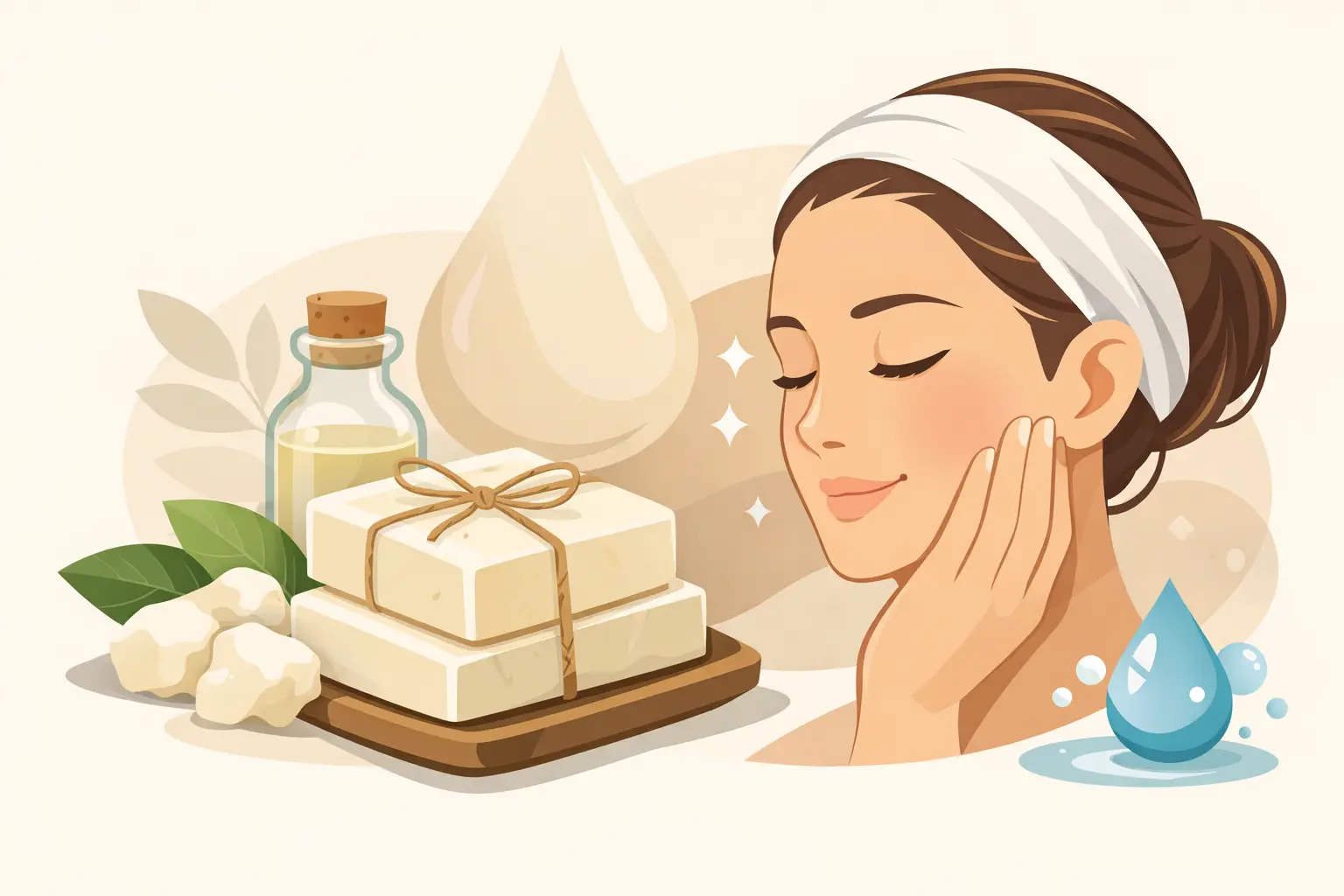
Grass-fed tallow has been used in soap for generations, and for good reason. It creates a firm, long-lasting bar with a rich, creamy lather rather than a large, fleeting foam. Its fatty-acid profile is close to that of our own skin oils, which makes it a particularly considered choice for skin that feels dry, tight or easily unsettled after washing.
At Luna Natural Soap Co., tallow is slowly rendered in-house from locally sourced, grass-fed animals. This approach gives real visibility over an ingredient that is often overlooked. It also makes practical use of a material that might otherwise go to waste, honouring the animal and supporting a more circular way of making.
Tallow is naturally associated with vitamins A, D, E, K and B12. In a rinse-off soap, it is best understood as part of a nourishing, skin-compatible recipe rather than a miracle treatment. What you will notice most is the quality of the lather: substantial, gentle and satisfying.
Plant oils and butters: balance, not buzzwords
Olive oil is valued for its mildness and silky feel. Coconut oil contributes cleansing power and bubbly lather, but too much can feel stripping for some skin types. Castor oil is often used in a small amount to support a stable, creamy foam. Butters such as shea can add a luxurious feel, though a bar still needs a balanced formula to remain firm and rinse cleanly.
A long ingredient list does not automatically mean better soap. In fact, a simple recipe made with well-chosen fats and enough curing time can be the most reassuring option for a minimal routine. If your skin is reactive, fewer moving parts can make it easier to understand what agrees with you.
A guide to herbal soap ingredients that earn their place
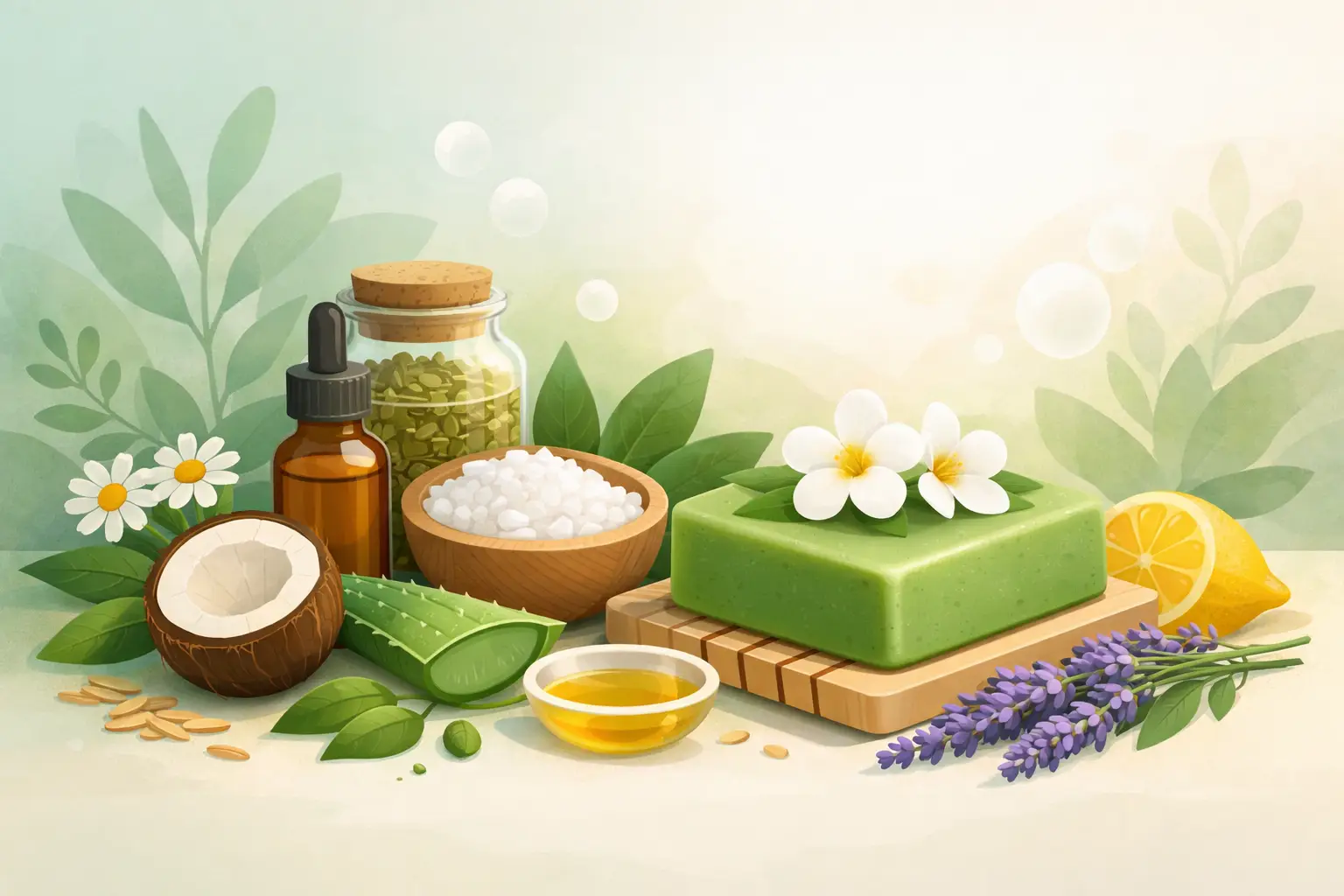
The word “herbal” can mean several things. A maker may infuse dried plants into oil, add powdered botanicals to the soap batter, use whole leaves or flowers as decoration, or build a scent blend with essential oils. These methods create very different results.
Herbal infusions
An oil infusion is made by steeping dried plant material in oil before soapmaking. Calendula is a classic example. Known for its warm golden colour and gentle reputation, it brings a thoughtful, soothing character to a bar intended for delicate-feeling skin. Chamomile and lavender are also commonly infused for their familiar, calming associations.
Infused oils are a lovely expression of craft, but expectations should stay grounded. Soap is washed away, and the high-pH soapmaking process differs from a leave-on balm or oil. The benefit lies in the whole formulation and the experience of gentle daily cleansing, not in exaggerated claims about a single plant.
Powders, clays and grains
Ground herbs, spices and clays can add colour, slip or gentle texture. Alkanet root can create muted violet tones, while spirulina may lend a soft green. French green clay gives a mineral-rich feel and can help create a bar that feels fresh and thoroughly cleansing. For oily skin, that can be appealing. For skin that is very dry, a creamy tallow-led formula without too much clay may feel more comfortable.
Oatmeal deserves special mention. Finely ground oats bring a soft, comforting texture and are a natural fit for a simple, fragrance-light bar. They are not merely decorative. When milled finely, they can make washing feel less abrasive than soaps containing larger exfoliating particles.
Whole botanicals: lovely, but mostly visual
Dried rose petals, lavender buds and cornflowers make a bar feel special, especially as a gift. Yet whole plants sitting on the surface do not necessarily improve how the soap performs. They may darken with time, catch in the washcloth or become scratchy if used too generously.
A well-made herbal soap treats decoration with restraint. The bar should be a pleasure to hold and use, not something you have to work around. For everyday family use, smooth bars or those made with finely ground botanicals are often the practical choice.
Essential oils: scent with care
Essential oils can give herbal soap its recognisable fragrance. Peppermint feels bright and cooling; lavender is gentle and floral; rosemary has a clean, green character. Used responsibly, they turn a small daily task into a moment of care.
Natural does not mean suitable for everyone, however. Essential oils are concentrated substances and can irritate sensitive skin, particularly when a bar is heavily scented or used often. If you are prone to eczema, fragrance sensitivity or unexplained flare-ups, an unscented or lightly scented bar is usually the sensible starting point. Patch testing a new product is wise, and persistent skin concerns deserve advice from a qualified healthcare professional.
How to read a herbal soap label
Ingredient labels can appear intimidating because cosmetic ingredients are usually listed using recognised INCI names. You do not need to memorise every Latin term. Look first for clarity and purpose. A transparent maker should be able to tell you what the main fats are, how the soap is scented and which botanicals are genuinely part of the recipe.
When comparing bars, consider these four details:
- The first ingredients: These usually reveal the main soap base. Look for a clear balance of fats rather than vague wording.
- Fragrance: “Parfum” can be appropriate, but people with sensitive skin may prefer to know whether the scent comes from essential oils, fragrance oils or no added fragrance at all.
- Exfoliants: Poppy seeds, coffee and coarse herbs can be enjoyable on hands or feet, yet may be too abrasive for the face or compromised skin.
- Colour and decoration: Plant-based colour is beautiful, but it can fade. That is not a failure. It is often simply the honest nature of botanical ingredients.
Also consider how the bar is packaged and made. Plastic-free packaging reduces unnecessary waste, while a carefully cured, handmade soap generally lasts longer when kept dry between uses. A draining soap dish is a small change that protects both the bar and your budget.
Choose the bar for your skin, not the trend
If your skin feels dry after showering, begin with a simple tallow soap with a creamy lather and modest fragrance. If you enjoy an energising morning wash and your skin tolerates scent well, an herbal mint bar may be a pleasure. For hands that work hard in the garden or kitchen, a lightly exfoliating bar can be useful, but keep a gentler option by the sink for frequent washing.
The same applies when buying for someone else. A strongly scented floral bar may look generous, but a mild, beautifully wrapped soap with a clear ingredient story is often the more thoughtful gift. Good soap is practical luxury: made slowly, used daily and chosen with care.
Let the herbs bring character, let the base do the hard work, and give your skin a little time to respond. The right bar is rarely the loudest one. It is the one you reach for every day because your hands and skin simply feel better after using it.