

The bathroom bin usually tells the truth. Empty toothpaste tubes, finished shampoo bottles, disposable razors, cotton pad packets – small things, bought often, thrown away without much thought. If you are looking for a guide to plastic free bathroom starter kit choices, the good news is that this is one of the easiest places to begin. The better news is that the most useful swaps often feel better on the skin, look calmer on the shelf, and cut out a lot of unnecessary clutter.
A good starter kit is not about replacing every item overnight. It is about choosing the products you use every single day and switching them to versions that are simple, durable and genuinely pleasant to live with. That matters even more if you have dry, sensitive or eczema-prone skin, because a low-waste bathroom should not ask you to compromise on comfort.
What belongs in a plastic free bathroom starter kit?
The best plastic free bathroom starter kit covers your daily essentials first. Think cleansing, washing, oral care and the small accessories that support those routines. Start there, and you will notice a difference quickly.
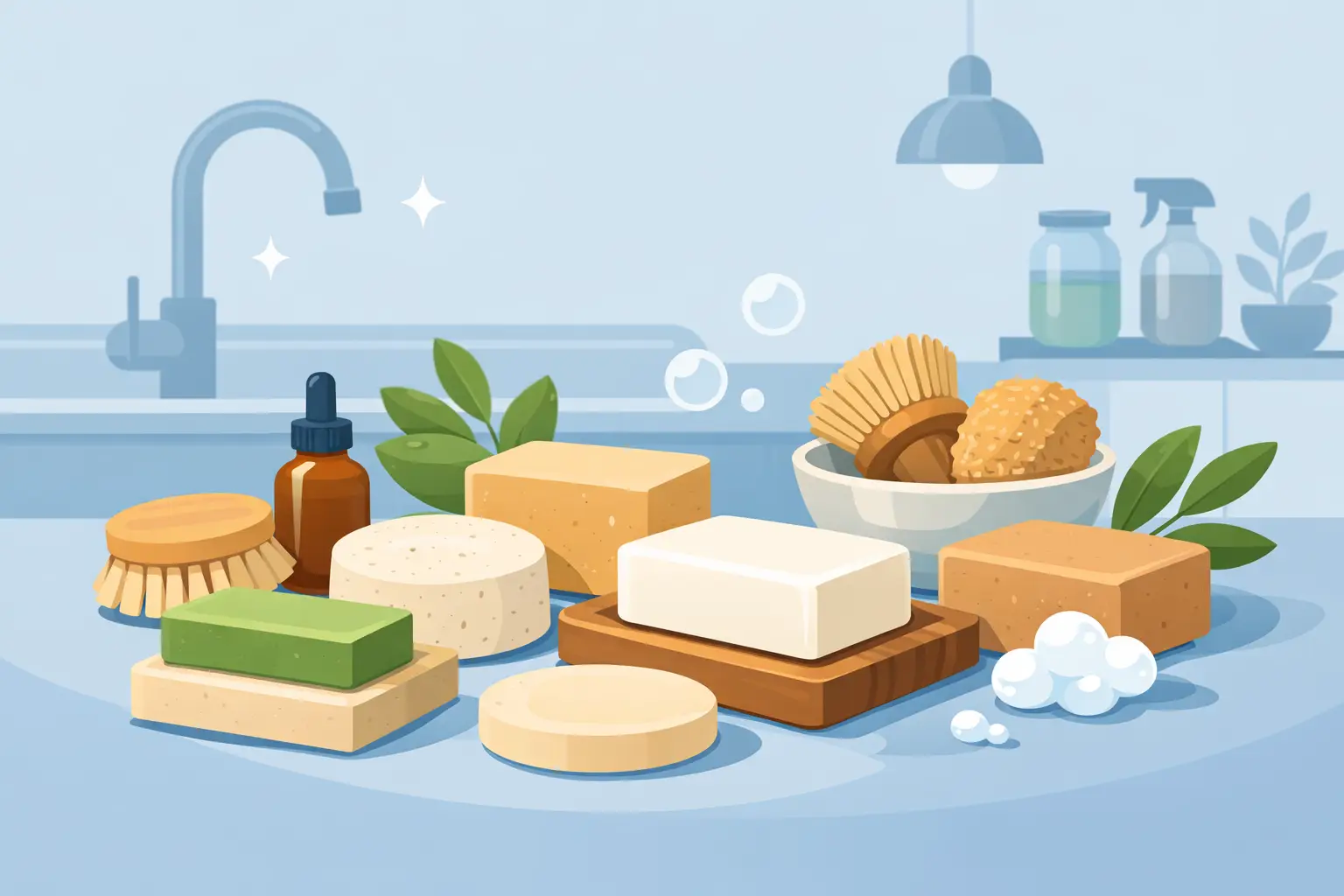
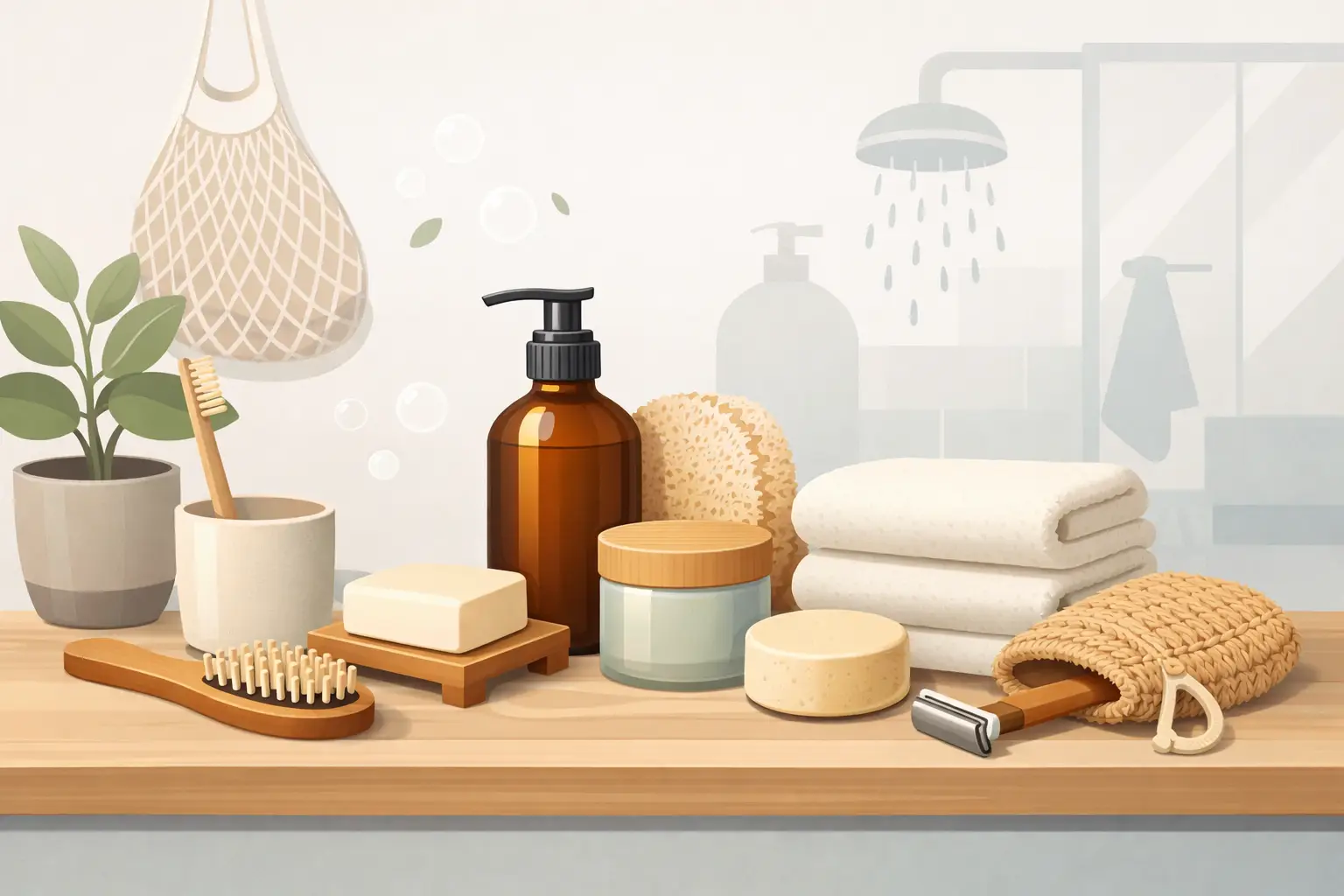
For most households, the foundation is a proper soap bar, a shampoo bar if it suits your hair, a solid dish or stain bar for multipurpose cleaning, a bamboo or wooden soap dish, a safety razor or another long-life shaving option, and a toothbrush made from renewable materials. Add reusable cotton rounds or washable cloths if you currently go through a lot of single-use items. This is enough to make a visible dent in bathroom waste without creating a cupboard full of worthy but unused products.
The trick is not to confuse plastic-free with inconvenient. If a product turns mushy in two days, leaves residue behind or irritates your skin, it will not earn its place. A starter kit should feel dependable from the first week.
Start with the products you finish fastest
If you are deciding where to begin, look at repeat purchases. Hand soap, body wash, shampoo and shaving products tend to be the biggest source of packaging waste because they are used constantly. Replacing these first gives you the most immediate return.
A well-made soap bar is often the strongest swap in the whole bathroom. It removes the need for plastic bottles, lasts well when stored properly, and can be made with fewer unnecessary fillers than many liquid cleansers. For sensitive skin, formulation matters. A firm, traditional bar made with nourishing fats and straightforward ingredients will usually be a better choice than something heavily perfumed or packed with detergent foaming agents.
That is where many people are pleasantly surprised by tallow soap. It has a long history for a reason. Properly made, it gives a rich lather, cleanses gently and supports the skin barrier rather than leaving skin tight and squeaky. For dry hands, winter skin and everyday family use, that is not a small detail. It is the difference between a swap that feels premium and one that feels like a compromise.
The core swaps that make the biggest difference
Bar soap instead of bottled body wash
This is the easiest place to start, and often the most satisfying. One quality soap bar can replace multiple plastic bottles over time, especially in households where handwashing and showering products disappear quickly.
Choose a bar based on your skin rather than its label alone. Oatmeal or unscented bars tend to suit reactive skin. Herbal or mint blends can feel fresher if you want a deeper clean after exercise or gardening. If your skin is easily stripped, avoid bars that chase a harsh, ultra-cleansing finish. Comfortable skin should feel clean, calm and soft, not over-washed.
A soap dish that helps bars last
This sounds minor until your beautiful bar sits in a puddle and softens into waste. A draining soap dish made from wood, ceramic or metal is part of the system, not an afterthought. It keeps the bar firm, makes it last longer and keeps the sink looking tidy.
If you share a bathroom with children or a busy household, consider having separate bars for basin and shower use. It keeps things cleaner and avoids the half-melted bar problem.
Shampoo bars, with a note of realism
Shampoo bars can work brilliantly, but they are not universal. Hair type, water hardness and styling habits all matter. If your hair is fine and easily weighed down, or if you live in a hard-water area, it may take trial and error to find the right one.
That does not mean the swap is not worth trying. It simply means you should treat it as a test, not a moral exam. Begin with one bar, give it a fair run, and notice how your scalp and lengths respond. For some people, shampoo bars become a permanent staple. For others, soap and shaving are the easier wins.
A long-life shaving option
Disposable razors create a surprising amount of waste. A safety razor or another durable razor with replaceable blades cuts that down dramatically. The initial cost is higher, but it tends to even out over time.
There is a learning curve. The shave can be excellent, but the pressure and angle are different from plastic disposables. Go slowly for the first few uses. Pairing shaving with a nourishing soap or a dedicated solid shaving bar can also make the process gentler on sensitive skin.
Reusable cloths and cotton rounds
If you use cotton wool pads for cleansing, toner or removing makeup, washable rounds or soft reusable cloths are an easy switch. They are especially helpful if your skin dislikes rubbing, because many reusable options are softer and less abrasive than cheap disposable pads.
Keep enough on hand that laundry does not become a nuisance. That is the practical detail that decides whether this habit sticks.
A guide to plastic free bathroom starter kit choices for sensitive skin
If your skin is fussy, a plastic-free routine needs to do more than reduce waste. It needs to reduce friction. That means fewer products, clearer ingredients and formulations that support the barrier rather than constantly challenging it.
Solid products are not automatically better. Some are excellent. Some are drying. Some rely on strong fragrance to feel luxurious, which is not much comfort if your skin flares. Read beyond the front label. Look for simple ingredient lists, traditional soapmaking methods and fats or oils known for their emollient qualities.
This is one reason artisan bars have held their place for so long. Small-batch soapmaking allows for a more deliberate approach to ingredients and curing. You can feel that in use. The bar stays firm, the lather is creamy rather than aggressive, and the skin is left clean without that raw, stripped finish. For many people, that is what makes the swap sustainable in the real sense – they actually want to keep using it.
Buy less, choose better, store it properly
A common mistake with any guide to plastic free bathroom starter kit shopping is overbuying. Ten bars, three tins, two bamboo organisers and a drawer full of accessories may look the part, but they are not automatically low waste if they sit untouched.
Start with one or two bars you are confident you will use. Add storage that protects what you already have. A dry soap dish, a jar for reusable rounds, and a simple tray or basket can make the room feel organised without buying a collection of things you did not need before.
It also helps to think in terms of replacement cycles. If your current moisturiser comes in plastic and works perfectly for your skin, use it up. Then switch. A plastic-free bathroom is built through steady decisions, not by throwing useful items away for the sake of aesthetic purity.
What makes a starter kit worth gifting?
A plastic-free bathroom starter kit also makes a thoughtful gift because it feels both practical and indulgent. The best ones do not preach. They simply offer a better daily ritual.
For gifting, presentation matters. A beautifully cured soap bar, a proper dish, a shaving bar or household soap, and a cloth accessory can feel generous without being excessive. It helps if each item has a clear purpose and a clear story – handmade, plastic-free, gentle, built to last. That is often more convincing than a large hamper full of novelty swaps.
If you are buying for someone with sensitive skin, err on the side of calm. Choose unscented or lightly scented options and avoid anything too experimental. A good gift should reduce decision-making, not create it.
The bathroom does not need perfection
There is no prize for changing everything at once. A sensible plastic-free bathroom is usually built around a few dependable items that perform well and are easy to replace. For many people, that means starting with soap, adding a draining dish, then moving onto shaving or reusable cloths when the time feels right.
If you want the shift to last, choose products with substance. Traditional soapmaking, honest ingredients, plastic-free packaging and skin comfort still matter more than trend-led claims. Luna Natural Soap Co. has built much of its approach around that exact idea: small-batch bars that are gentle, practical and made with care, so the low-waste choice also feels like the better one.
A starter kit should make the everyday simpler. When it does, less plastic is only part of the reward.