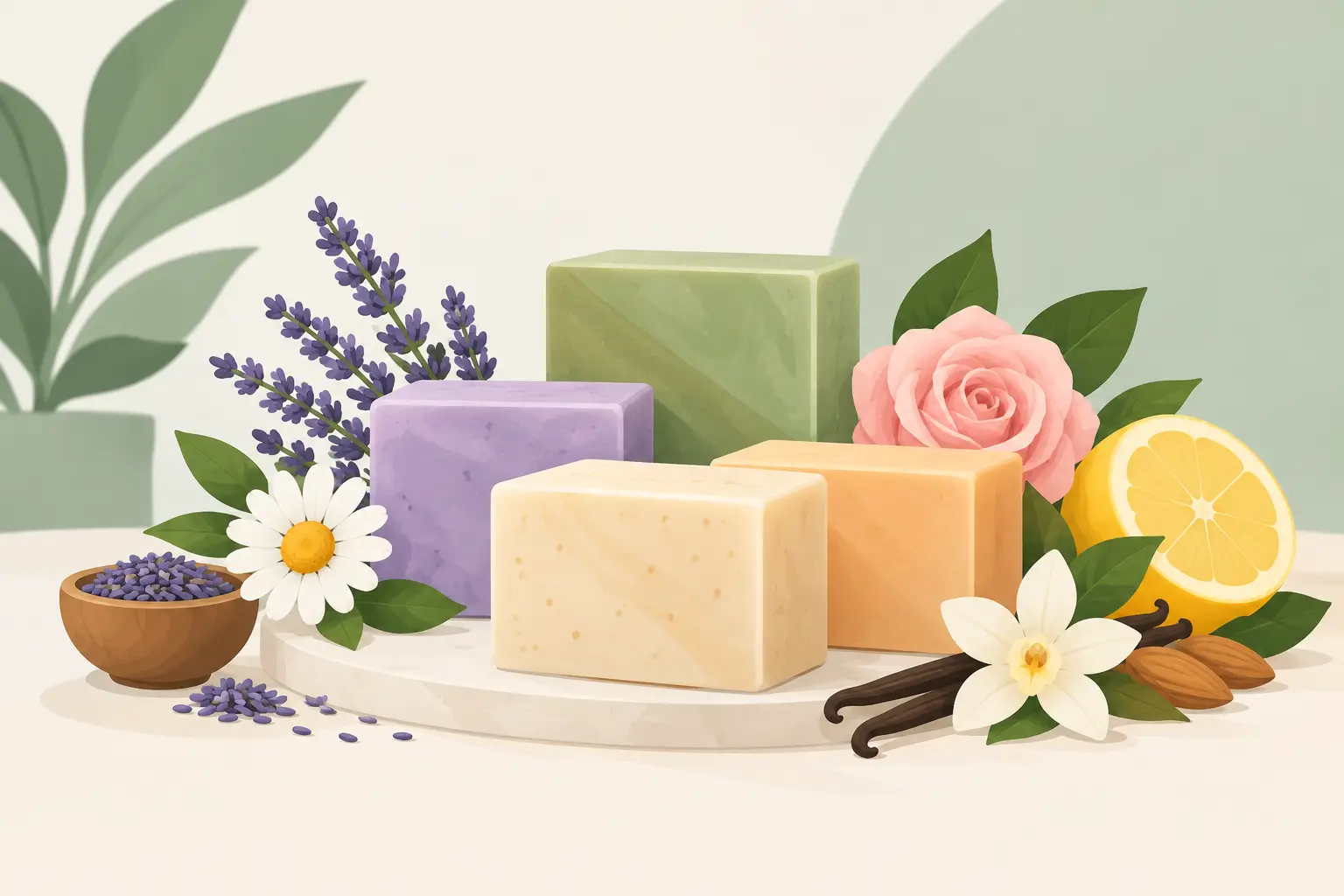



Pick up a freshly made bar too early and you can feel the difference straight away. It may look beautiful, smell lovely, and seem ready for the bathroom, yet it softens quickly, wears down fast, and never quite gives the calm, creamy wash you expected. A proper guide to soap curing time and hardness matters because cure is not a cosmetic extra – it is what turns a newly made bar into a firm, longer-lasting soap that feels better on skin.
For anyone choosing handmade soap, especially if you have dry or sensitive skin, this is worth understanding. Hardness is not about making a bar harsh. In well-made cold-process soap, it is about balance. You want a bar that holds its shape, lasts well between uses, and still produces a gentle, satisfying lather.
What curing actually does
When cold-process soap is first made, saponification begins as oils and lye react to create soap. That reaction happens relatively quickly, but the bar is not truly finished after the first day or two. Curing is the slower stage that follows.
During cure, water continues to evaporate from the bar. As that moisture reduces, the soap becomes harder, milder, and more durable. The lather often improves too. A fresh bar can feel slightly sticky or dissolve more quickly in the dish, while a cured bar feels firmer in the hand and gives a more controlled, even wash.
This is why traditional soapmaking relies on patience. A bar can be technically soap before it is a very good soap. The difference is especially noticeable with artisan bars made in small batches, where ingredient quality and process are meant to shine rather than be hidden by synthetic hardeners.
A guide to soap curing time and hardness in real terms
Most cold-process soaps need at least four to six weeks of cure. That is the usual starting point, not a universal rule. Some recipes become excellent at four weeks. Others continue improving at six, eight, or even longer.
A harder bar generally needs enough time for excess water to leave and the internal structure of the soap to settle. If the recipe contains ingredients that naturally create a firmer bar, cure may feel more straightforward. If it contains more liquid oils, extra milks, honey, or other additives, it may need longer before the bar reaches its best texture.
This is where people sometimes get mixed up. A bar can feel hard on the outside after only a short period, but still be under-cured overall. Surface firmness is not the same as a full cure. The true test is how it behaves in use – whether it lasts well, lathers properly, and rinses clean without turning soft too quickly.
What makes a soap bar hard or soft
Soap hardness starts with formulation. Different fats create different qualities, and traditional soapmakers choose them carefully to build a balanced bar.
Tallow is well known for producing a firm, long-lasting soap with a stable, creamy lather. It contributes solidity without making the bar feel stripping when the recipe is well balanced. For many people, especially those looking for a more skin-compatible cleanse, this is one reason tallow-based bars remain so respected in traditional soapmaking.
By contrast, oils high in oleic acid, such as olive oil, can make a wonderfully gentle soap but often need a longer cure to reach their best hardness. Coconut oil contributes cleansing power and hardness, though too much can feel drying for some skin types. Butters such as shea or cocoa can add firmness, but recipe balance still matters.
Water content also plays a part. More water in the original batter usually means a longer road to a firm final bar. Additives matter as well. Clays can help with hardness. Milks, botanicals, and sugars can influence texture and cure in more subtle ways. None of these are bad choices – they simply change the timeline.
Why harder is not always better
It is easy to assume the hardest bar is automatically the best one. That is not quite true. A very hard soap may last well, but hardness alone says little about gentleness, conditioning feel, or suitability for sensitive skin.
The best bars bring a few things together. They should be firm enough to last, mild enough for regular use, and well cured so they rinse cleanly and perform consistently. A bar that is overly cleansing may feel hard and durable but can leave dry or reactive skin feeling tight. For households dealing with eczema-prone or troubled skin, that trade-off matters.
This is why ingredient choice and curing time belong in the same conversation. Hardness should support the washing experience, not overpower it.
How soapmakers improve curing time and hardness
There is no shortcut that fully replaces a proper cure, but skilled soapmakers can influence how a bar develops. They do this first through the recipe, then through process.
A balanced use of hard fats and softer oils helps create structure from the start. Careful control of water can reduce the time needed for the bar to firm up, though pushing water too low can make soap harder to work with and affect the finish. Sodium lactate is sometimes used in cold-process soap to help with unmoulding and early hardness, but it still does not remove the need for curing.
Storage conditions are just as important. Soap cures best in a dry, airy space with good circulation. If bars are stacked too tightly or kept in a damp room, water leaves more slowly and the cure drags out. Temperature matters too, though steady airflow is often the bigger factor in practice.
Traditional methods tend to respect these limits rather than force the process. That slower approach often gives the best result – a bar that feels refined because it has been allowed to finish naturally.
How to tell if a bar is properly cured
If you are buying handmade soap rather than making it yourself, you will not usually know the exact cure date unless the maker shares it. Even so, there are clues.
A cured bar feels firm and dry to the touch, not tacky. It should sound and feel solid when handled. In use, it should not turn mushy after one shower or hand wash, provided it is stored on a draining dish. The lather should be even rather than thin and fleeting.
Appearance can help, but only to a point. A smooth, tidy bar may still be young. A more rustic bar may be beautifully cured. Performance tells the real story.
If you make your own soap, keeping notes is invaluable. Track the recipe, date poured, date cut, and how the bars feel at four, six, and eight weeks. Over time you will see patterns. Some formulas are forgiving. Others ask for more patience.
Using cured soap well at home
Even a properly cured bar can soften too quickly if it sits in water. Good storage protects the life of the soap just as much as a good cure protects its structure.
Use a soap dish that drains well. Let the bar dry fully between uses. If you keep soap in a very steamy shower, expect it to wear down faster than a bar stored by the basin. Cutting a large bar in half can help as well, especially if you want to keep the unused portion fresh and firm for longer.
This is particularly useful with rich, traditionally made bars. They are crafted to cleanse gently and last well, but they still respond to how they are treated once they reach your home.
Why this matters for skin-conscious shoppers
People often focus on fragrance, ingredients, or whether a soap is natural, and those details do matter. Yet cure is one of the quiet markers of quality. It shows care in the making. It suggests the maker values performance over speed. And it directly affects how the bar feels on your skin and how long it lasts in the bathroom.
For a brand such as Luna Natural Soap Co., where traditional methods, in-house craftsmanship, and thoughtful ingredient sourcing are part of the promise, curing is not a hidden technicality. It is part of what makes a bar feel complete. A well-cured tallow soap offers the kind of firm, creamy, comforting cleanse that many people are looking for when they move away from detergent-heavy products.
If you remember one thing, let it be this: good soap cannot be rushed. Time is part of the ingredient list, even when it never appears on the label. When a bar has been given the cure it needs, you can feel that care in every use.