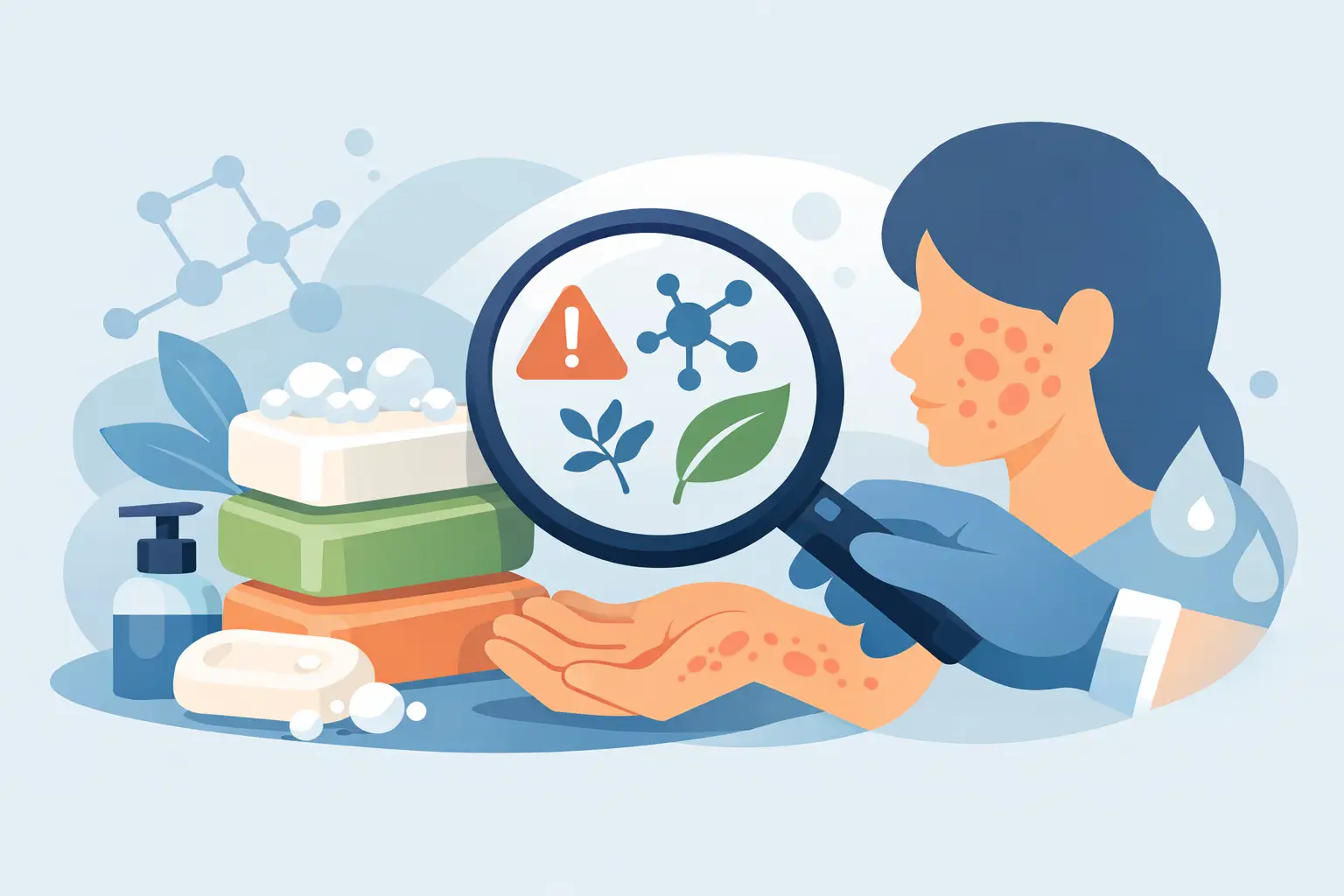


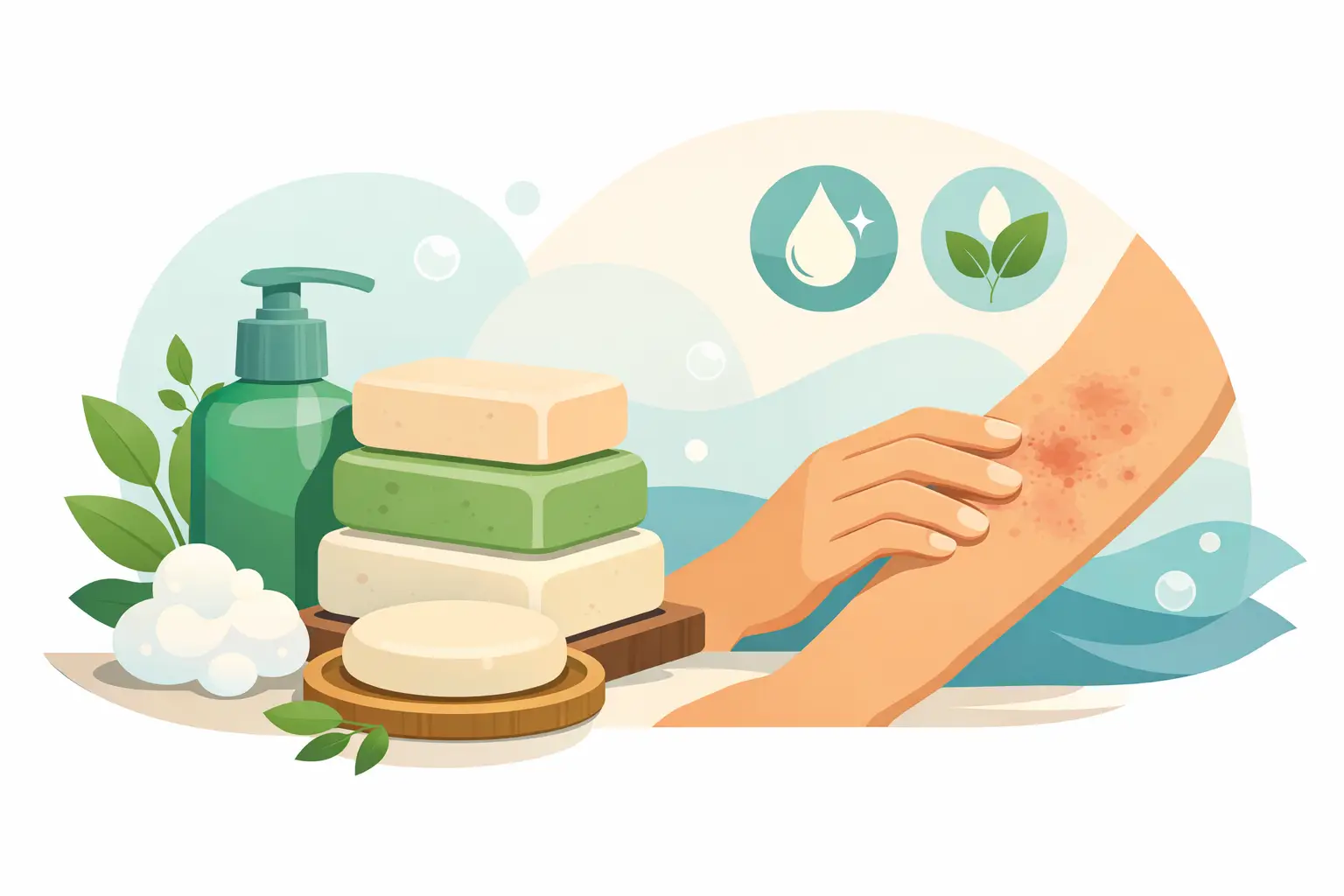
If you live with eczema, you usually know within seconds when a soap is wrong. Skin feels tight before you’ve even reached for a towel. Redness lingers. Itching starts where calm should be. That is why a proper guide to soap for eczema matters – not as marketing fluff, but as everyday help for skin that reacts quickly and forgives slowly.
For eczema-prone skin, cleansing is rarely just about getting clean. It is about protecting a fragile barrier while removing sweat, daily grime, and the bits of life that sit on the skin by evening. The wrong bar can leave skin stripped and irritable. The right one can make washing feel comfortable again.
What eczema-prone skin needs from a soap
Eczema is closely tied to barrier disruption. Skin loses moisture more easily, becomes more reactive, and often struggles with ingredients other people barely notice. Fragrance, harsh detergents, strong essential oils, and overly aggressive cleansing can all push things in the wrong direction.
That means the best soap for eczema is not the one with the boldest claims. It is the one that cleans gently, rinses well, and leaves the skin feeling settled rather than squeaky. That last point matters. Squeaky-clean skin is often stripped skin.
A good bar for eczema-prone skin should support comfort in simple ways. It should have a short, thoughtful ingredient list. It should avoid unnecessary harshness. It should offer a creamy, conditioning wash rather than a foamy blast that leaves the skin feeling exposed.
Traditional soapmaking can have a place here, especially when the bar is formulated with skin compatibility in mind. Rich, nourishing fats can help create a gentler cleanse, and that is one reason many people with dry or troubled skin are drawn to slower, simpler bars made with purpose.
A guide to soap for eczema: what to look for
When choosing a bar, start with the base oils or fats. This is where much of the character of a soap comes from. Bars made with nourishing ingredients such as tallow or oats often appeal to people with dry, sensitive skin because they tend to feel more conditioning on the skin.
Tallow deserves a clear mention here. Well-made tallow soap is valued for a reason. Its fatty acid profile is particularly compatible with the skin barrier, and it is naturally rich in fat-soluble vitamins. For eczema-prone skin, that can translate into a bar that feels creamy, calm, and less drying than many mass-produced alternatives. It is not a miracle cure, and no honest brand should present it that way, but it can be a very sensible choice for skin that needs gentleness.
Oatmeal is another ingredient many people seek out. Finely milled oats are known for their soothing feel and are often chosen for skin that feels itchy or unsettled. Goat milk can also be a good fit in some bars, adding a creamy quality that many sensitive-skinned customers enjoy.
At the same time, it helps to be realistic. Natural does not always mean non-irritating. Essential oils, clays, scrubs, and botanicals can be lovely in the right bar for the right person, but eczema-prone skin often prefers restraint. If your skin is flaring, simple is usually better.
Ingredients and features worth avoiding
If your eczema is active, heavily scented soap is often the first thing to put aside. Even natural fragrance sources can be troublesome. Lavender, peppermint, citrus, and spice oils may smell beautiful, but inflamed skin often does not appreciate them.
Exfoliating bars can also be too much. Seeds, coarse oats, salt, charcoal-heavy formulas, and vigorous cleansing bars may feel satisfying for some skin types, but they can aggravate patches that are already dry or broken.
It is also wise to be cautious with products marketed for deep cleansing. Eczema-prone skin rarely needs a detox. More often, it needs less interference and more consistency.
Bar soap or syndet cleanser – which is better?
This is where nuance matters. Some people with eczema do best with very mild, soap-free cleansers, especially during severe flares or when the skin is cracked. Others find that a carefully made traditional bar works beautifully for daily washing, particularly if they avoid hot water and moisturise promptly afterwards.
So the answer is not absolute. It depends on how reactive your skin is, where your eczema appears, and how the product is formulated. If every cleanser seems to sting, a soap-free option may be the better short-term route. If your skin tolerates gentle artisan bars well, you may find a simple nourishing soap easier to use, more pleasant, and better suited to a low-waste routine.
For many households, the practical answer is to keep both. A mild, uncomplicated bar for everyday hands and body washing when skin is settled, and an even gentler backup for difficult weeks.
How to choose the right soap for your skin
The first step is to match the soap to your current skin, not the skin you wish you had. If your eczema is calm but your skin runs dry, a plain, creamy bar with minimal scent may suit you well. If your skin is angry, itchy, or cracked, strip things right back. Fewer ingredients. No exfoliation. No strong fragrance.
Patch testing is worth the effort. Try a new bar on a small area first for several days. That may sound cautious, but with eczema, caution is practical. A beautiful ingredient list still does not guarantee personal tolerance.
It also helps to think about where the soap will be used. A face bar, a hand soap, and a body bar do not always need to be the same. Hands deal with frequent washing, weather, and household tasks, so they often need the gentlest option in the house. A body bar can sometimes be slightly richer without causing issues.
Washing habits matter as much as the bar
Even the best soap can only do so much if the routine around it is too harsh. Long hot showers are a common problem. They feel comforting in the moment, but they can leave eczema-prone skin drier and more irritated afterwards. Warm water is usually kinder.
Use enough soap to cleanse, but do not overwork it into the skin. Rinse well. Pat dry rather than rubbing. Then moisturise while the skin is still slightly damp. That final step is not an extra. It is part of the cleansing routine.
If hand eczema is the issue, soap choice becomes even more important because of how often hands are washed. Keep the bar gentle, the water lukewarm, and a rich moisturiser nearby. Repeating this consistently often matters more than chasing a dramatic fix.
Why traditional, simple bars appeal to sensitive skin
There is something reassuring about soap made the slower way. Small-batch bars built on traditional methods often have a clearer purpose. They are not trying to be ten things at once. They are made to cleanse well, last well, and feel good on the skin.
For people managing eczema, that simplicity can be a relief. A well-balanced bar made with quality fats, careful curing, and unnecessary extras kept to a minimum often feels more trustworthy than a crowded formula full of claims. At Luna Natural Soap Co., this is exactly why ingredient choice and process matter so much. When a bar is crafted with skin barrier support in mind, every decision behind it counts.
That said, there is no single perfect soap for everyone with eczema. Age, trigger patterns, climate, water hardness, and the severity of your skin all make a difference. What works beautifully in winter may feel different in summer. What suits your body may not suit your face. Good skincare is often about paying attention, not following hype.
The best mindset for choosing soap when you have eczema
Look for calm, not excitement. Look for comfort, not perfume. Look for a bar that respects the skin you are in today.
The most helpful guide to soap for eczema is really a guide to listening to your skin with a bit more care. Choose simple ingredients. Be wary of anything too busy or too bold. Give your skin time to respond. And if you find a bar that leaves your skin clean, soft, and untroubled, that is not a small win. It is the kind of everyday comfort that changes the whole rhythm of a routine.