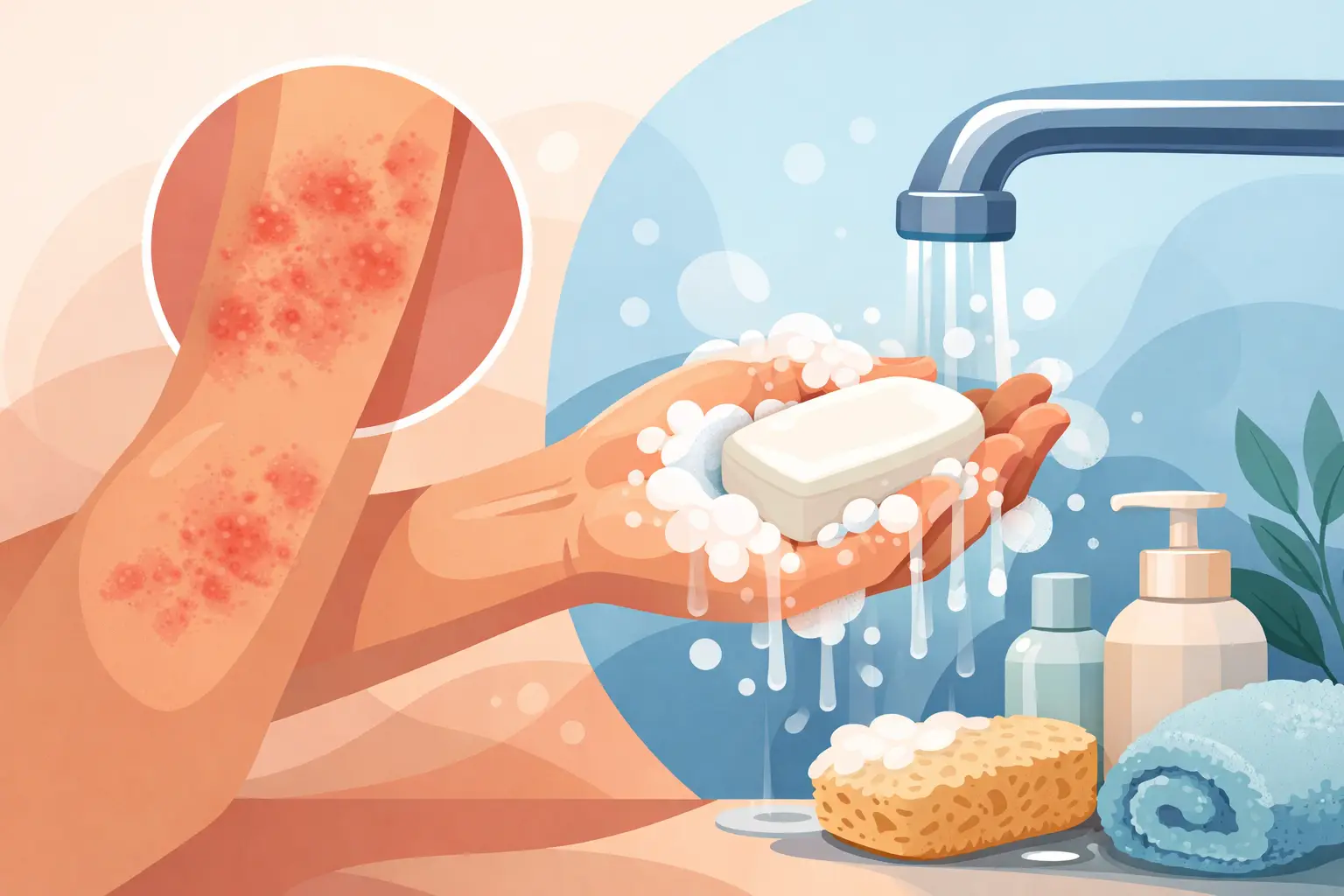



A bar may look simple on the bathroom shelf, but what it is made from changes how it feels on your skin, how it performs in water, and what happens after it has been used. In the conversation around handmade soap versus detergent bars, the difference is not about one being universally good and the other universally bad. It is about ingredients, method, purpose, and what your own skin needs.
For dry, sensitive or easily unsettled skin, that distinction can make everyday washing feel very different. A thoughtfully made traditional soap can turn a necessary routine into a small act of care. But there are times when a detergent-based cleansing bar may be the better fit too.
What makes a handmade soap a true soap?
Traditional handmade soap is made through saponification. This is the time-honoured process of combining fats or oils with an alkali, then allowing the bar to cure. The resulting soap is a salt of fatty acids: a cleanser created from the ingredients themselves, rather than a base blended with synthetic surfactants.
At Luna Natural Soap Co., this process begins with carefully sourced, grass-fed tallow that is slowly rendered in-house. Tallow has a fatty-acid profile that creates a firm, long-lasting bar with a creamy, satisfying lather. When balanced well with other considered ingredients, it can cleanse without leaving skin feeling needlessly stripped.
Handmade soap also naturally retains glycerine, a humectant produced during saponification. Glycerine helps attract water to the skin, which is one reason a well-formulated bar can feel more comfortable than a harsh, fast-cleansing wash.
That does not mean every handmade bar is automatically gentle. A bar can still be drying if its recipe is poorly balanced, too strongly fragranced, or made with a cleansing level that does not suit your skin. Craft matters. So does curing time, ingredient quality, and the care behind the formula.
What is a detergent bar?
A detergent bar, often called a syndet bar, is made with synthetic or processed surfactants rather than soap created by saponification. Surfactants are cleansing agents that lift oil, dirt and debris so they can be rinsed away.
Many high-street cleansing bars are detergent bars, even when they are shaped and sold like soap. Their ingredient list may include names such as sodium cocoyl isethionate, sodium lauroyl isethionate, sodium laureth sulphate or cocamidopropyl betaine. These ingredients can be formulated into very mild products, particularly for facial cleansing or skin with a compromised barrier.
A detergent bar is often made at a lower pH than traditional soap. Human skin is naturally mildly acidic, while true soap is alkaline. This pH difference is one reason dermatology-led advice sometimes favours syndet cleansers for eczema-prone or highly reactive skin.
Yet the label alone does not tell the whole story. A detergent bar may contain fragrances, strong surfactants, colourants or a long list of additives that do not suit everyone. Equally, a carefully made natural soap may work beautifully for a person whose skin feels uncomfortable with conventional washes. The formula matters more than the marketing language on the front of the box.
Handmade soap versus detergent bars: the practical differences
The clearest difference is how each product cleans. Traditional soap works by binding to oils and rinsing them away. It is highly effective and particularly useful for hands, body washing and household tasks. Detergent surfactants can be designed for specific cleansing strengths and textures, making them common in facial bars, shampoo bars and specialist body cleansers.
The experience can differ too. A handmade tallow soap often gives a dense, creamy lather and leaves the skin feeling clean but cushioned. A detergent bar may feel silkier, foam more readily in hard water, or rinse with a lighter finish. Neither sensation is proof of quality on its own.
Ingredients are another meaningful distinction. Handmade soap recipes can be wonderfully short and recognisable: fats or oils, sodium hydroxide, water, and perhaps oats, botanicals, goat milk or essential oils. A detergent bar usually has a more technical ingredient list because its surfactant system, stabilisers and conditioning agents are manufactured separately.
There is also the question of end of life. Both types can be sold without plastic, and both can be a practical alternative to liquid wash in a plastic bottle. However, a small-batch soap bar made with local ingredients, simple packaging and low-waste production offers a more traceable route for shoppers who care about the full story behind their daily essentials.
Which is better for sensitive or dry skin?
There is no honest one-bar answer. If you have a diagnosed skin condition, frequent flare-ups, broken skin or a known allergy, seek guidance from a pharmacist, GP or dermatologist. Skin concerns deserve care, not guesswork.
For many people with dry skin, a gentle handmade bar with a simple formula can be a welcome change from heavily fragranced shower gels and aggressively cleansing washes. Tallow-based soap is particularly valued for its rich, skin-compatible feel. It is naturally composed of fatty acids also found in the skin’s protective surface, and a properly cured tallow bar can leave the body feeling clean, calm and comfortable.
For some people with eczema-prone or extremely reactive skin, a fragrance-free syndet bar with mild surfactants and an acidic pH may be more suitable, especially during a flare. That is not a failure of natural soap. It is simply a reminder that real skin has changing needs.
The most helpful approach is to simplify. Choose one gentle cleanser, avoid unnecessary fragrance if sensitivity is a concern, use lukewarm rather than hot water, and moisturise after washing while skin is still slightly damp. Give a new product time, but stop using it if it stings, itches or causes irritation.
Why tallow belongs in a considered soap bar
Tallow is often misunderstood because modern beauty has taught us to chase novelty. In truth, it is one of the oldest and most practical soapmaking ingredients. It creates a hard bar that does not vanish after a few showers, a creamy lather, and a cleansing experience that feels substantial rather than harsh.
Its value also reaches beyond performance. When sourced from regenerative and local farms, tallow can make respectful use of a material that might otherwise be wasted. Slow rendering and small-batch production take more care, but they offer greater transparency over what enters the bar and where it comes from.
For Luna, this is not about claiming that one ingredient solves every skin concern. It is about choosing traditional materials with purpose, making them carefully, and offering an alternative to disposable, overcomplicated personal care.
How to choose a bar with confidence
Start with the job the bar needs to do. A body soap, a facial cleanser and a solid dish soap do not need the same formula. A hardworking household bar can be more cleansing, while the bar you use on dry shoulders or sensitive hands may benefit from a simpler, more conditioning recipe.
Then read beyond the front label. Look for a clear ingredient list and a maker willing to explain their process. With handmade soap, ask what fats or oils are used, whether the bar is traditionally made and properly cured, and whether fragrance has been kept gentle. With detergent bars, look at the surfactants used and consider whether added perfume or actives are necessary for you.
Finally, think about how you use the bar. Keep it dry between washes on a draining dish or rack. Any bar, however beautifully made, will soften and disappear quickly if it sits in water. A firm, cured soap stored well should last satisfyingly long, making the plastic-free switch feel practical as well as indulgent.
A better question than which bar wins
Rather than asking whether handmade soap or detergent bars are best, ask what your skin is asking for and whether the product earns a place in your home. Does it cleanse comfortably? Are the ingredients clear? Is it made with care? Will you enjoy using it every day?
The right bar should feel like less compromise, not another complicated choice. Whether you need the gentle simplicity of a traditional tallow soap or the specific mildness of a syndet bar, choose with curiosity, use with care, and let your skin have the final say.