


If your skin feels tight after a shower, the difference between handmade soap vs commercial soap is not a marketing detail. You can feel it on your hands, your legs, and often on the dry patches that seem to get worse no matter how much cream you apply. For many people, the bar at the sink is either helping the skin barrier stay calm or quietly wearing it down.
That is why this comparison matters. Soap is not just soap. The way it is made, the ingredients chosen, and what is removed or added afterwards all shape how it cleanses and how your skin feels once the lather is gone.
Handmade soap vs commercial soap: what actually changes?
At first glance, both can look similar. They both cleanse. They both lather. They both come in a bar. But the real difference sits in formulation and process.
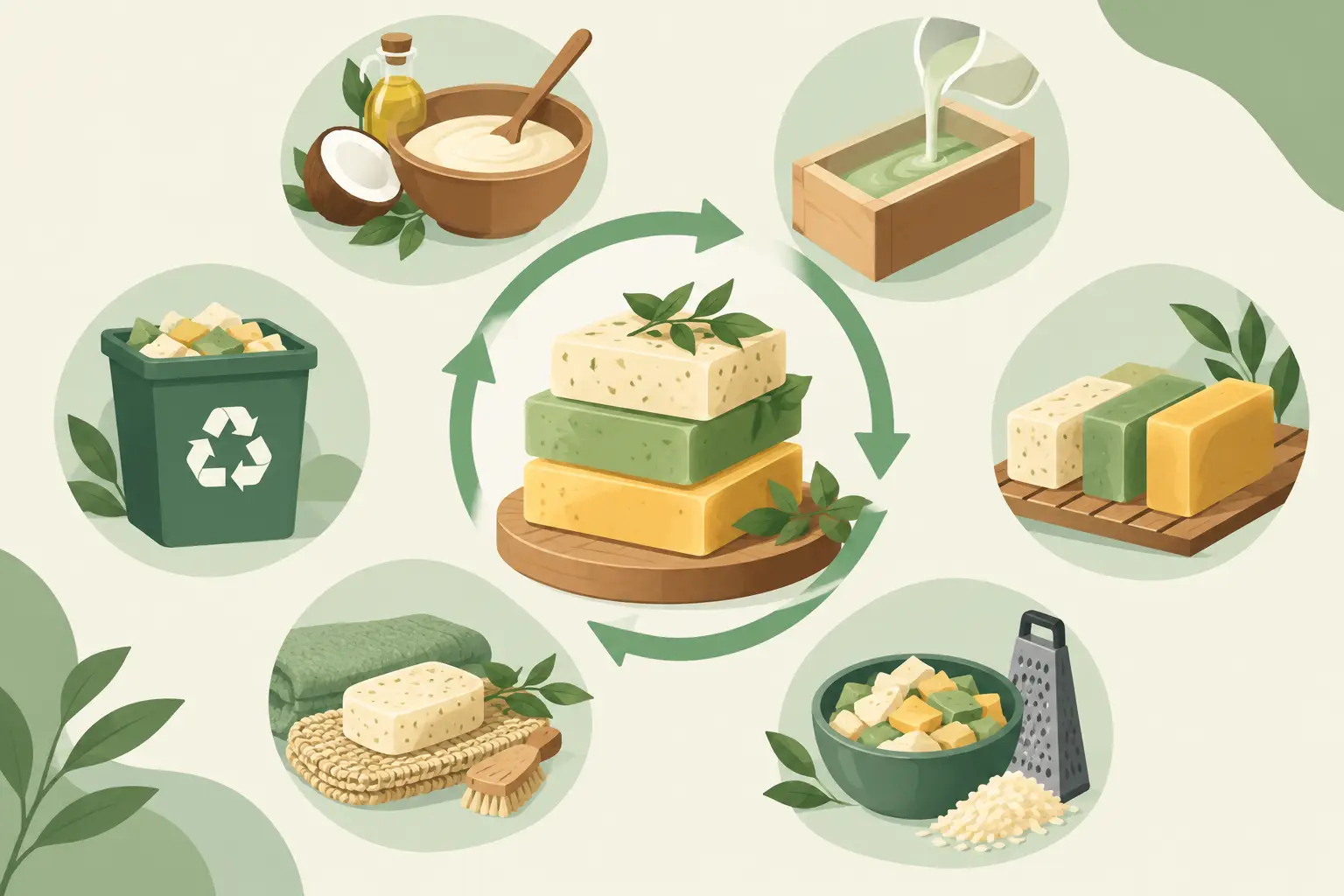
Handmade soap is usually made in small batches using traditional soapmaking methods. In cold-process soap, oils or fats are combined with an alkali to create soap and naturally occurring glycerine. In many artisan bars, that glycerine stays in the finished soap. That matters because glycerine is a humectant, which means it helps draw moisture towards the skin.
Commercial soap is often made for scale, shelf consistency, and low unit cost. Some bars sold as soap are not soap in the traditional sense at all, but synthetic detergent bars. These can be useful in some settings, but they are formulated differently and often rely on stronger surfactants, stabilisers, preservatives, fragrance blends, and fillers to deliver a uniform product at volume.
Neither category is automatically good or bad. A handmade bar can still be poorly made. A commercial cleanser can still suit some people well. But if you care about ingredient integrity, skin comfort, and a simpler routine, the differences become hard to ignore.
Ingredients matter more than the label
The ingredient list tells a clearer story than the front of the packet. Handmade soap tends to use a shorter, more recognisable list of ingredients. You are more likely to see oils, botanicals, clays, milk, salt, or traditionally used fats such as tallow. In a well-made bar, each ingredient has a job to do.
That is especially relevant for dry or sensitive skin. Traditional fats like grass-fed tallow are valued because they create a firm, long-lasting bar with a rich lather and a skin feel that many people describe as comfortable rather than stripped. Tallow is also naturally rich in vitamins A, D, E, K and B12, which is one reason it has remained a trusted skincare ingredient long after trends moved on.
Commercial bars often contain more processing aids and performance agents. You may see synthetic fragrance, colourants, hardeners, foaming boosters, and preservatives. These are not always harmful, but they can increase the chance of irritation for people with reactive skin, eczema-prone skin, or a compromised skin barrier.
Fragrance is one of the biggest dividing lines. Handmade bars often use essential oils sparingly or skip fragrance altogether. Commercial bars are more likely to use complex synthetic fragrance blends designed for a stronger, longer-lasting scent. If you have ever loved the smell of a soap only to find your skin stinging afterwards, you already know the trade-off.
How each bar cleanses your skin
Cleansing is where the experience changes most. A handmade soap bar made with a balanced recipe can cleanse effectively while still feeling gentle. This is partly down to the retained glycerine and partly down to the fatty acid profile of the oils or fats used.
Some handmade bars are also superfatted, which means a small portion of the nourishing oils remains unsaponified in the final bar. That does not turn soap into a moisturiser, but it can soften the overall wash and reduce that squeaky, over-cleansed feeling.
Commercial soap and detergent bars are often designed to remove oil fast, produce reliable foam in any water type, and last through shipping and storage. That efficiency can suit oily skin or heavy-duty cleansing, but it may be too much for skin that is already dry, itchy, or irritated.
This is why people often switch to handmade soap after years of thinking their skin simply needed more lotion. In some cases, the issue is not just lack of moisture afterwards. It is that the cleanser itself is too harsh in the first place.
Handmade soap vs commercial soap for sensitive skin
If your skin is sensitive, the answer is rarely absolute. Some people react to essential oils. Others do better with a very plain handmade bar than with any commercial wash. Some need a soap-free cleanser on the face but can happily use a traditional bar on the body.
Still, handmade soap has a few clear advantages for sensitive skin. Smaller makers can be more selective with ingredients. Recipes are often built around skin feel rather than mass-market fragrance or dramatic foam. And the best artisan soapmakers are transparent about what is in the bar and why.
That transparency matters. If you are trying to avoid common irritants, it helps to know whether a bar contains synthetic fragrance, palm-derived detergents, artificial dyes, or harsh cleansing agents. It also helps to know where the core ingredients come from and how they were processed.
At Luna Natural Soap Co., that traditional approach is part of the point. Slow-rendered tallow, cold-process methods, and plastic-free packaging are not decorative brand choices. They reflect a slower, more deliberate way of making products for real skin.
Performance, price and practicality
Commercial soap wins on convenience in one obvious sense. It is easy to find, often cheaper at the till, and usually highly consistent from one purchase to the next. If your main priority is low upfront cost, a supermarket bar will often come out ahead.
But cost per bar is not the whole story. A well-cured handmade soap can last surprisingly well, especially if it is kept dry between uses. A hard, well-formulated tallow bar tends to hold up better than many people expect. When a bar lasts longer, feels better on the skin, and reduces the need for extra soothing products afterwards, value looks different.
There is also the question of what you are paying for. With handmade soap, more of the cost is tied to ingredient quality, small-batch production, curing time, and thoughtful packaging. With commercial bars, more of the system is built around volume, transport, marketing, and standardisation.
Neither route is free from compromise. Handmade soap is usually dearer. It can vary slightly from batch to batch because natural ingredients do vary. Some bars are softer or melt faster if left in standing water. But for many households, those are manageable trade-offs.
The environmental difference
For eco-conscious shoppers, packaging and sourcing are often part of the buying decision. Handmade soap brands are more likely to offer plastic-free wrapping, lower-waste production, and ingredient sourcing with a clearer paper trail.
That does not make every handmade brand sustainable by default. Terms like natural and eco-friendly are used loosely. What matters is evidence: local sourcing where possible, minimal packaging, responsible ingredient choices, and waste reduction built into the business rather than added as a slogan.
Commercial soap can be efficient at scale, but it is often packaged in plastic and built on global supply chains with less visibility for the end customer. If circular economy values matter to you, handmade bars generally offer a stronger fit.
Which should you choose?
If you have resilient skin, like a bold fragrance, and want the cheapest option available, commercial soap may suit you perfectly well. If you are dealing with dryness, tightness, sensitivity, or you simply prefer fewer synthetic ingredients, handmade soap is often the more comfortable choice.
The best approach is to match the bar to your skin and your priorities. Look for a short ingredient list. Notice how your skin feels 20 minutes after washing, not just during the lather. Pay attention to whether a bar leaves you calm and comfortable or reaching for moisturiser straight away.
For many people, the shift from commercial to handmade soap is less about luxury and more about relief. Skin that feels less itchy. Hands that do not crack as quickly. A daily routine that feels simpler, cleaner, and easier to trust.
Good soap should do its job without making your skin work harder afterwards. That is a modest standard, but a useful one – and often the clearest way to tell which bar belongs by your sink.