

Hard water soap options matter most when a shower that should feel comforting leaves your skin tight, your hair dull, or a film around the basin. The culprit is not always your soap. Water rich in calcium and magnesium changes the way traditional soap behaves, and it can make even a beautifully made bar feel less generous than it should.
For skin that is dry, sensitive or easily unsettled, that difference is worth understanding. The aim is not simply more bubbles. It is a cleansing routine that feels gentle, rinses well and does not ask you to scrub harder or use more product than you need.
What hard water does to real soap
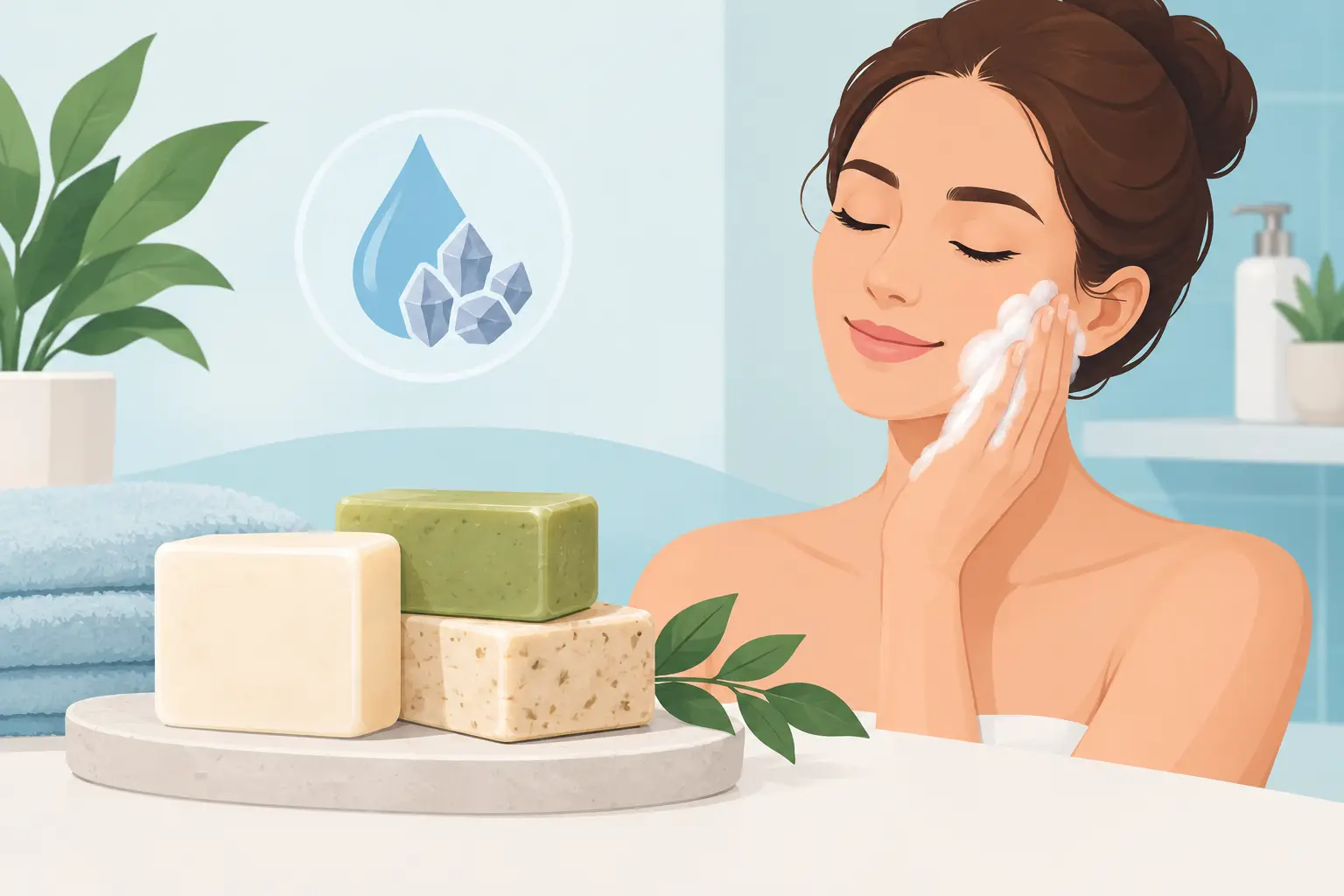
Traditional soap is made by combining oils or fats with an alkali. In a hard-water area, the minerals in the water can react with soap and create insoluble salts, often called soap scum. This is the pale film that may collect on shower screens, flannels, sinks and the surface of a bar.
It can also affect the wash itself. Your bar may lather less quickly, feel as though it drags across the skin, or leave behind a slightly waxy sensation. This does not necessarily mean the bar is poor quality. It means part of the soap has reacted with the minerals before it can do its job in the water.
Hard water is common across much of England, particularly in the South and East, though it can occur anywhere. If the kettle furs up quickly, taps show chalky marks and laundry feels less soft than expected, your soap is likely working against mineral-heavy water too.
Hard water soap options: start with the right cleanser
There is no single perfect answer because skin needs, household priorities and local water all differ. But it helps to separate traditional soap from synthetic detergent bars and liquids.
A well-formulated traditional soap bar
A properly cured, traditionally made bar remains a strong choice in a hard-water home, especially for those who value simple ingredients and plastic-free washing. It will still cleanse effectively. The compromise is that it may form some residue and may not create the dramatic foam associated with shower gels.
Look for a firm bar with a balanced recipe rather than one loaded with unnecessary fragrance or harsh cleansing agents. Tallow is particularly valued in traditional soapmaking because it makes a long-lasting, creamy bar. Its fatty-acid profile creates a rich, cushiony lather that can feel more comfortable on dry skin than a very stripping wash.
At Luna Natural Soap Co., tallow is slowly rendered in-house from carefully sourced, grass-fed local suppliers before it is made into small-batch soap. That care cannot remove the minerals from your tap water, but it does mean the bar begins with a purposeful, skin-considerate formula rather than a shortcut.
Soap with a chelating ingredient
Some soapmakers include a chelator, such as sodium citrate, in a recipe. Chelators bind to metal minerals, helping reduce the amount available to react with the soap. In practical terms, this can improve lather and reduce residue in hard water.
This is one of the most useful hard water soap options if you love genuine soap but dislike the film it can leave behind. It is not a magic fix. Very hard water can still challenge any bar, but a thoughtfully formulated chelating ingredient can make daily use noticeably easier.
Do not assume that every natural-sounding bar contains one. Read the ingredient list and, if this matters to you, ask the maker how the bar is designed to perform in hard water. Clear answers are a good sign of careful formulation.
A syndet bar or gentle liquid cleanser
Syndet means synthetic detergent. These bars are not soap in the traditional chemical sense, even if they look like a soap bar. They generally do not react with calcium and magnesium in the same way, so they perform reliably in hard water and rinse with less residue.
For some people, particularly those with very hard water or hair prone to build-up, this is the most practical option. The trade-off is ingredient philosophy. A syndet bar may be lower in pH and highly effective, but it is a different product from cold-process soap and may not suit shoppers seeking a short, traditional ingredient list.
A gentle liquid cleanser can offer similar benefits. Choose one without aggressive detergents and strong perfume if your skin is reactive. More foam does not automatically mean a better or kinder cleanse.
A water softener, where it makes sense
If hard water affects every part of your home, a water softener changes the water rather than asking every cleaning product to compensate. This can reduce scale around taps, improve the feel of laundry and help true soap lather more readily.
It is a significant household decision, not a requirement for enjoying a bar of soap. Tenants may not have the option, and many households manage perfectly well with small routine changes. If you do install one, check whether the softened water arrangement is appropriate for drinking water and any existing plumbing advice.
Make your bar work better in hard water
The way you use and store soap has a real effect. Start with warm water rather than very hot water, which can leave already-dry skin feeling more depleted. Wet the bar and your hands well, then build the lather between your palms or on a soft flannel before applying it to the body.
Using a flannel can be especially helpful where water is very hard. It creates lather with less product and offers gentle, controlled cleansing without repeatedly rubbing the bar over skin. Keep the cloth clean and allow it to dry between uses.
Rinse patiently. A few extra seconds under running water can remove residue more effectively than adding another cleanser. Afterwards, pat skin dry rather than rubbing, then apply a simple moisturiser while the skin is still slightly damp. For dry or eczema-prone skin, this step often matters more than chasing the highest possible lather.
Your bar also needs to dry fully between washes. Keep it on a draining soap dish, away from pooled water and the direct stream of the shower. A firm, dry bar lasts longer, stays more pleasant to use and creates less soft residue around the dish.
What to avoid when skin already feels dry
Hard water can encourage a frustrating cycle: skin feels coated, so you cleanse again; then it feels tight, so you reach for a stronger product. Resist the urge to overcorrect. Squeaky-clean skin is often a sign that too much oil has been removed.
Avoid very hot showers, heavily fragranced washes and harsh exfoliating mitts used every day. If a cleanser stings, leaves redness or makes flaking worse, stop using it. A product can be natural, expensive or popular and still be the wrong fit for your skin.
Be cautious with claims that a bar can treat eczema or replace medical advice. Soap can be part of a gentler routine, but persistent itching, cracking, weeping skin or a sudden flare deserves guidance from a pharmacist, GP or dermatologist.
Choosing for the whole household
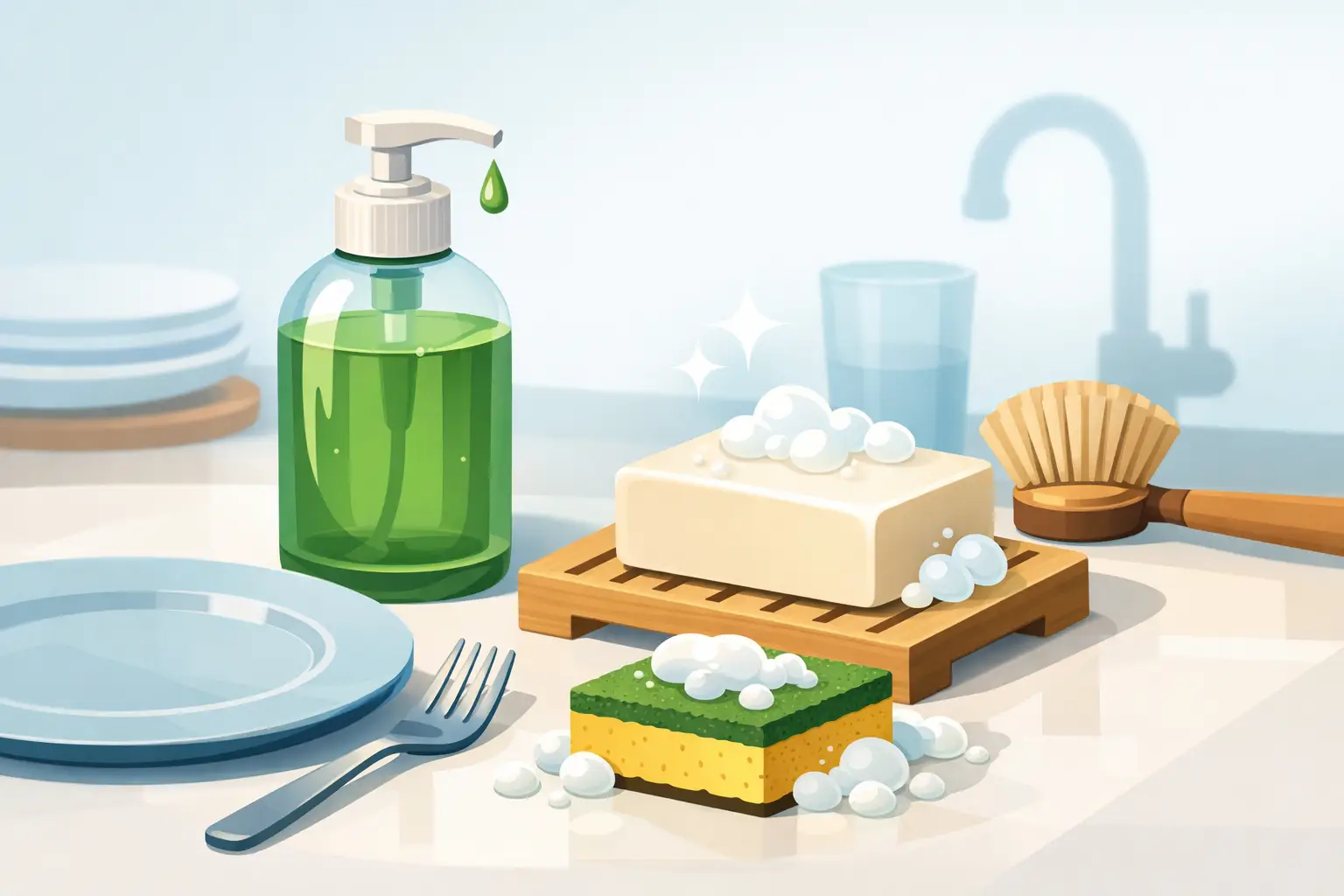
A household does not need one cleanser for every person and task. A creamy traditional bar may be ideal for everyday hand and body washing, while a syndet cleanser may suit a teenager with a sensitive scalp or someone who finds hard-water residue intolerable. For dishes, a purpose-made solid dish soap is more sensible than using body soap at the sink.
If you are buying a gift, consider the recipient’s water and skin rather than choosing only by scent. An unscented or gently scented, well-cured bar is often the more thoughtful option for someone with dry, mature or sensitive skin. Pair it with a draining dish and the gift becomes both beautiful and useful.
Hard water does not mean you must give up on traditional soap. It simply asks for a little more intention: choose a carefully made bar, let it dry properly, cleanse gently and judge the result by how your skin feels long after the towel is hung up.