

That tight, hot, over-cleansed feeling after washing is hard to ignore. If you are searching for how to calm soap irritated skin, the first thing to know is this – you usually do not need more cleansing, stronger products, or a complicated routine. You need less friction, less stripping, and more support for the skin barrier.
Soap irritation can show up quickly. Your skin may feel squeaky, look pink, itch around the cheeks or hands, or start flaking by the end of the day. For some people it passes in hours. For others, especially if skin is already dry, sensitive or eczema-prone, one harsh wash can tip skin into a longer spell of discomfort.
How to calm soap irritated skin without making it worse
The instinct is often to scrub off whatever is causing the problem or apply a long line-up of soothing products. In practice, both can backfire. Irritated skin is already under strain. The gentlest approach is usually the most effective.
Start by rinsing the area well with lukewarm water. Not hot. Heat can increase redness and leave skin feeling even drier afterwards. A proper rinse helps remove any residue from the cleanser, fragrance, or surfactants that may still be sitting on the skin.
Then pat dry with a soft towel. Do not rub. It sounds small, but rubbing can turn mild irritation into a stinging, inflamed patch very quickly, particularly around the eyes, neck, hands, or anywhere skin is thinner.
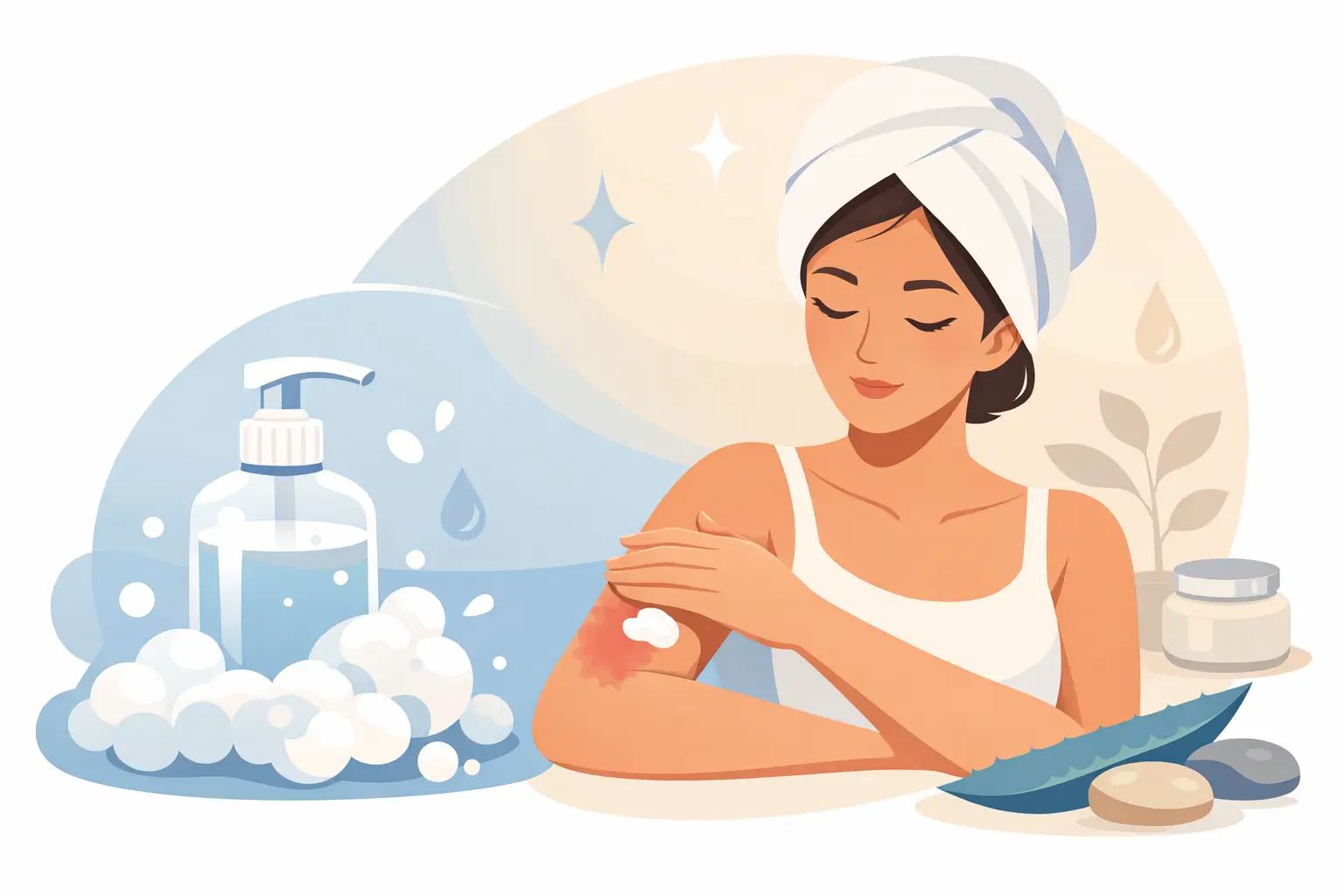
Once skin is slightly damp, apply a simple, fragrance-free moisturiser or balm. This is where barrier support matters most. Look for formulas that help reduce water loss and soften the surface rather than active products that promise exfoliation, brightening, or deep cleansing. When skin is reactive, even ingredients that are normally fine can feel like too much.
If the irritation is on your hands, reapply after every wash for a day or two. Hands recover more slowly because they are constantly exposed to water, weather, and repeated cleansing.
Why soap can irritate skin in the first place
Not all soap irritation means you are allergic to soap. Very often, the issue is that the product was too stripping for your skin as it is right now. Skin needs a healthy barrier made up of lipids, moisture, and well-structured cells. When that barrier is disturbed, water escapes more easily and irritants get in faster.
Traditional soap has a naturally higher pH than skin, and some cleansers are simply more aggressive than others. Add frequent washing, hot water, hard water, winter air, or existing dryness, and skin can start to protest. The same bar one person loves can leave another person tight and flaky.
This is why formulation matters. A thoughtfully made bar with skin-compatible fats and a balanced feel on the skin is very different from a harsh, detergent-heavy wash that leaves everything squeaking. Skin does not need to feel stripped to be clean.
There is also the question of fragrance and essential oils. Natural does not always mean non-irritating. Botanicals can be beautiful in the right formula, but when skin is already sore, even pleasant, plant-based scent can sting.
The first 24 hours after soap irritation
Think of the next day as a recovery window. Keep the routine plain and steady. Wash only when necessary, and if you do cleanse, choose the mildest option you have. For the face, that may mean rinsing with lukewarm water in the morning and skipping anything foaming until the tightness settles. For the body, cleanse strategically rather than all over if skin is sore.
Avoid exfoliating acids, retinoids, strong vitamin C, physical scrubs, and anything marketed as clarifying or purifying. These may be useful in other contexts, but irritated skin rarely thanks you for ambition.
Make-up can also be a trade-off. If skin feels hot, stings with application, or looks flaky, a full face of products may worsen discomfort. If you do need to wear make-up, keep it minimal and remove it gently.
A cool compress can help if skin feels especially warm or itchy. Keep it soft, clean, and brief. You are aiming to calm the skin, not shock it.
How to calm soap irritated skin long term
If this keeps happening, the answer is not only what to put on after irritation appears. It is also about changing what caused it.
The most useful shift is choosing cleansers that respect the skin barrier. For many people, that means simpler ingredient lists, fewer unnecessary additives, and formulas built around nourishing fats rather than harsh detergents. Skin that runs dry or sensitive often does better with cleansing that feels creamy, conditioning, and gentle rather than aggressively foamy.
This is one reason traditional, carefully made bars have kept their place. When soap is crafted with high-quality fats and a clear purpose, it can cleanse properly while feeling far kinder on the skin. Tallow, in particular, is valued for its skin compatibility and naturally supportive profile. It is rich in fat-soluble vitamins and has a composition that sits closer to the skin’s own protective layer than many people expect. That does not make every tallow soap right for every person, but it does explain why some find it far more comfortable than standard supermarket options.
It also helps to shorten your routine overall. Sensitive skin often improves when it has fewer variables to deal with. One gentle cleanser, one reliable moisturiser, and consistency usually beat a shelf full of products.
Signs your skin barrier needs extra support
If your skin reacts to soap more than once, there may already be underlying barrier disruption. Common signs include persistent dryness, stinging when applying basic skincare, rough patches, redness that lingers, and a feeling that skin is both oily and dehydrated at the same time.
Hands are a classic example. Repeated washing, household cleaning, cold air, and sanitiser can leave them cracked and uncomfortable. In that case, the best results often come from a combination of a gentler hand soap and a richer balm used regularly, especially overnight.
For the face, over-cleansing is often the hidden problem. Many people wash twice a day, use active serums, and then wonder why skin feels cross. If your skin is reactive, once-daily cleansing in the evening may be enough, with a water rinse in the morning.
When it might be more than simple irritation
Sometimes soap is not the whole story. If you develop swelling, hives, blistering, weeping skin, or a rash that spreads, it may be an allergic reaction or another skin condition rather than straightforward irritation. The same applies if symptoms do not improve after several days of gentle care.
If you have eczema, rosacea, psoriasis, or very reactive skin, your tolerance can be lower even with well-made products. It is worth patch testing anything new, especially scented products, exfoliants, and heavily preserved formulas.
Children’s skin also needs a lighter touch. What works for an adult can still be too much for a child, especially in winter or after frequent bathing.
Choosing a gentler soap next time
A better soap does not need to be flashy. In many cases, less is more. Look for bars made with nourishing fats, a clear purpose, and no unnecessary clutter. Oatmeal can be helpful for comfort. Unscented or lightly scented options are often the safer choice for skin that is flaring. If your skin is dry, anything that leaves it taut after washing is probably not your best match.
Good soap should clean the skin, not pick a fight with it. That is a small but meaningful difference. At Luna Natural Soap Co., that belief sits at the centre of how traditional soap should feel – practical, comforting, and made for real skin.
There is always some trial and error with sensitive skin. Water hardness, season, stress, hormones, and the rest of your routine all play a part. But if you keep returning to the basics – gentler cleansing, lukewarm water, simple moisturising, and fewer irritants – skin usually has a chance to settle.
When skin is irritated, calm is the goal, not perfection. Give it quiet care, and let recovery be enough for now.