

That tight, prickly feeling after a shower is often blamed on dry weather, hard water or sensitive skin. Sometimes the culprit is far simpler. The wrong soap for itchy skin can leave your barrier feeling stripped, reactive and uncomfortable within minutes.
It is easy to assume all soap does the same job. Clean is clean. But anyone living with dryness, eczema-prone patches or skin that flares for no obvious reason knows that is not true. What you wash with matters, and so does how that bar is made.
What itchy skin is really asking for
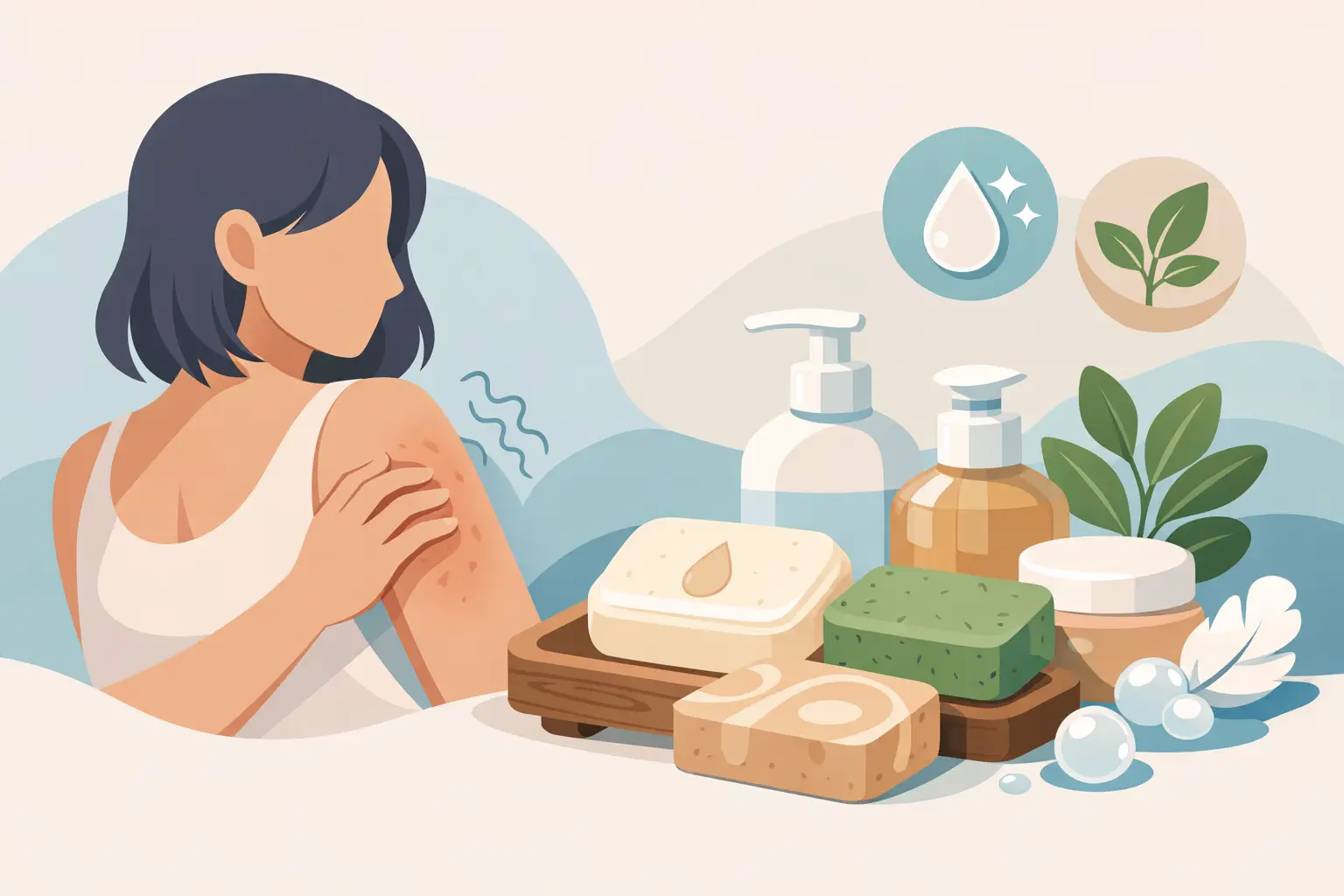
Itchy skin is not always dirty skin. More often, it is skin asking for calm. That usually means one thing: your barrier needs support, not a harsher cleanse.
Healthy skin holds moisture in and keeps irritants out. When that barrier is compromised, skin can feel rough, hot, flaky or simply never quite comfortable. A cleansing bar that removes too much oil, uses aggressive detergents or relies on heavy fragrance can make that cycle worse. You wash, your skin feels squeaky, then the itching begins.
This is why the best soap for itchy skin is usually not the strongest, the most heavily scented or the one promising a dramatic deep clean. It is the one that cleans gently and leaves the skin feeling settled afterwards.
What to look for in soap for itchy skin
A good bar for itchy, sensitive skin tends to be simple in the best possible way. It should cleanse properly, but not leave the skin feeling stripped. It should contain nourishing fats, be thoughtfully formulated and avoid unnecessary extras that increase the risk of irritation.
Traditional cold-process soap can be a very good fit here, especially when it is made with skin-compatible fats. Tallow is a good example. It has a fatty acid profile that works beautifully in soap, creating a firm, creamy bar with a rich lather and a more conditioned feel on the skin. For people whose skin is already dry or unsettled, that difference can be noticeable.
Tallow is also naturally rich in vitamins A, D, E and K, along with B12. While soap is a wash-off product, ingredient choice still matters. A well-made bar built around nourishing fats can help the skin feel less depleted after cleansing, which is often the first win when itch is part of daily life.
Oatmeal is another ingredient worth noting. Finely ground oats are valued for their soothing feel and are often well suited to skin that needs a calmer, softer cleanse. Goat milk can also be useful in a gentle bar, adding a creamy quality that many people with dry skin appreciate.
Ingredients and features worth avoiding
If your skin is itchy, irritated or prone to flare-ups, less is often more. Strong fragrance is a common issue. Even when a scent smells beautiful in the bath, it may not be what your skin wants every day.
Harsh foaming agents can also be problematic. A dramatic lather does not always mean a better cleanse. In fact, bars or cleansers that leave the skin feeling tight are often taking too much with them.
Bright colours, complicated ingredient decks and exfoliants that are too rough can all tip sensitive skin in the wrong direction as well. There is a place for active, invigorating products, but itchy skin is rarely asking for stimulation. It is asking for relief.
Soap for itchy skin and eczema-prone skin
If you are dealing with eczema-prone skin, caution matters. Not every natural product is automatically suitable, and not every soap will feel good during a flare.
This is where honesty is important. Even a beautifully made artisan bar may not suit everyone at every stage. Some people find traditional soap far gentler than synthetic body washes. Others may prefer to avoid soap on certain areas when their skin is very reactive. It depends on the severity of the dryness, where the itching occurs and how compromised the skin barrier is at that moment.
A sensible approach is to choose a mild, fragrance-light or fragrance-free bar and patch test first. Use it on a small area for several days before switching your whole routine. If your skin feels calmer, not tighter, you are probably on the right track.
When skin is actively broken, weeping or intensely inflamed, it is best to be even more careful and seek medical advice if needed. Good skincare supports the skin, but it does not replace proper treatment.
Why traditional soapmaking can make a difference
There is a reason traditional methods still matter. Slow, cold-process soapmaking allows the maker to work with high-quality fats, control the recipe carefully and produce a bar that feels considered rather than mass-made.
That matters for itchy skin because formulation is not an afterthought. The balance of oils or fats, the cure time, the superfat level and the quality of ingredients all influence how the bar behaves on the skin. A rushed product made to hit a price point often feels exactly that way in use.
Small-batch soapmaking also tends to favour transparency. You can actually understand what is in the bar and why it is there. For customers trying to avoid mystery fragrance blends, unnecessary fillers or detergent-heavy formulas, that clarity is valuable.
At Luna Natural Soap Co., this thinking sits at the centre of the work. Slow-rendered tallow, traditional methods and carefully chosen ingredients are not marketing extras. They are the reason a simple daily bar can feel noticeably kinder on real skin.
How to use soap for itchy skin without making things worse
The bar itself matters, but so does the way you use it. Even a gentle soap can be undermined by very hot water, over-washing or scrubbing too aggressively.
Keep showers warm rather than hot. Use the bar where you need it most rather than lathering every inch of skin repeatedly. If your skin is especially dry, focus on underarms, hands, feet and any areas that genuinely need cleansing, and let water do more of the work elsewhere.
After washing, pat the skin dry instead of rubbing. Then apply a moisturiser or balm while the skin is still slightly damp. This step is often what turns a decent routine into a helpful one. Cleansing removes what does not belong on the skin; moisturising helps restore what your barrier needs.
If hard water is part of the problem, you may still notice some dryness no matter how good your soap is. In that case, your bar should work as part of a gentler routine, not as a miracle fix on its own.
A quick reality check on natural soaps
Natural is not a magic word. It does not guarantee suitability, purity or comfort. Some natural essential oils can irritate sensitive skin. Some handmade bars are lovely for normal skin but too active for someone dealing with itching or eczema-prone dryness.
That is why ingredient philosophy matters more than trend language. Look for bars made with a clear purpose: gentle cleansing, barrier support and fewer irritants. A soap can be beautifully crafted and still practical. In fact, that is the sweet spot.
If you are shopping for a family, this becomes even more useful. One well-made, plastic-free bar that suits dry or sensitive skin is often a better choice than several different products cluttering the bathroom and disappointing everyone in turn.
How to tell if your soap is helping
Your skin usually answers quickly. A suitable soap should leave you clean, but not desperate for relief the moment you step out of the shower. You may still need a moisturiser afterwards, especially in winter, but the itching should not spike because you washed.
Look for small signs. Less tightness. Fewer flaky patches. A calmer feel after bathing. Skin that does not seem to protest every time it meets water. Those are meaningful improvements, even if they sound modest.
If a soap stings, leaves you very red or seems to make your skin more reactive over a week or two, it is probably not the right fit. There is no prize for finishing a bar your skin clearly dislikes.
Choosing with confidence
The best soap for itchy skin is rarely the loudest product on the shelf. It is usually the quiet one with a thoughtful formula, nourishing fats and a gentler way of cleansing.
For some people that will mean a plain tallow bar. For others, an oatmeal soap will feel like the better match. If your skin is highly reactive, fragrance-free may be the wisest route. The point is not perfection. It is paying attention to what your skin is telling you and choosing products that respect it.
When skin is itchy, comfort becomes a luxury very quickly. It should not have to be. A carefully made bar, rooted in traditional ingredients and honest formulation, can make the everyday act of washing feel calm again. Start there, and let your skin tell you the rest.