

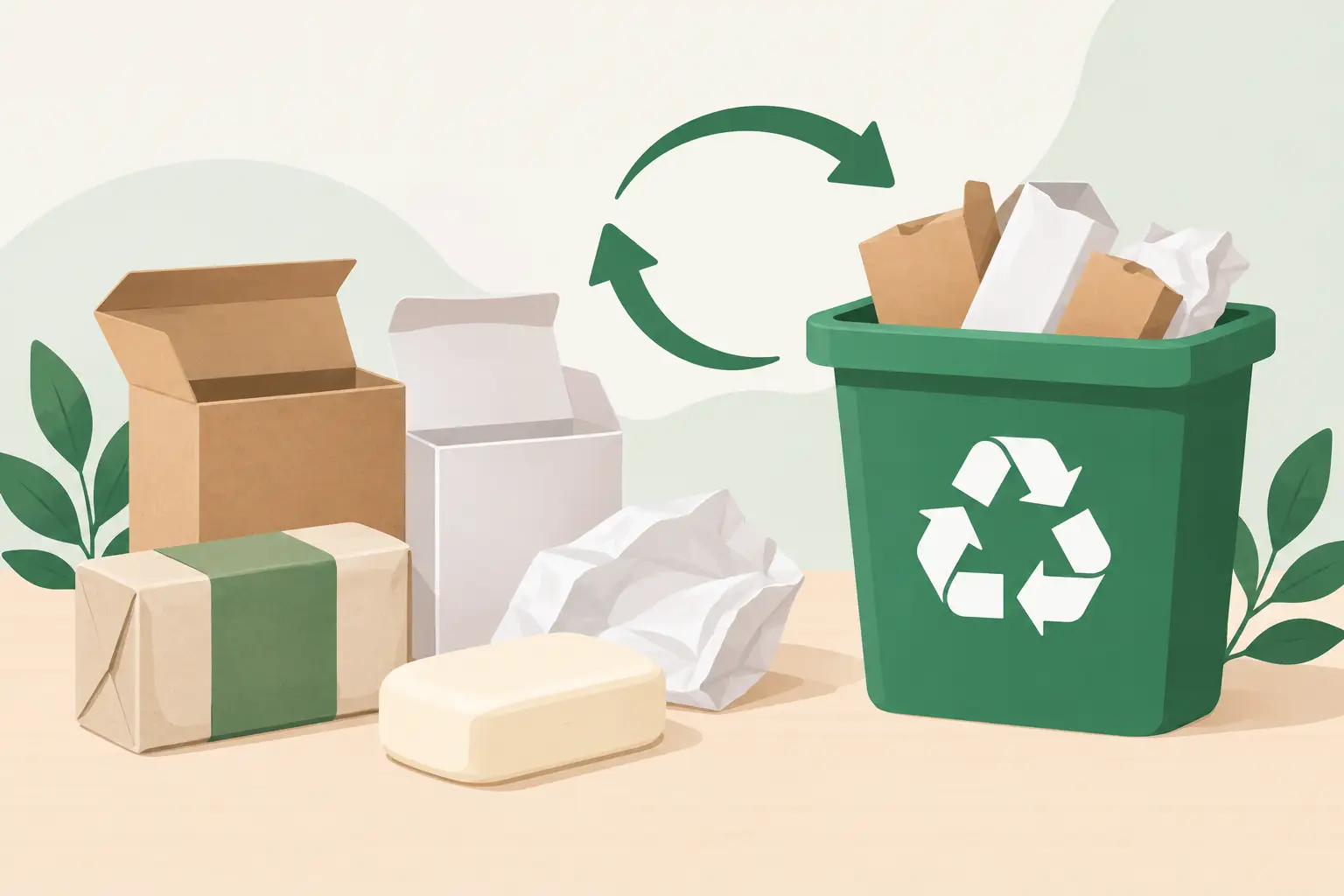
A beautiful bar of soap should not leave you standing over the bin, wondering where its wrapping belongs. The good news is that most soap packaging is straightforward to manage once you separate the materials. Knowing how to recycle soap packaging starts with one simple rule: recycle each material on its own, clean and dry where needed, and follow your local council guidance where collection rules differ.
For a plastic-free bar, the answer may be as simple as placing a clean cardboard box in your paper recycling. A pump bottle, gift set or postal parcel needs a little more thought. That extra minute matters. It helps keep recyclable materials in circulation and prevents good paper or glass from being rejected because it is mixed with the wrong component.
How to recycle soap packaging at home
Start by looking at the packaging as separate pieces rather than one item. A soap box may have a paper sleeve, a small label and a clear seal. A skincare jar may have a glass base, plastic lid and paper insert. If the pieces come apart easily, separate them before recycling.
Do not spend ten minutes scraping at glued-on labels or trying to prise apart parts that are firmly fixed. Recycling should be practical. Remove obvious mixed materials, such as ribbons, magnets, plastic windows or metal clips, then sort the main item according to the guidance for your area.
The recycling symbol can be useful, but it is not a guarantee that your kerbside collection accepts that material. It often identifies what an item is made from, rather than confirming that it can be processed locally. When in doubt, your council’s accepted-materials list is the final word.
Cardboard soap boxes and paper wraps
Cardboard soap boxes are usually the easiest part of the routine. Flatten them and place them in your paper and card recycling, provided they are dry and free from heavy product residue. The same generally applies to plain paper wraps and paper belly bands.
Small marks from natural soap oils are normally not a problem. A wrapper that is saturated with oil, wet through or heavily soiled is less useful to paper recyclers and may need to go in general waste. This is one of those occasions where trying to recycle everything can do more harm than good by contaminating a whole batch of paper.
Watch for special finishes. Foil stamping, wax coatings, glitter, laminated paper and plastic-lined windows can make a box harder to recycle. If a box has a tiny plastic window, remove it if it lifts away cleanly. If it does not, check local guidance before placing the box in recycling. Plain, uncoated card remains the simplest and most widely recyclable choice.
Glass jars and bottles
Glass jars used for balms, creams or liquid soap are durable, valuable recycling materials. Empty the container, give it a quick rinse if there is visible residue, and leave it to dry. Place the glass portion in the appropriate glass recycling stream, not the paper bin.
Lids should be removed. Metal lids are accepted in many household recycling collections, while plastic lids depend on the type of plastic and your local rules. Keep them separate from the jar so the materials can be sorted correctly. Pumps and droppers are more complicated and should not be pushed into a glass bank with the bottle attached.
If a jar is in excellent condition, reusing it first can be the more thoughtful option. Small jars are useful for travel-sized toiletries, pins, seeds or homemade salves. Reuse is not always possible, but a sturdy container deserves a second look before it reaches the recycling box.
Plastic pumps, caps and refill bottles
Plastic packaging is where local guidance matters most. Rinse bottles that held liquid soap or lotion, then check whether the bottle itself is accepted in your household collection. If it is, remove the pump where possible.
A pump often combines several materials: different plastics, a metal spring and a dip tube. Many kerbside systems cannot sort it effectively. Some areas accept pumps through specialist collection points, while others ask for them to go in general waste. It is not ideal, but placing an unsuitable pump in recycling can cause more disruption than disposing of it correctly.
Caps are often simpler than pumps, though their recyclability still varies. If your council accepts the bottle but not loose small plastics, screw the cap back on only when its guidance specifically recommends this. Small pieces can fall through sorting machinery, so local instructions are worth following closely.
Aluminium tins and metal containers
Soap tins and metal balm containers are long-lasting, giftable and often widely recyclable. Empty and wipe out the container, then put it with metal recycling if accepted locally. A quick clean is enough. There is no need to use more hot water and washing-up liquid than the task requires.
Before recycling, consider whether the tin can hold another bar, travel soap, jewellery or small household essentials. A tin that is reused for years has a lower impact than one that is recycled after a single use. Once it is dented, damaged or no longer wanted, metal recycling is usually the right next step.
Do not forget postal packaging
Online orders can arrive with more than the soap box itself: a shipping carton, tissue paper, paper tape, protective fill and occasionally a delivery label. Most plain cardboard cartons can be flattened and recycled with card. Plain tissue paper is accepted in some areas but not all, because its fibres are shorter than those in standard paper. Check locally, or reuse clean sheets for wrapping a gift or storing delicate items.
Paper tape can usually stay on a cardboard box. Plastic tape should be removed where practical, especially if there is a large amount of it. Delivery labels are generally fine to leave on unless they are large, plastic-coated or contain a prominent non-paper section.
Avoid wish-cycling padded envelopes. Paper envelopes lined with bubble wrap, foil or plastic need to be separated into their individual materials, if that can be done easily. If not, they often belong in general waste. Choosing paper-based protective materials from the outset makes this stage far less complicated.
A lower-waste soap routine starts before the bin
Recycling is useful, but it is only one part of a considered bathroom routine. The less packaging you bring home, the less you need to sort later. A firm soap bar can replace a plastic bottle in the shower or by the sink, and a well-drained soap dish helps that bar last longer.
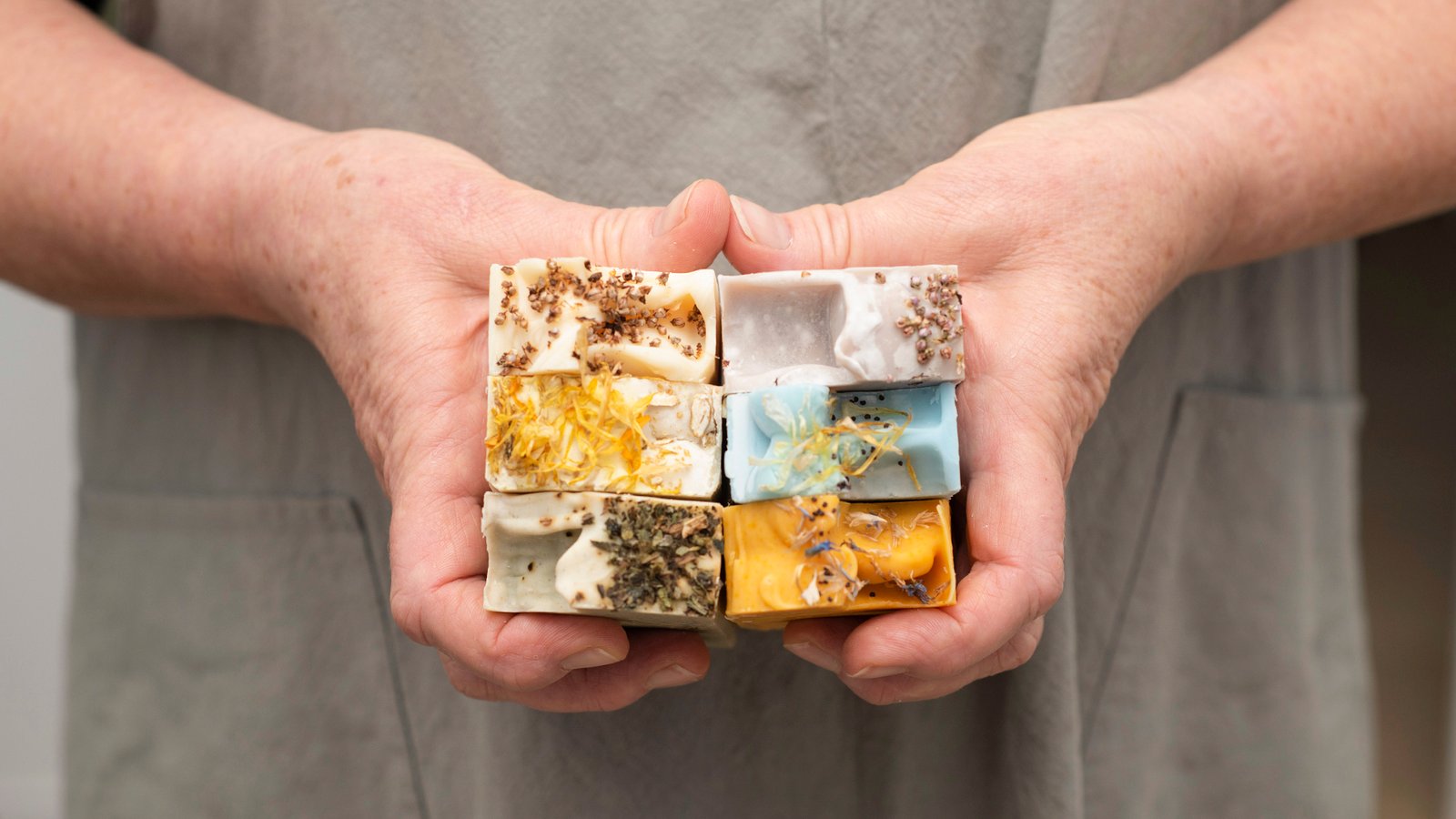
Choose packaging that is purposeful rather than excessive. Cardboard boxes protect a handmade bar during transport and make gifting feel special, but a box does not need layers of plastic inside it. At Luna Natural Soap Co., plastic-free packaging and small-batch making are part of the same practical idea: use materials with care, avoid unnecessary waste and make products worth using to the very last sliver.
Save clean paper wraps for a small gift, keep a useful tin in circulation, and flatten card as you go rather than letting it pile up in the kitchen. These are modest habits, but they make sustainable choices feel less like a project and more like part of everyday care.
The best packaging is not necessarily the package with the most symbols on it. It is the one that protects what you need, uses honest materials and has a clear next life in your home or local recycling system. Let your next empty soap box be a small, satisfying reminder that thoughtful care can extend well beyond the bar itself.