

Good tallow begins long before the soap mould. Learning how to render beef tallow means turning a humble, often overlooked ingredient into a clean, stable fat with a firm texture and a beautifully practical purpose. Done slowly, it becomes the nourishing foundation of traditional soap, cooking fats and simple low-waste skincare.
At Luna Natural Soap Co., we value this process because it honours the whole animal and gives us greater control over purity. Rendering is not complicated, but it does reward patience, good sourcing and a gentle hand.
Start with well-sourced beef fat
The best tallow comes from suet: the hard, crumbly fat found around the kidneys and loins of the animal. It is naturally cleaner and milder than softer fat trimmings, and generally produces a firmer, paler tallow. Ask a trusted local butcher for beef suet, ideally from grass-fed cattle raised with care.
Sourcing matters. If tallow will become part of a soap or skincare routine for dry, sensitive or troubled skin, it makes sense to know where it began. Local, regenerative farms can offer useful traceability while supporting a more thoughtful, circular approach to food and farming.
You can render softer trimmings too, but expect a deeper colour, more pronounced beef aroma and a slightly softer finished fat. For cold-process soap, suet is usually the better choice. It creates a clean, dependable tallow that contributes to a hard bar and a rich, creamy lather.
What you need to render beef tallow
Keep the set-up simple: chilled beef suet, a sharp knife or food processor, a heavy saucepan or slow cooker, a fine sieve, muslin or an unbleached cloth, a heatproof bowl or jug, and clean dry jars with lids.
Cleanliness is particularly useful at the straining and storing stage. Any pieces of meat, moisture or browned sediment left in the finished tallow can shorten its shelf life and add an unwanted scent. There is no need to chase perfection on the first pass, though. Tallow can be filtered again.
Prepare the suet while it is cold
Cold fat is much easier to handle. Remove any visible pieces of meat, blood vessels, membrane or connective tissue, then chop the suet into very small pieces. A food processor can make this quicker, especially if the fat is partly frozen first.
Smaller pieces render more evenly and reduce the temptation to turn up the heat. That matters because high heat can brown the solids, creating a stronger aroma and a darker tallow. Slow rendering protects the clean, mild character you want for soapmaking.
How to render beef tallow using a slow cooker
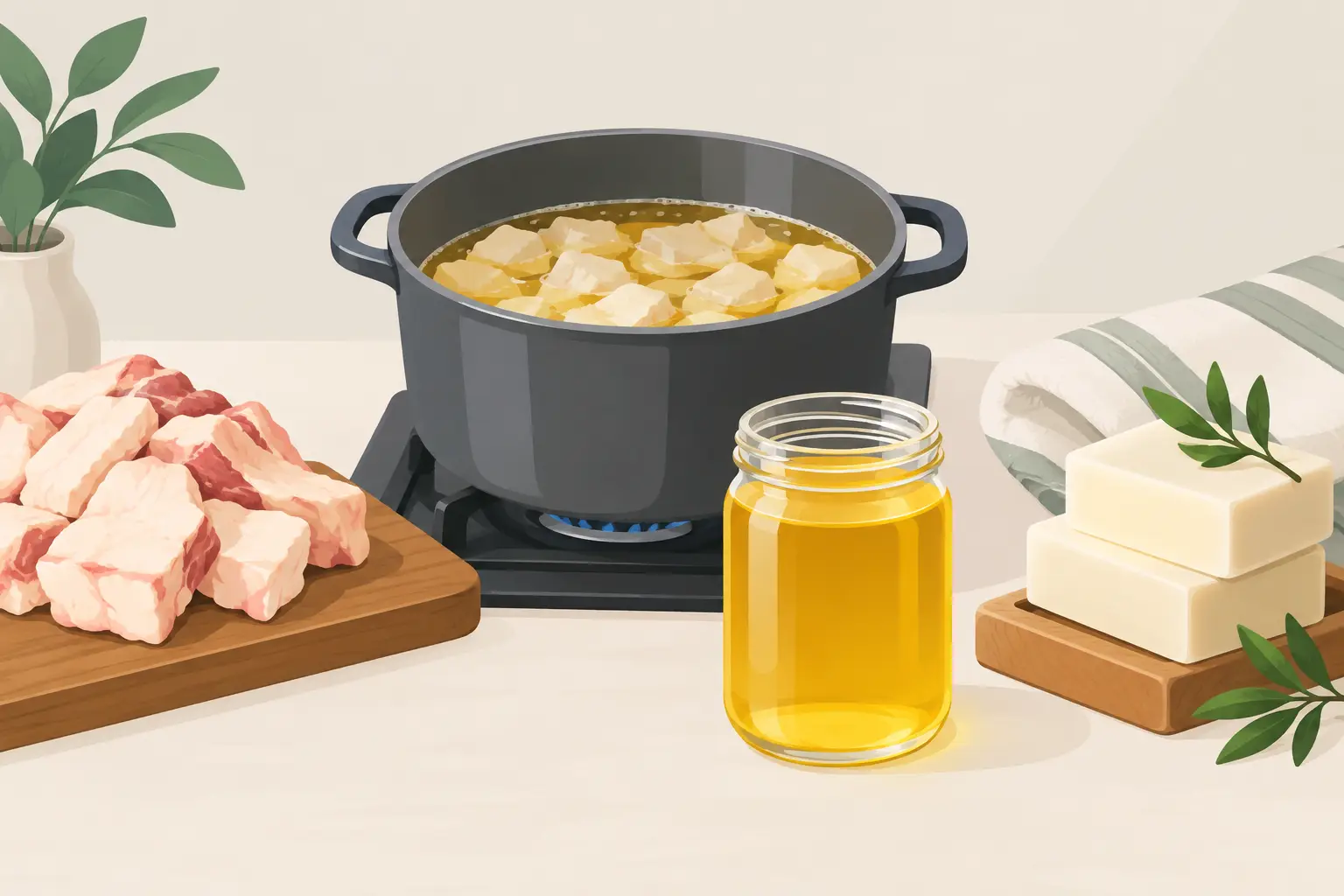
For most home soapmakers, a slow cooker is the calmest, most forgiving method. Add the chopped suet to the bowl and set it to low. Do not add water for this dry-rendering method. Put the lid on slightly askew if possible, allowing steam to escape without splattering your kitchen.
As the fat warms, clear liquid tallow will begin to gather beneath the pieces. Stir occasionally with a clean, dry spoon, breaking up any clumps and checking that nothing is catching around the edges. Depending on the quantity and size of your pieces, rendering can take several hours.
The process is ready for straining when most of the fat has melted and the remaining solids look shrunken, pale golden and lightly crisp. They should not be dark brown or burnt. A gentle, almost quiet simmer is the aim – not frying.
Carefully pour the liquid through a fine sieve lined with muslin into a heatproof bowl or jug. Let it cool undisturbed. As it sets, good tallow will turn creamy white to pale ivory and feel firm at room temperature.
A saucepan works well too
A heavy-based saucepan is ideal for smaller batches, provided you stay nearby. Use the lowest heat your hob will hold and stir regularly. If you notice sizzling, browning or a strong cooked-meat smell, the pan is too hot. Take it off the heat briefly, then return it at a lower setting.
The advantage of a saucepan is speed and direct control. The trade-off is that it needs more attention. A slow cooker takes longer but makes it easier to keep the temperature gentle.
Should you use water when rendering tallow?
Water rendering is another traditional method. A little water is added to the fat as it melts, helping prevent scorching and allowing impurities to settle separately as the mixture cools. The solid tallow lifts to the top, while the water and debris remain underneath.
This approach can be helpful when working with less tidy trimmings or when you want an extra-clean result. However, all water must be removed before storage or soapmaking. Moisture can encourage spoilage, and it is not welcome in a jar of finished tallow.
For clean kidney suet, dry rendering is usually simpler. For mixed fat trimmings, a water render followed by a second purification may be worth the extra time. It depends on the material in front of you, not on a rigid rule.
Purify rendered tallow for soapmaking
If your first batch smells quite beefy, looks darker than you hoped or has sediment at the bottom, re-render it. This is common, especially when learning, and it does not mean the batch has failed.
Place the solid tallow back in a clean pan or slow cooker and melt it gently. For a further clean, add water and allow the mixture to cool completely. Once the tallow has hardened on top, lift it away from the water, scrape any residue from its underside, then melt it once more over low heat to evaporate every trace of moisture.
Strain the final liquid tallow through fresh muslin into dry jars. Avoid pressing the solids through the cloth. Pressing can force fine particles into your finished fat, which defeats the purpose of filtering.
For soap, a clean and mild tallow is worth the extra step. Tallow brings structure, longevity and a cushioning feel to a traditional bar. It pairs especially well with olive oil, coconut oil and gentle botanicals, but every recipe needs to be properly calculated for its own ingredients.
Cool, store and use your tallow well
Pour strained tallow into clean, completely dry glass jars or silicone moulds. Leave a little space at the top and allow it to cool uncovered until set, then add the lid. Condensation is a sign that the tallow was sealed while still too warm, so let any trapped moisture escape before closing the jar.
Stored in a cool, dark cupboard, properly rendered tallow can keep for many months. Refrigeration extends its freshness further, particularly in a warm kitchen or if you have made a large batch. If it develops mould, visible moisture, or a sharp rancid smell, it is time to discard it.
For soapmaking, weigh the tallow after rendering rather than relying on the weight of raw suet. Rendered fat is concentrated, and accurate weighing is essential when working with sodium hydroxide. Always use a reliable soap calculator, wear appropriate protective equipment and follow established cold-process safety practices. Tallow itself is gentle to work with; lye is not.
Common rendering mistakes and simple fixes
A strong smell usually comes from heat that was too high, too much meat left on the fat, or fat trimmings rather than clean suet. A second, slow rendering can improve it considerably. Dark sediment means the tallow needs another strain, while a soft finished texture may simply reflect the type of fat used.
If your tallow feels grainy, it is often still perfectly usable. Graininess can happen as different fatty acids cool at different speeds. Melt it gently and allow it to cool slowly for a smoother texture, though soapmaking will not mind a little natural variation.
Do not pour liquid fat down the sink, even after a small batch. It cools and solidifies in pipes. Let scraps set in a container before placing them in food waste where accepted, or use them thoughtfully in cooking if they are clean and suitable.
Rendering tallow asks for an afternoon, not a shortcut. In return, you have a traditional ingredient made with intention: local fat transformed into something useful, long-lasting and beautifully uncomplicated. Let it cool, label the jar, and enjoy the quiet satisfaction of making more from what might otherwise have been wasted.