


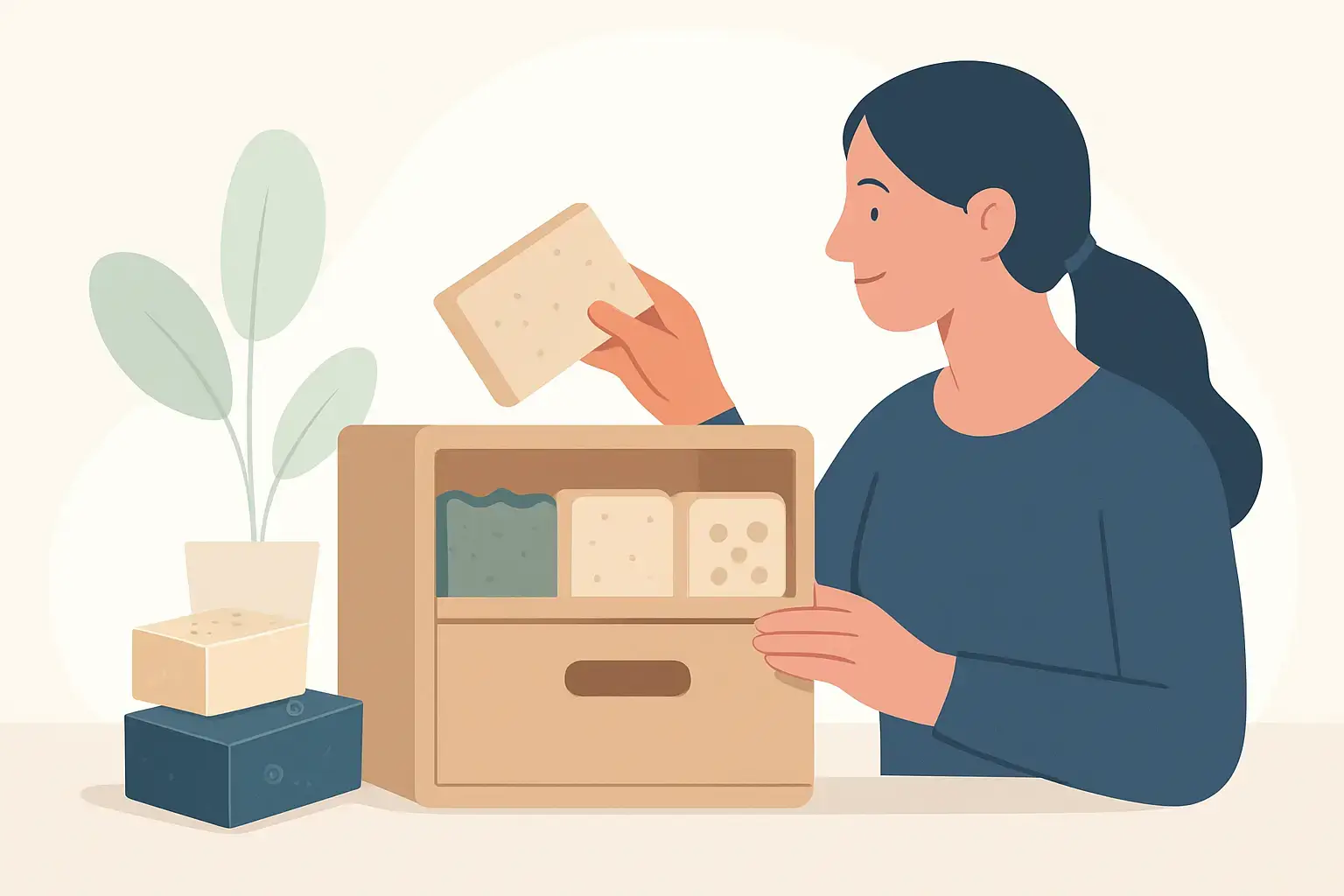
A handmade bar that turns soft, sticky, or “sweaty” isn’t failing – it’s simply reacting to its environment. Natural soap is glycerine-rich, and glycerine loves water. In a steamy bathroom, that can mean a bar that seems to melt between uses, loses its shape, or develops tiny beads on the surface.
The good news is that storage is the easiest way to protect your soap’s lifespan and your skin experience. When you store handmade soap well, you get a firmer bar, a richer lather, and a cleaner rinse – with less waste left behind in the dish.
What handmade soap needs between uses
Handmade cold-process soap is still a simple thing: oils (or tallow), lye, and time. During curing, excess water evaporates and the bar hardens. Once it’s in your bathroom, it keeps responding to moisture in the air and on your hands.
Between uses, your bar needs two things: airflow and a chance to dry fully. Not “a bit less wet”, but properly dry on all sides. If the underside stays damp against a flat surface, it will soften first, then smear, then disappear faster than it should.
There’s also a trade-off worth knowing. If you over-protect soap from air by sealing it tightly while it’s still even slightly damp, you can trap moisture and create a bar that feels rubbery or develops an off smell. Air is your friend. So is dryness.
How to store handmade soap bars in the bathroom
Most soap storage problems start at the sink or in the shower. Bathrooms swing from dry to humid within minutes, and shower shelves are practically designed to keep things wet.
A draining soap dish is the simplest upgrade you can make. Look for a dish with raised ridges, holes, or a slatted base so water can run away and the bar can breathe underneath. If you love a ceramic dish (beautiful, but often flat), add a small lift inside it – a soap saver insert, a small loofah slice, or even a wooden slat that keeps the bar out of its own puddle.
Placement matters more than most people think. If your soap lives under the direct spray of the shower, it will never really dry. Move it to a drier corner, a higher shelf away from the stream, or outside the shower altogether and bring it in only when you need it.
If more than one person is using the bar, drying time becomes a real factor. A bar used morning and night by different people has less chance to firm up. In that case, it helps to keep two bars on rotation: one in use, one drying. You’ll often find both last longer this way than a single bar constantly being re-wet.
A note on “soap sweat”
Those little water-like droplets you sometimes see on natural soap are usually glycerine drawing moisture from humid air. It’s common with handmade bars, especially in steamy bathrooms, and it’s not mould.
If you dislike the feel, focus on ventilation: a cracked window, an extractor fan run a little longer, and a dish that drains properly. The bar will settle once it can dry out.
Storing spare handmade bars (without ruining the scent)
If you buy a few bars at once – or you’re building a little cupboard of favourites – storage becomes about balance. You want to protect the bar from humidity and dust, but you don’t want to suffocate it.
The best place for spare bars is cool, dry, and out of direct sunlight. A linen cupboard, a bedroom drawer, or a shelf in a hallway works well. Bathrooms are usually the worst option for spares, simply because damp hangs around even when everything looks dry.
Keep bars in breathable packaging where possible. Cardboard boxes, paper wraps, or a cotton bag allow airflow while keeping things tidy. If your bars are unwrapped, you can still store them neatly in a cardboard shoebox or a lidded tin with a little ventilation (even a small gap is enough). Avoid fully sealed plastic for long-term storage, especially if the bars are freshly made or have been in a humid room.
Scent is its own consideration. Essential oils and fragrance oils can fade over time, and different bars stored together may “borrow” each other’s aroma. If you’re keeping strongly scented bars alongside more subtle ones, give them a little separation – individual paper wraps, or group similar scents together. This keeps your gentle oat bar from smelling like mint, and your floral bar from picking up smoky notes.
There’s a second trade-off here. Extremely dry storage can make a bar harder and longer-lasting, but it can also make the scent feel quieter. If you love a bold aroma, store your bar well, but don’t expect it to smell as intense six months later as it did on day one. That’s natural, especially with essential oils.
How to store handmade soap bars for travel
Travel storage fails for one reason: we pack soap while it’s damp. A wet bar in a sealed container is a recipe for mush.
If you can, let your bar dry completely before packing. Even half a day on a draining dish can make a difference. For short trips, a soap tin works well, but choose one with internal ridges or pair it with a small insert so the bar isn’t sitting in moisture. For longer trips, breathable matters more. A cotton soap bag or a simple wrap of paper inside a pouch allows the bar to air out when you open your luggage.
If you need to pack the bar straight after use, treat it like a damp flannel: contain it, but let it breathe as soon as you can. Pop it into its tin or case for the journey, then open it on arrival and set the bar somewhere it can dry.
One practical tip that travellers love: take a smaller piece. Soap ends or cut-down bars dry faster, fit into small containers, and you won’t worry about losing a full-size bar. It’s also a naturally low-waste way to use every last slice.
Keeping handmade soap hygienic (without overthinking it)
Soap is self-cleaning in the sense that it’s designed to lift oils and grime, and it rinses away. Still, storage affects how “clean” a bar feels.
If your bar sits in water, it will develop a soft gel layer that can feel slimy. That’s not bacteria taking over – it’s the soap absorbing water. A good draining dish solves most of this.
For shared household use, consider giving each person their own bar, especially if someone is managing eczema-prone or reactive skin and wants consistent ingredients and handling. It’s not about fear; it’s about keeping routines simple and calm.
If a bar picks up fluff, hair, or residue from a grimy dish, just rinse and rub the outside under running water for a few seconds. If you want a fresh edge, a quick wipe with a clean cloth or a light scrape with a butter knife will remove the softened surface.
Why tallow-based bars can feel different in storage
Tallow-based cold-process soap often cures into a firm, creamy bar with a dense, rich lather. Many people find it less drying and more barrier-friendly than detergent cleansers, which is why it’s a favourite for real skin that needs calm rather than stripping.
Even so, tallow soap still needs the same storage basics: drain, dry, and avoid constant steam. A well-formulated, well-cured bar will reward you when you treat it properly – you’ll notice it lasts longer, feels smoother in the hand, and stays more consistent right down to the final sliver.
If you’re building a low-waste bathroom routine, the storage piece is what makes the swap actually work. A plastic-free bar that dissolves too fast isn’t satisfying. A bar stored well becomes the most practical kind of luxury.
If you’re choosing accessories alongside your bars, we keep things simple and plastic-free at Luna Natural Soap Co. – because the right dish and a little airflow are what turn “nice soap” into a daily staple.
Common storage mistakes (and quick fixes)
If your soap is disappearing fast, it’s nearly always one of three issues: it’s sitting in water, it’s being drenched between uses, or it’s not getting enough time to dry. Fixing any one of those usually changes everything.
If your bar feels too hard and you miss a creamier glide, that can happen if it’s stored in very dry air for a long time. The simplest solution is to start using it – a few washes will bring it back to a more familiar feel.
If your spare bars are losing scent, check for heat and sunlight first. A sunny windowsill may look pretty, but warmth speeds up scent fade and can soften natural butters. Move spares into a cooler cupboard and keep only your current bar in the open.
And if you spot white powdery marks, that’s often soda ash – a harmless cosmetic effect that can appear on handmade soap. It doesn’t mean the soap is bad, and it won’t hurt your skin. A quick rinse usually removes it, and good airflow helps prevent it.
A handmade bar doesn’t need perfect conditions. It just needs a fair chance to dry. Give it that, and you’ll feel the difference every time you pick it up – firm in the hand, creamy on the skin, and quietly dependable in your daily routine.