


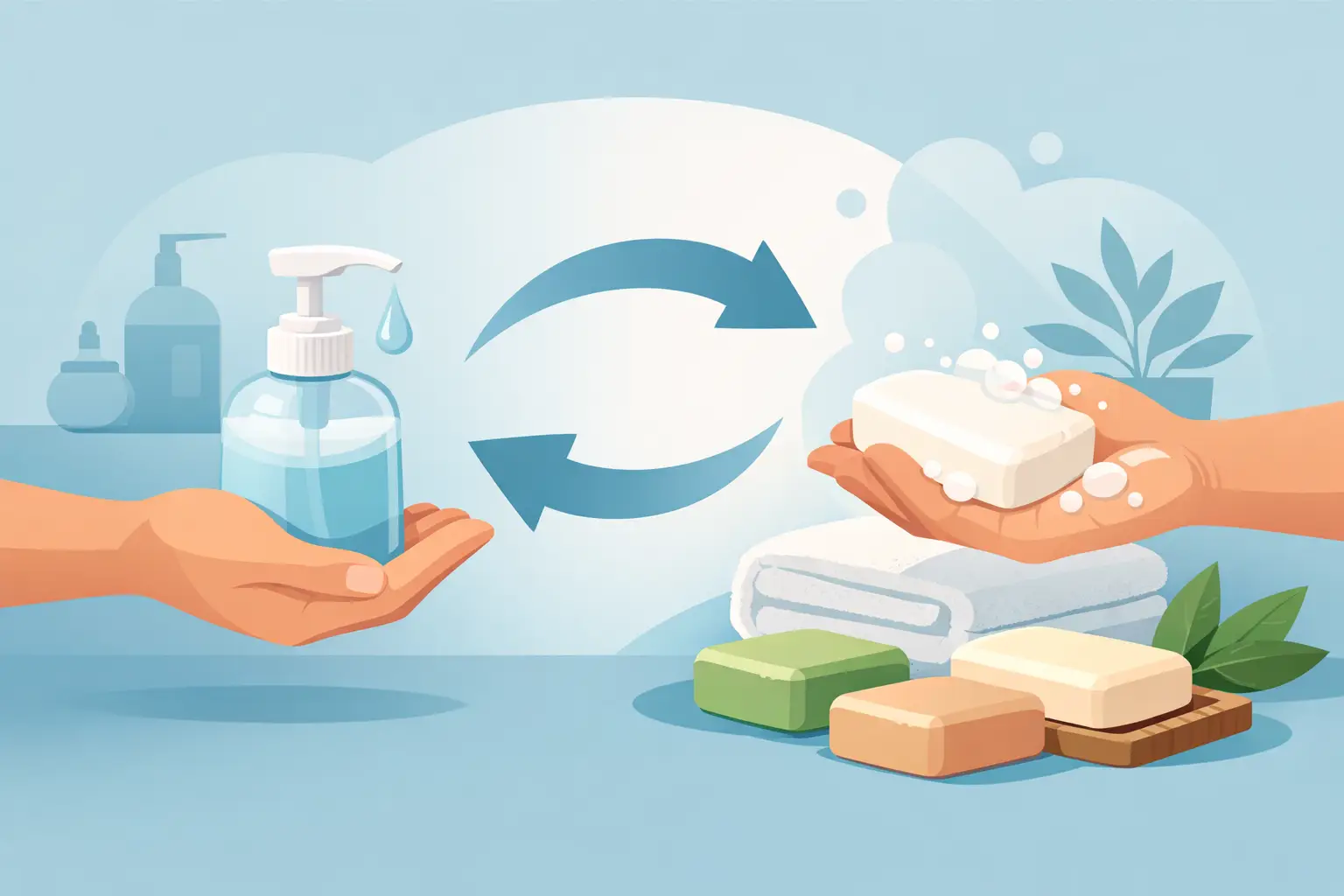
The first wash can be the moment people give up. A bar that feels tight on the skin, turns soft in the dish, or leaves your hairline and hands feeling odd can make the whole idea seem overhyped. But if you are wondering how to switch to bar soap, the issue is rarely the format itself. It is usually the bar, the method, or the expectation.
A well-made bar soap can be simple, gentle, long-lasting, and deeply satisfying to use. It can also be a meaningful change if you are trying to cut plastic, avoid harsh detergents, or choose ingredients with a clearer story. The key is to switch in a way that suits your skin, your water, and your routine.
How to switch to bar soap and get it right first time
The easiest way to start is by choosing the right bar for the job. Not all soaps behave the same, and not every bar is meant for every part of the body. This matters most if your skin is dry, sensitive, or prone to eczema flare-ups.
Traditional cold-process bars made with nourishing fats tend to feel very different from highly stripped-down cleansers or synthetic bars made to mimic soap. A thoughtfully formulated bar, especially one rich in skin-compatible fats, can cleanse well while leaving the skin feeling calm rather than squeaky. That squeaky feeling is often mistaken for clean. In practice, it can be a sign that your skin barrier has been over-cleansed.
If you are making the switch from liquid body wash, start with your hands or body before replacing everything at once. That gives your skin time to adjust and helps you notice what is working. It also keeps the process practical. You do not need to overhaul the whole bathroom in one afternoon.
Start with your skin, not the trend
If your skin is generally balanced and not especially reactive, you have room to experiment. You may enjoy a deeply cleansing bar in summer and a richer, creamier one in winter. But if your skin tends to feel tight after washing, or if you are managing sensitivity, dryness, or eczema-prone patches, your first bar matters more.
Look for simple formulas with a short, recognisable ingredient list and no aggressive fragrance load. Rich fats, traditionally made soap, and bars designed for sensitive skin are often the safest place to begin. Ingredients such as tallow, oatmeal, or gentle clays can offer a more supportive cleanse than heavily perfumed alternatives.
This is where ingredient quality shows itself. A firm, well-cured bar made with care usually lasts longer, lathers better, and feels more balanced on the skin. Cheap bars can create the impression that all soap is drying. That is not always true. Sometimes it is just poor soap.
If you have dry or sensitive skin
Patch testing is sensible, especially if you react easily. Use the bar on one small area for a few days before fully switching. If your skin feels calmer, not tighter, that is a good sign.
It also helps to lower the temperature of your water. Very hot showers can undo the benefits of even the gentlest soap. Lukewarm water, a short wash, and a good moisturiser afterwards can make a noticeable difference.
If you are switching for sustainability
Bar soap is one of the easiest low-waste swaps because it removes both the plastic bottle and the extra water used in liquid products. But there is a practical side to sustainability too. A bar that dissolves into mush after three days is not especially efficient.
Choose a hard bar and store it properly. That one change often makes the difference between a bar that lasts a fortnight and one that lasts much longer.
The most common mistakes when switching
The biggest mistake is rubbing the bar directly over the whole body and then leaving it sitting in a puddle. It wastes product and can make the bar break down quickly. Instead, lather the bar between your hands, or use a washcloth if that suits your skin.
Another common issue is using the same bar for everything. Face, body, hands, and dishes all have different needs. Some people do like an all-purpose bar, but many find that one gentle bar for skin and another for household jobs works better.
Hard water can also change your experience. In many parts of Britain, hard water affects lather and can leave a slight residue. That does not mean bar soap is failing. It means you may need to rinse more thoroughly, use less product, or choose a bar known for a rich, stable lather.
Finally, do not judge a bar soap by the first single use if your skin has been relying on heavily fragranced shower gel or detergent-based cleansers. Give it a little time. Skin often needs a short adjustment period when you remove harsher ingredients from the routine.
How to make bar soap feel luxurious, not fiddly
A good bar should not feel like a compromise. It should feel easy to live with. The trick is building a small routine around it.
Keep the bar on a draining soap dish, not on the edge of the bath or a flat shelf where water gathers. Let it dry fully between uses. If you have a family bathroom, consider two bars instead of one constantly soaked bar passed between everyone.
For the shower, a soap saver bag can help use up smaller pieces without waste. For the basin, a dry dish with airflow is often enough. These are small details, but they make daily use more pleasant.
If you are used to a big cloud of lather from bottled wash, reset the expectation slightly. Natural bar soap can still give a rich lather, especially when made well, but the feel is usually creamier and less artificial. Many people end up preferring that once they stop equating bubbles with performance.
How to switch to bar soap in different parts of your routine
Hands are the easiest place to begin. A gentle bar by the sink can replace liquid hand wash without much effort, and because you use it several times a day, you quickly learn whether the formula suits your skin.
For body use, choose a bar that matches your skin’s needs rather than a strong scent. If your shins, arms, or chest often feel dry after showering, a more nourishing traditional soap is usually a better choice than a heavily deodorising one.
Face is where caution matters most. Some people do beautifully with a mild facial bar, while others prefer to keep a separate cleanser. It depends on your skin, your water, and whether you wear SPF or make-up daily. If you do use bar soap on the face, keep it gentle and watch carefully for any tightness around the cheeks or eyes.
Household bars are different again. A solid dish soap or household soap can work brilliantly, but it should be treated as a separate product, not borrowed from your skincare routine. Function matters here.
Choosing a bar you will actually keep using
The best bar soap is not the one with the most fashionable ingredient. It is the one you reach for every day because it feels good on the skin and works without fuss.
That usually means balancing a few things: skin comfort, scent preference, bar hardness, and the kind of cleanse you want. Some people love an unscented bar for daily use and keep a more aromatic one for occasional indulgence. Others want one dependable bar that suits the whole household.
If you are buying for children or for a partner with sensitive skin, simpler is often better. If you are buying for yourself as part of a slower, more intentional routine, texture and scent may matter more. Neither approach is wrong. It just depends on what makes the swap sustainable in real life.
For many people, traditionally made tallow soap becomes the point where performance and gentleness finally meet. It is rich, firm, and naturally compatible with the skin, which is one reason Luna Natural Soap Co. has built its range around it. That heritage matters, but so does the daily result – a comfortable cleanse you do not have to think twice about.
When bar soap may not be the answer
There are cases where a full switch is not ideal. If you have an active skin condition under medical treatment, very broken skin, or a carefully prescribed routine, it is worth checking before changing multiple products at once. Gentle does not always mean universal.
You may also find that bar soap suits your body perfectly but not your face, or that it works all year except in the depths of winter when you need extra support. That is not failure. It is simply knowing your skin.
The goal is not to force a swap because it looks cleaner on the shelf. The goal is to build a routine that feels calm, effective, and easier to maintain.
If you are curious about how to switch to bar soap, start small, choose well, and pay attention to what your skin tells you. The best routines are rarely the trendiest. They are the ones that quietly work, day after day.