


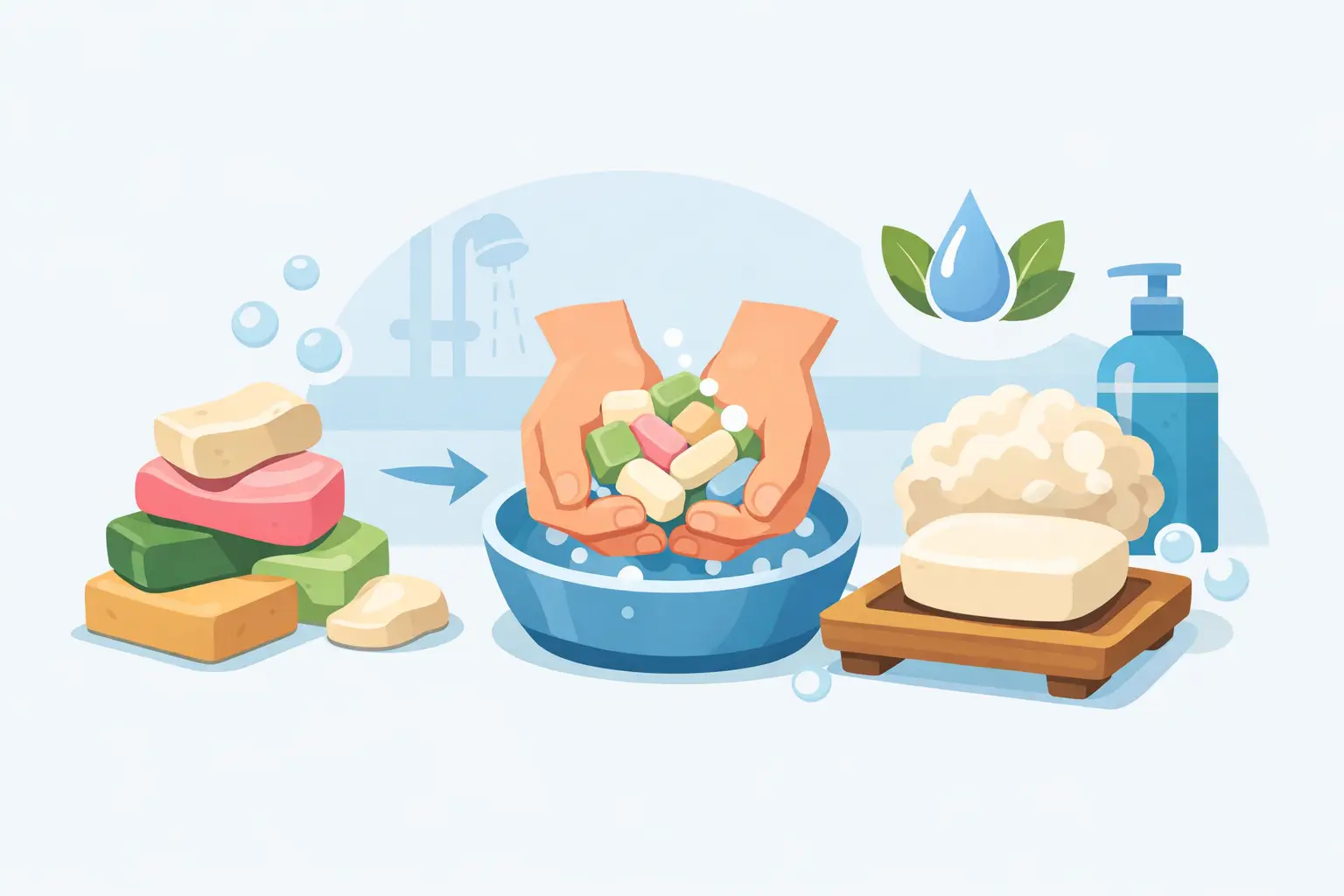
That last sliver of soap always seems too small to hold and too good to throw away. If you have been wondering how to use soap ends, the good news is that the smallest pieces can still be useful, gentle on skin, and entirely worth keeping. With a little thought, they become part of a lower-waste routine that feels practical rather than fussy.
For many households, soap ends gather at the side of the basin, in the shower caddy, or near the kitchen sink. They are easy to ignore because they feel awkward to use. Yet a well-made bar is still a well-made bar, even when it is down to its final inch. Those last pieces still carry the same careful ingredients, the same cleansing power, and, in the case of traditional tallow soap, the same skin-supportive qualities that made the full bar worth buying in the first place.
Why soap ends are worth using
Soap ends are not scraps in the throwaway sense. They are simply the final stage of a bar you have already chosen for its quality. When soap is handmade in small batches, cured properly, and formulated with nourishing fats, every piece has value. Using the whole bar is one of the simplest ways to honour the ingredients, the craft behind it, and the resources used to make it.
There is also the practical side. Small pieces are useful in places where a full bar feels too much. They suit handwashing on a guest basin, quick cleans at the kitchen sink, and travelling when you want something compact. If you are trying to reduce plastic bottles in the bathroom or cut household waste without making life more complicated, learning how to use soap ends is one of the easiest habits to adopt.
How to use soap ends in everyday life
The simplest approach is often the best. Keep your soap ends in a dry dish and use them one by one for handwashing until they are gone. If the piece is still large enough to grip comfortably, there is nothing more you need to do.
When the soap becomes too small to hold, a soap saver bag is often the most effective solution. Place the ends inside, wet the bag, and rub it between your hands or directly onto the skin. It creates lather, keeps the little pieces together, and gives you much better grip. This works especially well in the shower, where tiny slivers would otherwise slip away.
If you do not have a soap saver bag, you can press the damp end onto a new bar. The trick is timing. Both pieces should be slightly wet and soft, not soaked. Press them together firmly and leave them to dry as one bar. This works best when the soaps are from a similar formula. If one is very creamy and the other much harder, they may not bond as neatly, but it is still worth trying.
Another good option is to collect several ends in a small container until you have enough to make a larger piece. Once they are softened with a little warm water, press them tightly into a soap mould or even a small ramekin. Leave the soap to dry thoroughly before use. It may look more rustic than a fresh bar, but that suits the nature of the process. Handmade products do not need to look factory-perfect to work beautifully.
How to use soap ends for the shower
Shower use is where many people give up on soap ends, mostly because wet hands and small pieces are a poor match. A soap saver bag solves most of that frustration, but there are a few other ways to make them easier to use.
If you use soap for body cleansing, gather the ends and reserve them only for the shower. Once you have a few pieces, combine them in a bag or mould them into a larger puck. This gives them a clear purpose and stops them cluttering the sink.
It also helps to store them well between uses. Soap ends break down quickly if they sit in pooled water. A draining soap dish, a slatted tray, or a hanging soap bag will keep them firm for longer. That matters even more with rich, conditioning bars, which can soften more quickly if left wet.
Can you melt soap ends?
You can, but it is not always the best method.
Many people search for ways to melt leftover soap into a new bar. Technically, yes, soap ends can be softened with heat and water. The trade-off is texture. Traditional bars, especially cold-process bars, do not usually melt into a perfectly smooth new soap the way a ready-made melt-and-pour base does. They tend to become soft, uneven, and a little lumpy. Still useful, just less polished.
If you want to try it, grate the soap ends, add a very small amount of hot water, and warm them gently until they become pliable. Press the mixture into a mould and allow plenty of drying time. Do not add too much water. That is where people often go wrong, and it can leave the new bar mushy for days.
For most households, pressing damp pieces together is easier than fully melting them. It is less messy and gives a better result.
Good uses for soap ends around the home
Not every soap end needs to return to your main bathing routine. Some are ideal for household jobs, especially if they are small but still firm.
Keep a dish by the utility sink for washing hands after gardening, cleaning shoes, or rinsing cloths. A small soap end is perfect there because it gets used quickly. You can also keep one by the kitchen sink for handwashing, provided the scent and ingredients suit that space.
Some people like to tuck dry soap ends into drawers or linen cupboards for a light, clean scent. This works best with strongly scented bars, though it is worth being selective. If the fragrance is very faint, you may get little benefit. If the soap is soft or damp, save it for washing instead.
Soap ends can also be useful for travelling. Pop a few dry pieces into a tin or soap case and take only what you need. It is a practical way to avoid carrying a full bar, especially for a short stay.
A few things to avoid
There is a difference between reducing waste and making a simple task harder than it needs to be. If a soap end is gritty from sitting on the edge of the bath, or if it has collected dust or hair, it is better used for household cleaning than for skin.
Be careful with mixing very different types of soap together. A facial bar, a dish soap bar, and a heavily exfoliating body soap each have their own purpose. Combining them can make the final piece less pleasant or less suitable for the original use. It depends on the bars, but as a rule, group similar soaps together.
Storage matters too. If you keep soap ends sealed while still wet, they can turn soft and sticky. Let them dry between uses. A firmer bar lasts longer, lathers better, and feels much more luxurious in the hand.
Why this small habit matters
Using soap ends well is not about squeezing every last penny from a bar. It is about choosing a more thoughtful way to use what you already have. That matters even more when you buy products made with care, traditional methods, and ingredients chosen for a reason.
At Luna Natural Soap Co., that thinking sits naturally within the wider idea of circular, low-waste skincare. A good bar should serve you fully, from the first use to the last little piece. No fuss. No needless waste. Just honest ingredients used well.
There is something quietly satisfying about finishing a bar completely. It turns an everyday act into a small expression of care – for your home, your skin, and the resources behind both. The next time a soap sliver lands on the side of the sink, keep it. It still has more to give.