


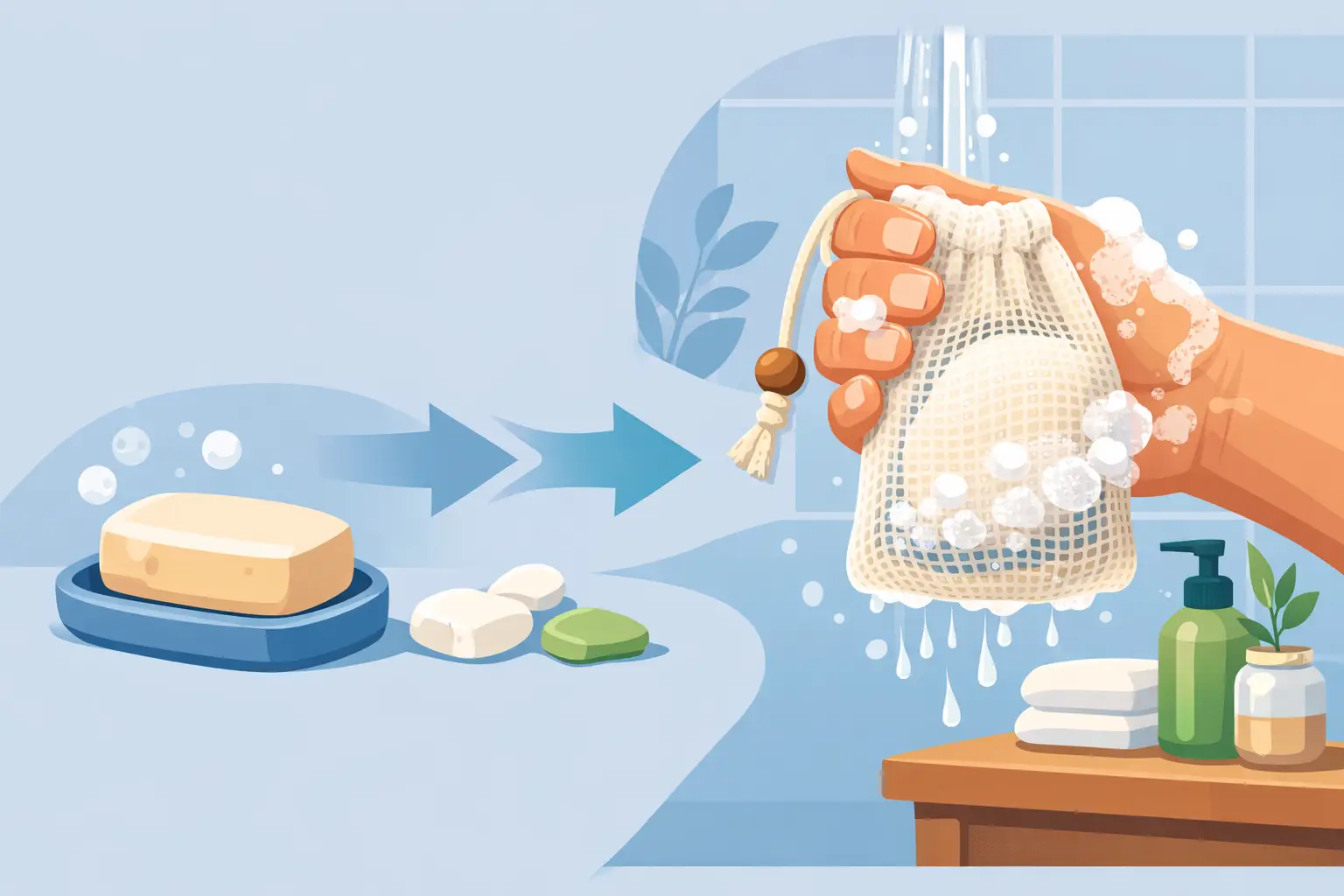
That last sliver of a beautiful soap bar is often too small to hold, yet far too good to throw away. Learning how to use a soap saver bag gives every piece a purpose: it creates a rich lather, keeps scraps together and helps make a carefully crafted bar last that little bit longer.
For a low-waste bathroom, it is one of the simplest swaps you can make. There is no complicated routine and no need to compromise on the pleasure of using a proper bar of soap. A soap saver bag simply helps you enjoy it to the very end.
What is a soap saver bag?
A soap saver bag is a small drawstring pouch designed to hold a bar of soap or the leftover pieces from several bars. Many are made from natural fibres such as sisal, cotton or linen. The open weave lets water pass through while helping the soap foam when rubbed between wet hands or directly over the body.
It is useful from the first use of a bar, but it comes into its own once your soap has become thin, broken or awkward to grip. Instead of pressing tiny pieces onto a new bar, you can collect them in the bag and use them as one.
The material matters. A coarse sisal bag can offer a gentle exfoliating feel on areas such as elbows, knees and feet. For delicate, dry or eczema-prone skin, a softer cotton or finely woven bag is usually the kinder choice. The bag should support your cleansing ritual, not leave skin feeling scrubbed or tight.
How to use a soap saver bag
Start by placing your soap inside the bag. A whole bar can be used in a larger pouch, though many people prefer to reserve it for soap ends. If you are using leftover pieces, gather several together until the bag feels comfortably filled. Do not overpack it – water needs to move through the fibres and reach the soap.
Pull the drawstring closed, then wet the bag thoroughly under warm water. Rub it between your palms for a few seconds to build lather. You can then wash your hands with the foam, glide the bag lightly over your body, or use the lather with a flannel if you prefer a softer wash.
Pressure is not what makes a good cleanse. A well-made traditional soap should produce a satisfying lather with water and a little movement. Let the soap do the work, especially if your skin is dry, reactive or already feeling uncomfortable.
When you have finished, rinse the bag briefly to remove excess foam. Gently squeeze it once or twice – do not twist or wring it harshly – and hang it from its drawstring somewhere with good airflow. This is the habit that makes the greatest difference to how long your soap lasts.
Using it in the shower or at the basin
In the shower, hang the bag from a hook away from the direct stream of water. Leaving it beneath constant spray will soften the soap too quickly, particularly if the pouch holds several small pieces.
At the basin, hang it from a small hook or place it on a draining soap dish after use. Avoid sealing it inside a cupboard, a travel case or a puddle of water. Like any natural soap, it needs a chance to dry between washes.
Why drying matters more than you think
A firm, well-cured bar lasts longer because it is not sitting in water between uses. A soap saver bag improves grip and helps use up the last fragments, but it cannot compensate for poor drainage. If it remains wet all day, the soap inside will become soft and disappear faster.
This is not a reason to avoid the bag. It is simply a practical trade-off. A pouch makes soap ends easy to use and can create a lovely lather, while a draining dish is often best for preserving a full, fresh bar for as long as possible.
Many households use both: keep the main bar on a well-draining dish, then move the small final pieces into the saver bag. It is an easy rhythm that respects the ingredients, the making process and your budget.
Can you use a soap saver bag on your face?
Usually, no. Even a soft bag can create more friction than facial skin needs. This is especially true if you manage sensitivity, redness, active breakouts, eczema or a compromised skin barrier.
For your face, wet your hands, work the soap into a light lather between your palms, then apply the foam gently. Rinse with lukewarm water and pat dry with a clean towel. Keep the soap saver bag for hands, body and those easily overlooked areas that benefit from a little extra polish.
If you have very resilient skin and choose a particularly soft cotton pouch, you may find it comfortable for an occasional gentle cleanse. Still, listen to your skin. Cleansing should leave it calm and comfortable, not squeaky, sore or over-exfoliated.
The best way to use soap ends
Soap ends are proof that a bar has been loved, not wasted. Once a piece is too thin to hold safely, pop it into your bag. You can mix similar scents together, or keep fragrance-free and scented pieces separate if you prefer a more consistent wash.
There is no need to wait until the pouch is packed full. Even two or three small pieces will lather well when wet. As the scraps reduce, add the next sliver. Eventually, the bag becomes an easy, practical hand or body wash that uses every last bit.
For a bar made with thoughtful ingredients – whether rich tallow, soothing oats or simple botanical additions – this small habit honours the care behind it. At Luna Natural Soap Co., waste reduction is part of the making, from considered ingredients to plastic-free choices that fit into everyday life.
How to clean a soap saver bag
Natural-fibre bags need occasional care. Rinse yours after each use and make sure it dries completely. If it begins to smell musty, looks discoloured or feels coated with old soap, it is time for a deeper clean.
Empty any remaining pieces, turn the bag inside out and rinse it under warm water. Hand wash it with a little mild soap, then rinse thoroughly. Leave it open to air dry fully before refilling. Depending on the fibre and how often it is used, a machine wash may also be suitable, but check the maker’s care guidance first.
Replace the bag when the fibres become thin, the drawstring no longer works or it does not come clean after washing. Sisal and other plant fibres are natural materials, so their lifespan will vary with use. A bag used daily in a busy family shower will wear out sooner than one used occasionally at the basin.
Common mistakes that make soap disappear faster
The most common mistake is leaving a wet bag on the shower floor or curled up on the side of the bath. It may seem harmless, but trapped moisture turns a firm bar into soft soap quickly.
Another is using the bag as a vigorous body scrub every day. A little texture can feel refreshing, but daily exfoliation is not right for everyone. Use light pressure, alternate with your hands or a soft flannel, and avoid freshly shaved, irritated or broken skin.
Finally, do not treat a soap saver bag as a place to store a soaking-wet bar indefinitely. It is a useful tool, not a sealed container. Hang it up, let air circulate and enjoy the lather when you next need it.
A soap saver bag is a small thing, but it changes the final days of every bar from an inconvenience into a useful ritual. Keep it dry, use it gently and let those last precious pieces earn their place at the basin or in the shower.