


A sink full of greasy pans can make any plastic-free swap feel like a test. The good news is that learning how to use solid dish soap is straightforward once you know what the bar needs to perform well. Used properly, a good solid dish soap gives you rich suds, cuts through daily mess, and keeps unnecessary packaging out of your kitchen.
Solid dish soap is not complicated, but it does ask for a slightly different rhythm than bottled washing-up liquid. You are working with a concentrated bar rather than a diluted liquid, so technique matters more than quantity. Once that clicks, most people find the bar lasts longer, feels tidier on the counter, and makes ordinary washing up a little more satisfying.
How to use solid dish soap day to day
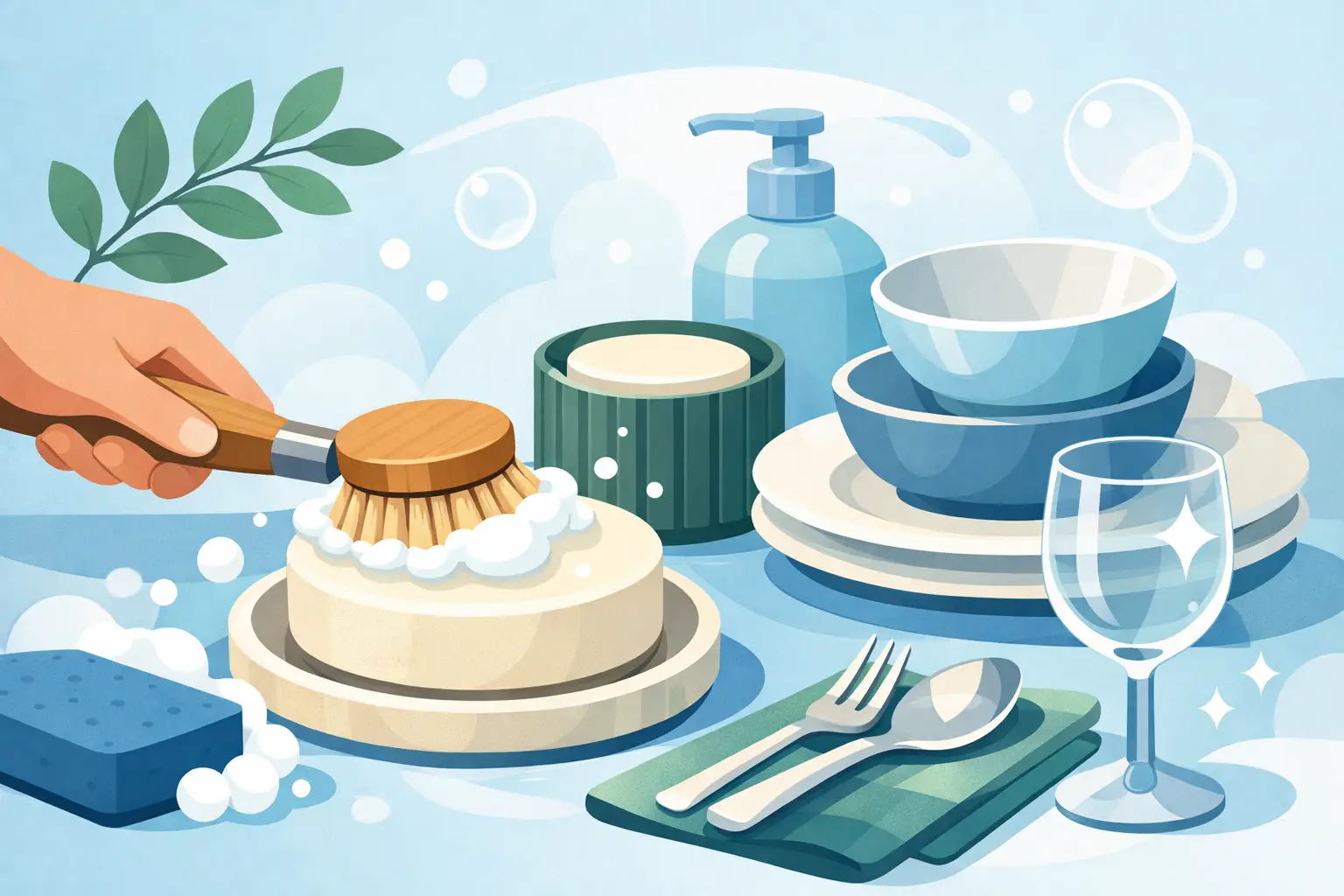
The simplest way to use solid dish soap is to keep the bar near the sink in a well-draining dish, wet your brush, sponge or cloth, and rub it directly over the surface of the soap a few times. You do not need to soak the bar or scrape product off with your nails. A light but deliberate swirl is usually enough to build a creamy lather.
From there, wash your dishes as usual. Start with glasses and lightly used items, then move on to plates, cutlery and finally greasy pans. That order keeps your water cleaner for longer and helps the soap go further. If the suds fade, re-wet your brush and load a little more soap from the bar.
If you prefer filling the sink with water first, you can still use a solid bar. Rather than dropping it into the bowl, rub your wet brush or cloth on the bar and transfer the lather into the washing-up water. Solid dish soap works best when loaded onto a tool and worked gradually, not left sitting in water.
Why technique matters with solid dish soap
People sometimes assume a bar should behave exactly like bottled liquid. It will clean just as effectively, but the application is different. Liquid soap is already diluted. A solid bar is concentrated and activated by the water on your brush, sponge or cloth.
That means more soap is not always better. If you oversaturate the bar or leave it sitting in puddled water, it softens too quickly and wears down faster than it should. A firm, well-made bar is designed to be economical, but only if it is allowed to dry properly between uses.
This is one reason solid dish soap appeals to low-waste homes. It asks for less packaging and usually less product overall. There is also something refreshingly honest about it – no bulky bottle, no excess water, just a hardworking bar doing one job well.
The best tools to use with a solid dish soap bar
If you are wondering how to use solid dish soap in a way that feels easy rather than fiddly, your washing-up tool makes a real difference. A dish brush with stiff natural bristles is often the most effective option. It loads quickly, reaches into corners, and works especially well on baked-on food.
A cellulose sponge or natural scrub pad can also work well, particularly for everyday plates and mugs. If you usually wash with a cloth, choose one with a little texture so it can pick up enough soap from the bar. Very smooth cloths may need a few extra passes over the soap.
There is no single correct choice here. A household with lots of pots and roasting trays may prefer a sturdy brush, while someone washing mostly cups, bowls and cutlery may enjoy the feel of a sponge. It depends on your sink routine and what you cook.
How to deal with grease and stuck-on food
Solid dish soap is excellent for daily grease, but as with any dish product, a few habits help. First, scrape food scraps into the bin or compost before washing. That keeps the bar cleaner and stops greasy residue building up too quickly in your bowl.
For oily pans or roasting dishes, use hot water and load your brush directly from the bar rather than relying on leftover suds in the sink. Apply the lather straight to the greasy area and scrub before rinsing. This more direct method gives the soap its best chance to break through the film.
If food is baked on, soak the dish first in hot water. Solid dish soap is not a magic shortcut for burnt-on residue, and pretending otherwise only leads to frustration. A brief soak softens the mess so the soap can do its job without excessive scrubbing.
How to make solid dish soap last longer
A quality bar should last well, but storage is part of the product experience. The most important rule is simple: keep it dry between washes. Use a draining soap dish, a ridged tray, or a wooden holder that allows air to circulate. If the bar sits in a puddle, it will turn soft and disappear faster.
Try not to leave it under a dripping tap. That constant trickle slowly dissolves the surface and shortens the life of the bar without giving you any extra cleaning power. A small shift in position can make a big difference over time.
You also do not need to load huge amounts of soap each time you wash up. A few swirls are often enough. Because a solid dish soap bar is concentrated, it rewards restraint. This is one of those small kitchen changes that feels more natural after a week or two.
Common mistakes people make
The most common mistake is treating solid dish soap like hand soap. While both are bars, dish soap is formulated for crockery, cutlery and cookware rather than daily facial or body cleansing. Keep it for the sink and use your skincare bars where they belong.
Another mistake is dropping the whole bar into a full basin of water. It may seem convenient, but it wastes soap and leaves you with a soggy bar. The better method is always to activate it on your brush, sponge or cloth.
Some people give up too early because they expect a mountain of bubbles. Suds can be helpful, but they are not the same as cleaning power. Water hardness, tool choice and washing habits all affect visible lather. If your dishes are coming up clean and grease-free, the soap is doing its job.
Is solid dish soap hygienic?
Yes, provided you use it sensibly. Rinse your brush or sponge after washing, let it dry, and keep the soap in a clean draining dish. If food debris builds up on the bar, simply rinse the surface briefly and allow it to dry again.
This is also why many people prefer using a brush with a handle. It keeps hands out of hot water for longer and makes it easier to clean the bar without leaving residue behind. Still, if you favour a sponge or cloth, good drying habits matter more than the tool itself.
Is solid dish soap right for every kitchen?
For most homes, yes. It is especially well suited to people who want to cut plastic, simplify what sits around the sink, and choose products with a more traditional, low-waste feel. A carefully made bar can also feel like a more considered choice – less throwaway, more practical.
That said, it may take a few days to adjust if you have used bottled washing-up liquid for years. If your routine is built around squeezing soap straight into a pan, the bar can feel unfamiliar at first. That does not mean it is less effective. It simply asks for a different habit.
Some households with very heavy daily washing up may keep both a solid bar and another format for convenience. That is a personal choice, not a failure of the product. The aim is not perfection. It is finding a kitchen routine that works well and wastes less.
A more grounded way to wash up
There is a quiet pleasure in using something simple that works. A well-crafted solid dish soap, such as the kind made by Luna Natural Soap Co., strips away excess and leaves you with the essentials – effective cleansing, thoughtful ingredients, and less needless packaging. Once you understand how to use solid dish soap properly, it stops feeling like a swap and starts feeling like the better way to wash up.
If you are new to it, give yourself a week. Let the habit settle. Often the best household changes are the ones that ask very little, then steadily prove their worth.