

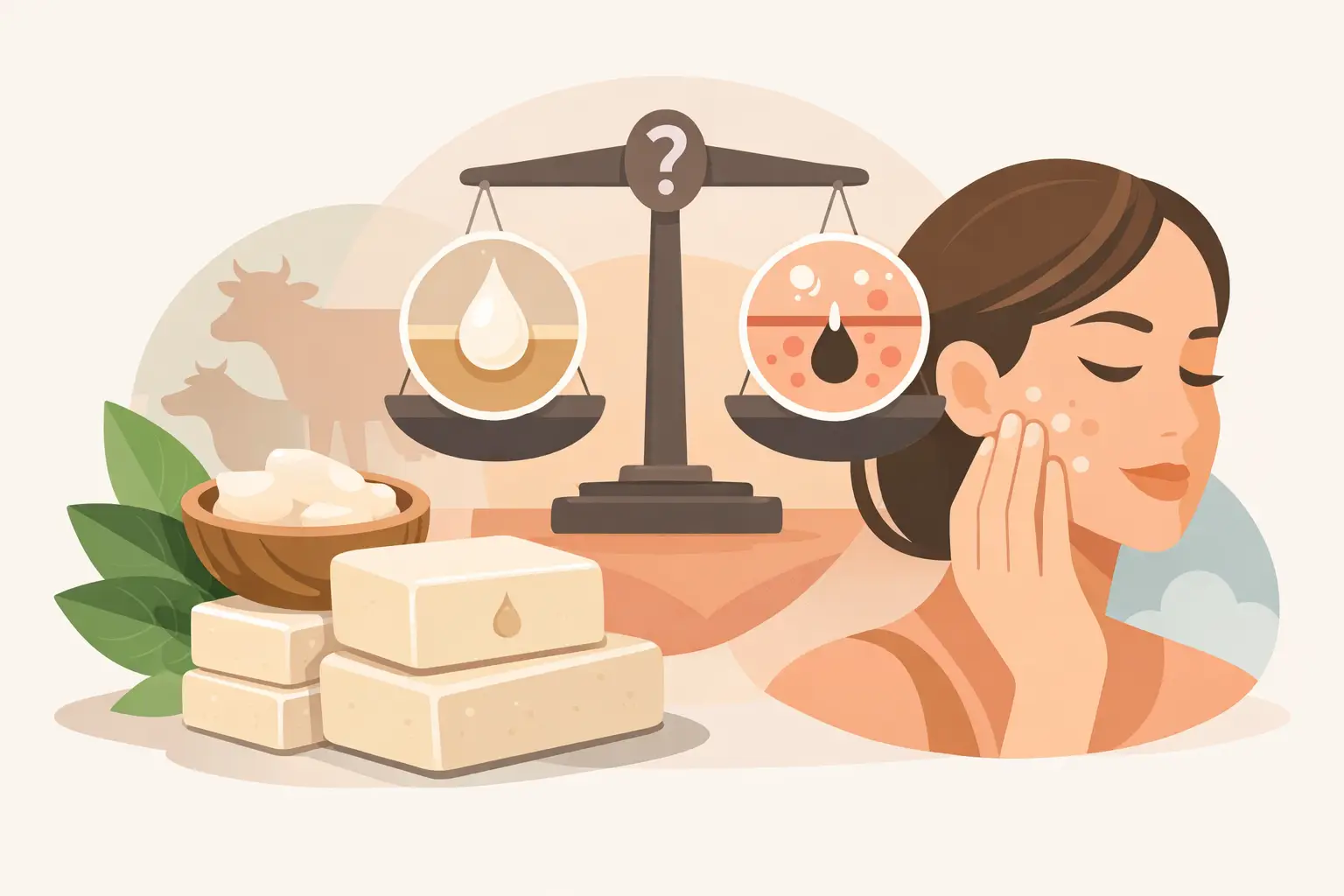
If you are prone to spots, the question is tallow soap comedogenic tends to arrive before the first wash. Fair enough. No one wants to swap to a natural bar, only to end up with clogged pores and skin that feels both greasy and irritated.
The short answer is this: properly made tallow soap is not automatically pore-clogging for everyone. In fact, many people find it gentler and more skin-compatible than harsh synthetic cleansers. But comedogenicity is never as simple as one ingredient, one score, one result. Skin is more individual than that.
Is tallow soap comedogenic for acne-prone skin?
Sometimes yes, often no, and very much depending on the formula, your skin type, and how the soap is used.
Tallow itself is a rendered animal fat, rich in fatty acids that are naturally similar to some of those found in human skin. That is one reason it has long been valued in traditional soapmaking. It can create a firm, long-lasting bar with a creamy lather, and when it is made well, it tends to cleanse without leaving skin feeling stripped.
That said, the word comedogenic refers to a substance being likely to block pores and contribute to comedones – blackheads, whiteheads, and the congestion that can lead to breakouts. The problem is that comedogenic ratings are not a perfect guide. Many are based on older testing methods, often not on finished soap bars used briefly and rinsed away.
A leave-on balm made with a heavy oil is one thing. A well-cured soap that sits on the skin for less than a minute is another. That difference matters.
Why tallow soap does not behave like pure tallow on skin
This is where the conversation often gets muddled. Soap is not the same thing as raw fat.
In cold-process soapmaking, tallow reacts with lye through saponification. The finished bar is a new substance. It is no longer just tallow sitting on your face in its original form. That means the pore-clogging potential of a finished tallow soap cannot be judged in the same way as a raw oil, butter, or balm.
The overall recipe matters too. A bar made with tallow alongside balancing ingredients and a careful superfat level may feel entirely different from a soap overloaded with rich oils or heavy fragrance. Even the cure time matters. A properly cured artisan bar is generally milder, harder, and more pleasant to use.
For people with reactive or blemish-prone skin, that can make a real difference. Skin often breaks out not only from excess oil, but from disruption. Over-cleansing, harsh surfactants, and a damaged skin barrier can push skin into a cycle of dehydration and rebound oiliness. Gentle cleansing helps interrupt that cycle.
What actually makes a soap more likely to clog pores?
Usually, it is not just one hero ingredient. It is the whole experience of the formula.
A bar may be more troublesome if it has a high level of unsaponified heavy fats, if it includes strongly fragranced essential oils that irritate your skin, or if it leaves behind a residue you do not tolerate well. Some people are also simply sensitive to certain fatty acid profiles. That is true for plant-based soaps too.
Water temperature, cleansing frequency, and what you apply afterwards matter just as much. If you wash too often, use very hot water, and follow with a rich face cream your skin does not like, it is easy to blame the soap when the issue is really the routine.
There is also a practical point worth saying plainly: facial skin and body skin do not always react the same way. A tallow soap that feels beautiful on dry legs or arms may be too rich, or simply not ideal, for an oily T-zone. That does not make it a bad soap. It means placement matters.
Is tallow soap good for sensitive and troubled skin?
For many people, yes. This is one of the reasons traditional tallow soap has endured.
Well-made tallow bars are often chosen by people with dry, sensitive, or eczema-prone skin because they cleanse in a straightforward, gentle way. They do not need long ingredient lists to do their job. When the tallow is carefully rendered and the bar is made in small batches, the result can feel calm, nourishing, and dependable.
That does not mean every tallow soap is suitable for every face. If your skin is highly acne-prone, very oily, or easily congested, it is still wise to start slowly. A simple, fragrance-light bar is usually the better place to begin than a heavily scented one with lots of extras.
For many customers, the real appeal is balance. Clean skin, but not squeaky. Comfort, but not a waxy film. That middle ground is where a good tallow soap tends to shine.
How to tell if a tallow soap suits your skin
The best approach is observation, not fear.
Use the bar once daily at first, ideally in the evening, and give it a couple of weeks before making a judgement. If your skin feels soft, settled, and clean, that is a good sign. If it starts feeling tight, overly shiny by midday, or develops small closed bumps in areas where you usually get congestion, the bar may not be your best match.
Look at the context as well. Has anything else changed? New moisturiser, richer SPF, hormonal shifts, stress, diet, or simply warmer weather can all affect breakouts. Skin rarely responds to one factor alone.
Patch testing is sensible, especially if your skin is reactive. And if you know your skin dislikes certain essential oils or botanicals, check the full ingredient list rather than focusing only on the tallow.
Is tallow soap comedogenic compared with plant-based soap?
Not necessarily. There is no automatic rule that plant-based means non-comedogenic and tallow means pore-clogging.
Some vegetable oils commonly used in soap can be beautifully gentle. Others may be less suitable for some acne-prone users, especially in leave-on skincare. Equally, some tallow soaps feel exceptionally balanced because of the hardness, creamy lather, and skin-friendly fatty acid profile that tallow brings to the formula.
This is where traditional craftsmanship still matters. Ingredient source, rendering quality, recipe balance, and curing all shape the final bar. A thoughtfully made tallow soap from a maker who values process and purity is very different from a generic bar made without much care.
At Luna Natural Soap Co., this is part of the philosophy behind tallow altogether – not as a trend ingredient, but as a time-honoured one, chosen because it supports the skin barrier and creates a bar that is both practical and indulgent.
Who should be cautious with tallow soap?
If you have active inflammatory acne, very oily skin, or a history of reacting badly to richer skincare, caution makes sense. Not panic, just caution.
You may still get on very well with a tallow soap, especially one designed to be gentle and uncomplicated. But facial cleansing is personal. Some acne-prone people prefer a lighter gel cleanser for the face and reserve natural bar soap for the body. Others do the opposite and find a minimalist bar calms their skin more than foaming bottled cleansers ever did.
If you are under the care of a dermatologist, or using strong acne treatments, keep the rest of your routine as non-irritating as possible. That may mean choosing the mildest unscented or low-scent bar available and watching how your skin responds.
The better question to ask
Rather than asking only is tallow soap comedogenic, it helps to ask whether this particular tallow soap is well made, gentle, and suitable for my skin.
That shifts the focus from internet scoring systems to what actually matters in daily use. A soap can be beautifully natural and still not suit you. Another can sound rich on paper and work brilliantly. Finished skincare is about formulation, not just ingredient reputation.
For dry, sensitive, or easily upset skin, tallow soap can be an excellent choice because it cleanses without the aggressive feel many modern products leave behind. For acne-prone skin, it may suit you very well, especially if irritation and barrier damage are part of the problem. But if your skin congests easily, start with care and keep the rest of your routine simple.
Your skin usually tells the truth faster than marketing does. Listen to how it feels after washing, how it looks a week later, and whether it seems calmer or more unsettled. The goal is not to chase a perfect ingredient. It is to find a cleansing ritual that leaves your skin clear, comfortable, and quietly supported.