

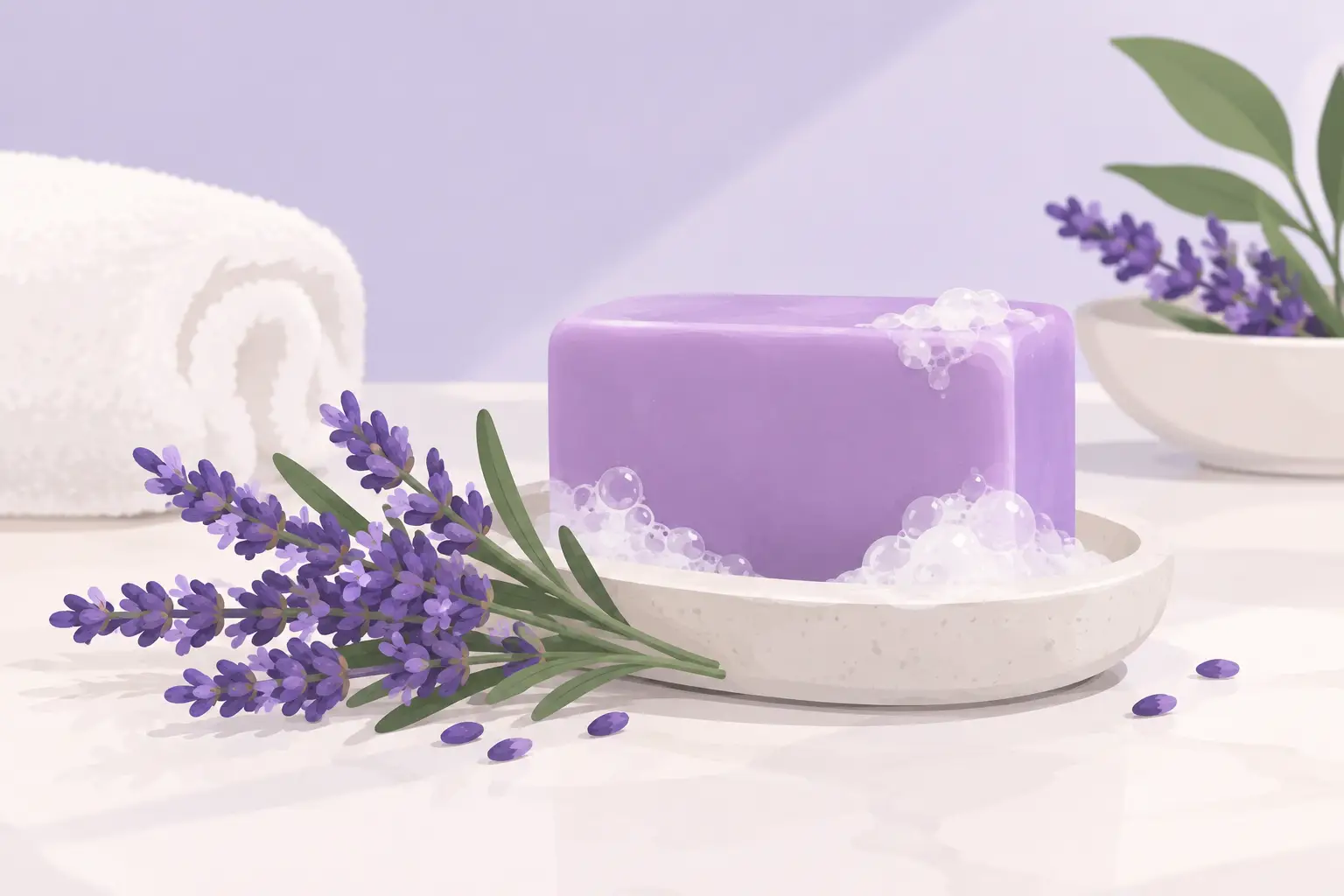
A lavender bar can make an ordinary evening wash feel quieter: warm water, a soft floral scent and a proper, creamy lather. But lavender soap tested only by its fragrance tells you very little. For dry, sensitive or easily unsettled skin, the real question is how your skin feels once the towel is down and the day carries on.
A well-made lavender soap should cleanse without leaving that tight, squeaky feeling behind. It should be firm in the hand, kind enough for regular use and scented with restraint rather than filling the bathroom with perfume. Natural skincare can be a pleasure, but it also needs to work for real skin.
What lavender soap tested properly should reveal
There is a difference between trying a soap once and giving it a fair, useful test. One wash may tell you whether you enjoy the scent or lather. Several days of use are more likely to reveal whether the bar suits your skin, your routine and the way you actually live.
Start with the ingredient list. A traditional cold-process bar made with nourishing fats and a measured amount of lavender essential oil has a different feel from a highly perfumed cleansing bar built around harsher detergents. Tallow is valued in traditional soapmaking for the dense, conditioning lather it creates. When carefully rendered and thoughtfully formulated, it makes a long-lasting bar that feels substantial rather than stripping.
Then look at what is not doing the work. A gentle bar does not need artificial colour, excessive fragrance or a long list of fillers to feel luxurious. Lavender has a naturally recognisable aroma all by itself. It is better when it is allowed to be soft, herbal and calming, rather than sharp or overpowering.
Finally, judge the experience after rinsing. Skin should feel clean and comfortable, not coated, itchy or desperate for moisturiser. If your hands feel dry immediately after washing, it may be the formula, but water temperature and frequency matter too. Even a beautifully made bar cannot fully offset repeated washing in very hot water.
The four checks that matter most
A lavender soap earns a place by the basin or in the shower through small details that add up. When assessing a bar, give attention to these four areas:
- Scent: Lavender should smell balanced and botanical. A gentler scent is often the better choice for faces, children and anyone who knows fragrance can upset their skin.
- Lather: Look for a rich, creamy foam that spreads easily between wet hands. Bigger bubbles are not automatically better. A dense lather often feels more cushioning during cleansing.
- Skin comfort: Notice your skin straight after washing and again later in the day. Tightness, persistent redness or itching are signs to stop using the bar.
- Bar life: A properly cured cold-process soap should remain firm when stored dry between uses. A soft, dissolving bar creates unnecessary waste and makes daily use less enjoyable.
These checks are simple, but they make a better test than relying on a beautiful label or a first impression alone. They also help separate a bar you merely like from one you will reach for every day.
Fragrance is not automatically gentle
Lavender is often associated with rest and comfort, and many people enjoy it without issue. Yet essential oils are concentrated plant materials, and any fragrance, natural or otherwise, can be a trigger for some skin. This does not make lavender unsuitable. It means the amount used, the rest of the formula and your own sensitivity all deserve consideration.
If you have reacted to fragranced skincare before, choose an unscented option for your face or for active flare-ups. If you would still like to try lavender, test it first on a small area of your inner arm or hand. Use it once, rinse well and wait 24 to 48 hours before wider use. A patch test cannot guarantee a reaction will never occur, but it is a sensible first step.
For skin affected by eczema, severe dryness or a diagnosed condition, keep your routine simple during a flare-up and follow the guidance of your pharmacist, GP or dermatologist. A gentle soap can be part of a considered routine, but it is not a medical treatment.
How to test a lavender bar in your own routine
The most honest test takes place at home, not in a single sink-side moment. Begin with hands or body rather than your face, especially if your skin is reactive. Wet the bar and work it between your palms for a few seconds. You need only enough lather to cleanse – more soap does not mean cleaner skin.
Rinse with lukewarm water and pat dry instead of rubbing. If your skin tends towards dryness, apply your usual moisturiser while skin is still slightly damp. This helps you assess the soap more fairly, because it reflects a practical routine rather than expecting any cleanser to carry the full burden of hydration.
Use the bar consistently for around a week, unless discomfort appears sooner. Notice whether your hands feel comfortable after washing up, whether your shins become dry after a shower, and whether the scent remains pleasant rather than cloying. A bar may suit the body beautifully but feel too fragranced for the face. That is not failure; it is simply useful information.
Keep the soap on a draining dish between uses. Natural bars last best when air can circulate around them. This small habit keeps the bar firm, reduces waste and lets you enjoy every last piece.
Why the making method changes the result
Handcrafted soap is not just about a rustic appearance. Slow, traditional cold-process methods give makers control over the balance of oils, the cure and the final feel of the bar. Time matters. A bar that has cured properly is harder, milder in use and less likely to turn soft at the edge of the basin.
The quality of tallow matters, too. Grass-fed tallow from responsibly raised local animals gives new value to a material that might otherwise be wasted. When rendered in-house with care, it becomes a purposeful ingredient in a circular, low-waste approach to skincare. This is practical sustainability: using ingredients fully, making bars that last and avoiding needless plastic around a product designed to be used every day.
Tallow has long been used in soap because of its reliable performance. It contributes to a creamy lather and a firm bar, while its naturally occurring fatty acids make it a considered choice for people seeking a less aggressive cleanse. No single ingredient is right for everyone, but sourcing and formulation are worth paying attention to when your skin is asking for calm.
Choosing the right lavender soap for your skin
For normal or combination skin, a lightly scented lavender bar can be an easy daily choice for hands and body. For dry skin, prioritise a bar made with skin-supportive fats and follow it with a simple moisturiser. For sensitive skin, the best choice depends on your personal tolerance: some people find a subtle lavender bar perfectly comfortable, while others do better with no essential oils at all.
It also helps to separate the romance of a scent from the needs of each area of skin. Hands may welcome a fragrant, hardworking bar by the kitchen sink. Facial skin is often less forgiving, particularly in cold weather or when your barrier is already compromised. There is no prize for using one product everywhere.
If you are buying lavender soap as a gift, choose a bar with a clear ingredient story, plastic-free presentation and a scent that feels refined rather than loud. A handcrafted soap is a useful luxury. It gives someone a small ritual they can return to, while reflecting care for the skin and the resources that made it.
The best lavender soap will not demand attention after every wash. It will simply leave skin feeling clean, comfortable and ready for the rest of the day – with a quiet trace of lavender that makes the routine feel worth keeping.