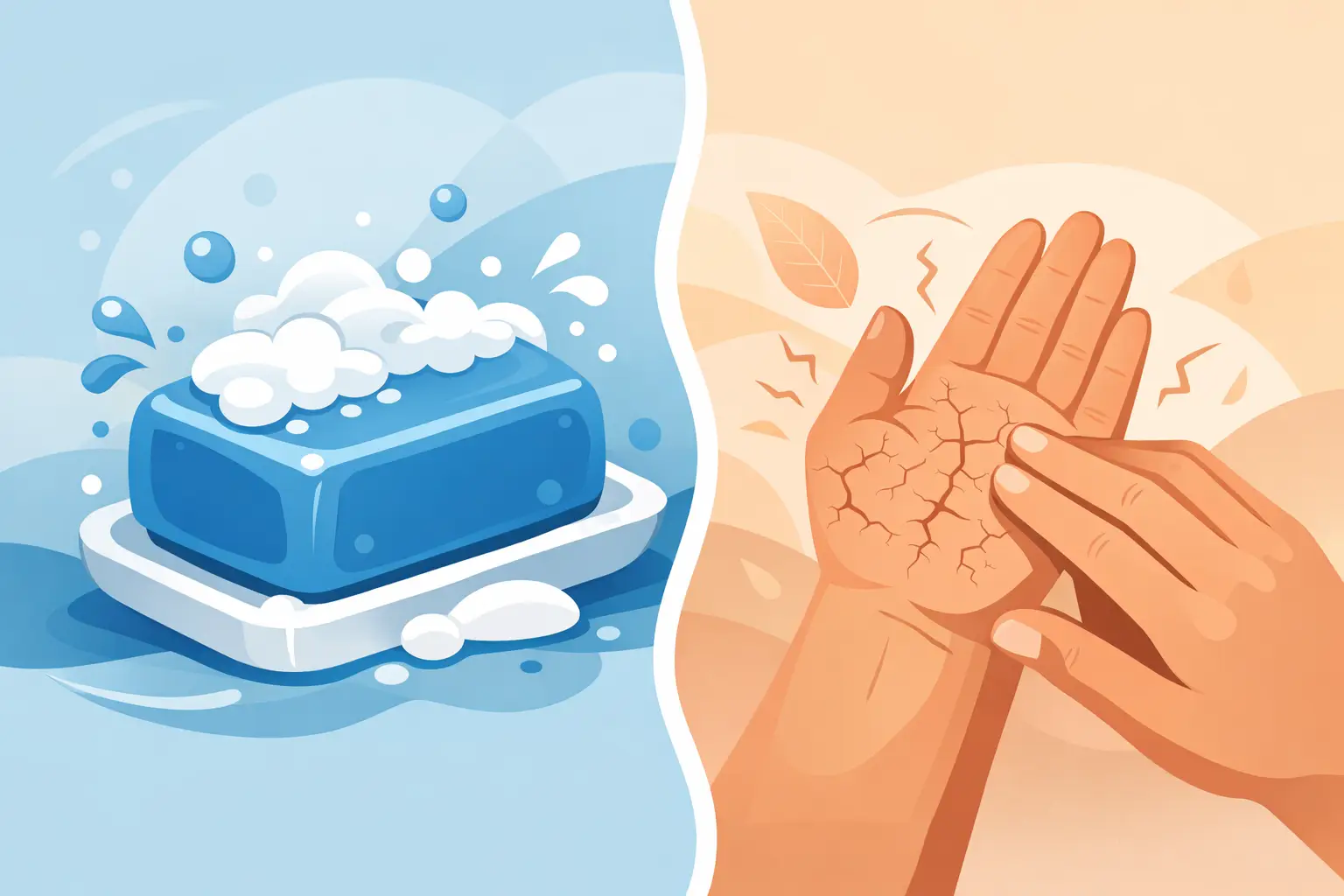


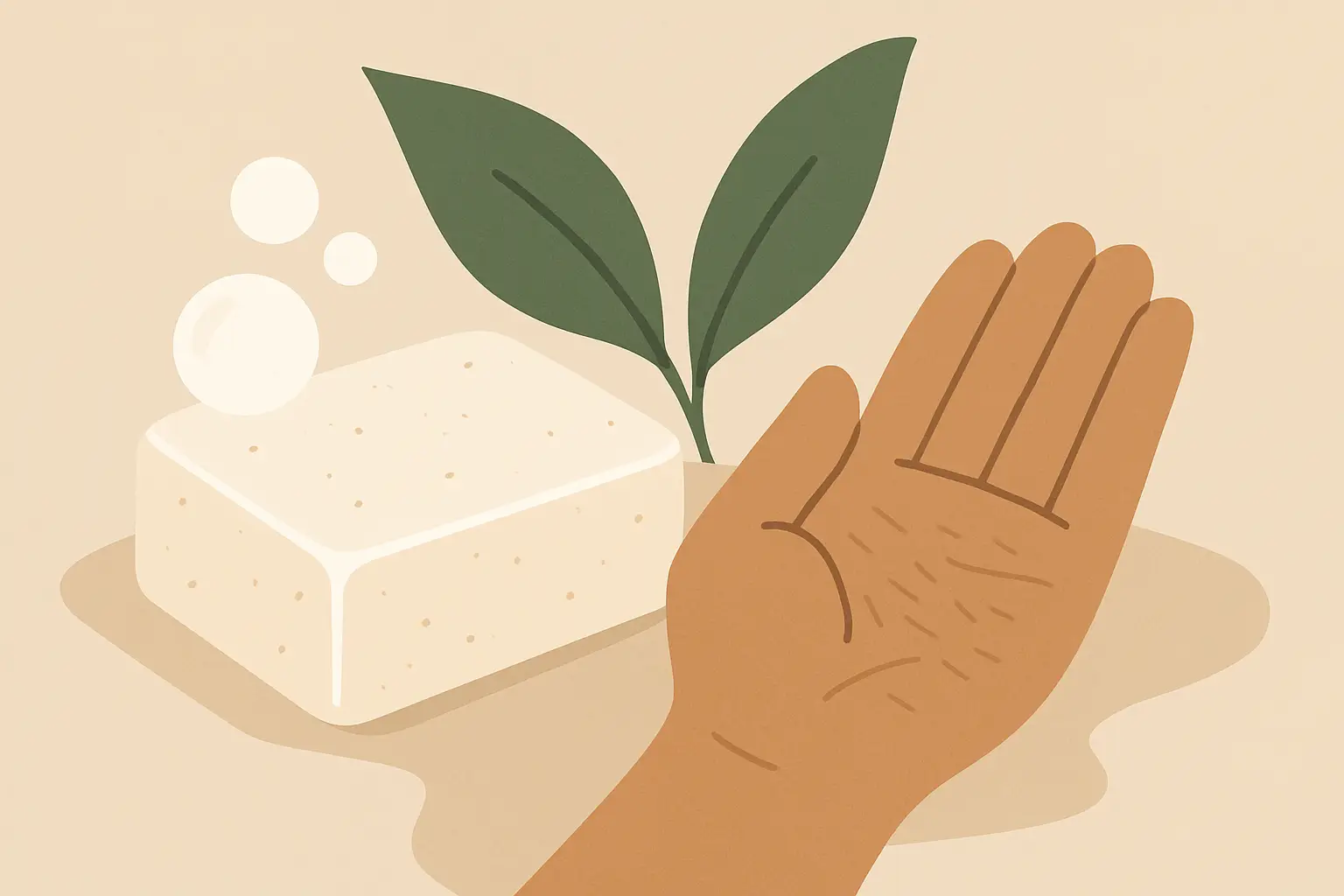
That tight, squeaky feeling after a shower is often treated like a sign you are “properly clean”. For dry skin, it is usually the opposite. It is the feeling of your barrier being stripped – and once that barrier is compromised, everything stings more, flakes more, and feels harder to calm.
If you are looking for natural soap for dry skin, the goal is simple: cleanse well enough to remove sweat and daily build-up, without dragging the skin’s protective oils down the plughole with it. The way a bar is made, and what it is made from, matters as much as the marketing on the label.
Why dry skin reacts so strongly to cleansing
Dry skin is not just “lack of moisture”. It is often a combination of low water content and a weakened lipid barrier. That barrier is meant to slow down water loss and keep irritants out. When you wash with something that is too alkaline, too detergent-heavy, or too aggressively fragranced, you can disrupt that barrier and increase transepidermal water loss.
This is why some people can use almost anything and feel fine, while others get tightness, itching, or patches after one wash. It depends on your baseline skin condition, the season (British winter air is famously unhelpful), how hot your showers are, and whether you are already managing eczema-prone or sensitised skin.
What “natural” really means on a soap label
“Natural” is not a regulated guarantee of gentleness. A product can be natural and still be too harsh for dry, reactive skin. Essential oils are natural. So are certain clays. So is salt. Any of these can be irritating or overly drying in the wrong context.
The more useful question is: what kind of cleanser is this bar, and how was it formulated?
Traditional soap is made by saponification – oils and butters reacting with sodium hydroxide to create soap and glycerin. A well-made soap can be beautifully cleansing and comfortable, but it will still be alkaline by nature. Some dry-skin users do brilliantly with a superfatted, thoughtfully formulated soap; others do better with a lower-pH syndet bar (which is not “soap” in the traditional sense).
So if you have tried natural soap before and hated it, it does not automatically mean all bars are wrong for you. It may mean that specific bar was too cleansing, too fragranced, or simply not made with dry skin in mind.
Natural soap for dry skin: what to look for
A dry-skin-friendly bar usually has two jobs. It must lift grime, and it must leave enough comfort behind that you are not immediately chasing your shower with a frantic layer of cream.
Start with the fat profile. Bars made with skin-compatible fats tend to feel less “strippy” because the finished soap has a more conditioning character. This is one reason tallow-based bars have returned to the conversation. Properly rendered, high-quality tallow is rich in fatty acids that mirror what the skin barrier naturally uses, and it brings a dense, creamy lather rather than a sharp, bubbly one.
Next, look for glycerin retention. In traditional cold-process soapmaking, glycerin is naturally produced during saponification and remains in the bar. Glycerin is a humectant – it helps the skin hold on to water. Mass-produced bars are sometimes processed in ways that reduce the glycerin content, then you feel the difference on your skin.
Finally, consider the “extras”. Oatmeal, goat milk, honey, or gentle botanical infusions can add comfort and a softer wash experience. They are not magic fixes, but for many people they make a noticeable difference in day-to-day dryness.
Ingredients that often suit dry, sensitive skin
You do not need a long INCI list to get results. In fact, for reactive skin, fewer ingredients can be a kindness.
Tallow, olive oil, shea butter, and cocoa butter are common in bars designed for dryness. Oatmeal can offer a soothing, cushioned feel, especially when the skin is itchy. Goat milk soaps are often chosen for a creamy lather and a gentle finish.
Fragrance is the trade-off to think about. A lightly scented bar can feel indulgent, but if your skin is easily irritated, fragrance – even natural essential oils – can be the difference between “comfort” and “flare”. If your skin is in a reactive phase, an unscented or very low-fragrance option is usually the safer bet.
What to avoid if your skin feels tight after washing
If your bar leaves you squeaky, it is doing too much.
Very high coconut oil formulas can be particularly cleansing. That does not make coconut oil “bad”; it makes it powerful. Some bars balance it beautifully with other fats and a higher superfat, but if you are persistently dry, it is worth paying attention to.
Strong minty essential oils, heavy exfoliants used daily, and “detox” style additives can also push dry skin in the wrong direction. If you want exfoliation, treat it like a tool you use occasionally, not something you build into every wash.
Technique matters as much as the bar
Even the best natural soap for dry skin can struggle if your routine is working against you.
Heat and time are big factors. Very hot showers feel comforting, but they increase dryness for many people. Keeping the water warm rather than hot, and shortening the time you spend in it, can make your soap feel twice as gentle.
Where you cleanse matters too. Not every part of the body needs a full lather every day. Underarms, hands, feet, and any areas that get sweaty or occluded usually benefit from proper cleansing. For legs, arms, and torso – especially if you are dry – you may find that a lighter wash or a quick rinse some days is enough.
Then there is the towel. Rubbing vigorously can irritate dry skin. Patting dry, then moisturising while the skin is still slightly damp, helps trap water in.
Choosing the right bar for your version of dry skin
Dry skin comes in different moods.
If you are dry but otherwise stable, you may enjoy a gently scented bar with a creamy lather and a richer feel. If you are dry and reactive, your best option is often the plainest one that still feels lovely to use.
If you are managing eczema-prone skin, it depends on your triggers. Some people tolerate simple essential oil blends; others need fragrance-free, minimal formulas. You may also need to be stricter during flare periods, then reintroduce other products cautiously when the skin is calm.
And if you are dealing with dryness plus breakouts, do not automatically reach for the harsh “deep clean” bar. Stripping can provoke more oiliness and irritation. A balanced, gentle cleanse is usually the more consistent path.
A note on craftsmanship and sourcing
Soap is one of those products where process shows up on your skin.
Small-batch makers can control cure time, ingredient quality, and how the bar is finished. A properly cured cold-process bar is firmer, longer-lasting, and often milder in feel. Sourcing matters as well, especially for tallow. How it is rendered, how fresh it is, and whether it is responsibly sourced will affect both the sensory experience and the ethics behind the bar.
If you care about the circular economy and low-waste living, a bar can do double duty: it is practical skincare and a plastic-free swap. Some makers even offer “soap ends” – the offcuts from trimming bars – which is a genuinely sensible way to reduce waste without sacrificing quality.
For those drawn to tallow-based soap made with transparent local sourcing and traditional methods, Luna Natural Soap Co. is one example worth exploring at https://Www.lunasoap.ie.
How to test a new soap without upsetting your skin
Dry, sensitive skin does not always object immediately. Sometimes the irritation shows up after a few days of repeated use.
Start by using a new bar once every other day, and only on part of the body. Keep everything else in your routine the same so you can actually tell what is helping or hindering. If your skin stays comfortable, you can increase frequency.
Pay attention to the first five minutes after you rinse. A good bar for dry skin tends to leave the skin feeling calm, not “tight but fine”. If you notice stinging, itching, or a papery tightness, treat that as useful information. You can still use the bar as a hand soap or save it for summer, but it may not be your winter shower staple.
Storage: the unglamorous step that improves everything
A bar that sits in a puddle turns soft and can feel slimy. That changes the wash experience and shortens its life.
Use a draining soap dish, let the bar dry between uses, and consider cutting large bars in half so you can rotate. A firm, well-kept bar lathers better and tends to feel gentler because you are not over-applying product to get the slip you want.
If your skin is dry, you deserve cleansing that feels like care, not punishment. Choose a bar with a conditioning fat profile, keep fragrance sensible for your tolerance, and wash like you are trying to support your barrier – because you are. The small comfort of stepping out of the shower without that tight, itchy after-feel is not a luxury. It is your skin telling you it can finally exhale.