

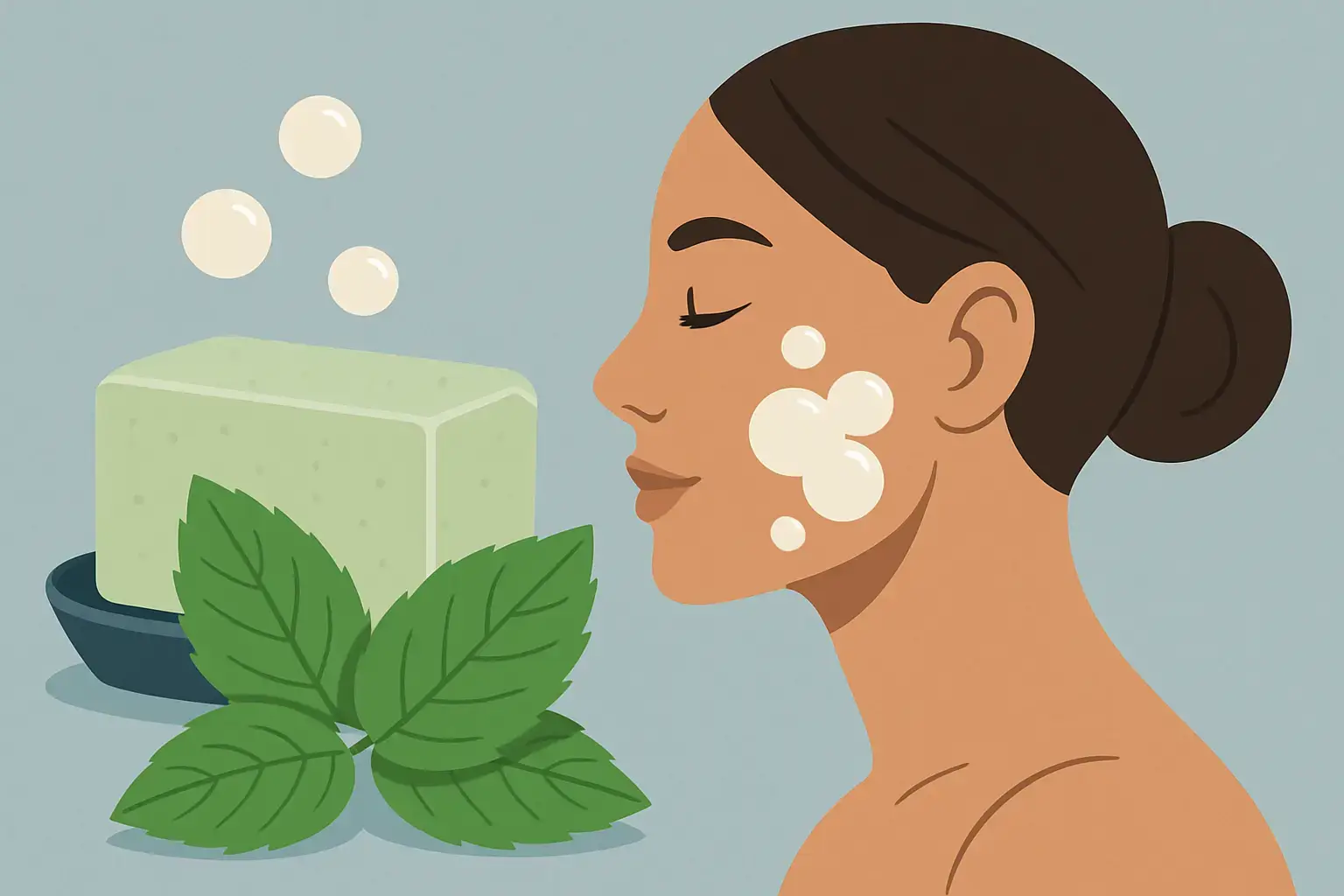
That first rinse with peppermint soap feels like a reset. Not a perfume-y cover-up or a harsh scrub, but a clean, cool finish that makes you feel properly washed – especially after the gym, a long commute, or one of those sticky, close summer evenings.
The appeal is simple: peppermint brings a crisp sensory lift, and in a well-made bar it can support a fresher-feeling cleanse without turning your skin tight and squeaky. Still, not every peppermint soap is the same, and the best results depend on what else is in the formula, how strong the peppermint is, and what your skin actually needs.
Peppermint soap benefits – what you can realistically expect
Peppermint has a reputation for being invigorating, and in skincare that usually translates to two things: it feels cooling, and it helps you feel clean. Those are real benefits, but they sit alongside practical considerations like skin barrier support, scent strength, and how you use the bar.
A good peppermint soap should leave skin comfortable. If the bar leaves you tight, itchy, or overly dry, the “fresh” feeling is coming at a cost.
1) A clean, cooling feel (especially after sweating)
Peppermint oil naturally contains menthol, which gives that cooling sensation. In soap, this can feel brilliant after exercise or on warmer days because it adds a sense of relief without needing exfoliating particles or strong detergents.
It is worth being clear about language here: peppermint does not literally lower your skin temperature. It triggers a cooling sensation, which many people find soothing on hot, flushed, or post-workout skin.
2) A fresher finish that helps with body odour
Soap works by lifting oils and grime so they rinse away. Peppermint adds a sharp, clean scent that many people associate with “properly fresh”. If you are someone who feels self-conscious about underarm or foot odour, peppermint can be a helpful part of your routine – not because it is masking everything, but because it makes the whole experience feel cleaner.
If odour is persistent or suddenly changes, it can be hormonal, stress-related, or linked to fabric and laundry habits. Soap helps, but it is not always the entire answer.
3) A wake-up effect for morning showers
Some soaps feel cosy. Peppermint feels brisk. That matters more than it sounds, because skincare is partly about consistency. If a bar makes you want to step into the shower and actually take the extra minute to wash properly, it is doing a job beyond ingredients.
For shift workers, early risers, and anyone who wants a quick “switch on” without an intense fragrance cloud, peppermint can be the most practical kind of indulgence.
4) A balanced option for combination skin
Peppermint is often chosen by people who get an oily T-zone, back breakouts, or sweat-related congestion, but still want a bar that does not strip their skin.
Here is the trade-off: peppermint itself can feel clarifying, yet the base oils and butters determine whether the bar is gentle enough for daily use. A thoughtfully formulated bar can cleanse thoroughly while leaving the skin barrier supported. A poorly formulated one can push combination skin into a cycle of dryness and rebound oiliness.
5) A more pleasant hand-wash at the sink
If you wash your hands often, you already know the problem: frequent washing can leave hands tight, rough, and uncomfortable. Peppermint makes hand-washing feel refreshing instead of like a chore, but again, the base matters.
A bar made with skin-compatible fats can help hands feel calmer after washing. If you are constantly washing at work or at home, that difference shows up quickly.
The base formula matters more than the peppermint
When people talk about peppermint soap benefits, they often focus on the essential oil. In reality, peppermint is the supporting actor. The main character is the soap base: what it is made from, how it is cured, and whether it cleans gently.
Cold-process soapmaking, for example, allows the natural glycerine formed during saponification to remain in the bar. Glycerine is a humectant, meaning it helps attract water and supports that comfortable, non-stripped feel after rinsing.
Tallow-based soap is another big factor. Grass-fed tallow has a fatty acid profile that is notably compatible with the skin barrier, which is why many people with dry or sensitive skin find it more comfortable than bars designed purely for maximum foam. When peppermint is paired with a barrier-supportive base, you get the fresh feeling without that “tight face” aftermath.
If you are choosing peppermint soap for sensitive skin, do not just look for the word “peppermint” on the label. Look for a short ingredient list, a properly cured bar, and a formula designed to cleanse without harshness.
Who peppermint soap tends to suit best
Peppermint is not a universal yes. It depends on your skin, where you are using it, and how strong the bar is.
It tends to suit:
- People who feel sweaty or sticky and want a clean, cooling wash after exercise.
- Those who prefer fresh, herbal scents over sweet or floral fragrance.
- Combination to oily body skin, particularly on the back and chest.
- Anyone making a plastic-free swap and wanting a bar that feels energising, not boring.
It may be less suitable if your skin barrier is already struggling. In that case, peppermint can feel like “too much”, even when the soap itself is gentle.
When peppermint soap can be a bad idea
Peppermint can be brilliant, but there are clear moments to be cautious.
Very sensitive, eczema-prone, or reactive skin
If your skin flares easily, peppermint essential oil can be stimulating. Some people tolerate it well, others do not. If you are in an active flare, keep things simple: an unscented, ultra-gentle bar is usually the kinder choice.
If you still want peppermint, treat it like a patch test scenario. Use it on the body first, not the face, and see how your skin feels over a few washes.
Face use (it depends)
Facial skin is generally more reactive than body skin. Peppermint can feel too intense around the nose and cheeks, and it is not something you want near the eye area.
If you are breakout-prone and like peppermint, you might enjoy it as an occasional face wash, but daily use can be drying for some. A safer approach is to keep peppermint for the body and choose a calmer cleanser for the face.
After shaving
That tingle can turn into a sting on freshly shaved skin. If you love peppermint, use it before shaving, then rinse well and follow with a simple moisturiser. Or save peppermint for non-shave days.
How to get the best out of a peppermint bar
Peppermint works best when you let the bar do its job without overworking your skin.
Use warm, not hot, water. Hot water can make dryness worse, which makes any essential oil feel stronger.
Lather in your hands or on a cloth and cleanse for 20-30 seconds, then rinse properly. If you are using it after exercise, a second quick lather on underarms, feet, or back can be more effective than scrubbing hard.
After the shower, moisturise while skin is still slightly damp. Peppermint soap can feel so “clean” that people skip moisturiser, then wonder why their legs feel dry by evening. Your cleanser and moisturiser are a pair.
Finally, store the bar well. A draining soap dish keeps the bar firm and long-lasting and prevents that soggy, melting edge that wastes product.
Peppermint, sustainability, and the zero-plastic bathroom
Peppermint soap has another quiet benefit: it makes the plastic-free swap feel satisfying. If you are used to a strong “fresh” body wash, a well-formulated peppermint bar can be the first bar that does not feel like a compromise.
That matters for households trying to reduce waste. A bar can replace multiple bottles over time, and if you choose a brand that prioritises minimal packaging and responsible sourcing, the impact goes beyond your shower shelf.
This is also where craft matters. Small-batch soapmaking tends to favour slower methods, simpler ingredients, and better curing, which often translates to a bar that lasts longer and performs better.
If you are looking for a peppermint bar with a traditional base and a clear sourcing story, Luna Natural Soap Co. leans into small-batch, cold-process craft with grass-fed tallow and plastic-free packaging – the kind of foundation that lets peppermint feel refreshing rather than harsh.
Choosing the right peppermint strength
Not everyone wants the same “mint”. Some bars are softly herbal. Others are eye-watering in the shower.
If you are new to peppermint, start with a gentler bar or use it just for the body. If you already know you love that strong cooling sensation, you can go bolder, but keep it away from delicate areas and wash your hands after using it before touching your eyes.
Also pay attention to what else is in the bar. Peppermint paired with other cooling botanicals can feel stronger. Peppermint balanced with soothing ingredients can feel smoother and more wearable day to day.
A useful rule: the more sensitive your skin, the more you should prioritise the base formula and keep peppermint as a light accent rather than the headline.
Closing thought: peppermint soap is at its best when it supports your routine, not when it tries to overpower it. Choose a bar that leaves your skin calm, your bathroom less cluttered, and your daily wash feeling like a small, clean reset you can actually stick with.