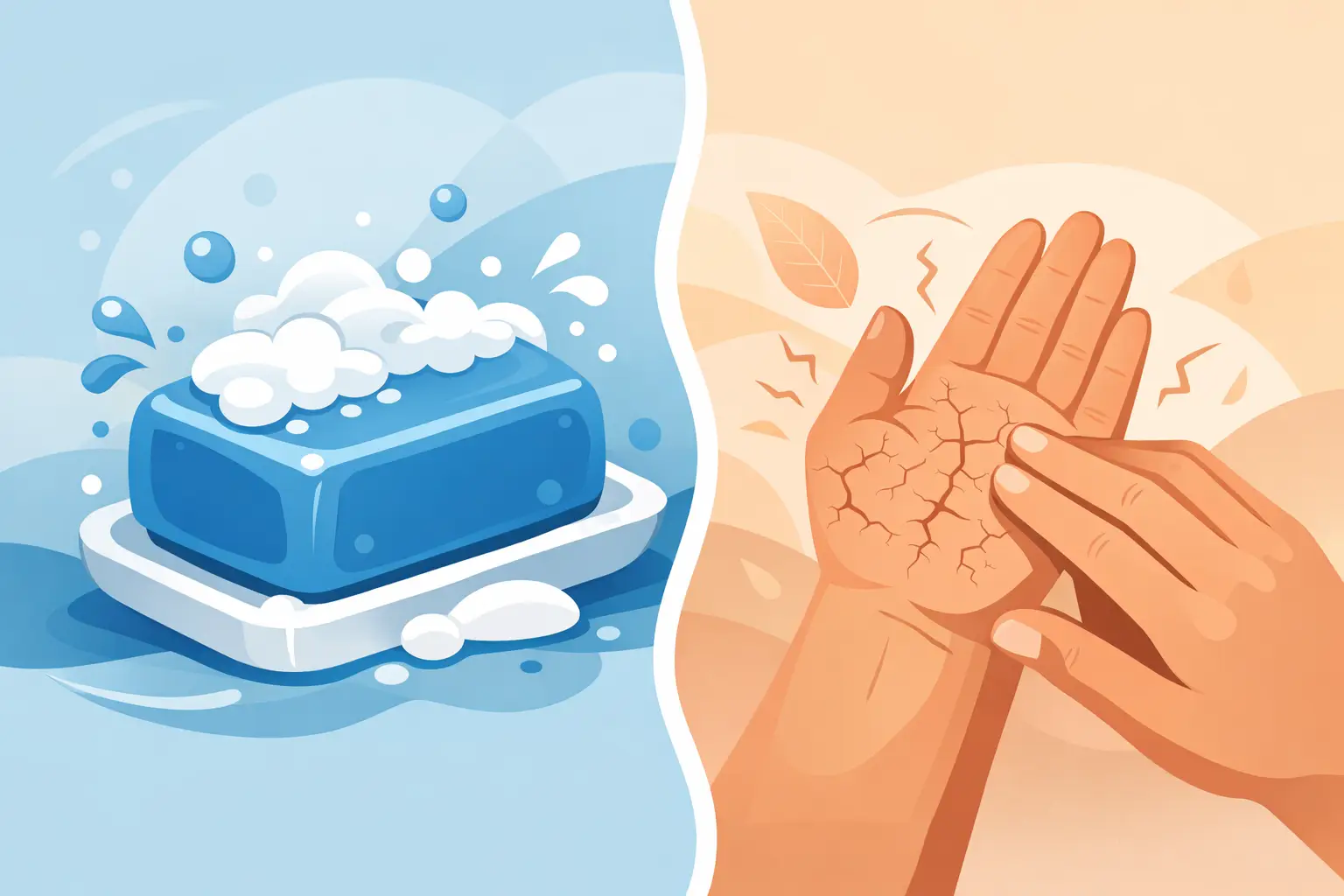


The first time you swap a plastic bottle for a bar, you notice two things straight away: how much space you’ve reclaimed at the sink, and how your skin feels after the rinse. A good bar leaves you comfortable and calm. A bad one leaves you tight, squeaky, and reaching for moisturiser like it’s an emergency.
Plastic free soap bars are not all the same. Some are true soap, made slowly and cured properly. Others are detergent bars (often called syndets) designed to behave like shower gel in solid form. Neither category is automatically “better” for every person, but for dry, sensitive, eczema-prone skin, the details matter – ingredients, curing, superfatting, and how the bar is stored between uses.
Why plastic free soap bars are worth the switch
If you’re trying to cut household waste, the bathroom is a surprisingly effective place to start. Bottles and pumps add up quickly, and most of them are hard-to-recycle mixed materials. A bar wrapped in paper or card is a simpler system.
There’s also a performance angle. Properly made bar soap is concentrated: no added water to make it pour, no need for plastic packaging to keep it stable. That often means less product used per wash, and fewer deliveries over time.
None of this means every bar will suit every skin. If you’re used to foaming shower gels, a bar can feel different at first. The goal is not to chase bubbles. The goal is clean skin that still feels like skin.
“Soap” vs “solid cleanser”: what you’re actually buying
Here’s the simplest way to understand it. Traditional soap is made by saponification – oils or fats combined with an alkali to create soap and glycerine. Solid cleansers (syndets) use synthetic surfactants pressed into a bar.
Syndets can be brilliant for certain needs, particularly if you want a lower pH cleanser or if you struggle with soap scum in hard-water areas. Traditional soap can be exceptional for comfort, richness and that satisfying, creamy lather – but it depends on formulation and cure time.
If your skin is reactive, don’t assume “natural” automatically equals “gentle”. Essential oils, strong botanicals, and very cleansing oil profiles can be irritating, even if they sound wholesome. Likewise, “dermatologically tested” doesn’t guarantee you’ll love how a product feels day to day. Your best clue is the ingredient list and how the brand talks about who the bar is made for.
What makes a bar genuinely plastic-free
Plastic-free should mean more than “not in a bottle”. Look at the whole presentation: outer wrap, labels, postage materials, and any protective coating.
Paper and card packaging are the obvious win, but it’s worth checking the small print. Some labels contain plastic film. Some “compostable” wraps only break down under industrial composting conditions. If you’re buying for a low-waste home, choose brands that are clear about materials and don’t dance around the details.
A practical point: plastic-free packaging is only helpful if the bar arrives in good condition. A properly cured bar is hard and stable, and it travels well with minimal protection.
The ingredient choices that matter for real skin
Many people come to plastic free soap bars for sustainability, then stay for the skin benefits – but only when the formula is built for barrier support.
Tallow, olive, coconut: why the base oils change everything
The “base” of a soap is the bulk of what touches your skin. Different fats create different cleansing profiles.
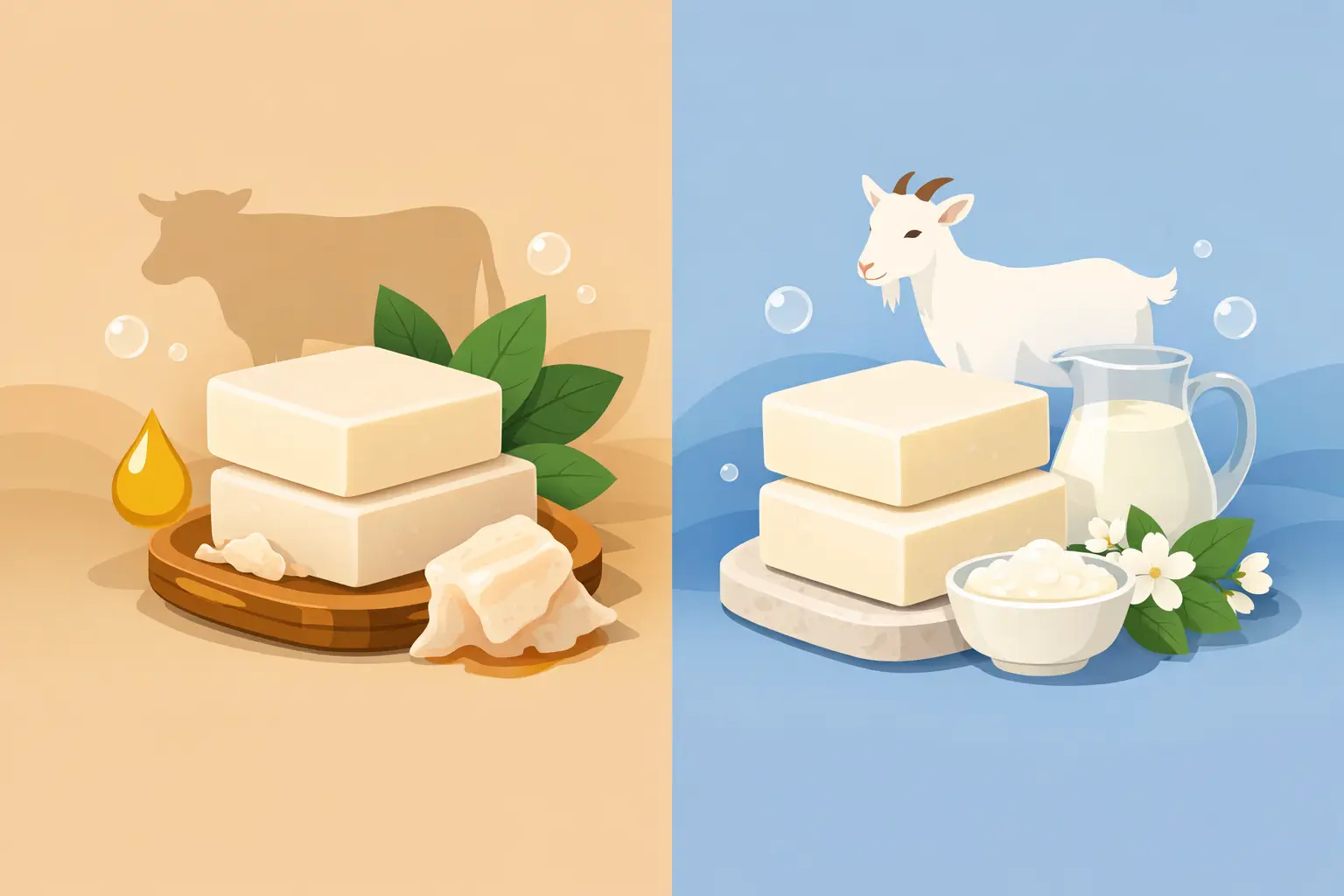
Tallow-based bars are often loved by people with dry or sensitive skin because tallow is naturally rich in fat-soluble vitamins and has a skin-like lipid profile. When it’s rendered and formulated well, it can feel less stripping than high-coconut formulations and leaves a soft, conditioned finish.
Olive oil brings mildness and a creamy lather, but very high-olive bars can feel slimy for some people and may not suit those who want a more cleansing wash.
Coconut oil boosts cleansing and bubbles. It’s useful in small amounts, but a coconut-heavy bar can feel drying, especially on eczema-prone areas or winter skin.
It depends on your priorities: if your main issue is body breakouts or very oily skin, you may prefer a more cleansing profile. If your main issue is tightness, flaking, or irritation, a gentler base matters more than foam.
Superfat and cure time: the unglamorous secrets
Two behind-the-scenes details separate an average bar from one you repurchase.
Superfatting means leaving a small percentage of oils unsaponified, which can increase the conditioned feel. Too little and the bar can feel harsh. Too much and it can feel heavy or leave residue, particularly in hard water.
Cure time matters just as much. Cold-process soap continues to harden and mellow as water evaporates and the crystalline structure develops. A properly cured bar lasts longer, lathers better, and tends to feel gentler. If a brand rushes production, you’ll often feel it on your skin.
Fragrance and essential oils: where “natural” can sting
If you’re buying for sensitive skin, be cautious with strong essential oil blends. Peppermint, cinnamon, clove, and some citrus oils can be stimulating or irritating, even at low levels.
If you want the ritual of scent without the risk, choose softly fragranced bars or fragrance-free options for everyday use, then keep your more scented bars for hands or occasional showers. Many families find this approach works well: a calm bar as the default, and a “treat” bar when skin is behaving.
Plastic free soap bars in hard water: a realistic expectation
Hard water is the quiet reason some people abandon bar soap. Minerals in hard water can react with soap to form soap scum, leaving a film on tiles and sometimes on skin or hair.
You can work with it. Use less product than you think you need, rinse thoroughly, and keep the bar dry between uses. If you find a residue on the skin, switching to a bar with a more balanced formula (not overly superfatted) can help.
For hair, it’s even more personal. Some people do well with soap-based shampoo bars; others find them too waxy in hard water and prefer syndet shampoo bars. There’s no virtue in forcing a routine that doesn’t suit your water or your scalp.
How to make a bar last (and stay nice to use)
A plastic-free swap should not feel like a downgrade. The quickest way to ruin a lovely bar is to leave it sitting in a puddle.
A draining soap dish is the difference between a bar that lasts weeks and one that turns to paste. If you’re travelling, let the bar air-dry before packing it, or wrap it in paper for the journey and move it to a dry surface on arrival.
If you buy artisan bars, consider rotating them. Using one bar constantly in a steamy shower can soften it more quickly. Alternating between two gives each one time to dry out fully, which improves longevity and lather.
Choosing the right bar for your skin (without overthinking it)
If your skin is dry, tight, or easily inflamed, start with a gentle, tallow- or olive-forward bar, lightly scented or fragrance-free. Look for plain, supportive extras like oats or goat milk rather than an intense botanical cocktail.
If you’re oily or sweat a lot, a slightly more cleansing bar can feel fresher, but you still want comfort after the rinse. “Clean” should not mean stripped.
If you’re buying for a household, choose one “everyone” bar and then add one or two personality bars. It reduces clutter and decision fatigue, and it makes refills easy.
If you’re shopping for a gift, packaging and story matter, but so does universality. For gifting, gentle scents, a firm bar, and truly plastic-free presentation are usually safer than a strong essential-oil statement.
For those who want a traditional, small-batch approach with plastic-free packaging and a focus on skin comfort, Luna Natural Soap Co. builds its bars around slow-rendered, grass-fed tallow and straightforward formulations designed for real skin.
The trade-offs: what a bar can’t do (and shouldn’t promise)
A brilliant soap bar can support the skin barrier by cleansing without over-stripping. It can leave you softer, calmer, and less itchy. What it cannot do is fix every skin issue by itself.
If you’re dealing with eczema flares, you may still need to manage triggers like overwashing, hot showers, and fragranced laundry products. You might also need a simple moisturiser after washing, even if your soap is gentle. Think of the bar as your first line of defence – the part that decides whether cleansing helps or harms.
Also, plastic-free does not automatically equal low-carbon. Shipping distances, ingredient sourcing, and manufacturing scale all play a part. The best choice is often the one you’ll actually use consistently, that performs well enough to replace bottles long-term.
A plastic free soap bar should feel like an upgrade: a small daily ritual that’s quieter, cleaner, and kinder to your skin. Choose one made with intent, keep it dry, and give your skin a week or two to settle into the change. The right bar doesn’t shout. It simply leaves you comfortable – and that’s the whole point.