

If you have ever picked up a skincare product and felt as though it was made for a warehouse rather than for skin, you are not imagining it. One of the clearest small batch skincare benefits is that it brings formulation back to a human scale – where ingredient quality, freshness and skin feel matter as much as shelf life and mass output.
For people with dry, reactive or easily overwhelmed skin, that difference can be felt quickly. A product made in smaller runs is often handled with more care at every stage, from sourcing and blending to curing and packing. That does not make every small batch product automatically better. It does mean there is more room for intention, transparency and craftsmanship – and those things matter when you are putting something on your skin every day.
What small batch skincare benefits really mean
Small batch is not just a marketing phrase when it is done properly. It means products are made in limited quantities rather than on an industrial scale, often by a maker who is close to the full process. Ingredients are usually chosen with a clearer purpose. Production tends to be slower. Quality checks are more direct.
That slower pace changes the product. In natural soapmaking and traditional skincare, time is part of the formula. Oils need to be selected well. Bars need to cure properly. Balms and creams need the right balance, not simply the longest possible shelf life. When a brand works in smaller runs, it can make decisions based on performance and integrity rather than pure volume.
For customers, the benefit is not only emotional, though that matters too. It is practical. You are often getting fresher product, more thoughtful ingredient selection and better traceability. For anyone trying to simplify a routine or avoid harsh, filler-heavy formulas, that is a meaningful shift.
Fresher formulas can make a visible difference
Freshness matters more in skincare than many people realise. Natural oils, butters, botanicals and unrefined ingredients all have their own texture, aroma and activity. When products are produced in huge quantities and expected to sit in storage, travel long distances and remain identical for extended periods, formulations are often built around stability first.
In small batch production, there is usually less distance between making and use. That can help preserve the character of the ingredients. A soap bar can retain a richer lather and a more nourishing skin feel. A balm can feel more alive on the skin rather than waxy or overly processed.
This does not mean small batch always equals short shelf life or that preserved products are somehow poor quality. It means the priorities are different. A carefully made product can be designed to support skin well while still respecting the natural qualities of its ingredients.
For dry or sensitive skin, that balance often shows up in how the skin feels afterwards – calmer, less stripped, more comfortable.
Better ingredient choices, not just longer ingredient lists
Many people now read labels closely, and for good reason. The real value in small batch skincare is not that it sounds rustic. It is that smaller makers often have more freedom to choose ingredients for skin compatibility rather than trend value.
That might mean using nourishing fats, gentle plant oils, oats, clays or botanicals because they serve a clear purpose. It might also mean leaving out ingredients that make a formula cheaper, foamier or more shelf-stable but less pleasant for compromised skin.
Tallow is a good example. When it is sourced well and prepared carefully, it is deeply compatible with the skin. It contains vitamins A, D, E and K, along with fatty acids that support the skin barrier. For people dealing with dryness or skin that feels constantly tight after cleansing, this kind of ingredient choice is not decorative. It is functional.
The trade-off is that ingredient-led products can have more natural variation. One batch may differ slightly in colour or scent from another, especially when essential oils, botanicals or traditional methods are involved. For many customers, that is reassuring rather than inconvenient. It signals that the product is made from real ingredients, not engineered for total uniformity.
Small batch skincare benefits sensitive and troubled skin
Sensitive skin often responds badly to excess. Too much fragrance, too many surfactants, too many actives layered together – all of it can push the skin barrier further off balance. Smaller scale skincare is often appealing because it tends to be simpler and more deliberate.
This matters in cleansing most of all. A cleanser or soap that removes dirt while respecting the skin barrier can change the whole routine. Skin that is prone to dryness, flaking or eczema often needs less drama, not more. Rich lather is lovely, but not if it leaves the skin squeaking and uncomfortable afterwards.
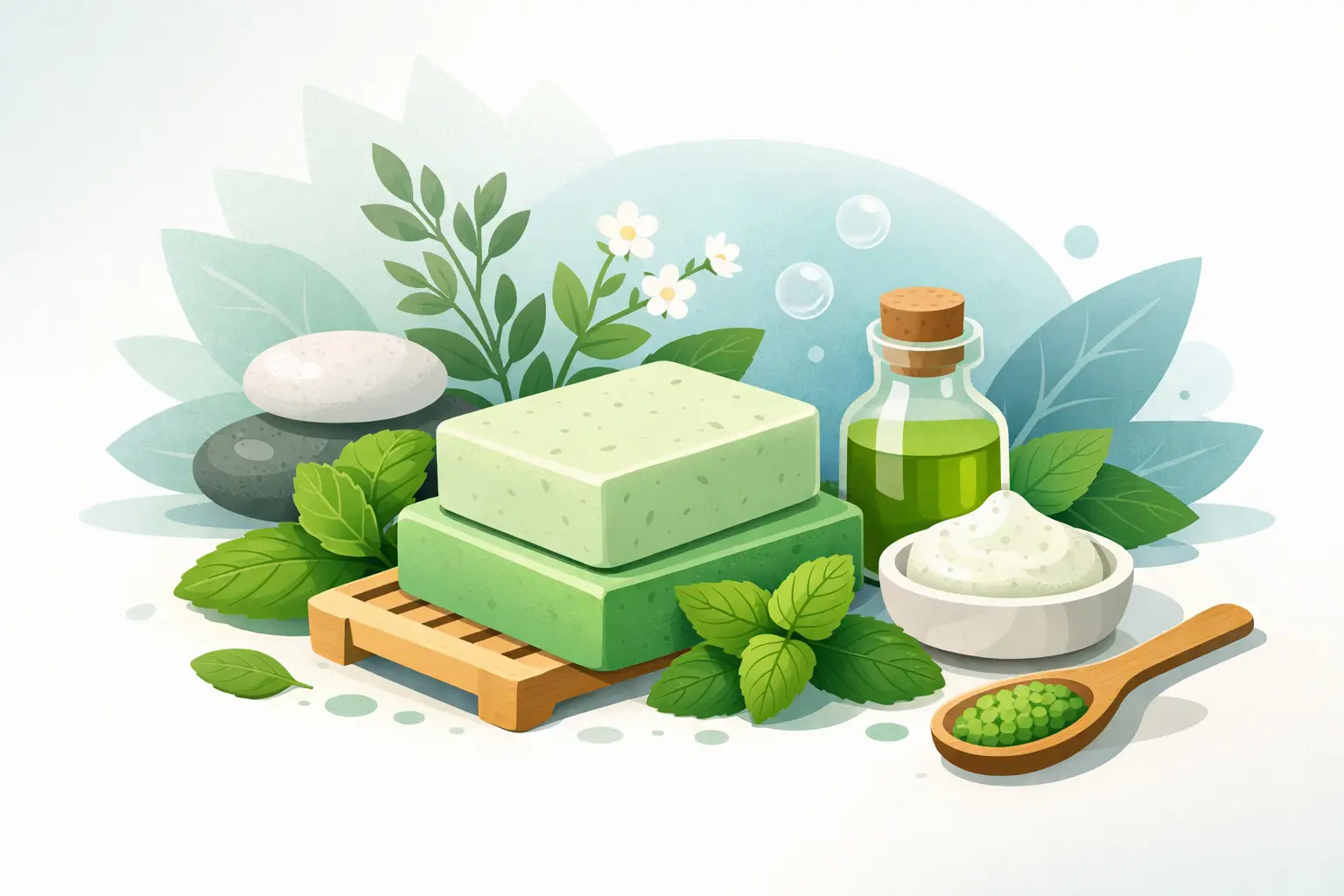
Traditional soapmaking methods can be especially helpful here when they are carried out well. Cold-process soaps, for instance, retain naturally produced glycerine, which helps draw moisture to the skin. When paired with nourishing fats and a proper cure time, the result can be a bar that cleans gently and leaves the skin feeling supple rather than stripped.
Of course, sensitive skin is not one single thing. Some people react to essential oils. Others do best with very plain formulas. That is why transparency matters so much. A good small batch maker should be clear about what is in a product, what it is designed to do and who might want a simpler option.
Transparency is easier at a human scale
One of the most overlooked small batch skincare benefits is traceability. When production is close to home and quantities are controlled, it is easier to know where ingredients came from, how they were handled and why they were chosen.
That level of visibility matters if you care about regenerative farming, animal welfare, plastic reduction or lower-waste production. It also matters if you are trying to avoid vague claims. Customers are more discerning now. They want to know whether a product is genuinely handmade, whether ingredients are responsibly sourced and whether sustainability claims hold up under scrutiny.
At a smaller scale, those answers are usually easier to give. If a maker renders tallow in-house, sources locally where possible or minimises waste through practical choices, that is not an abstract brand story. It is built into the way the product is made.
For many households, that has become part of quality. A good bar or balm should feel lovely to use, but it should also sit comfortably with the values behind your purchase.
Craftsmanship changes the everyday experience
Skincare is practical. It should work. But the way a product feels in the hand, the texture of the lather and the comfort it leaves behind all matter too. Small batch products often carry a different kind of care because the maker is paying attention to the full sensory experience, not only to output.
That can mean a bar that is firm, long-lasting and neatly cured. It can mean a herbal blend that smells clean and grounded rather than overpowering. It can mean packaging that feels considered and low-waste rather than excessive.
These details are easy to dismiss until you use them every day. Then they become the reason you stick with a product. Luxury is not always about rarity or fuss. Often it is about usefulness done beautifully.
This is especially true when buying for family or as a gift. A well-made small batch skincare product carries a sense of care before it is even opened. It feels personal without being fussy, premium without being detached from real life.
The trade-offs are worth understanding
There are, of course, limits. Small batch products can cost more because the ingredients, labour and slower methods cost more. Popular items may sell out. Slight variation between batches is normal. If you prefer absolute uniformity or need a product available in every large chemist, small batch may feel less convenient.
But convenience is not the only measure of value. For many people, especially those who have cycled through countless products looking for relief, fewer better choices are a relief in themselves. Paying for ingredient quality, careful production and honest sourcing often makes more sense than paying for marketing, filler ingredients and overbuilt packaging.
It also helps to separate small batch from homemade-for-the-sake-of-it. Scale alone is not enough. Good formulation, hygiene, testing and process discipline still matter. The best small batch skincare combines traditional craft with serious standards.
Who benefits most from choosing small batch skincare
Not everyone shops for skincare in the same way. Some people want a simple bar that does not upset their skin. Others want a bathroom that creates less waste. Others are buying gifts and want something with a clear story behind it.
Small batch skincare tends to suit all three. It is especially well matched to people who value ingredient transparency, gentle cleansing and products made with intention. If your skin is dry, sensitive or prone to irritation, the shift can be especially noticeable. If your priority is ethical sourcing and lower-waste living, the production model matters just as much as the ingredient list.
For those reasons, brands such as Luna Natural Soap Co. resonate with customers looking for skincare that feels grounded, honest and effective. The appeal is not novelty. It is trust.
A good product does not need to shout. When it is made carefully, sourced thoughtfully and used consistently, it simply earns its place by the sink or in the shower – and your skin usually tells you the rest.