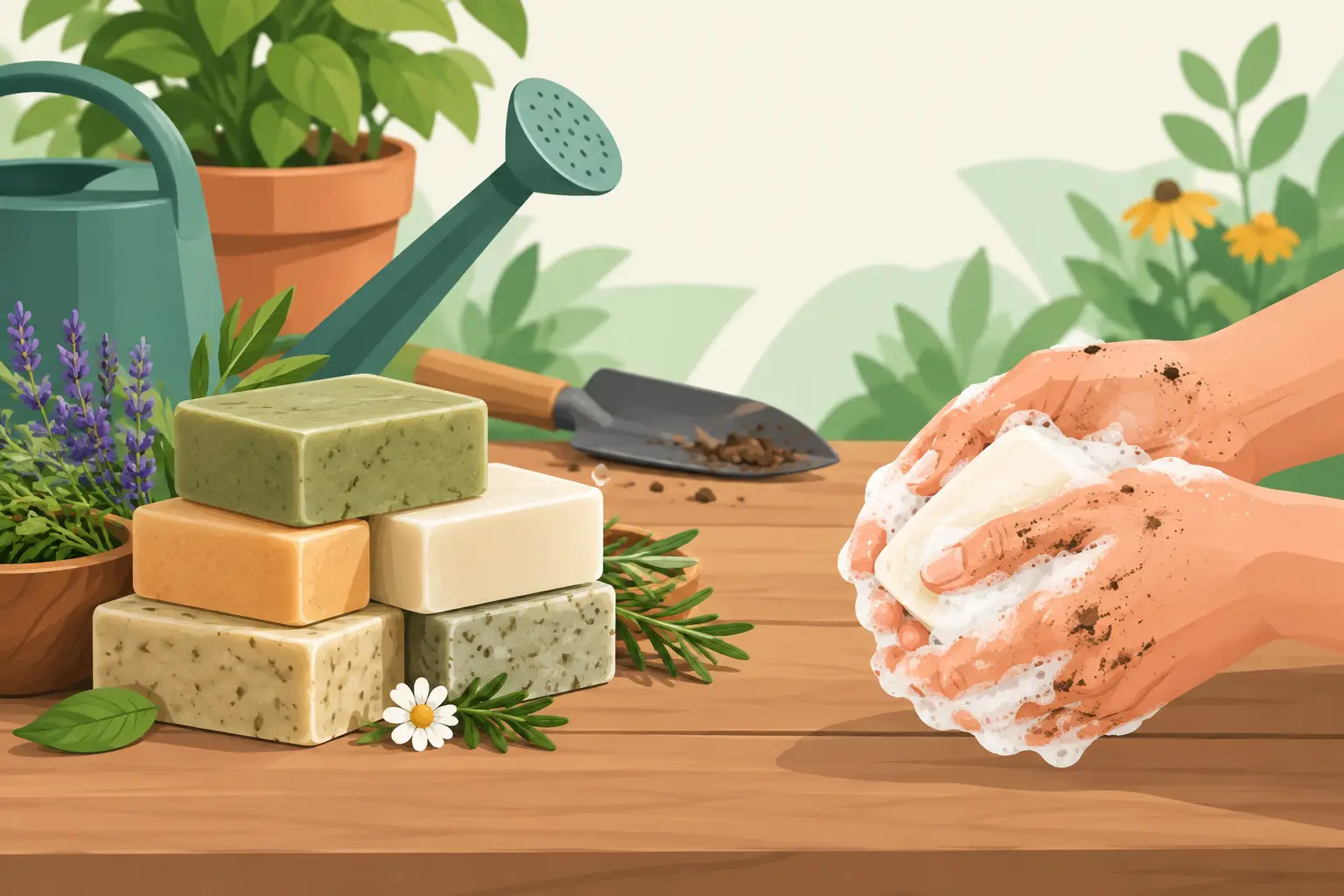


A beautiful bar should be used to its last, fragrant sliver – not softened into the soap dish after a few rushed showers. Soap waste reduction is less about being perfect and more about a few considered habits: choosing a well-made bar, keeping it dry between uses and giving every last piece a purpose.
For households moving away from plastic bottles, this matters. A bar that melts away too quickly can feel frustrating, even when its ingredients are good. A firm, traditionally made soap that is stored well offers the opposite: a rich lather, gentle cleansing and a longer life at the basin, bath or kitchen sink.
Why bars go soft before their time
Soap needs water to lather, but it does not need to sit in it. The most common cause of a short-lived bar is not daily use. It is standing in a pool of water between uses, where the surface turns soft and gradually washes away.
Humidity plays a part too. A busy family bathroom, a shower ledge with poor airflow or a closed soap tin used straight after washing can all keep a bar damp. Even a generous, creamy bar needs time to dry and firm up again.
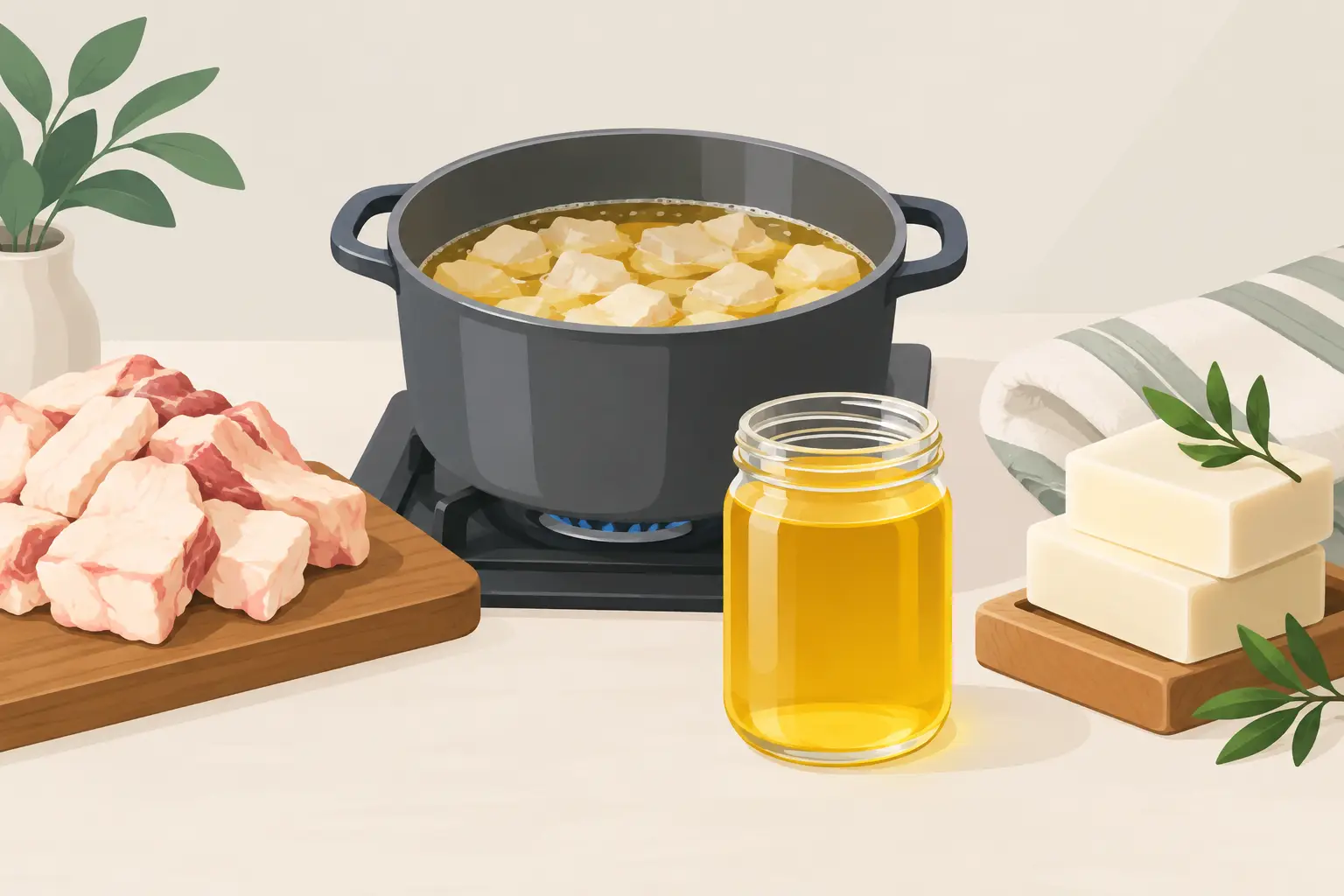
The recipe also matters. Handmade cold-process soap is naturally different from a factory-made detergent bar. Its ingredients, cure time and balance of oils determine how it feels in the hand and how it wears. Tallow is valued in traditional soapmaking for its ability to create a firm bar with a satisfying, creamy lather. When carefully formulated and properly cured, it can offer everyday practicality alongside a gentle feel on dry or sensitive skin.
A hard bar is not automatically a better bar, though. Some soaps are made to be especially conditioning, some contain botanicals or exfoliating oats, and some are intended for frequent kitchen use. The aim is not to make a bar last forever. It is to let it perform as it was made to perform, without losing half of it to the soap dish.
Soap waste reduction begins with storage
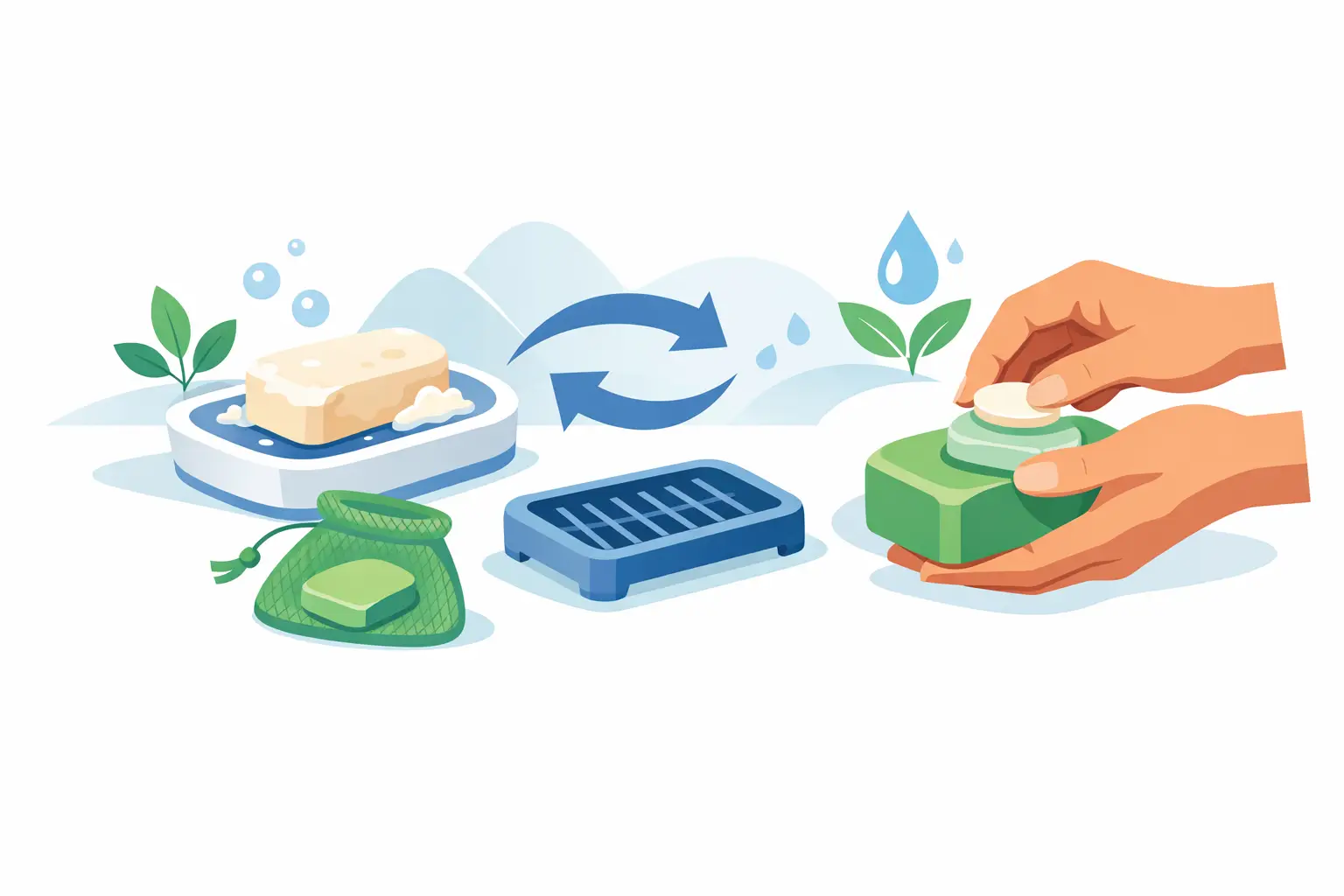
The simplest change is to give soap somewhere dry to rest. Choose a draining dish, a ridged tray or a soap saver that lifts the bar above standing water. Air needs to reach the underside as well as the top.
Place the dish away from the direct stream of the shower where possible. This small move makes a noticeable difference, particularly for a bar used by several people. If your only option is a shower shelf, select a holder with generous drainage holes rather than a flat container.
Closed travel tins are useful, but only once the soap is dry. Packing a wet bar into a tin traps moisture and creates the very conditions that shorten its life. At home, let it air-dry first. When travelling, a draining insert or a simple breathable wrap can help until you reach your destination.
It can also be useful to keep two bars in rotation. While one is being used, the other has time to dry fully. This is especially practical in homes where one bar serves the morning rush, evening baths and handwashing throughout the day.
Use less water on the bar itself
For handwashing, wet your hands first, rub the bar between them for a few seconds, then return it to its dish before building the lather. There is no need to hold the soap under running water while you wash.
In the shower, wet your skin or flannel, lather the bar briefly and set it down. This keeps the experience indulgent while avoiding unnecessary softening. It also helps you use a measured amount of cleanser, which can be kinder to skin that feels dry, tight or easily unsettled.
Choose bars made for real use
Low-waste living does not mean accepting products that feel austere or inconvenient. The most effective swaps are the ones people enjoy using every day. A soap bar should feel good in the hand, lather well and leave skin comfortable enough that you do not need to compensate with more products afterwards.
Look for clear information about how the soap is made and what it contains. Traditional cold-process methods, a full cure and thoughtfully chosen fats all support a bar’s quality. At Luna Natural Soap Co., tallow is slowly rendered in-house from locally sourced, grass-fed material, then used in small-batch formulations designed to cleanse gently and create a firm, lasting bar.
Ingredient choices should also suit the person using the soap. For very dry or sensitive skin, a harsh, overly stripping cleanser may encourage frequent washing followed by extra moisturising. A gentle bar with a nourishing lather can make a daily routine feel simpler. For oily or active skin, the right soap may be one that cleanses thoroughly without leaving the face feeling squeaky or uncomfortable.
There is no single best bar for every room. A facial bar may be used more carefully and stored at the basin. A solid dish soap will work harder, meeting grease, hot water and repeated use. A family bath bar may disappear faster simply because it is doing more. Matching the bar to the task avoids disappointment and prevents unnecessary replacement.
Do not throw away the small pieces
The final sliver is where good intentions often end. It becomes too small to hold, slips down the drain or gets left beside a fresh bar. Yet soap ends are still soap. They carry the same carefully made ingredients and can be used in several practical ways.
When a piece becomes awkward, press it onto the next bar while both surfaces are slightly damp. Leave them together to dry, and they will often bond well enough to use as one. This works best with soaps of a similar style, though a mixed bar can make an unexpectedly lovely handwash blend.
Alternatively, collect dry ends in a small cotton soap bag. Wet the bag, rub it between your hands or over a flannel, and it will create a useful lather until every fragment has been used. This is a particularly good option for children, who can struggle to grip a thin soap sliver.
For laundry handwashing or household cleaning, leftover pieces can be saved for jobs where fragrance and appearance matter less than function. Keep them dry in a labelled jar until you have enough to use. Avoid turning this into a complicated project that sits unfinished for months. The best waste-reduction method is the one you will genuinely maintain.
A note on remelting soap scraps
It is possible to grate and remelt soap ends with water to make a rustic new bar or soft cleaning paste. But it is not always the most efficient choice. Homemade remelting can produce a crumbly texture, and adding too much water may create something that spoils or performs poorly.
If you enjoy making things, a small batch can be satisfying. If you do not, use a soap bag or join the last piece to a fresh bar. Simple is often the more sustainable option because it ensures the scraps are actually used.
Make the lower-waste choice easy for everyone
A well-organised bathroom does more for soap waste reduction than a guilty reminder ever will. Put the draining dish where hands naturally reach for the bar. Keep a soap bag beside the basin for ends. If different household members prefer different soaps, give each person a clear place to store theirs.
Packaging deserves the same thought. Plastic-free wrapping and reusable accessories reduce the waste around the bar, but the bar itself should still be protected from moisture. Buy only what you can store in a cool, dry cupboard. Stocking up can be sensible, especially for favourite handmade soaps or gifts, but there is little benefit in keeping bars in a damp bathroom cabinet for months.
Gifting can be part of this habit too. A thoughtful soap set with a draining accessory encourages someone to use and care for the bar from day one. It is a useful kind of luxury: beautiful enough to give, practical enough to become part of an ordinary Tuesday morning.
The smallest changes are often the ones that stay with us. Let your bar dry, use the last piece and choose soap made with care. A little attention at the soap dish turns a daily necessity into a quieter, more considered ritual.