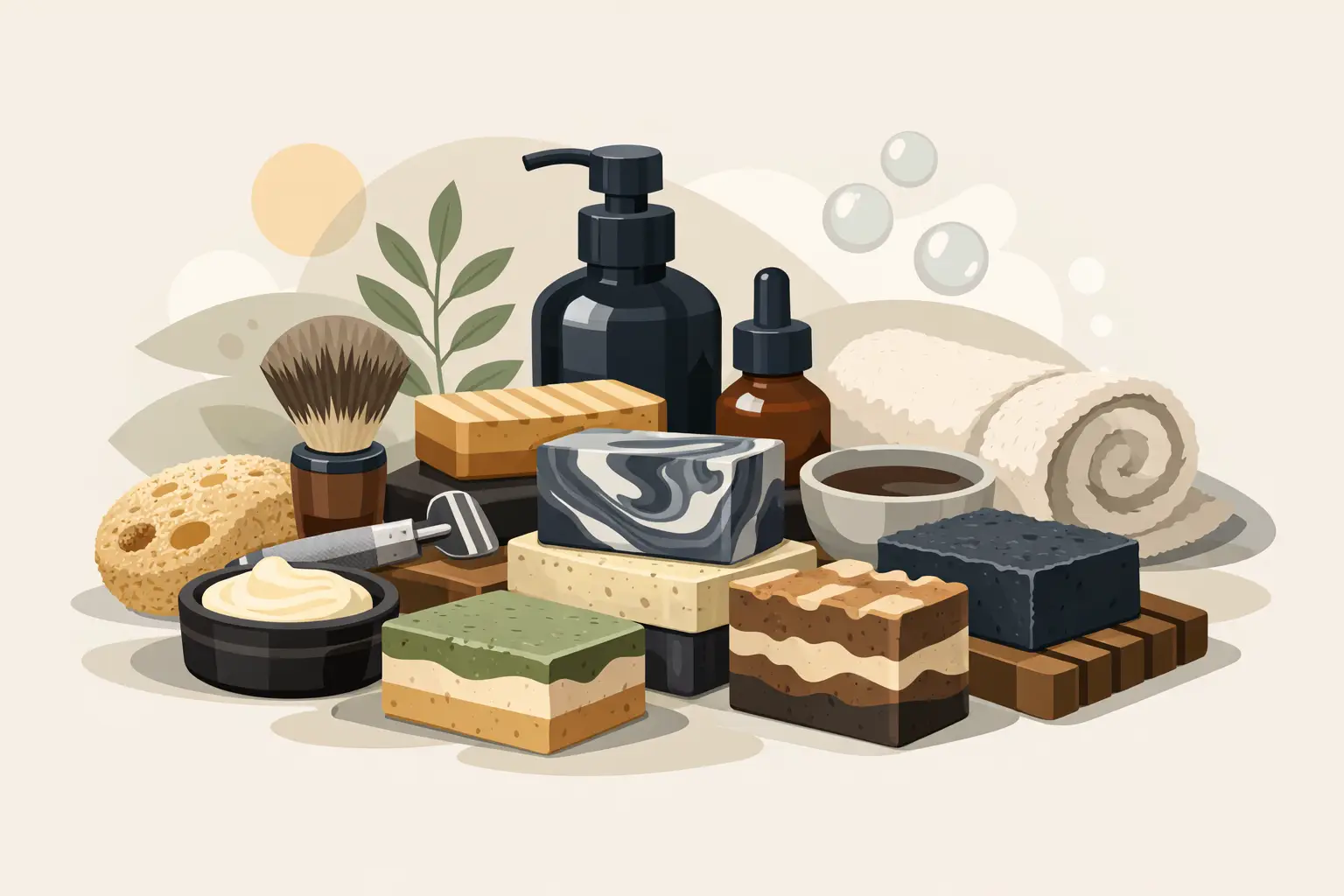


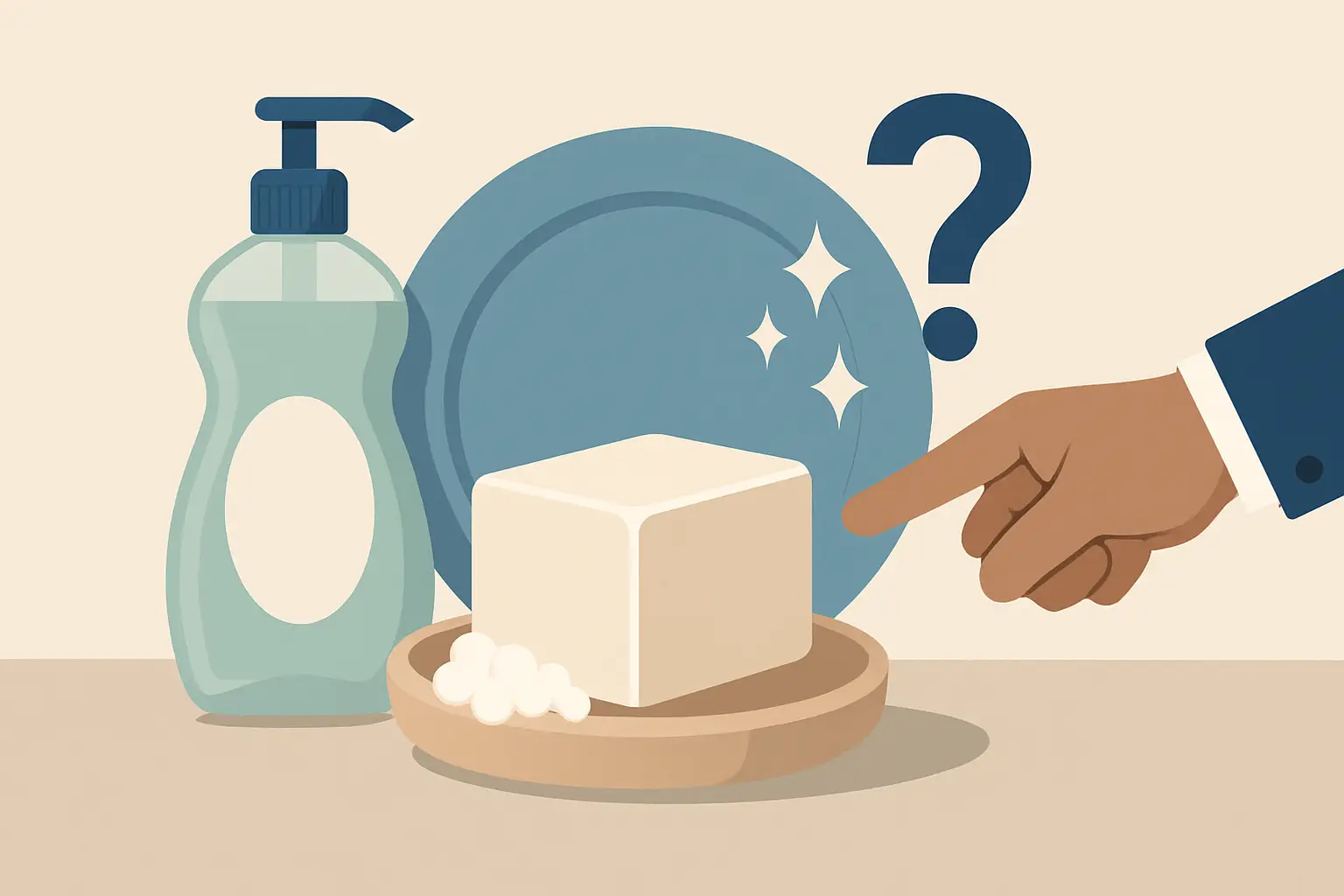
The moment most people try a solid dish soap bar, it is not the scent or the packaging that surprises them. It is how little you actually need. One quick swirl of a brush, a soft lather, and a full sink of plates suddenly feels very ordinary – in a good way. If you are used to pumping liquid soap until the bubbles look convincing, the first week with a bar can feel like you are being stingy. You are not. You are simply using a more concentrated format.
What a solid dish soap bar actually is
A solid dish soap bar is a firm, concentrated cleanser designed for washing dishes, cookware, and often light kitchen cleaning too. Instead of being diluted with water and packaged in a plastic bottle, the cleansing ingredients are set into a bar.
That sounds like a small change, but it shifts the whole experience: how you dose it, how you store it, and how it behaves in hard water. It also tends to change what is in it. Many bars are built around traditional soapmaking fats and oils. Some are detergent-based syndet bars. They can look similar on the counter, but they do not always perform the same way.
Why people are swapping from liquid to bar
Most swaps start with one of two motivations: less plastic, or fewer irritants.
A bar does not need a pump, a thickener, or a preservative system designed for a water-based product. That can make the ingredient list feel calmer, especially for households trying to reduce fragrance load or avoid harsher surfactants.
The other motivation is practical. A good bar lasts a long time. Because it is concentrated, you control the amount by how long you load your brush or sponge, rather than how hard you press a bottle.
There is a third reason people do not always say out loud: the kitchen looks better. A tidy dish station with a ceramic dish, a wooden brush, and a bar feels considered rather than cluttered.
The performance question: will it cut grease?
It depends on the bar.
True soap bars (made by saponifying fats and oils) are excellent at lifting everyday grease from plates, cutlery, and pans. They cling to the bristles of a dish brush and release gradually into the wash water, which is why they often feel efficient.
Where things get nuanced is heavy, cooled fats and very hard water. If you live in a hard-water area, you may notice more residue on the sink or a film on glassware if the bar is not well formulated for those conditions. That is not a failure of the format – it is chemistry. Soap can react with minerals in hard water, forming a deposit.
If you deal with hard water, the simplest fix is technique rather than changing everything. Use hotter water for greasy loads, rinse more thoroughly, and wipe out very oily pans with a bit of kitchen roll before washing. If you are washing delicate glassware, a quick final rinse in very hot water helps sheets of water run off cleanly.
Syndet-based solid bars can behave differently in hard water and may leave less residue, but they often come with a more “producty” ingredient profile. Neither choice is morally superior. Your best bar is the one that fits your water, your washing style, and what you want to avoid in your home.
How to use a solid dish soap bar (without wasting it)
Most frustrations come from using a bar like it is a bottle.
Start with a damp brush or sponge, not soaking wet. Give the bar two or three firm swirls – you are loading the fibres, not trying to create a mountain of foam on the bar itself. Then wash as normal. If you are doing a whole sink of dishes, you can reload once or twice as you go.
For stuck-on food, treat the bar like a spot cleaner. Rub a little directly on the sponge and work it into the problem area, then rinse. On baking trays or pans with cooked-on residue, a short soak in hot water does the heavy lifting, and the bar finishes the job.
If you prefer the “fill the sink” method, you can still do that. Load the brush first, then agitate the water. You will not always see the same bubble volume as some liquid soaps, but bubbles are not the measure of cleaning. Slip and lift are better indicators – the brush should glide and the grease should release.
Storage: the difference between a bar that lasts and one that goes mushy
A solid dish soap bar lasts longest when it dries fully between uses. That means airflow.
A draining soap dish, a slatted rest, or a simple rack matters more in the kitchen than in the shower because the bar is often used many times a day. If the bar sits in a puddle, it will soften and disappear faster. You are not doing anything wrong – it is just dissolving.
Keep it away from direct splashes if you can. Near the tap is convenient, but a few centimetres back often makes a noticeable difference.
If you want the neatest set-up, pair the bar with a natural-bristle dish brush and a dish that lets water drain. It feels small, but it turns the bar from “one more eco swap to manage” into something that fits your routine.
What to look for when choosing a solid dish soap bar
Ingredient lists can be confusing because bars vary widely. Instead of chasing buzzwords, focus on function and feel.
If you want a traditional, simple approach, look for a true soap bar made through proper saponification, ideally without heavy synthetic fragrance. If skin sensitivity is part of your story, pay attention to what ends up on your hands. Washing-up is not meant to be skincare, but repeated exposure to strong detergents can leave hands tight and uncomfortable.
If your priority is dealing with hard water or you want something that behaves more like a modern washing-up liquid, you may prefer a bar formulated to reduce residue. That might mean a different ingredient profile, and that is fine if it suits your household.
Also consider scent. A strong fragrance can feel lovely for one person and unbearable for another. In a small kitchen, a gentle, clean scent or an unscented bar can be the most luxurious choice.
The hidden benefit: less waste, naturally
The format makes it easier to be low-waste without feeling like you are giving something up.
A bar ships and stores efficiently. There is no bottle to rinse, no pump to bin, no half-used plastic to deal with. Even better, when a bar gets small, you can press the remaining piece onto a new bar, or keep it for wiping down the sink. Those last slivers are still useful.
If you like the idea of circular, practical home care, this is where a bar quietly shines. It encourages a “use it all” mindset because it is visible. You see what you have, and you use it.
A note on tallow-based dish soap
Not everyone expects to see tallow in household products, but it has a long history in traditional soapmaking. Properly rendered, high-quality tallow creates a firm, long-lasting bar with a stable lather. It is also a way to honour the whole animal when sourced responsibly, which can align with a lower-waste approach.
If you are drawn to this style of soapmaking, look for brands that can tell you where their tallow comes from and how it is processed. In-house rendering and local sourcing are not just nice stories – they are quality controls. They affect odour, consistency, and how clean the finished bar feels.
One example is Luna Natural Soap Co., which makes a solid tallow dish soap alongside their small-batch, traditional bars. If you care about traceability, that kind of transparency tends to matter as much as performance.
Trade-offs to be honest about
A solid dish soap bar is not a magic wand. There are a few real trade-offs that are worth knowing upfront.
First, there is a short adjustment period. You have to learn what “enough” looks like without relying on a big squeeze of liquid.
Second, if you rely on a sponge that stays wet on the side of the sink, a bar may feel fiddlier. A dish brush solves most of that, but not everyone likes brushes.
Third, hard water can be a factor, especially for glassware. Many people find their routine fixes it. Others decide a bar is best for everyday loads, and they keep a bottle for the occasional very specific job. That is still a win if your goal is reduction rather than perfection.
Making the swap feel easy
If you want the simplest transition, start by replacing only one thing. Keep your current liquid for a week or two and reach for the bar for the easy loads: mugs, cutlery, plates. Once the bar feels normal, it is much easier to use it for pans and baking trays too.
And give yourself permission to set the kitchen up in a way that supports the habit. A good draining dish and a brush you enjoy using are not accessories for the sake of aesthetics. They are what makes the bar last and makes you stick with it.
A solid dish soap bar works best when it becomes part of a small, repeatable rhythm – load, wash, rinse, rest to dry. When that rhythm clicks, the swap stops feeling like an “eco choice” and starts feeling like a genuinely nicer way to do an everyday job.