


A cleanser can leave skin feeling freshly washed yet strangely tight ten minutes later. That difference is where syndet vs soap becomes useful – not as a battle between “good” and “bad”, but as a way to understand what your skin is meeting at the sink every day.
For dry, sensitive or easily unsettled skin, the right choice is rarely about a fashionable ingredient claim. It is about the whole formula, how often you cleanse, the water temperature, and whether your skin feels comfortable afterwards. A beautifully made traditional soap can be a pleasure to use. A well-formulated syndet bar can be the gentler fit for some skin. Both deserve a clear look.
What is traditional soap?
True soap is made through saponification: oils or fats are combined with an alkali, then transformed into soap and naturally occurring glycerine. In a traditional cold-process bar, this is not a shortcut or a detergent blend. It is a time-honoured chemical process that creates the cleansing molecules themselves.
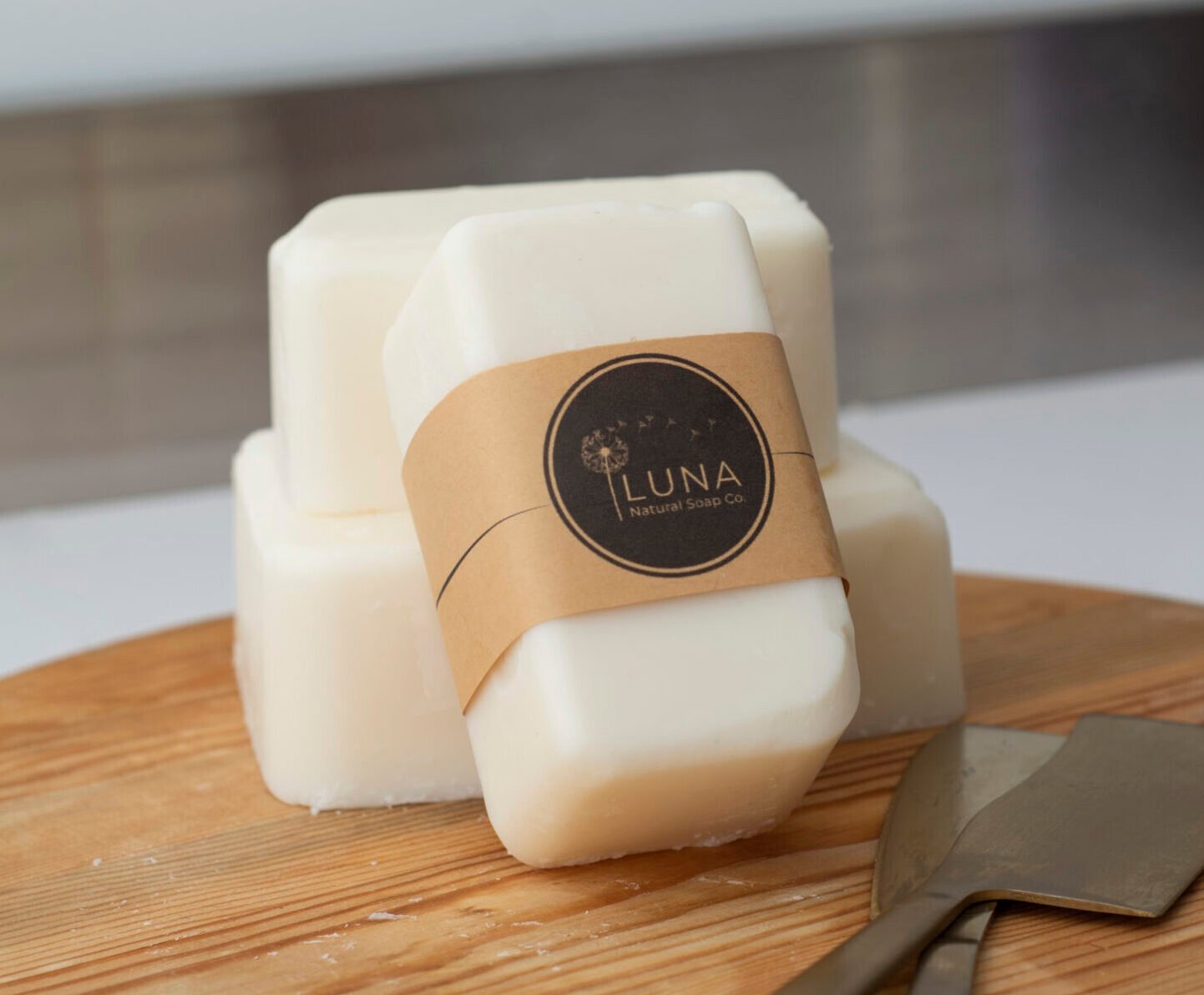
At Luna Natural Soap Co., our bars begin with grass-fed tallow that is slowly rendered in-house, then paired with considered plant oils and botanicals. Tallow has a fatty-acid profile that creates a firm, long-lasting bar with a rich lather. It also brings a sense of substance to a simple daily ritual: fewer unnecessary ingredients, plastic-free packaging, and a bar made with care from ingredients we can trace.
Traditional soap is naturally alkaline, usually sitting around pH 9 to 10.5 when dissolved in water. Human skin has a mildly acidic surface, often called the acid mantle. This has led to a simple message repeated widely: alkaline soap is always damaging, while lower-pH cleansers are always better. Real skin is more individual than that.
Cleansing with any surfactant changes the skin’s surface temporarily. For many people, particularly those with normal or resilient skin, a properly cured, thoughtfully formulated soap used once or twice a day is entirely comfortable. For others, especially during an eczema flare, in cold weather, or when using retinoids or exfoliating acids, an alkaline cleanser may feel too drying. The answer is not to ignore that response. It is to listen to it.
Why the oils and curing time matter
Not all soap bars feel alike. The fats used, their proportions, the amount of superfatting, the cure time, and the overall formula all affect hardness, lather and the way a bar cleanses.
A bar made chiefly for dramatic bubbles may feel more stripping than one balanced for creaminess and skin comfort. A well-cured bar is also firmer and milder in use than a rushed one. Traditional soapmaking asks for patience because the bar needs time to become what it is meant to be.
That said, even the most carefully crafted soap remains soap. If your skin consistently stings, flakes or feels taut after using it, switching cleansers is sensible care, not a failure of the product or your routine.
What is a syndet cleanser?
“Syndet” is short for synthetic detergent. Despite the name, that does not automatically mean harsh, cheap or unsuitable for sensitive skin. It simply describes cleansing agents made by a different process from soap.
Syndet bars and liquid washes commonly use surfactants such as sodium cocoyl isethionate, cocamidopropyl betaine or glucosides. These ingredients can be formulated at a pH closer to that of skin. They are often chosen for facial cleansers, baby washes and products intended for compromised skin barriers.
A syndet bar is not necessarily a plastic-free or low-waste compromise. Many are sold as solid bars and can avoid the bottle altogether. Equally, a syndet bar is not inherently more sustainable just because it has a low pH. Its environmental footprint depends on the sourcing and processing of surfactants, the rest of the formulation, transport, packaging and how long the bar lasts.
The formula matters beyond the word on the front label. A gentle surfactant system can still be paired with strong fragrance, essential oils that do not suit reactive skin, or ingredients that leave a film some people dislike. Conversely, a straightforward formula with a short ingredient list may be exactly what a sensitive complexion needs.
Syndet vs soap for dry and sensitive skin
If your main concern is persistent dryness, redness, eczema-prone skin or a disrupted barrier, a mild syndet cleanser is often the safer starting point – particularly for the face. Its lower pH and carefully selected surfactants may reduce the tight, squeaky-clean feeling that signals you have removed more oil than your skin is comfortable losing.
This does not mean you must use a syndet product everywhere, forever. Many people comfortably use a gentler syndet cleanser on the face, where the skin is exposed and often more reactive, while enjoying a nourishing traditional soap on hands or body. Hands, after all, need washing frequently and benefit from a bar that is practical, firm and pleasant enough to use consistently.
Traditional tallow soap may suit people who want a minimal, palm-free-feeling ritual and appreciate the creamy lather of a bar made with familiar fats and oils. It can be especially appealing if your skin is not highly reactive and you prefer to avoid bottled body wash. The key is to judge the result after rinsing and drying, not the marketing promise.
Look for these signs that your cleanser may be too much for your skin: tightness that lasts, increased flaking, stinging when you apply moisturiser, or a cycle of oiliness and dryness. They are not a diagnosis, but they are useful feedback. If you have eczema, rosacea or a diagnosed skin condition, speak with a pharmacist, GP or dermatologist about a suitable cleansing routine, especially during a flare.
Do not choose by pH alone
pH is meaningful, but it is only one part of the decision. Contact time matters. So does frequency. Washing your face twice with very hot water and then scrubbing it dry can irritate skin even with a low-pH cleanser.
Fragrance sensitivity, climate, medication and the rest of your routine all play a part. A person using prescription acne treatment may need a different cleanser from someone whose only concern is dry hands after gardening. The best bar is the one that cleans effectively without leaving your skin asking for recovery.
How to choose a bar you will genuinely enjoy using
Start with where you plan to use it. For hands and body, choose a bar that feels comfortable after several days of regular use and does not dissolve into a soft mess in the dish. For the face, be more cautious if your skin is dry, reactive or already using active skincare.
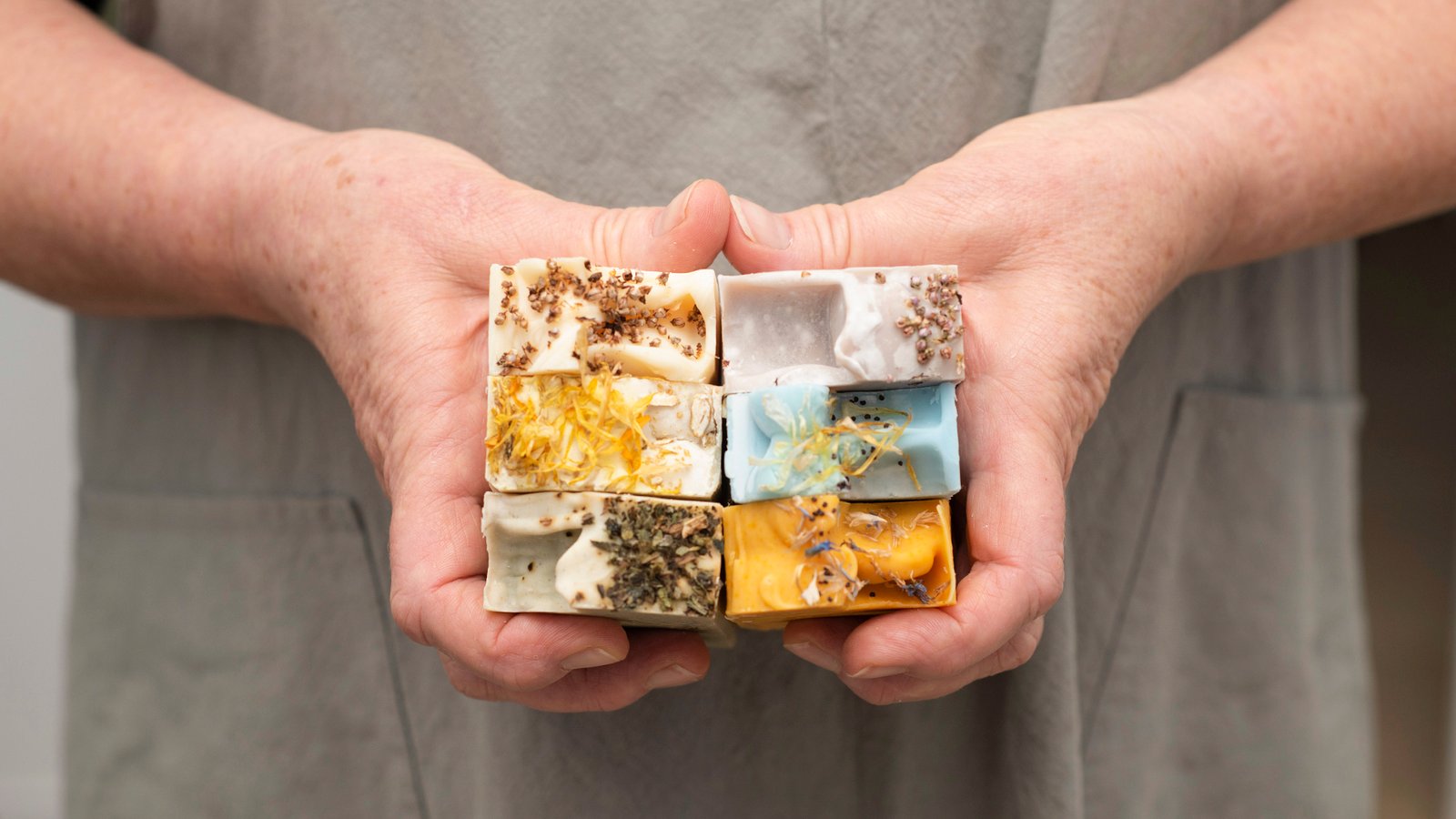
Then read the ingredient list with a calm eye. For a traditional soap, you will often see saponified oils or fats, perhaps glycerine, clays, oats or botanicals. For a syndet bar, look for the cleansing agents first, followed by moisturising and conditioning ingredients. Neither list needs to be intimidating. You are looking for clarity, not perfection.
Be equally honest about what you value. A handcrafted traditional bar may offer local sourcing, a circular use for nourishing tallow, less packaging and a ritual that feels grounded. A syndet bar may offer dependable mildness for a fragile skin barrier. These priorities can sit alongside one another.
Finally, give a new cleanser a fair but observant trial. Change one product at a time, use lukewarm water, pat rather than rub, and follow with a suitable moisturiser if your skin needs it. Stop if you experience burning, swelling or a rash.
A better question than “which is best?”
The useful question is not whether syndet or soap wins. It is whether your cleanser supports the skin you have, in the life you are living. A traditional bar made slowly from good ingredients can be a simple luxury. A mild syndet can be a wise, comforting choice when sensitivity calls for less.
Choose with care, use it with pleasure, and let your skin’s quiet response guide the next bar you bring home.