

That first bath can feel like a test you did not revise for. The water is the right temperature, the towel is ready, and then you look at the bottle on the shelf and wonder what is actually inside it – and what it might do to brand-new skin.
Baby skin is not “adult skin, but smaller”. It is thinner, it loses moisture more easily, and its protective barrier is still learning how to do its job. That is why some babies tolerate almost anything, while others react to products that seem perfectly mild. If you are considering tallow soap for baby skin, the question is not whether it is trendy. The question is whether it supports the skin barrier while still getting your baby clean.
Why baby skin reacts so quickly
A baby’s skin barrier has fewer of the lipids that help hold water in and keep irritants out. Add frequent nappy changes, dribble rash, milk residue in neck folds, and the reality that many babies only need a small amount of cleansing – and you get skin that can swing from fine to angry in a day.
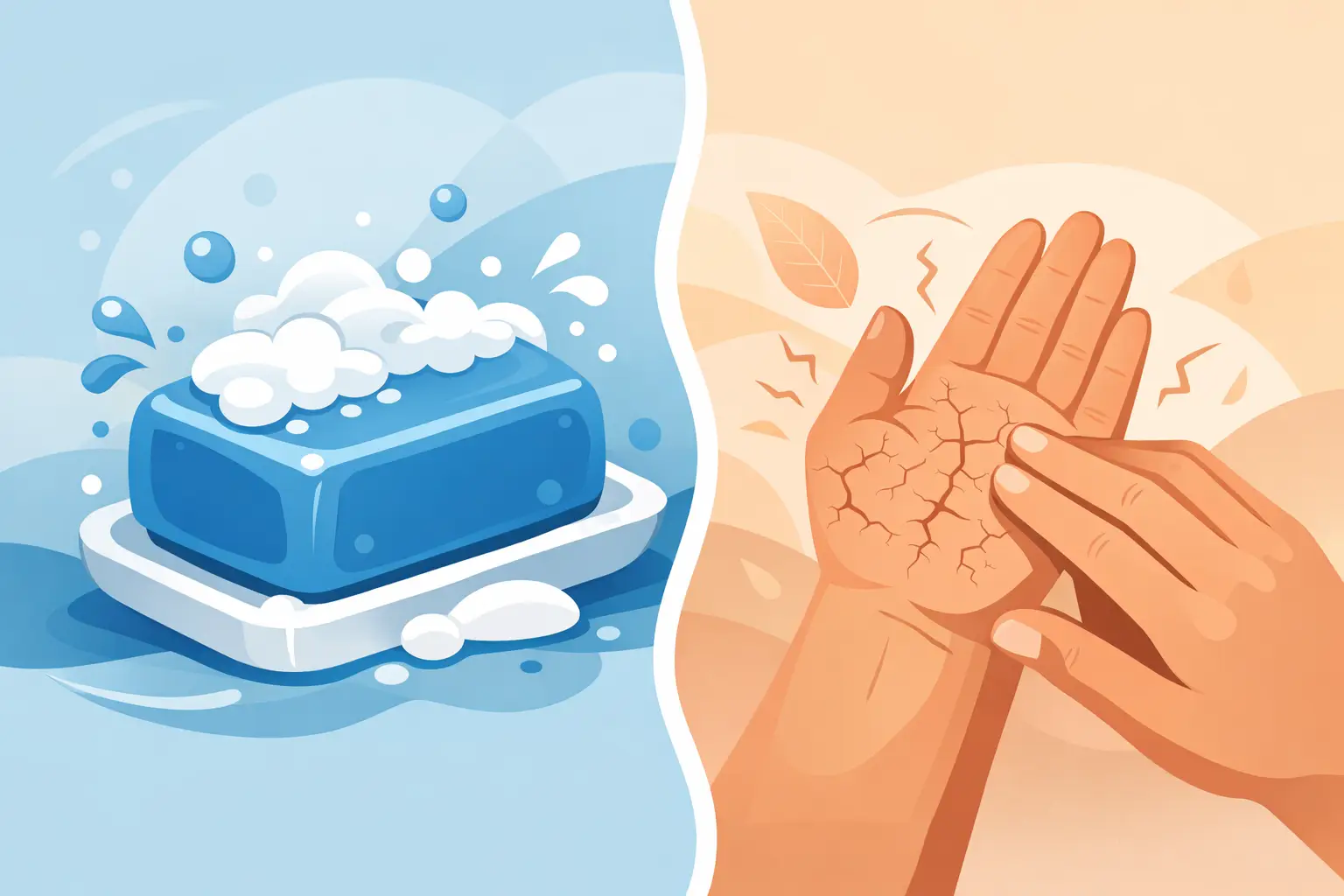
Cleansing is often where problems start. Many “baby washes” rely on synthetic detergents that are designed to foam easily and rinse fast. They can be convenient, but on a baby who is prone to dryness or eczema, they may leave skin feeling tight or looking flushed. Not always, and not for every child – but it is common enough that parents start looking for simpler options.
What tallow soap actually is (and what it is not)
Tallow soap is true soap made from fats and an alkali through saponification. When the fat is well-rendered tallow (ideally from grass-fed animals), you get a bar that can be both firm and creamy, with a lather that feels more cushiony than squeaky.
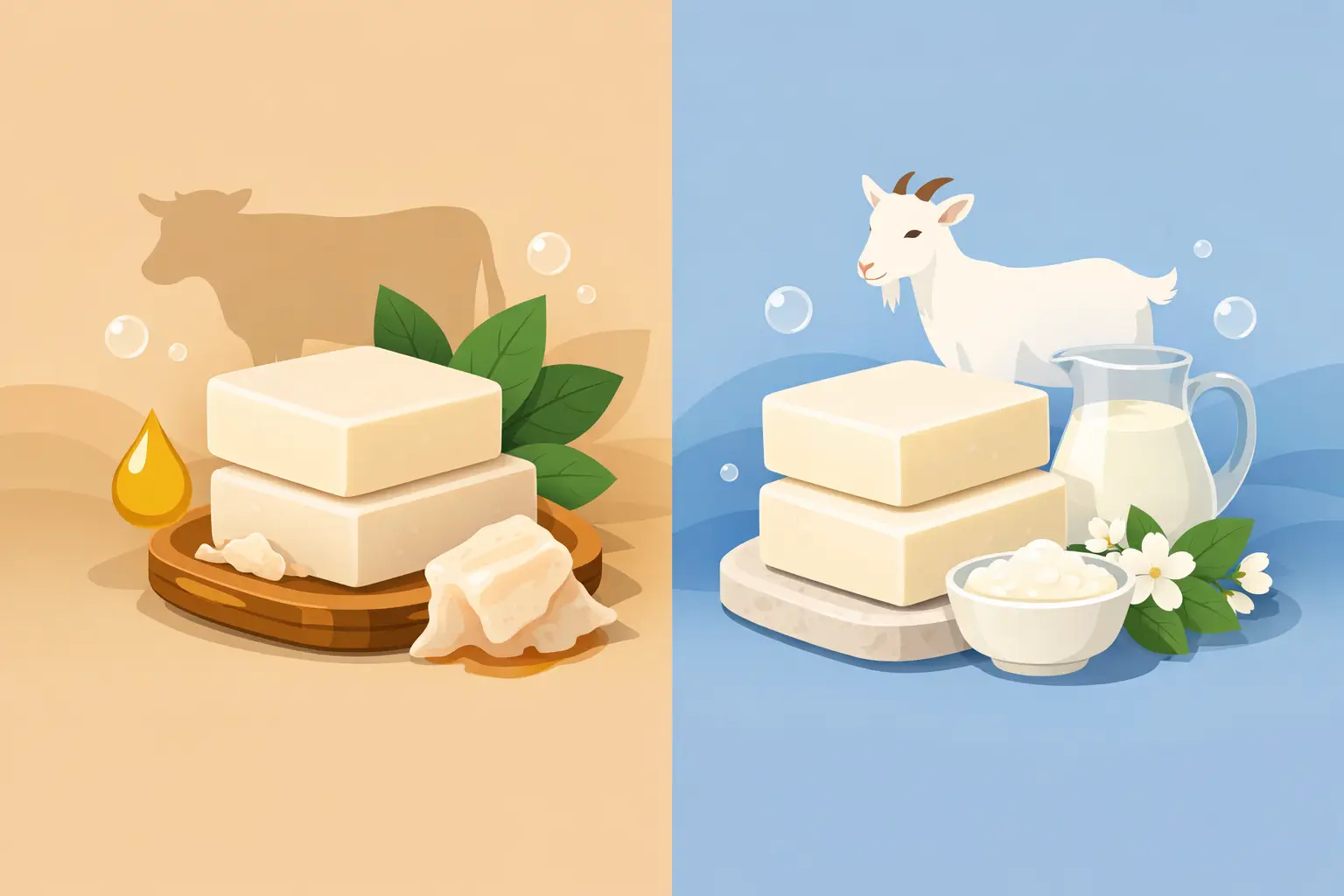
It is not a “detergent bar”. It is not a liquid wash with added thickeners, preservatives, and fragrance boosters. A well-made tallow bar can be remarkably straightforward – fat, lye (fully reacted), and sometimes a small number of supportive extras like oats or goat milk.
This matters for baby skin because fewer components often means fewer things to react to. That is not a promise. It is simply a sensible starting point for sensitive households.
Why tallow can suit delicate skin
Tallow is naturally rich in fat-soluble vitamins (A, D, E, K) and has a fatty acid profile that many people find skin-compatible. In practical terms, that can translate to cleansing that feels less stripping.
There is also a texture point that parents notice quickly. A good tallow soap tends to rinse clean without leaving the “tight” finish that can come from harsher surfactants. For a baby with dry patches, that can be the difference between skin that settles after a bath and skin that immediately needs rescue.
The other reason tallow gets chosen in family bathrooms is durability. A properly cured cold-process bar is long-lasting. That is not just good value. It also reduces the need for multiple half-used bottles, which is a quiet win if you are trying to cut plastic and clutter.
The honest trade-offs: when it depends
Tallow soap for baby skin can be a lovely option, but it is not a universal yes.
First, all true soaps are alkaline by nature. Adult skin can usually cope with that without fuss. Baby skin varies. Some babies do perfectly well with a gentle bar used sparingly. Others do better with a soap-free cleanser or simply warm water most days.
Second, fragrance is a common trigger. Even “natural” essential oils can irritate a baby’s skin, especially if there is existing eczema, broken skin, or a family history of sensitivity. If you want to try a bar, choose one that is genuinely unscented and designed for sensitive skin.
Third, newborns often do not need soap. In the early weeks, milk, spit-up, and nappies create mess, but warm water and a soft cloth are often enough on non-bath days. When you do use a cleanser, less is usually more.
Finally, if your baby has persistent eczema, recurrent infections, cracking, weeping, or significant redness, it is worth speaking to a pharmacist, health visitor, or GP. Skin that is damaged needs a plan, not guesswork.
How to choose a bar that is appropriate for babies
You do not need a “baby” label. You need a bar with a baby-appropriate formula and a careful process.
Look for a short ingredient list and avoid bars loaded with botanicals, exfoliants, heavy clays, or strong essential oil blends. Oatmeal can be soothing in some cases, but even then, finely milled is gentler than anything scratchy.
Also pay attention to how the maker talks about their ingredients. With tallow, the quality is in the rendering and the sourcing. Slow-rendered, well-filtered tallow tends to smell cleaner and behave more predictably in soap, which matters if you are aiming for the simplest possible bath routine.
A well-cured cold-process bar is another quiet marker. Curing allows excess water to evaporate and the soap to harden, which makes it milder in use and less likely to turn to mush at the sink.
How to use tallow soap for baby skin (without overdoing it)
Start small. You are not committing to an entire new routine on day one.
For a first try, lather the bar in your hands rather than rubbing it directly onto your baby’s skin. Use the lather to wash the areas that actually need cleansing – hands, feet, nappy area, and the folds that collect milk and sweat. For the rest of the body, water is often enough.
Keep bath time short and warm, not hot. Heat strips oils and can make post-bath itching worse. Rinse thoroughly, then pat dry rather than rubbing.
Within a couple of minutes, apply a simple emollient if your baby tends towards dryness. Soap choice helps, but moisturising is often the bigger lever for comfort.
If you see new redness that lasts beyond a short post-bath flush, stop and reassess. That is not failure. It is your baby’s skin giving you useful information.
What about cradle cap, eczema, and nappy rash?
These are the three reasons parents start reading ingredient labels at midnight.
Cradle cap is usually more about softening and gentle removal than “washing it off”. A mild cleanser can help, but the main work is done by loosening scales with an appropriate oil or emollient and using a soft brush. Soap is not the hero here, and too much cleansing can make the scalp drier.
Eczema is where people hope tallow will be a miracle. Sometimes a simpler, gentler cleanser makes a noticeable difference, especially if the previous wash was fragranced or foamy. But eczema is multifactorial – genetics, barrier function, triggers, and sometimes infection. For some children, any true soap is too much during a flare and a soap-free approach is kinder.
Nappy rash is often about moisture, friction, and contact with urine and stool. Cleansing should be gentle and thorough, but also followed by drying and barrier protection. If skin is broken, keep cleansers to a minimum and follow medical advice.
Sustainability and the “family bathroom” mindset
Many parents are trying to simplify: fewer products, fewer plastics, fewer ingredients that do not earn their place.
A solid bar supports that approach. It travels easily, it does not leak in a changing bag, and it reduces packaging waste. If you choose a maker who works with local, regenerative farms and keeps production small-batch, you also get a clearer line of sight on how the product is made.
This is one of the reasons we built Luna Natural Soap Co. around slow-rendered, organic, grass-fed tallow and traditional cold-process methods. When you are washing real skin – including the smallest, most delicate skin in your home – process and sourcing are not marketing details. They are the point.
A calm way to decide
If your baby’s skin is currently content, you may not need to change anything. If your baby’s skin is dry, reactive, or you are simply uncomfortable with long ingredient lists, a gentle, unscented tallow bar used sparingly can be a practical next step.
Treat it like any sensible experiment. Change one thing at a time, use it lightly, and give your baby’s skin a few days to tell you what it thinks. The goal is not a perfect routine. The goal is a bath that leaves your baby clean, calm, and comfortable – and leaves you feeling quietly confident each time you reach for the towel.