

You can usually tell within one wash whether a bar is for you. Your skin either feels calm and comfortable, or it feels tight – like it is asking for your moisturiser before you have even found your towel.
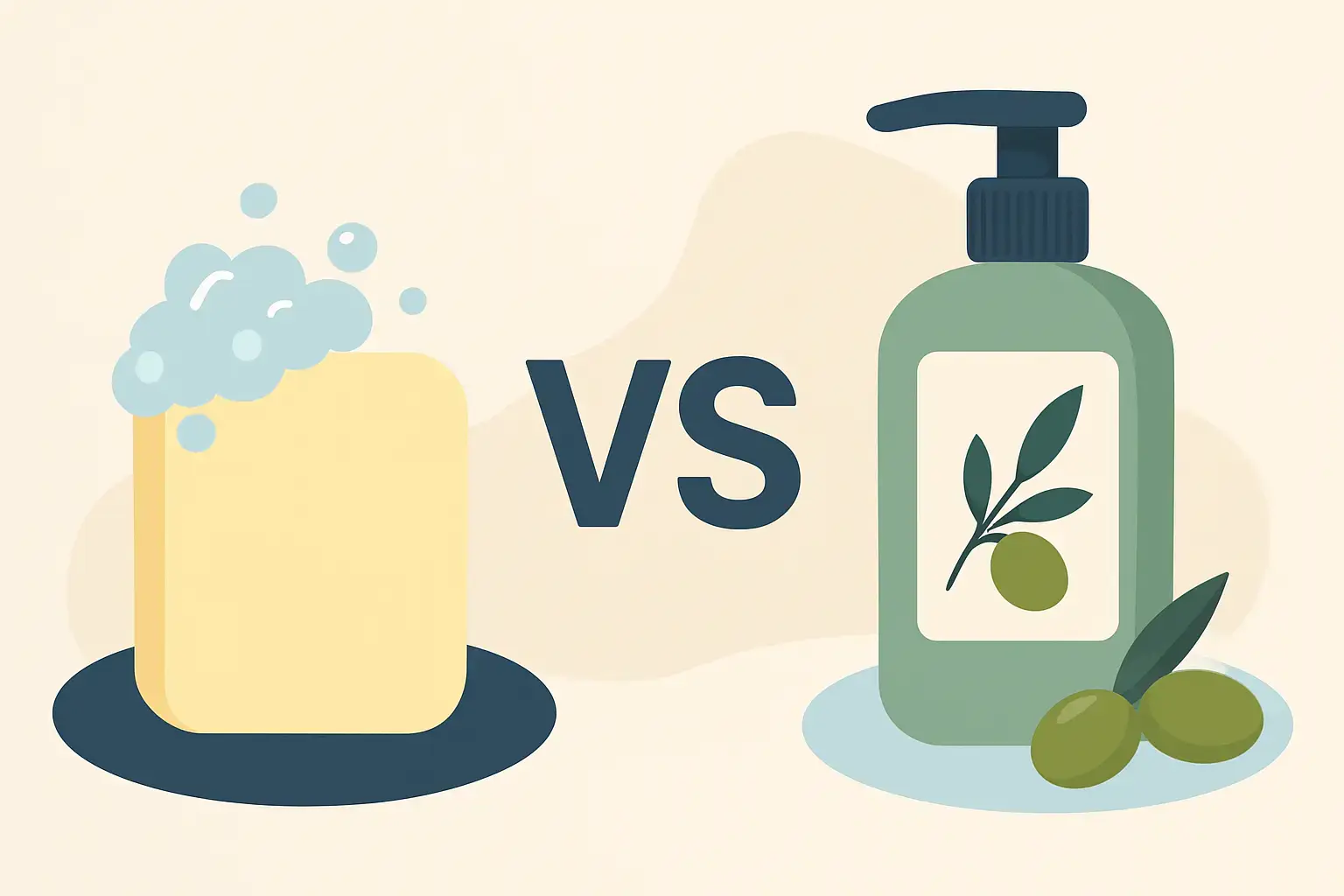
That reaction is exactly why the debate around tallow soap vs castile soap matters. Both can be beautifully simple, traditionally made, and plastic-free. Yet they behave very differently on real skin, especially skin that is dry, reactive, or prone to eczema.
What tallow soap and castile soap actually are
Tallow soap is true soap made by saponifying animal fat (tallow) with an alkali. When the tallow is well-rendered and the recipe is balanced, the finished bar is firm, creamy, and naturally conditioning. Tallow is also naturally compatible with the skin’s lipid barrier, which is why so many people describe it as “comforting” rather than merely “cleansing”.
Castile soap is also true soap, traditionally made from olive oil (and in the strictest sense, only olive oil) saponified with an alkali. It is one of the oldest, most respected soap traditions in Europe. A well-cured castile bar can be gentle and long-lasting, but it has a very particular feel and lather that not everyone enjoys.
Both types rely on the same basic chemistry. The difference is the fatty acid profile of the oils or fats used – and that difference shows up in lather, hardness, rinse-off, and how your skin feels an hour later.
Tallow soap vs castile soap: the skin-feel difference
If you have dry or sensitive skin, the most noticeable difference is after the rinse.
A good tallow bar tends to leave the skin feeling soft and supported. The lather is creamy rather than bubbly, and the cleansing feels substantial without feeling stripping. Many people with “tight after shower” skin find that tallow-based bars reduce that squeaky-clean feeling that can tip the skin into irritation.
Castile soap, especially high-olive formulas, can feel very clean – sometimes too clean for certain skin types. Some people describe a slight drag or tacky feel during use, and a different sort of “clean” after rinsing. On resilient or oily skin, that can be ideal. On compromised barriers, it can occasionally feel a little unforgiving, particularly if the bar is young and hasn’t been cured for long enough.
None of this makes castile “bad”. It simply means the experience depends on what your skin is asking for right now.
Lather, hardness, and the everyday experience
Lather is not a measure of cleansing power, but it is a measure of how pleasant a bar is to use.
Tallow soap typically produces a rich, dense lather quickly, even in harder water. It also tends to be a firm bar that holds up well in the shower, especially when properly cured and kept on a draining dish.
Castile soap lathers differently. Olive oil soap is famously mild, but the lather can be smaller, silkier, and slower to build. Many castile lovers appreciate that restrained, lotion-like wash. Others find it underwhelming compared with more creamy or bubbly bars.
Hardness also differs. Castile can be very hard and long-lasting when well-cured, but it benefits from patience. A castile bar that has not had sufficient cure time can feel slimy in use and may dissolve faster. Traditional makers often cure castile for many months because it genuinely improves with age.
How each bar behaves on eczema-prone and reactive skin
If you are managing eczema-prone or reactive skin, “gentle” is not just a marketing word. You are looking for a bar that cleans without triggering a flare, respects the barrier, and does not leave your skin feeling exposed.
Tallow-based recipes are often chosen for this exact reason. The fatty acid profile in tallow creates a bar that many people find soothing and less drying in practice. When blended with barrier-friendly additions like oats or goat milk, the wash can feel even more comforting.
Castile soap can work for sensitive skin too, but it tends to be a better match for people who tolerate olive oil well and prefer an ultra-minimal ingredient list. If you react to botanicals and fragrance, an unscented castile is appealing. The trade-off is that some reactive skin simply does not enjoy the post-wash feel of high-olive soap, especially in hard-water areas where soap can leave more residue.
One useful way to think about it is this: castile is often chosen for simplicity. Tallow is often chosen for support.
Hard water, soap scum, and why rinsing matters
Both tallow soap and castile soap are true soaps, not synthetic detergent bars. That means both can react with minerals in hard water.
In hard-water areas, castile soap is sometimes more likely to leave a noticeable residue on the skin or in the shower, simply because of how it is used and how its lather behaves. Some people interpret this as “my skin feels coated”, while others experience it as “my skin feels protected”. It depends on your preference and your water.
Tallow soaps can also form soap scum, but many users find they rinse more cleanly while still leaving the skin comfortable. If hard water is a challenge in your home, using less product, lathering in your hands first, and rinsing thoroughly can make a significant difference for either type.
Ingredients and ethics: what matters to you
For some customers, the decision in the tallow soap vs castile soap question is philosophical as much as it is practical.
Castile is plant-based, which matters to vegans and some vegetarians. It also appeals to people who want a formula built around one familiar oil.
Tallow is an animal-derived ingredient, so it will not suit everyone. But for many households trying to reduce waste and buy more circularly, tallow can be a principled choice. When it is sourced from local, regenerative farms and rendered slowly with care, it uses a valuable part of the animal that might otherwise be discarded. It is also a deeply traditional ingredient in British and Irish soapmaking history.
Neither stance needs to be combative. Your bathroom choices should align with your skin and your values.
Fragrance, essential oils, and truly “gentle” formulas
People often blame the base soap when the real culprit is fragrance.
Both tallow and castile bars can be made unscented, or scented with essential oils. If your skin is reactive, an unscented bar is often the easiest starting point. Essential oils are natural, but “natural” is not the same as “non-irritating”. Peppermint, citrus, and some herbaceous oils can be too stimulating for faces, children’s skin, or flare-prone areas.
If you want scent but still need calm, look for softer profiles and lower total fragrance load. And if you are trialling a new bar, patch test on the inside of your arm or use it on hands first for a week before committing to full-body use.
Face, body, shaving, and household use
Castile soap has a reputation for versatility. Many people use it for body cleansing, handwashing, and even household cleaning in liquid form. As a simple soap, it can fit a minimalist lifestyle.
Tallow soap often shines as a daily face and body bar, especially for skin that feels dry, tight, or easily unsettled. The creamier lather can also be excellent for shaving, helping the razor glide without leaving the skin feeling stripped.
If you are choosing one bar for a family bathroom, it often comes down to the fussiest skin in the house. If one person is eczema-prone and another is oily, you may find it easier to keep a gentle, supportive bar for daily use and bring in a stronger, more clarifying option only when needed.
So which should you choose?
Choose tallow soap if your skin tends to feel dry after washing, if you are prone to irritation, or if you want that comfortable, conditioned feel that makes moisturising feel optional rather than urgent. This is often the better match for winter skin, mature skin, and anyone rebuilding their barrier.
Choose castile soap if you want a plant-based bar with a very minimal formula, if your skin prefers a cleaner finish, or if you already know you love the feel of olive oil soap. It can be a beautiful choice for resilient skin and for people who want an unfussy ingredient list.
If you are still unsure, pay attention to the simplest feedback loop: how your skin feels two hours after a normal wash. Calm and supple is a good sign. Tight, itchy, or shiny-dry is your sign to change.
At Luna Natural Soap Co. (https://Www.lunasoap.ie), we built our range around organic, grass-fed tallow because so many customers came to us with “real skin” needs – dryness, sensitivity, and a desire for plastic-free cleansing that still feels like a small luxury.
A final thought
Whichever bar you choose, let it earn its place by performance, not by hype. The right soap is the one that leaves your skin feeling quietly steady – and makes the rest of your routine feel simpler.