

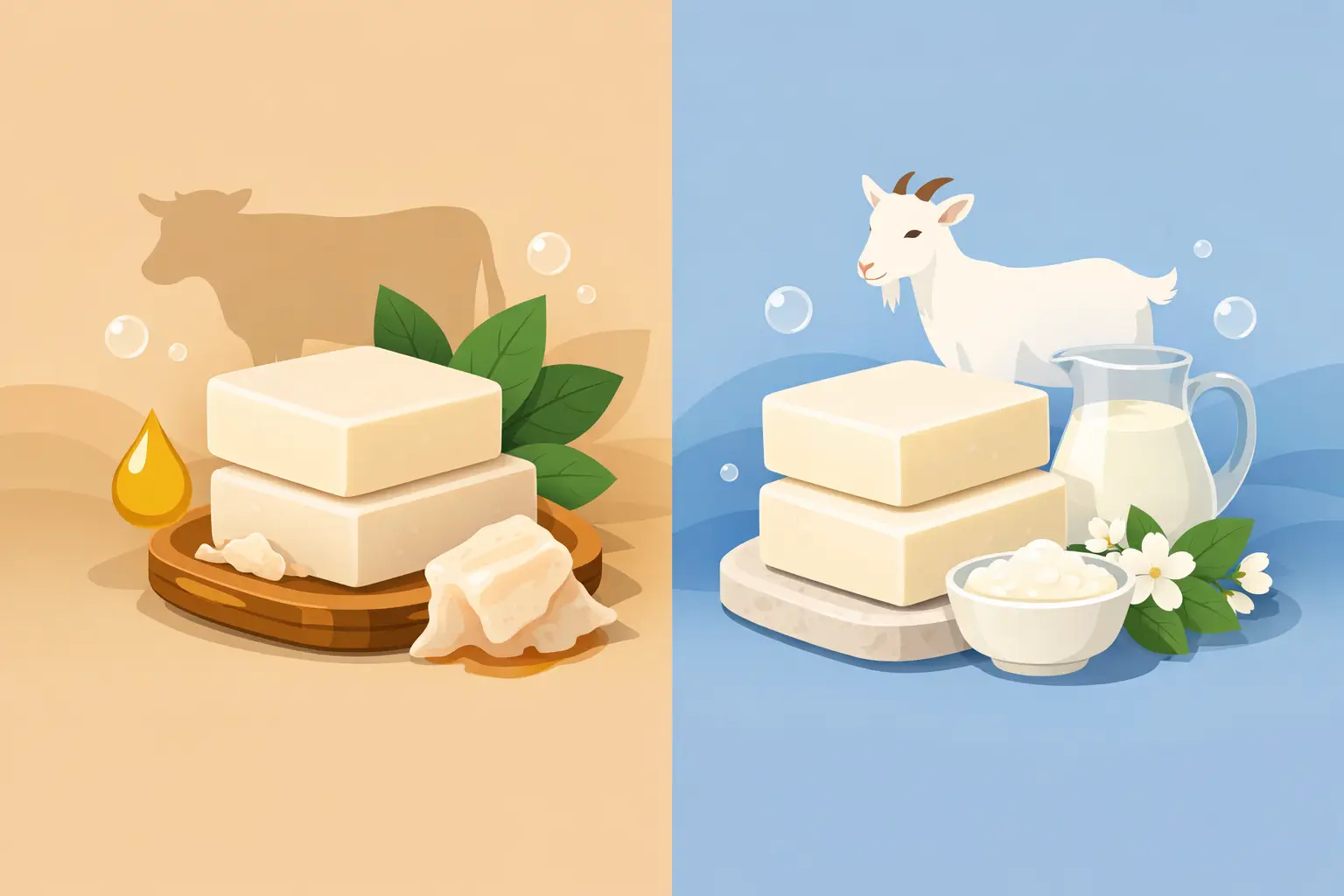
If you have ever stood in front of a natural soap shelf wondering whether to choose tallow or goat milk, you are not alone. The question of tallow soap vs goat milk soap usually comes down to one thing – what your skin needs day after day, not what sounds most fashionable on the label.
Both have earned loyal followings for good reason. Both can be beautifully made, gentle, and nourishing. Yet they are not interchangeable. The difference sits in the way they are formulated, how they cleanse, how they feel on the skin, and what kind of daily routine they suit best.
Tallow soap vs goat milk soap: what is the real difference?
At the simplest level, tallow soap is built around rendered animal fat, usually from beef, while goat milk soap includes goat milk as part of the liquid phase of the recipe. That may sound straightforward, but it does not tell you how each bar behaves.
A well-made tallow soap tends to have a dense, creamy lather and a firm, long-lasting bar. It is often prized for how compatible it feels with the skin. Tallow contains a fatty acid profile that closely resembles the oils naturally found in our skin barrier, which is one reason many people with dry or delicate skin find it comforting.
Goat milk soap is often chosen for a softer, creamier skin feel and the appeal of milk-based skincare. Goat milk contains fats, sugars, and naturally occurring compounds such as lactic acid, which can contribute to a gentle, conditioned finish when the soap is properly made. It has a reputation for feeling soothing and luxurious, especially in bars designed for dry or sensitive skin.
The key point is this: neither ingredient works in isolation. The full formula matters. The quality of the fats, the curing time, the superfat level, and the soapmaker’s process all shape the final bar.
How tallow soap feels on dry and sensitive skin
Tallow has a quiet sort of strength. It does not need a dramatic sales pitch. In cold-process soap, it creates a bar that is hard, stable, and richly conditioning when balanced correctly with other ingredients.
For skin that feels tight after washing, tallow can be especially appealing. Its fatty acids support a more cushioned cleanse, so the skin is left feeling clean but not stripped. Many people with dryness, sensitivity, or an unsettled skin barrier find that this matters more than fragrance or foam.
There is also a practical side. Tallow bars are typically firm and long-wearing, which means they hold up well by the sink or in the shower. That matters if you are trying to reduce waste and buy fewer, better products.
Of course, not every tallow soap is automatically gentle. A poorly made bar can still feel harsh. The sourcing matters too. Slow-rendered, well-purified tallow from grass-fed animals tends to produce a cleaner, more refined result than the idea many people have of animal fat from mass production. Traditional methods make a visible difference.
How goat milk soap feels on the skin
Goat milk soap is often loved for its softness. It can feel creamy, comforting, and slightly more indulgent in character. For many people, especially those moving away from detergent-based cleansers, it feels like an easy first step into traditional soap.
The milk sugars can help create a silky lather, while the milk fats contribute to a nourished feel after rinsing. In a gentle formula, goat milk soap can leave skin feeling calm and supple rather than squeaky.
This is where expectations need a little grounding. Goat milk is not a magic fix on its own. Some bars are marketed as though milk alone will transform problem skin, but soap is still a wash-off product. The benefit comes from the whole recipe and how mild the cleansing action is.
For very reactive skin, goat milk soap can be lovely, but it depends on the rest of the ingredients. Added essential oils, heavy exfoliants, or strong fragrances may matter more than the milk itself.
Which lathers better?
If lather matters to you, both can perform beautifully, but they do it differently.
Tallow soap usually creates a rich, creamy lather with a satisfying density. It often feels substantial in the hand and on the skin. There is less of the airy, flashy foam you get from some highly cleansing bars, and more of a soft, stable cream.
Goat milk soap can also be creamy, but often with a silkier, lighter quality depending on the oils used alongside the milk. Some people prefer that softer feel. Others want the more structured, cushiony lather common in a tallow-rich bar.
This is very much a preference question. If you like a bar that feels solid, lasting, and protective, tallow often has the edge. If you want a more delicate, milky experience, goat milk may feel more like a treat.
Tallow soap vs goat milk soap for eczema-prone or troubled skin
This is usually the point where people want a clear winner. Realistically, it depends.
For eczema-prone, very dry, or compromised skin, many people do well with tallow soap because it supports a gentler cleanse and tends to feel less stripping. Skin that is already working hard to hold onto moisture often responds well to simple, barrier-conscious formulas.
Goat milk soap can also suit eczema-prone skin, especially when the formula is plain and fragrance-free or lightly scented. Some people love the creamy finish and find it helps reduce that post-wash tightness.
The deciding factors are often these: how minimal the ingredient list is, whether fragrance is used, how the bar is cured, and how your own skin responds. There is no single ingredient that guarantees comfort. That said, if your skin is persistently dry and reactive, tallow’s skin-compatible fatty acid profile gives it a strong case.
Ingredient philosophy and sustainability
For many natural skincare customers, performance is only part of the decision. The sourcing story matters too.
Tallow soap appeals to those who value traditional craft and a more circular use of materials. When sourced from regenerative or local farms and rendered with care, tallow makes use of a by-product that might otherwise be wasted. It fits naturally into a lower-waste, whole-animal philosophy and can be a thoughtful choice for shoppers who care about provenance and practicality.
Goat milk soap often appeals through its pastoral, wholesome image and its connection to small-scale farming. That can be a strong part of its charm. But as with any ingredient, the ethics depend on the producer, the farming standards, and the rest of the brand’s practices.
So the question is not simply which ingredient sounds cleaner. It is whether the maker is transparent. Responsible sourcing, plastic-free packaging, and traditional production methods tell you more than a buzzword ever will.
Which bar should you choose?
If your priority is barrier support, longevity, and a rich, steady cleanse, tallow soap is often the stronger choice. It suits people who want a hardworking everyday bar that feels gentle and grounded. It also makes sense for households trying to simplify their skincare and reduce packaging waste.
If your priority is a soft, creamy wash with a more overtly milky feel, goat milk soap may be the better fit. It can be especially appealing if you like a gentle, comforting bar and enjoy the sensory side of your routine.
Some people alternate. A tallow bar may become the daily staple, with goat milk used when they want something especially soft and indulgent. There is no rule that says you must commit to one forever.
At Luna Natural Soap Co., this is exactly why ingredient education matters. A beautiful bar should do more than look good by the basin. It should earn its place through craftsmanship, skin comfort, and honest sourcing.
A simple way to decide
If your skin is dry, tight, or easily upset, start with tallow. If your skin enjoys creamy cleansers and responds well to milk-based products, try goat milk. If you are sensitive to fragrance, choose the plainest bar in either category.
And give any new soap a fair trial. Use it for a couple of weeks, keep the rest of your routine simple, and pay attention to how your skin feels after washing – not just in the first five minutes, but later in the day.
The best natural soap is rarely the trendiest one. It is the bar you reach for every morning because your skin feels calm, clean, and properly cared for after using it.