

If your skin feels tight after washing, the difference between a pleasant bar and the right bar becomes very clear. In the tallow soap vs shea butter soap conversation, the real question is not which ingredient sounds nicer on the label. It is which soap leaves your skin clean, comfortable and supported after daily use.
Both tallow and shea butter have earned loyal followings for good reason. Both can make a beautiful bar. Both can suit dry or sensitive skin when they are used well. But they do not behave in exactly the same way during soapmaking, and they do not always leave the same finish on the skin.
For anyone choosing between the two, it helps to look past marketing language and focus on what the bar is actually made to do.
Tallow soap vs shea butter soap: what really changes?
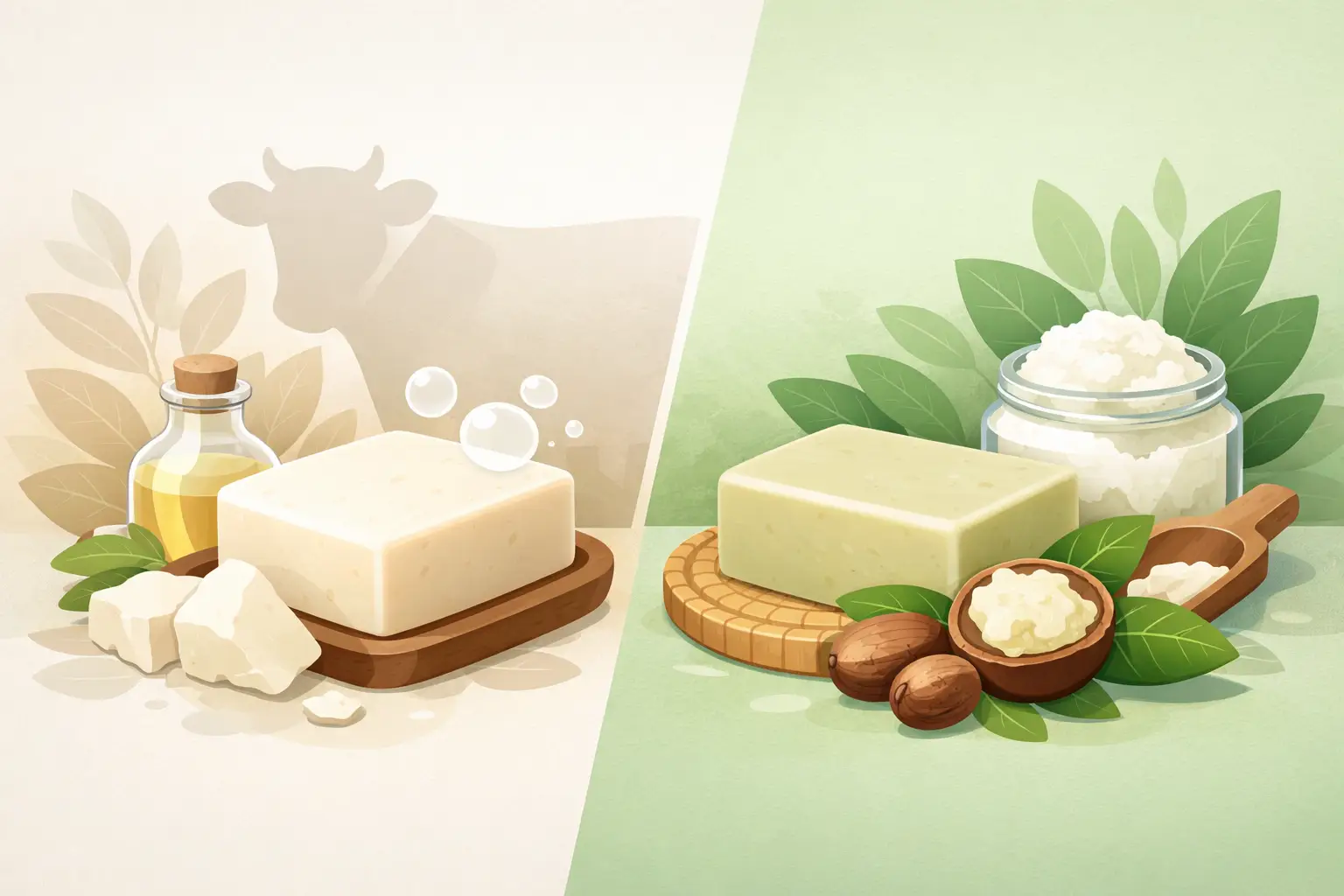
The biggest difference is the fat profile. Tallow is an animal-derived fat, often from grass-fed beef, and it has a fatty acid composition that is remarkably compatible with the skin. Shea butter is a plant butter, pressed from the nut of the shea tree, and is prized for its richness and conditioning feel.
In soap, those differences affect hardness, lather, longevity and after-wash comfort. A tallow-rich bar is usually firmer, longer-lasting and more balanced in the way it cleanses and conditions. A shea butter soap can feel creamy and gentle, but on its own it does not always create the same hard, durable bar or stable lather unless it is balanced with other oils and butters.
That matters because the best soap is not simply the one with the most fashionable ingredient. It is the one with a thoughtful formula.
How tallow behaves in a soap bar
Tallow has a long history in traditional soapmaking, and there is a reason it has endured. It produces a firm bar with a rich, satisfying lather and a skin feel that many people describe as calm and comfortable rather than stripped.
This comes down to structure as much as nourishment. Tallow helps create a bar that keeps its shape well, lasts longer by the sink or in the shower, and gives a creamy cleanse rather than a fleeting foam. For households trying to reduce waste, that durability is not a small detail. A bar that turns soft too quickly is less economical and less practical.
For dry or reactive skin, tallow also has another advantage. It tends to feel familiar to the skin. Not identical, of course, but compatible. That is why many people with sensitive or eczema-prone skin find tallow-based cleansing easier to live with over time, especially when the formula is kept simple and the bar is cured properly.
How shea butter behaves in a soap bar
Shea butter is well loved in skincare because it feels rich and protective. In balms and body butters, that reputation is well deserved. In soap, however, the picture is a little more nuanced.
Shea butter can contribute a creamy feel and can support a gentler washing experience, but once a fat is saponified, it is no longer behaving exactly as it does in a leave-on product. That is where some confusion begins. People often expect shea butter soap to feel like rubbing shea butter directly onto the skin. It does not work that way.
A shea butter soap can still be lovely, especially in a balanced recipe, but it often needs support from other fats to improve hardness, lather and longevity. If a bar is marketed around shea butter alone, it is worth looking at the full ingredient list rather than assuming the name tells the full story.
Which is better for dry or sensitive skin?
This is where it depends.
If your skin is dry, delicate or easily upset, a well-formulated tallow soap often has the edge. It tends to cleanse gently while leaving the skin barrier feeling less disturbed. The bar itself is usually milder in use, especially when made with traditional cold-process methods and allowed a full cure.
A shea butter soap can also suit dry skin, particularly if it includes other supportive ingredients and avoids heavy fragrance or harsh additives. But shea butter alone is not a guarantee of gentleness. Plenty of bars use a little shea butter for label appeal while relying heavily on more stripping ingredients.
For very sensitive skin, simplicity matters more than buzzwords. Fewer unnecessary additives. No aggressive fragrance load. A recipe designed for skin comfort, not just bubbly lather. That is often where traditional tallow bars shine.
Lather, hardness and how long the bar lasts
Soap has to work in real life. It has to lather well enough to feel enjoyable, stay hard enough to last, and rinse cleanly without leaving the skin feeling squeaky and over-cleansed.
Tallow performs especially well here. It helps create a dense, creamy lather rather than a large but airy foam. It also contributes to a harder bar, which means less waste in the soap dish and a longer life between purchases.
Shea butter soap can feel creamy too, but if the formula leans too soft, the bar may disappear more quickly. That does not make it poor quality. It simply means the soapmaker has different formulation priorities. For some people, that softer, more conditioning style is appealing. For others, especially families using a bar every day, longevity matters.
Tallow soap vs shea butter soap for ethical shoppers
This is often the deciding factor.
If you prefer plant-based products, shea butter soap will naturally feel more aligned with your values. That is a clear and reasonable choice. Ingredient ethics are personal.
If, however, you are focused on circularity, waste reduction and local sourcing, tallow deserves a fair hearing. Responsibly sourced tallow makes use of a material that might otherwise be discarded. In that sense, it fits beautifully into a low-waste, regenerative approach to skincare. When it is sourced from local farms and rendered with care, it can be one of the more honest ingredients in a traditional soap bar.
This is one reason many customers are revisiting tallow with fresh eyes. It is not about nostalgia for its own sake. It is about using what is available well, respecting the whole animal, and making products that genuinely perform.
What to check on the label
When comparing bars, the front label only tells part of the story. Turn the soap over and look at the full ingredients.
A good tallow soap should be clear about its fat base and ideally its sourcing. A good shea butter soap should show where shea sits in the formula, not hide behind the name while using only a token amount. It also helps to look for bars with straightforward ingredients, especially if your skin is easily irritated.
Watch for heavy perfume, bright synthetic colourants or long ingredient lists that make the bar sound more complicated than it needs to be. The best artisan soaps are often the simplest. They are made with intention, not clutter.
So which one should you choose?
If you want a firm, long-lasting bar with creamy lather and a skin feel that tends to suit dryness and sensitivity, tallow soap is often the stronger choice. It is especially appealing if you value traditional soapmaking, transparent sourcing and a practical kind of luxury.
If you prefer a plant-based bar and enjoy a creamier profile, shea butter soap may suit you well, provided the formula is balanced and not relying on shea butter as a marketing shortcut.
For many people, the decision comes down to skin behaviour rather than ideology. If your skin often feels tight, itchy or over-washed, a carefully made tallow bar may offer more day-to-day comfort. If your priority is strictly botanical ingredients, a quality shea butter soap can still be a good option, but it is worth choosing with a more critical eye.
At Luna Natural Soap Co., this is exactly why traditional tallow soapmaking still matters. A well-made bar should feel indulgent, yes, but it should also do the simple job of cleansing without making your skin work harder to recover afterwards.
The best soap is the one you keep reaching for because your skin feels better with it. If that is the standard, not just the sales copy, the choice becomes much easier.