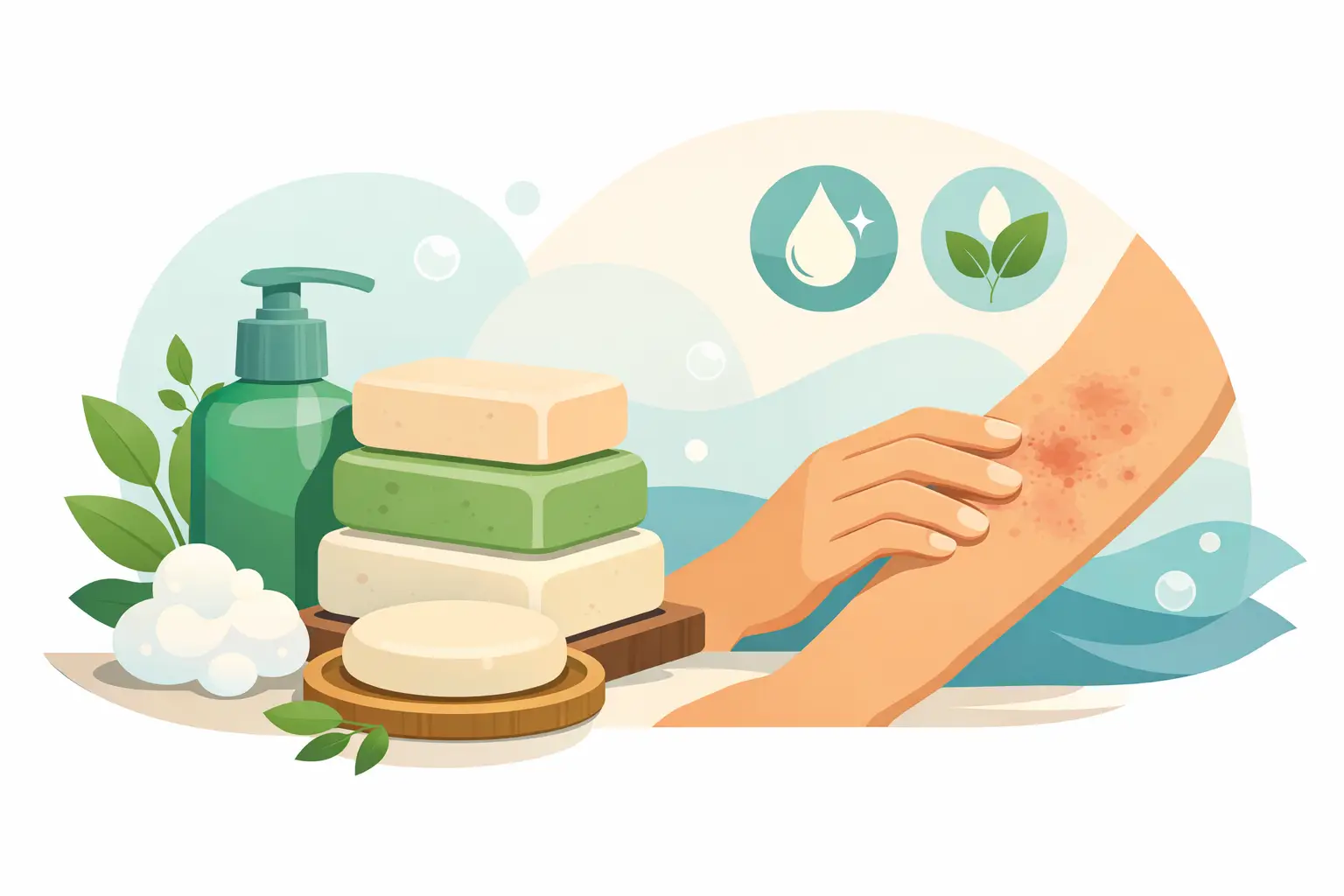



When your face feels tight after washing, your cleanser is usually telling on itself. Skin that is dry, reactive or easily flushed rarely needs more scrubbing, more foam or more fragrance. It needs a gentler start, and that is where unscented tallow soap for face cleansing earns its place.
For many people, facial cleansing goes wrong before the skincare even begins. A wash that leaves the skin squeaky can feel effective in the moment, but that stripped feeling often leads to redness, discomfort and a barrier that stays unsettled. An unscented bar made with well-rendered tallow takes a different approach. It cleans properly, but with a softness that feels closer to care than correction.
Why unscented matters for facial skin
Fragrance is not automatically bad, but it is one of the first things sensitive skin tends to object to. That includes both synthetic perfume and essential oils. Even natural aromatic ingredients can be too much for skin that is already compromised, especially around the cheeks, nose and chin where irritation often shows up first.
That is why unscented tallow soap for face cleansing can make immediate sense for people dealing with dryness, sensitivity or eczema-prone skin. By removing added scent, you remove one common source of stress from the routine. The formula becomes simpler. The experience becomes calmer. For skin that flares easily, that restraint is often a strength.
Unscented also suits households where one product needs to work for more than one person. If one person has reactive skin and another simply prefers a cleaner, plainer option, an unscented facial bar is an easy middle ground.
What tallow brings to a facial soap
Tallow has been used in traditional soapmaking for generations, and not by accident. Properly rendered grass-fed tallow creates a firm, long-lasting bar with a rich, creamy lather. More importantly for facial use, it has a skin compatibility that many people notice quickly.
Tallow contains naturally occurring vitamins A, D, E, K and B12, and its fatty acid profile is one reason it feels so comfortable on dry or delicate skin. In soap, those qualities help create a cleanse that feels thorough without being harsh. You wash away the day, but your face does not feel punished for it.
This does not mean every tallow soap is automatically right for the face. Formulation still matters. Rendering quality matters. The balance of oils matters. A facial bar should feel gentle, rinse clean and leave the skin settled rather than squeaking. Traditional methods often do this best because they are built around ingredient integrity, not shortcuts.
Unscented tallow soap for face cleansing vs typical cleansers
A standard facial cleanser often relies on liquid formats, added fragrance, preservatives and ingredients designed to create a very particular texture or sensory finish. Some work beautifully. Some do not, especially if your skin is already telling you it prefers less.
An unscented tallow bar is a simpler option. It usually contains fewer moving parts, and that simplicity is part of the appeal. For eco-conscious shoppers, there is the added benefit of less packaging and a lower-waste bathroom shelf. For people focused on skin comfort, the bigger question is how the face feels afterwards.
The trade-off is that bar cleansers are not one-size-fits-all. If your skin is very oily, acne-prone or used to acid-based cleansers, a tallow bar may feel different at first. Not worse, just different. You may notice less of that sharp, degreased finish and more of a balanced, conditioned feel. For many, that is exactly the point. For others, it may take a week or two to decide whether the change suits their skin.
Who benefits most from an unscented facial bar
This kind of cleanser tends to suit people whose skin is asking for less noise. Dry skin often responds well because the cleansing feels less depleting. Sensitive skin benefits from the lack of added fragrance. Mature skin can appreciate a wash that does not leave the face feeling taut. And if your skin barrier is unsettled from weather, over-exfoliation or too many active products, a simpler cleanser can be a sensible reset.
It can also work well for men who want one reliable bar without a complicated routine, and for teenagers whose skin is reactive but not necessarily oily enough to need stronger cleansing. There is a practical luxury in using one beautiful, well-made bar that simply does its job.
If you wear very heavy make-up or strong SPF daily, you may prefer to use an oil or balm first, then follow with your bar cleanser. That is not a flaw. It is just matching the method to the job.
How to use unscented tallow soap for face cleansing
Technique matters more than people think. The goal is to cleanse the skin, not drag the bar directly across the face with unnecessary friction. Wet your hands first, then work the bar between them to build a light cream or lather. Massage that gently onto damp skin using fingertips, then rinse with lukewarm water.
Hot water can make reactive skin angrier, and over-cleansing can undo the gentleness of the formula. Most people do well cleansing once in the evening, then using only water or a very light cleanse in the morning if their skin is on the drier side. If your face feels comfortable after washing, that is usually a good sign you have found the right balance.
Afterwards, apply moisturiser while the skin is still slightly damp. Cleansing and moisturising should work together. A gentle bar does its part, but it is still wise to seal in hydration straight after.
What to look for in a good bar
Not all natural soaps are equally suited to facial use. A good unscented facial bar should have a short, clear ingredient list and no added fragrance. It should be made with quality fats and oils, and the bar should feel firm rather than soft or tacky.
Craft matters here. Small-batch cold-process soapmaking often allows for more control over ingredient quality and curing time. When tallow is slow rendered in-house and sourced with care, that attention tends to show in the finished bar. You notice it in the feel of the lather, the longevity of the soap and the way the skin responds over time.
This is one reason brands like Luna Natural Soap Co. place so much emphasis on traditional methods and transparent sourcing. The process is not decoration. It is part of the result.
Common concerns people have
Some people hear the word tallow and assume it will feel heavy or greasy on the face. In a properly made soap, that is usually not the case. The bar should rinse cleanly while still feeling gentle.
Others worry that unscented means plain in a disappointing way. In practice, unscented often feels quietly luxurious because nothing is competing with the comfort of the cleanse itself. No perfume cloud. No unnecessary sting. Just a rich lather and a calm finish.
There is also the question of adjustment. If you have been using foaming gels or strong active cleansers for years, your skin may need a little time to settle into a milder routine. Give it a fair trial, but pay attention. If your skin feels consistently congested or not fully cleansed, you may need to pair the bar with a first cleanse at night or adjust the rest of your routine.
A better kind of simple
Skincare does not need to be complicated to be effective. In fact, faces that are dry, sensitive or easily overwhelmed often do better when the routine becomes more thoughtful and less crowded. Unscented tallow soap for face cleansing fits that philosophy well. It is grounded, traditional and quietly high-performing.
There is real comfort in using a cleanser that respects the skin barrier instead of constantly testing it. For many people, that shift is not dramatic. It is better than dramatic. It is steady, practical and easy to live with. And when your face feels calm after washing, the rest of your routine has a far better chance of doing what it is meant to do.