

If you have ever picked up a bar that left your hands tight, flaky, or oddly squeaky, you already understand why people start asking different questions about soap. Not “what smells nicest?” but “what is actually in this?” and, more specifically, what is cold process soap – and why do so many makers of genuinely gentle bars choose it.
Cold process soap is not a trend. It is a traditional method that prioritises ingredient choice, time, and a slower kind of quality you can feel on the skin.
What is cold process soap?
Cold process soap is real soap made by combining oils or fats with an alkali (sodium hydroxide, often called lye) so a chemical reaction called saponification can happen. That reaction turns the oils and lye into soap and naturally occurring glycerine.
The “cold” part does not mean the soap is made cold. It means the mixture is not cooked through a long, forced heating stage. Instead, once the oils and lye solution are blended to the right point, the soap is poured into moulds, insulated, and left to set. After it firms up, it is cut into bars and cured for several weeks so water evaporates and the bar becomes harder, milder, and longer lasting.
That curing time is the quiet difference. Cold process soap asks for patience, and good soapmakers are happy to give it.
The simple chemistry that changes everything
Lye can sound alarming until you understand what it is doing. Lye is not an optional extra in proper soap – it is the ingredient that makes soap possible. When the recipe is correctly formulated and the soap is fully cured, there is no “free lye” left floating around in a well-made bar. The lye has been used up in the reaction.
What you get on the other side is a bar made of soap salts (the cleansing part) plus glycerine (a natural humectant that helps hold on to moisture). Many mass-produced bars remove glycerine to sell it elsewhere. Cold process soap typically keeps it right where your skin can benefit from it.
This is why cold process soap can feel so different: it is not just about being “natural”. It is about what is left in the bar, and what is not.
How cold process soap is made (and why it takes time)
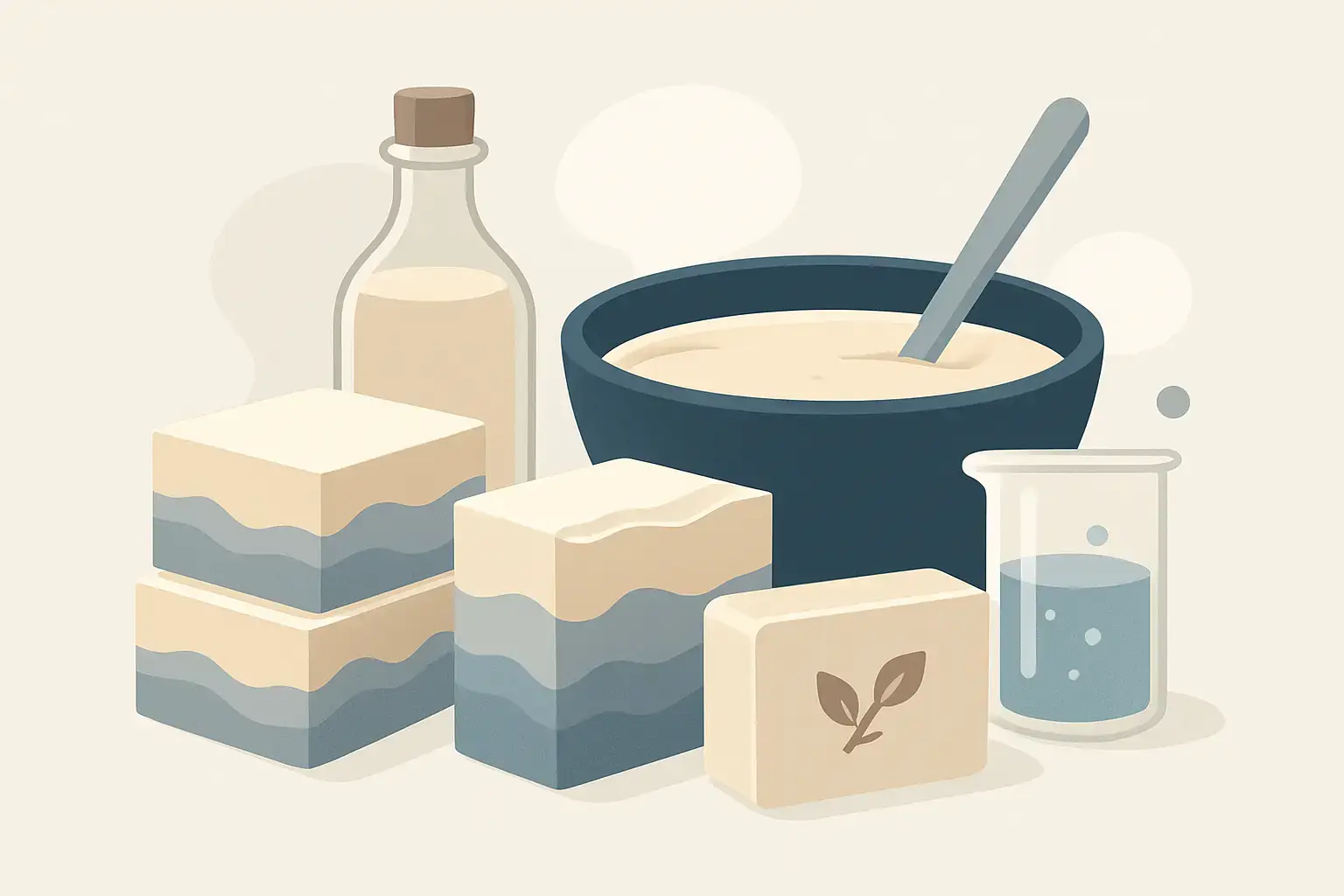
At its most traditional, cold process soapmaking looks almost too straightforward: choose your oils, calculate your lye, mix, pour, wait. In practice, the quality is in the decisions.
First, the maker selects fats and oils for performance. Some create fluffy lather, some create creamy lather, some make a bar harder, and some are especially soothing for dry, sensitive skin. Then the lye amount is calculated precisely for that exact blend.
Once mixed, the batter thickens as saponification begins. It is poured into moulds and left to set for 24 to 48 hours. It can then be cut, but it is not ready yet. Curing usually takes four to six weeks (sometimes longer), which lets excess water evaporate and the bar become milder and more durable.
If you are comparing a bar that has been rushed with a bar that has been properly cured, you often notice it straight away. The better-cured bar feels firmer, lasts longer in the shower, and tends to be kinder to reactive skin.
Why cold process soap often suits sensitive or dry skin
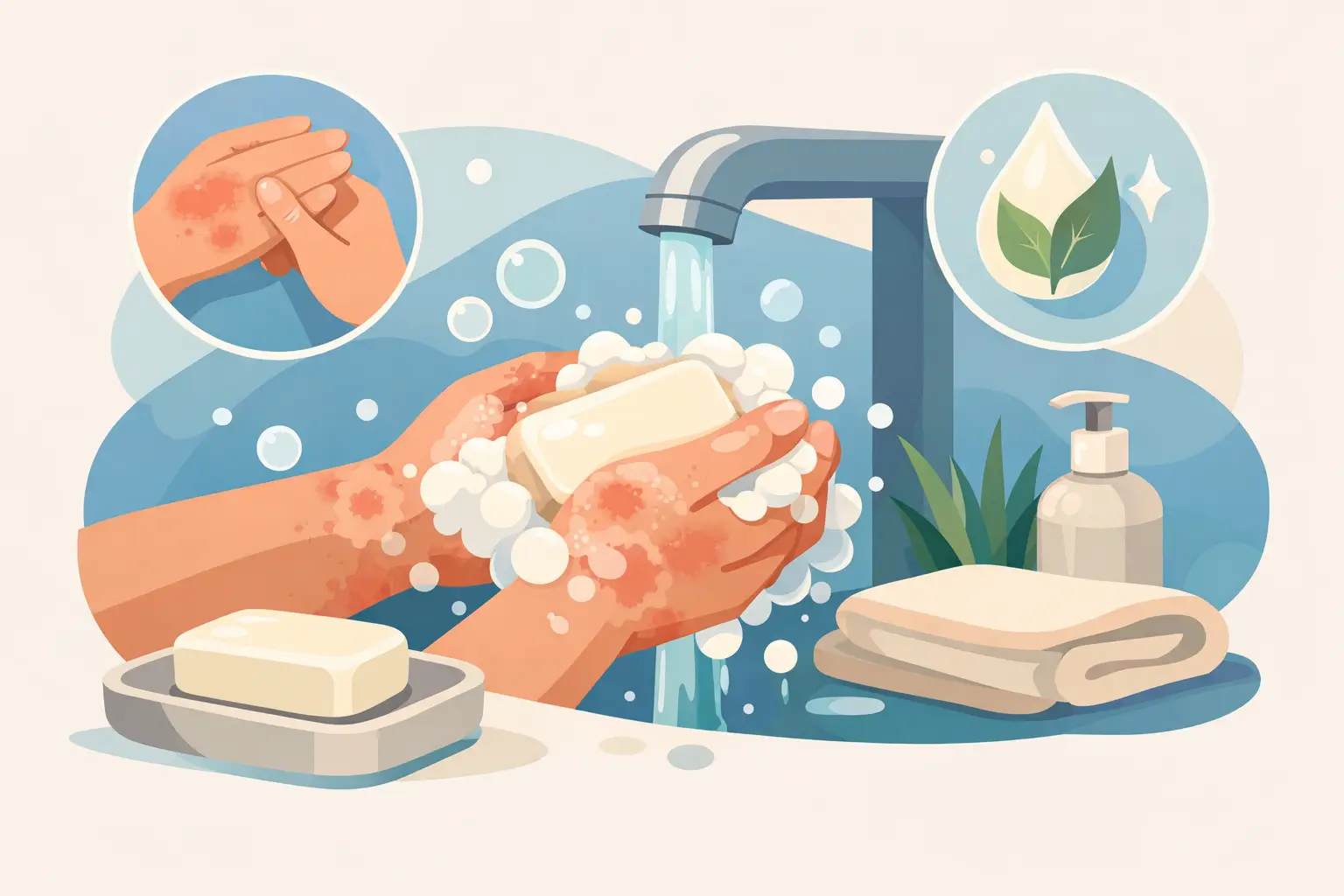
Skin that is dry, eczema-prone, or easily irritated does not just need “gentle”. It needs cleansing that respects the skin barrier – the protective layer that helps keep moisture in and irritants out.
Cold process soap can support that goal in a few ways.
It keeps naturally produced glycerine in the bar, which can help reduce that stripped feeling after washing. It also allows soapmakers to “superfat” the recipe – leaving a small amount of unsaponified oils or fats in the finished bar. Done well, this can make the bar feel more conditioning.
There is also the simple fact of control. With cold process, the maker controls every part of the formula: the base oils, the amount of scent, and whether to include botanicals like oats or clays. For people who react to heavily fragranced products, that control matters.
A fair note: soap is still soap. If your skin barrier is severely compromised, any cleanser can sting. For some people with active eczema flare-ups, limiting wash time, using cooler water, and moisturising promptly afterwards can be just as important as the soap itself.
Cold process soap vs commercial “soap” bars
Many supermarket “beauty bars” are not actually soap in the traditional sense. They are often syndet bars (synthetic detergent), made with surfactants designed to cleanse efficiently and remain stable for mass production. Some people do fine with them. Others find them drying.
Cold process soap is different in structure and feel because it is made from saponified oils and contains glycerine by default. It is usually produced in smaller batches, which makes it easier to keep formulas simpler and avoid unnecessary fillers.
That said, “natural” is not a guarantee of gentleness. A cold process bar can still be harsh if it is poorly formulated, if it uses too much aggressive cleansing oil for someone’s skin type, or if it is heavily fragranced. The method gives you the potential for a beautiful bar. The recipe and the cure determine whether you get it.
Why tallow is having a quiet comeback in cold process soap
If you have only ever associated tallow with old-fashioned soap, you are not wrong – but that is a compliment. Tallow has been used for generations because it makes an exceptionally hard, creamy bar with a rich lather.
From a skin-feel point of view, many people find tallow soaps particularly comforting on dry or reactive skin. Tallow is naturally rich in fat-soluble vitamins (A, D, E, K and B12) and its fatty acid profile is often described as skin-compatible. In cold process soapmaking, it can create that “cushioned” cleanse that feels less squeaky and more conditioning.
There is also a sustainability angle that matters if you care about waste. When tallow is sourced responsibly and used as a by-product, it can support a circular economy approach: using more of what already exists rather than relying solely on newly grown crops. The sourcing is the key. Regenerative, local supply chains look very different from anonymous commodity fats.
What to look for when buying cold process soap
If you are choosing cold process soap for sensitive skin, for a plastic-free swap, or for a better everyday bar, a few details tend to separate “nice enough” from genuinely excellent.
Start with the ingredient list. You want to recognise the base oils or fats. You also want clarity around fragrance. Some bars use essential oils, some use fragrance oils, and some are unscented. None of these options is automatically wrong, but if your skin is reactive, lower scent levels and simpler formulas are often easier to live with.
Next, consider cure time and bar hardness. Makers do not always state cure time, but you can often infer it from reputation and from how the bar feels. A properly cured bar tends to be firm, not tacky, and less prone to melting away.
Finally, pay attention to the maker’s sourcing and process transparency. Cold process soap is at its best when it is made by people who care about the inputs and can tell you where they come from. If a brand can talk plainly about its oils, its superfat level, and how it minimises waste, you are usually in good hands.
If you are looking for a tallow-led cold process bar made with traceable ingredients and small-batch care, Luna Natural Soap Co. shares its approach and products at https://Www.lunasoap.ie.
Common misconceptions that trip people up
One of the biggest misconceptions is that cold process soap is “lye soap” in the sense that lye remains in the bar. In a correctly balanced recipe, it does not. Another is that a more bubbly lather means a gentler cleanse. Sometimes the opposite is true: very bubbly bars can be more cleansing, which dry skin may not love.
People also assume that exfoliating bits automatically help. Oatmeal can be soothing and soft, but heavy exfoliants used daily can aggravate sensitive skin. If you are buying for eczema-prone areas, choose the gentlest texture you can.
How to get the best results from a cold process bar
The way you use a bar affects how your skin experiences it. If you are prone to dryness, try lathering in your hands or on a soft cloth rather than rubbing the bar directly on delicate areas. Keep water lukewarm, not hot. After washing, pat skin dry rather than rubbing, then moisturise while the skin is still slightly damp.
To make your bar last, let it dry properly between uses. A draining soap dish and a spot away from the main spray of the shower can double the lifespan of a well-cured bar.
So, is cold process soap worth it?
If you want a bar with fewer compromises – less plastic, fewer unnecessary additives, more control over ingredients, and a skin feel that is often kinder – cold process soap is one of the most practical upgrades you can make in the bathroom.
The best part is how un-dramatic the change can be. You wash your hands, you rinse, and your skin simply feels like itself. That is the point. Choose a bar made with care, give it a proper soap dish, and let the slow method do what it has always done: turn good fats into an everyday kind of comfort.