

You pick up a bar that looks natural, smells clean, and comes in simple cardboard packaging. Then you turn it over and spot sodium palmate, palm kernelate, or just plain palm oil halfway down the ingredient list. That is usually the moment people start asking what makes soap palm oil free – and the honest answer is more specific than the front label often suggests.
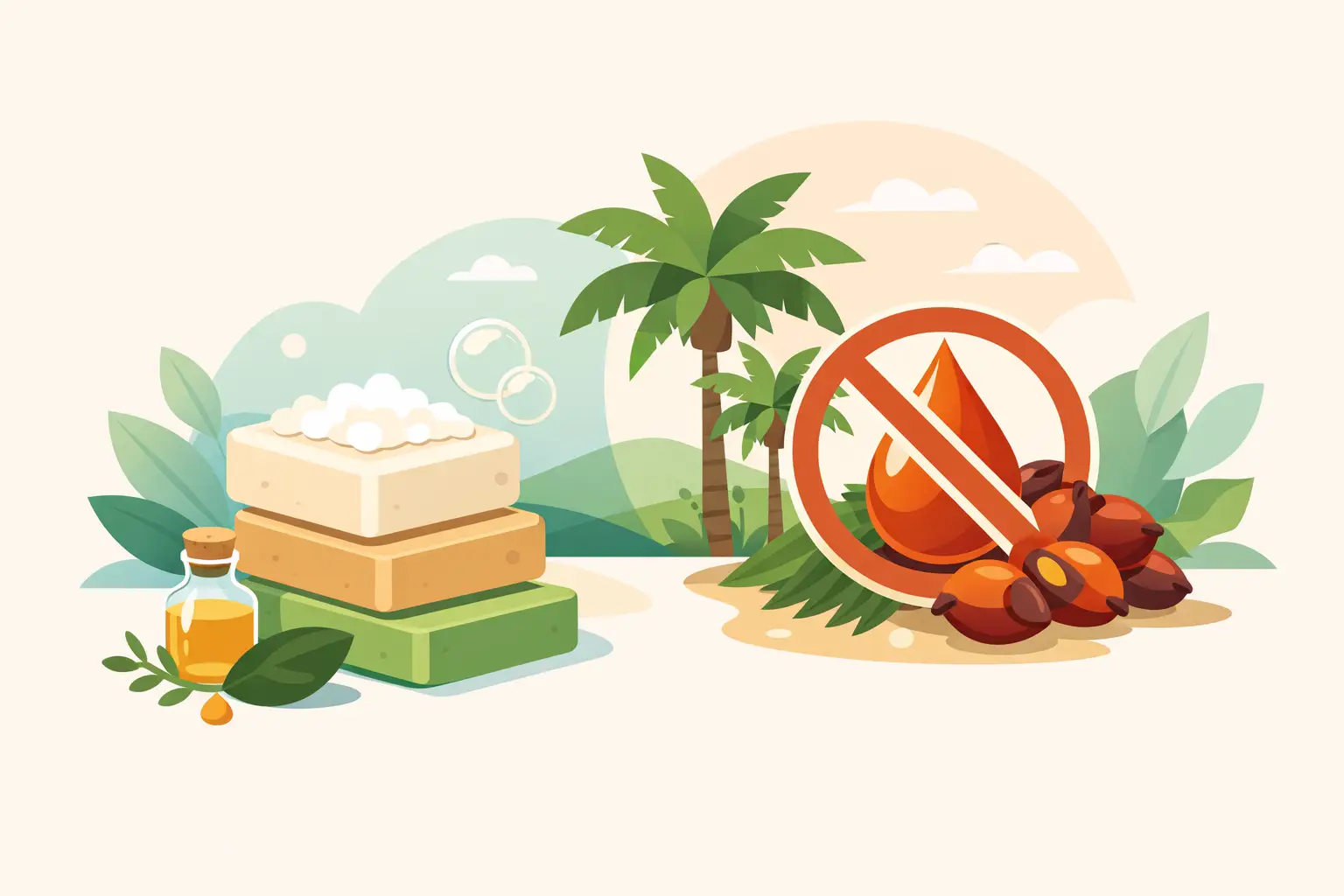
A soap is palm oil free when no palm-derived fats, oils, fatty acids, surfactants, or soap salts are used anywhere in the formula. That includes the obvious ingredients, such as palm oil and palm kernel oil, but also the less obvious processed versions that appear after saponification. In a true palm-free bar, the entire fatty acid profile comes from other ingredients instead.
What makes soap palm oil free in practical terms?
In cold process soapmaking, oils and fats react with lye to create soap. Once that reaction happens, the original oils do not appear on the label in the same way. That is where confusion starts.
For example, a soapmaker may begin with palm oil, but the finished ingredient list might show sodium palmate rather than palm oil itself. It is still palm-derived. The same goes for sodium palm kernelate, palmitic acid from palm, or glycerine sourced from palm processing. If the starting material comes from palm, it is not palm free.
So what makes soap palm oil free is not just the absence of the words palm oil on the packet. It is the absence of palm in all forms used to build the bar, harden the bar, boost lather, or support texture. A genuinely palm-free soapmaker should know every core fat in the recipe and be able to explain what replaces palm and why.
Why palm oil is used in soap so often
Palm oil is popular for a reason. It helps create a hard, long-lasting bar with a stable lather. It is widely available, relatively inexpensive, and easy to work with in commercial and artisan formulas alike.
That matters because every soap recipe needs balance. One ingredient may bring cleansing, another creaminess, another hardness. Palm has often been used as a convenient middle ground, especially in formulas that want firmness without relying on animal fats.
That does not make palm automatically good or bad in every setting. Some makers use certified sustainable palm and stand by that choice. Others avoid it altogether because they want a formula with clearer sourcing, different environmental values, or a more traditional fat base. It depends on the maker’s priorities and on what they use in its place.
The ingredients that replace palm in palm-free soap
A palm-free bar still needs structure. If palm is removed, something else has to do that work.
Traditional soapmakers often turn to tallow, olive oil, coconut oil, cocoa butter, shea butter, castor oil, or other plant oils depending on the feel they want from the finished bar. Each one changes the character of the soap.
Tallow, in particular, creates a firm, creamy bar with a rich lather and a skin feel many people find comforting, especially if they struggle with dryness or sensitivity. Olive oil brings gentleness and conditioning but can make a softer bar if used alone. Coconut oil boosts cleansing and bubbles, though too much can feel stripping on delicate skin. Butters can add luxury and solidity, but they also raise the cost of the bar.
This is why palm-free soap is not one single thing. Two bars may both be palm free and feel completely different in use. One may be hard and long-lasting. Another may be softer, creamier, or more conditioning. The formula matters more than the headline claim.
How to read the label properly
If you want to know what makes soap palm oil free, the ingredient panel tells you far more than the front of the box.
Look first for obvious terms such as palm oil, palm kernel oil, Elaeis guineensis oil, sodium palmate, sodium palm kernelate, or palmitate ingredients clearly linked to palm. Then pay attention to whether the maker states the full oil blend used before saponification. That kind of transparency is usually a good sign.
Some brands simply say vegetable soap base. That is not very helpful. A vegetable base can still contain palm, and very often it does. If a company does not say what oils are in the bar, you are left guessing.
A trustworthy palm-free soapmaker will usually be clear about the recipe foundation. They may describe the soap as made with tallow and olive oil, or with coconut, shea, and castor oils, for example. Clear sourcing language matters. Vague language usually does not serve the customer.
Palm free does not always mean gentler
This is worth saying plainly. Palm free is a sourcing choice. It is not a guarantee of skin compatibility.
A palm-free soap can still be harsh if it is high in strongly cleansing oils or made without enough consideration for the skin barrier. Likewise, a soap that contains palm may still be mild in use. The question is not only whether the soap is palm free, but how the whole formula behaves on skin.
For people with dry, reactive, or eczema-prone skin, the better question is often this: what fats are being used instead, and what kind of cleansing profile do they create? A balanced bar made with nourishing fats and a thoughtful superfat level will usually matter more than a single marketing claim.
That is why ingredient education matters so much. If your skin feels tight, squeaky, or itchy after washing, the bar is not right for you, even if it ticks every ethical box on paper.
What makes soap palm oil free and still high quality?
A good palm-free soap is not just palm removed. It is properly reformulated.
When palm is left out, the maker has to rebuild hardness, lather, longevity, and skin feel using other fats. That takes more care than swapping one oil for another and hoping for the best. The proportions matter. The curing time matters. The intended user matters.
This is where traditional soapmaking often shines. Slow-made bars with a well-considered recipe tend to perform better because the formula has been built around the chosen fats from the start. In small-batch production, there is often more room to refine the bar for real skin concerns rather than simply meeting a cost target.
For many customers, that is the appeal of artisan palm-free soap. It is not only about what has been taken out. It is about what has been chosen instead, and whether those choices support a better wash for skin and home.
Questions worth asking before you buy
If you are comparing bars, ask simple questions. What oils or fats make up the base? Is every palm-derived ingredient excluded, or only palm oil itself? Is the bar designed for sensitive skin, everyday washing, or a stronger cleansing job such as kitchen use?
Those questions quickly separate true formulation-led products from broad marketing language. A soapmaker who knows their craft should be able to explain why the bar is firm, why it lathers well, and why it suits a certain skin type.
At Luna Natural Soap Co., that conversation starts with the base itself. Traditional tallow soapmaking offers a palm-free route to a hard, creamy, long-lasting bar without leaning on vague claims or generic vegetable blends. For customers who want clarity, that matters.
The bigger point behind the label
People rarely search what makes soap palm oil free because they want chemistry alone. Usually they are trying to buy more carefully. They want a bar that matches their values, feels good on the skin, and comes with fewer hidden compromises.
That is a sensible instinct. But the best choice is not always the loudest one. Palm free can be a meaningful standard, especially when paired with transparent sourcing and thoughtful formulation. On its own, though, it is only the beginning of the story.
The more useful question is whether the soapmaker can tell you exactly what is in the bar, why it is there, and how it will feel in daily use. When that answer is clear, choosing well becomes much simpler.
A good bar should never make you work too hard for the truth.