

The bin tells the truth. If your kitchen cleaning routine relies on plastic spray bottles, disposable wipes and synthetic sponges, the waste adds up quietly and quickly. A good zero waste kitchen cleaning routine example is not about perfection. It is about replacing the repeat purchases that leave you with more packaging, more clutter and often harsher ingredients than you need.
For most households, the kitchen asks for the same jobs every day: washing up, wiping surfaces, dealing with grease, freshening the sink and keeping cloths from turning stale. Once you look at it that way, a lower-waste routine becomes much simpler. You do not need ten products. You need a few reliable tools, a rhythm that fits real life, and cleaners that work well without making a mess of your cupboards or your conscience.
What makes a good zero waste kitchen cleaning routine example?
The best routine is the one you will actually keep. That usually means fewer products, refillable or package-free formats, and tools that last. It also means accepting a sensible middle ground. If you have one stubborn cleaner under the sink that helps with a once-a-month deep clean, that does not cancel out every better choice you make the rest of the week.
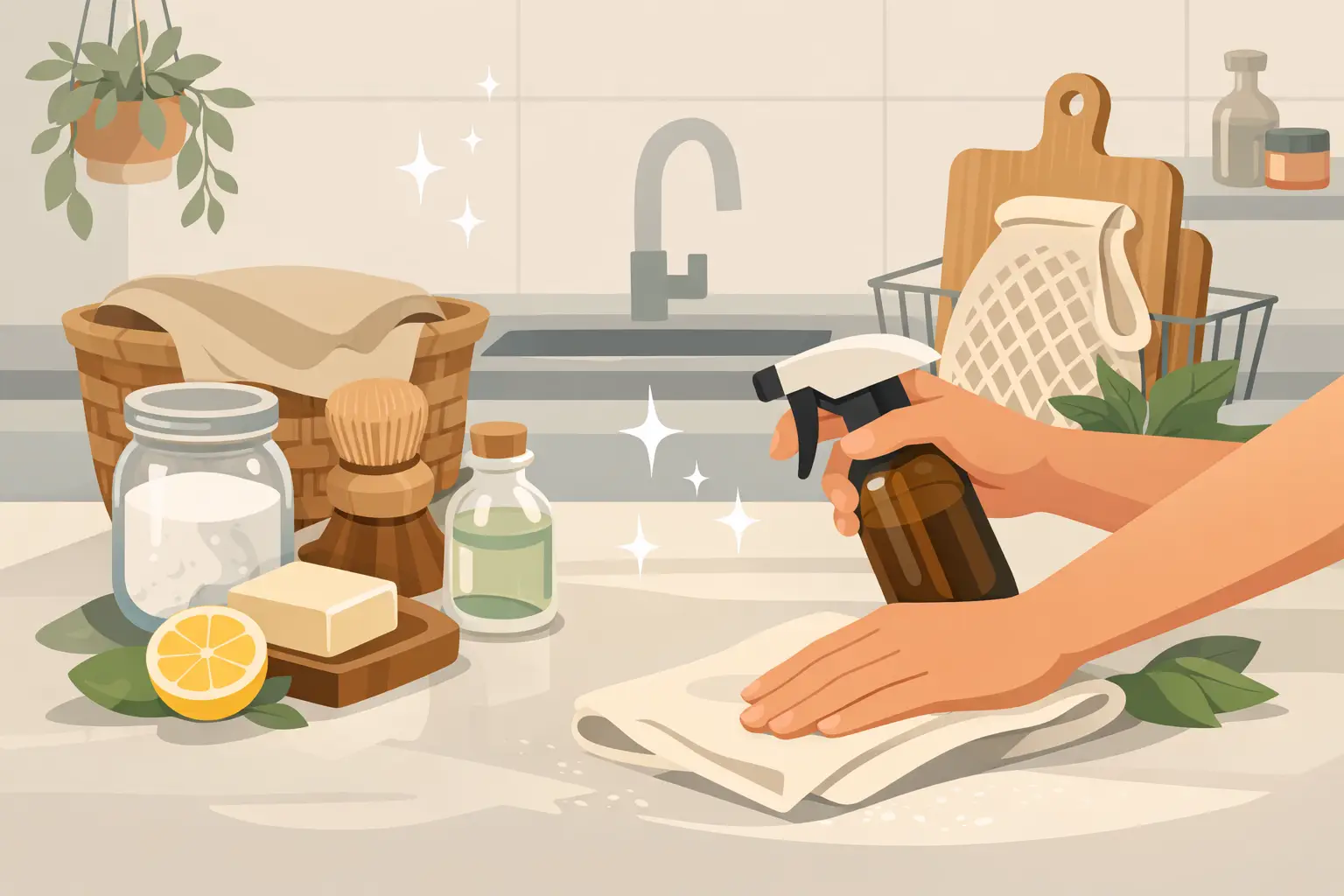
Zero waste cleaning works best when you stop thinking in categories like “worktop spray” and “hob spray” and “sink spray” and start thinking in tasks. You need something for dishes, something for surfaces, something absorbent for spills and something abrasive enough for stuck-on residue. In many kitchens, one solid dish soap, a washable cloth, a wooden dish brush and a simple scrubber will cover almost everything.
There is another benefit people often notice quite quickly. A pared-back routine feels calmer. Fewer bottles on the side. Fewer fragrance-heavy products in the air. Less contact with detergents that can leave hands feeling dry or tight after repeated use.
Your everyday zero waste kitchen cleaning routine
A practical zero waste kitchen cleaning routine example starts at the end of each meal, not with a dramatic weekly reset. Daily care prevents the heavy build-up that makes people reach for stronger products later.
After cooking
Begin with dishes while food residue is still soft. A solid dish soap bar paired with a brush or natural-fibre sponge is usually enough for plates, pans and utensils. If grease is heavy, use hotter water and give the soap a moment to cut through it before scrubbing. That small pause matters. People often assume a product is not working when really it has not had time to do its job.
For worktops, wipe crumbs and splashes with a damp washable cloth first. Dry debris should be lifted before you add more moisture, otherwise you create a paste and more work for yourself. If the surface needs more than water, use a little soap on the cloth rather than spraying the whole counter. It is a quieter, more controlled way to clean and it uses less product.
After washing up
Once the dishes are done, rinse the sink and give it a quick scrub with the same dish soap and a designated brush or scrubber. This keeps soap scum, tea stains and bits of food from building up. Wipe the taps and draining board with a dry cloth afterwards. That final drying step is easy to skip, but it is often what leaves the kitchen looking properly clean rather than half-finished.
If you use washable dishcloths, rinse them thoroughly, wring them well and hang them so they can dry fully. A cloth screwed up beside the sink will never smell fresh for long. One of the simplest low-waste habits is rotation. Keep enough cloths to change them regularly rather than trying to force one to last too many days.
At the end of the day
Take one minute for the fridge handle, cupboard pulls and bin lid. These are the spots that collect fingerprints and grease without anyone noticing. A damp cloth with a touch of soap is normally enough. This is where routine beats effort. Tiny, regular cleaning is what keeps you from needing an exhausting catch-up every weekend.
The tools worth keeping by the sink
A lower-waste kitchen is built more on materials than marketing. Choose tools that can be washed, composted or reused for a long time. Cotton cloths, cellulose or loofah sponges, wooden brushes with replaceable heads and metal scourers for pans all tend to earn their place.
There are trade-offs. Natural scrubbers do not always last as long as plastic-heavy versions, especially if they are left wet. Wooden brushes need proper drying. Some compostable sponges break down faster with very hot water. None of that means they are poor choices. It simply means they work best when treated as durable tools rather than disposable ones.
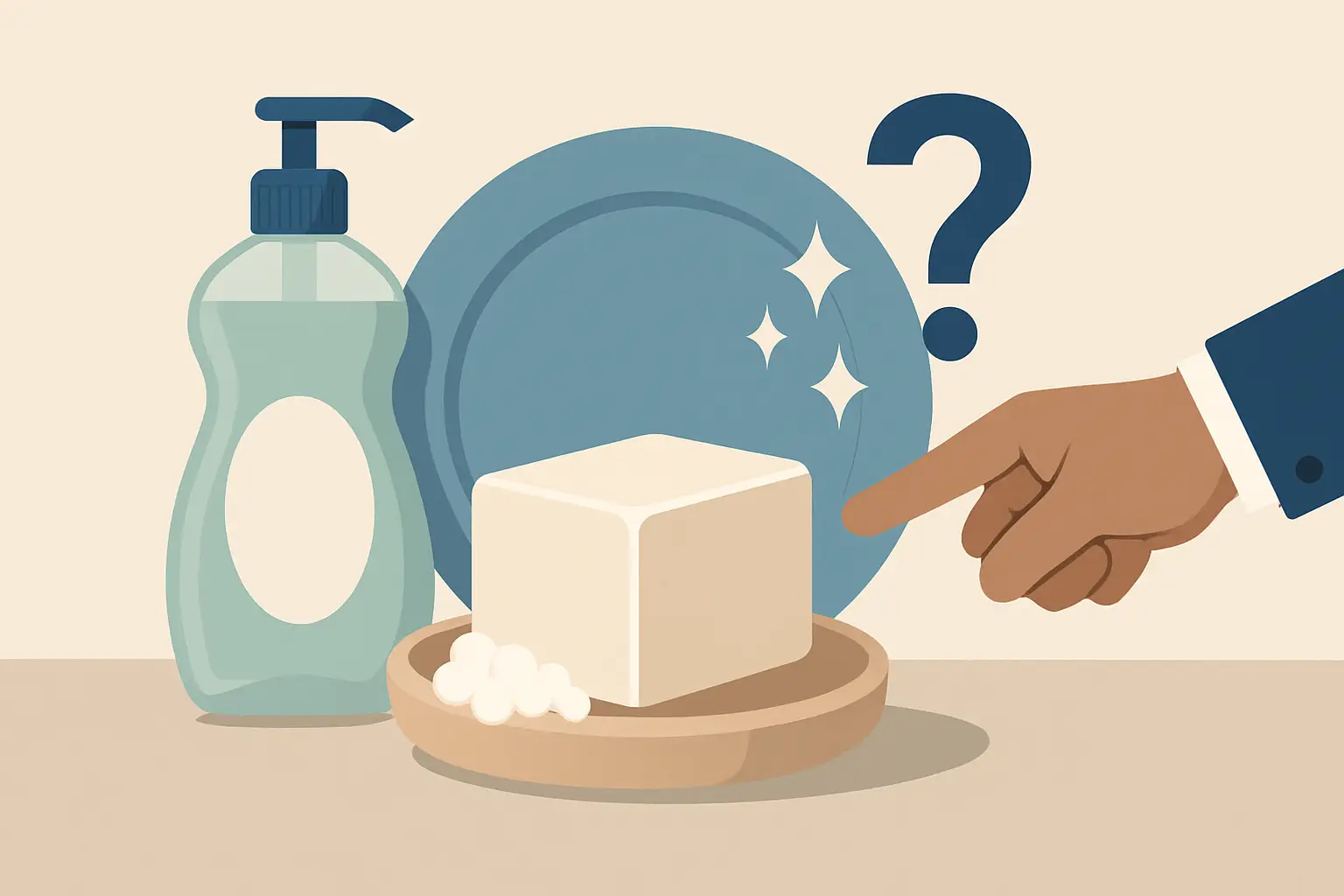
A solid dish soap is often the easiest switch because it removes one of the most frequently replaced plastic bottles in the house. A well-made bar should feel firm in the hand, lather generously and cut grease without leaving residue behind. For homes where skin sensitivity is part of the story, this matters even more. Repeated contact with harsh washing-up liquids can leave hands rough and uncomfortable, especially in colder months.
How to deal with grease, smells and stuck-on food
This is usually where people doubt whether a zero waste approach will be strong enough. The truth is that kitchen mess is not all the same, and the right method depends on the type of grime.
Grease responds best to heat, soap and patience. If a pan is oily, wipe excess fat first with a scrap of paper from packaging or a designated rag before washing. This protects your sink and helps the soap work more efficiently. For baked-on food, soak the pan rather than attacking it dry. Time often does more than force.
Sink smells are often a drainage issue rather than a surface-cleaning problem. Keep the plug area free from trapped food and flush the drain with hot water regularly. If your cloths smell, replace or wash them sooner. It is rarely the sink itself.
For chopping boards, the material matters. Wood should not be soaked for long periods, while glass and some sealed surfaces can tolerate more vigorous washing. This is where zero waste cleaning stays practical rather than rigid. You adapt the method to the item instead of insisting one approach fits all.
A weekly reset without extra waste
A weekly kitchen clean should feel like maintenance, not punishment. Set aside a little time to wipe cupboard fronts, clean the hob properly, check the fridge for forgotten food and wash your cloths at a hot enough temperature to freshen them fully.
If you batch your cleaning, keep it simple. Take everything off the counters, wipe from top to bottom and return only what you use often. Kitchens collect visual noise quickly, and clutter makes cleaning slower. The less you store out in the open, the easier it is to keep surfaces clear and hygienic.
This is also the moment to look honestly at waste beyond cleaning products. Are you using rolls of kitchen towel out of habit? Could a basket of clean cloths do the same job for most spills? Are you buying plastic sponges because they are familiar, not because they perform better? Real change often comes from these quiet substitutions.
Why ingredient choice matters in a kitchen
Cleaning is close contact. Your hands are in the sink. Your cloth moves across the surfaces where you prepare food. The residue left behind matters, especially if you are already careful about what touches your skin.
That is one reason many households are moving back towards traditional soap-based cleaning for everyday jobs. A thoughtfully made solid dish soap can be effective, low-waste and more pleasant to use than a line-up of plastic bottles. It feels less like managing chemicals and more like keeping house with purpose.
At Luna Natural Soap Co., that same belief shapes how products are made – useful, honest and built around ingredients with a reason to be there. In a kitchen, practicality comes first. But there is no reason practicality cannot also feel beautifully considered.
Making the routine stick
Start with one swap that removes repeat waste. For many people, that is dish soap. Then move to cloths, brushes and storage habits. If you try to replace everything at once, you may spend more than you need and end up with tools that do not suit your kitchen.
It also helps to use what you already have before buying new versions. Zero waste is not about throwing away a plastic brush just to buy a wooden one immediately. The better step is to finish its life well, then replace it thoughtfully.
Some weeks will be tidier than others. Some households produce more mess because they cook constantly, have young children, or simply live hard in their kitchens. That does not mean the routine has failed. A good kitchen cleaning rhythm should support ordinary life, not compete with it.
A cleaner, lower-waste kitchen rarely comes from one dramatic change. It comes from small choices repeated until they feel natural – a solid soap by the sink, a cloth hung up to dry, a counter wiped before spills set hard. That is how a routine becomes part of the home rather than another task on the list.