


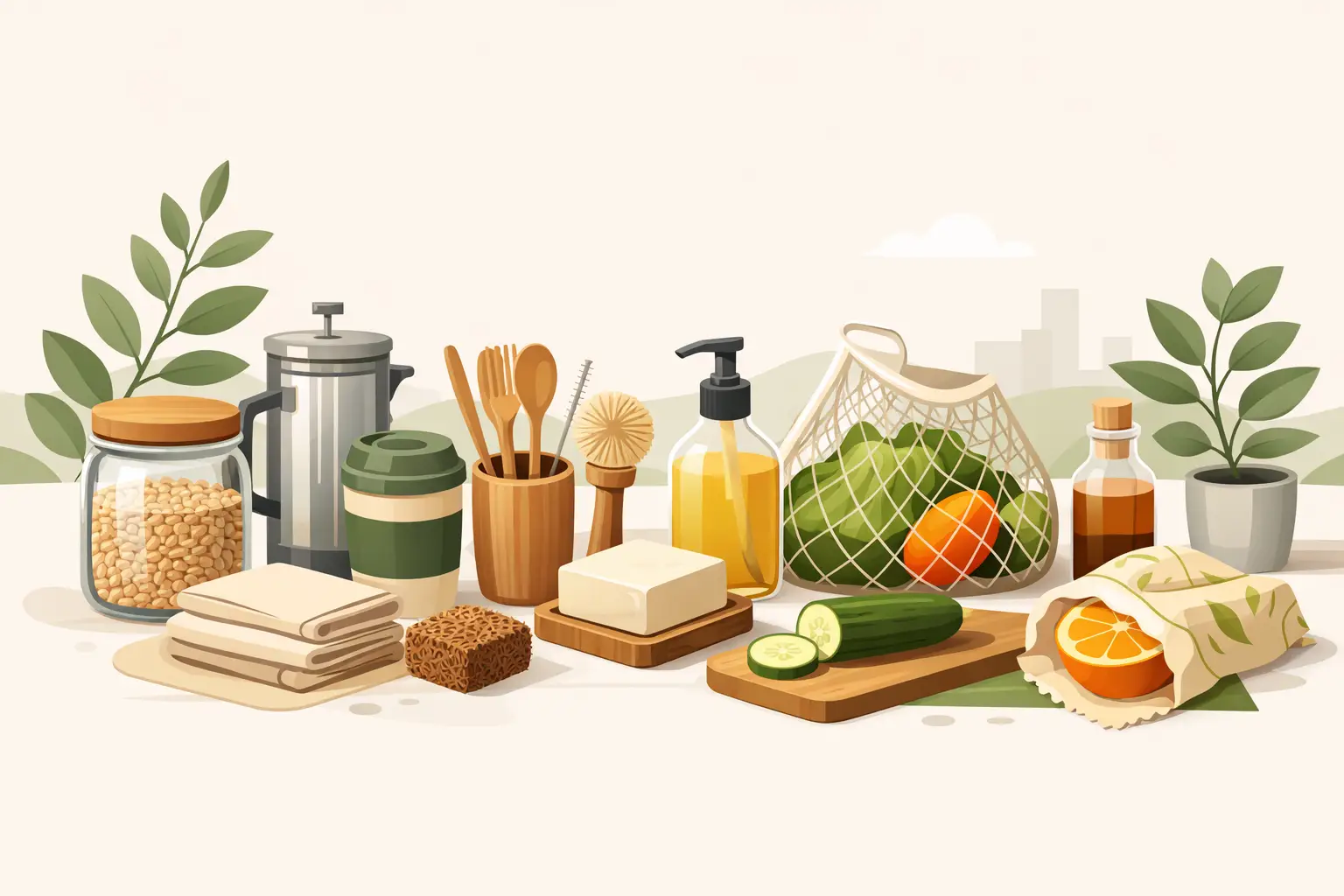
A low-waste kitchen rarely begins with a dramatic clear-out. It starts at the sink, where disposable sponges, plastic washing-up bottles and endless rolls of kitchen paper tend to disappear fastest. The best low waste kitchen essentials make these daily jobs simpler, not stricter, while helping you buy less often and throw away less without compromising on a clean home.
The aim is not to own a cupboard full of matching jars or replace useful items simply because they are not plastic. The most sustainable choice is often the one you already have. When something does reach the end of its useful life, choose a replacement that is durable, easy to care for and suited to the way your household actually cooks and cleans.
What makes a kitchen essential genuinely low waste?
A useful low-waste swap earns its place through repeated use. It should last well, work properly and avoid creating waste somewhere else, whether that is excessive packaging, short-lived materials or a product that needs constant replacement.
Look beyond the word “eco”. A wooden brush with a replaceable head may be a better choice than a fully compostable brush that wears out in a fortnight. A glass storage jar is helpful if you use it for leftovers, dry goods or packed lunches every week. If it sits unused because it is too heavy, too small or awkward to wash, it is simply another purchase.
Materials matter, but so does care. Cotton cloths, stainless-steel containers, wooden tools and solid soap can all have a long working life when dried properly and looked after. Choose a few dependable pieces rather than chasing perfection one swap at a time.
The best low waste kitchen essentials to start with
1. A solid dish soap
Plastic washing-up liquid bottles are one of the easiest kitchen habits to rethink. A firm solid dish soap can replace bottle after bottle, particularly when it is sold without plastic packaging. It takes up little space beside the sink, travels well and gives you control over how much product you use.
The quality of the bar matters. A well-made dish soap should create a rich lather, cut through everyday grease and stay firm between uses. Keep it on a draining dish or a raised soap rest so it can dry fully. Leaving any soap in a puddle of water shortens its life, no matter how carefully it is made.
For homes where washing-up leaves hands feeling tight or dry, the formulation is worth considering too. A traditional solid tallow dish soap, such as one made by Luna Natural Soap Co., offers a practical plastic-free option with a satisfying lather. As with any cleaning product, it is designed for dishes rather than personal cleansing, but a thoughtfully made bar can make the most repetitive kitchen task feel less harsh.
2. Washable kitchen cloths
Kitchen roll has its place for particularly messy jobs or food-safety clean-ups, but it is often used for spills that a cloth could handle just as well. Keep a small set of washable cotton or linen cloths within reach for wiping surfaces, drying hands and mopping up everyday splashes.
The key is having enough to rotate. One cloth used for a week becomes unpleasant and unhygienic; a handful means you can change them regularly and wash them with towels or bedding. Choose plain, sturdy cloths rather than thin novelty versions that lose their shape after a few washes.
Use separate cloths for dishes and worktops if that helps your routine. Labels or different colours can make this easy, especially in a busy family kitchen. Low waste should support good hygiene, not make it harder to maintain.
3. A proper washing-up brush and scourer
Disposable synthetic sponges shed over time, wear quickly and are difficult to recycle. A brush with natural bristles and a wooden handle can last far longer, particularly if you allow it to dry bristle-side down after use. Some designs offer replacement heads, reducing waste further while keeping the handle in service.
For baked-on food, a durable scourer is useful, but choose according to your cookware. A metal scourer may be excellent for stainless-steel pans and oven dishes, yet it can damage non-stick coatings. A coconut-fibre scourer is gentler for many jobs, though it may not tackle every stubborn pan. There is no single perfect tool, which is why a modest combination often works best.
Replace brushes and scourers only when they stop doing their job. A faded handle is not a reason to discard something that is still sound.
4. Glass jars and reusable food containers
Before buying a coordinated storage set, save a few sturdy jars from pasta sauce, pickles or coffee. They are ideal for dried lentils, loose tea, homemade dressing and leftovers that need using soon. Clear containers make food visible, which can reduce the forgotten vegetables and half-used ingredients lurking at the back of the fridge.
For packed lunches and freezer meals, leak-resistant glass or stainless-steel containers are often a worthwhile investment. Glass is easy to clean and does not retain strong food smells, but it is heavier and can break. Stainless steel is lighter and exceptionally durable, though you cannot see what is inside. Choose based on where the container will be used most.
If you buy new jars for pantry storage, use consistent sizes where possible. Lids are easier to match, shelves stay calmer and replacement is less complicated. There is no need to decant every item, however. Food in its original packaging can be perfectly practical until you have a reason to change it.
5. Reusable wraps and covers
Cling film is convenient, yet it is usually used once and difficult to recycle through ordinary household collections. Reusable bowl covers, washable fabric wraps and beeswax-style wraps can cover many of the same jobs: wrapping cheese, protecting cut fruit or covering a bowl of dough.
Fabric bowl covers are especially useful for leftovers in the fridge and rising bread, as they are quick to put on and easy to wash. Waxed wraps mould around food with the warmth of your hands, but should not be used with raw meat or placed in hot water. They also need replacing eventually, so use them where they genuinely replace frequent cling-film use rather than as an extra layer of storage.
A simple plate over a bowl is still one of the lowest-waste covers available. It costs nothing and works beautifully for many short-term fridge jobs.
6. A compost caddy that suits your routine
Food waste is often a bigger issue than packaging. A small, lidded caddy on the counter makes it easier to separate vegetable peelings, tea leaves, coffee grounds and eggshells as you cook. If your council accepts food waste, empty it regularly into the outdoor bin. If you compost at home, check what your own system can handle before adding cooked food or compostable liners.
Compostable caddy liners can be convenient, but they are not essential. Many households find that rinsing the caddy after emptying works just as well. The best option depends on collection rules, how often you cook and whether anyone in the home is likely to abandon the system if it becomes fiddly.
7. A refillable pantry, approached with care
Buying dry goods in larger packs or from refill stations can reduce packaging, but only when you can store and use the food before it loses freshness. Rice, oats, beans and pasta are often easy wins. Specialty ingredients bought for one ambitious recipe are less likely to be.
Start with the staples your household already finishes. Keep a short note of what runs out most often, then refill those items first. This avoids the familiar low-waste trap of buying beautiful containers and unusual bulk foods that become cupboard clutter.
Make each swap last longer
The quieter side of a low-waste kitchen is maintenance. Dry cloths and brushes between uses. Keep solid soap away from standing water. Store grains and pulses in airtight containers once opened, and label frozen leftovers with the date so they are eaten rather than forgotten.
It also helps to let replacements happen naturally. Finish the washing-up liquid you own before trying a solid bar. Use the last of the cling film before relying on reusable covers. This approach respects both your budget and the resources already used to make the products in your home.
Low waste is not measured by an immaculate pantry or a perfectly plastic-free bin. It is built through useful, repeatable choices: a bar that lasts at the sink, a cloth that goes through the wash, a jar used again tomorrow. Choose what makes caring for your kitchen feel easier, then let those small habits do their quiet work.