


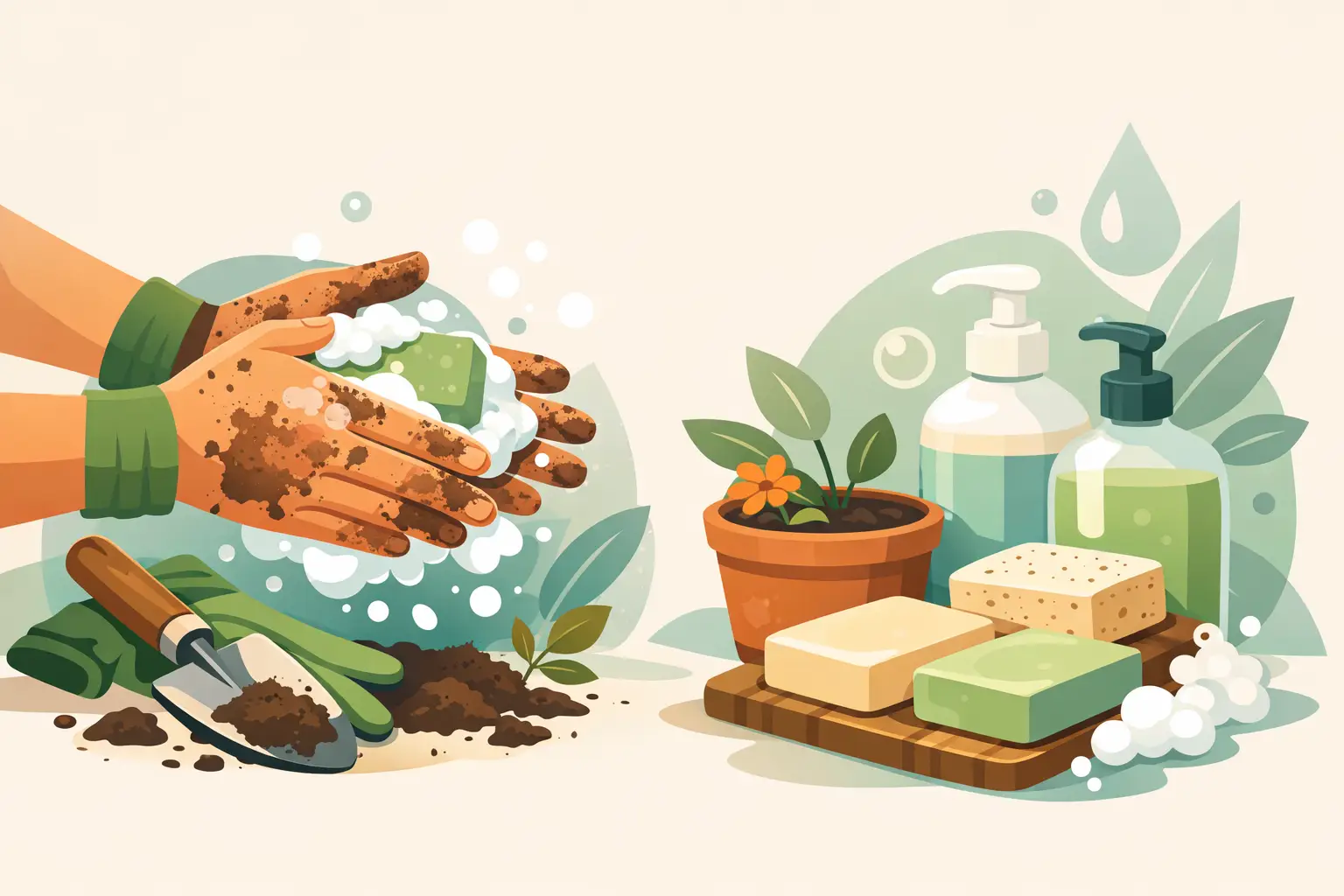
Soil under the nails. Green stains across the knuckles. That tight, over-washed feeling that arrives after one more scrub at the outdoor tap. Finding the best soap for gardener hands is not simply about getting clean. It is about removing grit and sap without leaving skin dry, sore or cracked by evening.
Gardeners ask a lot of their hands. You move compost, prune thorny stems, pull weeds, handle terracotta pots and rinse tools in cold water. Even if you wear gloves for part of the job, your skin still meets friction, dampness, dirt and repeated washing. The wrong soap can make this cycle harder. It strips too much, leaves hands rough, and turns a practical clean-up into another source of irritation.
What the best soap for gardener hands needs to do
A good gardening soap has to manage two jobs at once. First, it must lift dirt, plant residue and natural oils from the skin. Second, it should respect the skin barrier while doing it. That balance matters more than people think.
Many heavy-duty hand cleansers lean on aggressive detergents or a very harsh scrub. They can work quickly, but they often leave skin feeling squeaky in the worst sense of the word. If your hands already run dry, sensitive or eczema-prone, that kind of cleanser can push them over the edge.
The best soap for gardener hands usually combines a proper, rich lather with ingredients that keep the wash from feeling punishing. You want cleansing power, but not the sort that leaves the backs of your hands looking chalky and feeling hot afterwards.
Why gardener hands need a gentler kind of deep clean
There is a persistent idea that proper cleaning must feel harsh. For gardeners, that is rarely true. Most of what sits on the skin after a day outdoors is a mix of soil, sweat, plant matter and natural oils. You need a soap that can break that down, but not one that treats your hands like workshop machinery.
Skin on the hands is already under pressure. Cold air, wind, frequent rinsing and contact with tools all wear it down. Add a strong cleanser several times a day and the barrier becomes less resilient. Small cracks start to appear around the fingertips. Cuticles split. Soap stings where it never used to.
That is why traditional, well-made bar soap can be such a sensible choice. A carefully formulated bar with skin-compatible fats and a stable lather can clean thoroughly while being far kinder to hard-working skin than many synthetic washes.
Ingredients worth looking for in a gardening soap
The ingredient list tells you more than the front label ever will. If your hands are often dirty but also dry, look first for a nourishing soap base rather than a long list of perfume or foaming agents.
Tallow is especially well suited here. Properly rendered, grass-fed tallow produces a firm bar with a creamy, lasting lather. More importantly, it is naturally compatible with the skin. It contains vitamins A, D, E, K and B12 and is valued for helping support the skin barrier rather than constantly depleting it. For gardener hands, that means you can wash thoroughly without that stripped, papery finish.
Oatmeal is another useful ingredient, especially if your skin reacts easily. In a soap bar, it can offer gentle polishing action while helping calm the feeling of roughness. Herbal additions can also be helpful, though this depends on the formula. Mint, for example, can feel refreshing after muddy jobs, but if skin is actively cracked or very sensitive, a simpler bar may be the better option.
Natural oils matter too, but they need to be chosen well. A soap should rinse cleanly rather than leave a residue that feels waxy. The best bars feel balanced – cleansing enough for real dirt, nourishing enough for daily use.
What to avoid if your hands are always in the soil
If a hand soap boasts that it cuts through everything in seconds, pause for a moment. Speed is not the only measure of quality.
Very strong detergents, sharp synthetic fragrance and overly abrasive particles can all make gardener hands worse over time. One wash may seem effective, but repeated use can lead to redness, dehydration and a cycle where you need more cream simply to undo what the soap has done.
Antibacterial hand washes are another area where more is not always better. For routine gardening clean-up, they are often unnecessary. Unless there is a specific need, a well-formulated cleansing bar is usually enough.
There is also the matter of texture. Some exfoliating soaps are useful, but if the scrub is too coarse it can aggravate tiny cuts and worn patches. For most people, a mild exfoliating effect is enough. If your hands are stained from tomato vines, beetroot or potting compost, use a soft nail brush with the soap rather than relying on a very abrasive bar.
Bar soap or liquid soap for gardening?
Both can work, but bar soap has real advantages for gardeners. A good bar is concentrated, long-lasting and easy to use at the sink after outdoor jobs. It also tends to come with less packaging, which matters if you are trying to keep your household routines a little lighter on waste.
Liquid soaps can be convenient, especially by a utility sink, but many rely on stronger surfactants to create that instant foamy feel. Some are excellent, but plenty prioritise quick lather over skin comfort. A traditional cold-process bar often gives a richer, creamier wash and a more considered ingredient profile.
For households with frequent hand washing, a solid bar can also be the more practical choice. It is simple, effective and usually better value over time.
How to choose the right soap for your skin type
Not every gardener needs the same bar. If your hands are sturdy and rarely dry, you may prefer a soap with a little more exfoliating character. Something with oatmeal can be especially useful after muddy work or seed sowing.
If your skin is sensitive, dry or prone to eczema, a plainer nourishing bar is often the better fit. In that case, focus less on scrub and more on barrier support. A tallow-based soap made with traditional methods is often ideal because it cleans deeply enough for real life while remaining calm on the skin.
If you garden daily, think beyond a single wash. The best choice is the soap you can use morning and evening without dread. A bar that removes grime beautifully but leaves your hands sore after three days is not the right bar, no matter how powerful it seems.
How to wash gardener hands without making dryness worse
Soap matters, but so does technique. Use warm rather than very hot water, as heat can make dryness worse. Work the bar into a proper lather before scrubbing, and let the lather do most of the lifting.
Pay extra attention to fingertips, around the nails and the creases of the hands, where soil tends to cling. A soft nail brush is often more effective than scrubbing harder. Once clean, rinse well and pat dry rather than rubbing vigorously with a rough towel.
Then moisturise while the skin is still slightly damp. This step is easy to skip, but it makes a visible difference. If your hands crack in winter or after long days outside, a rich balm or cream after washing is part of the routine, not an optional extra.
The best soap for gardener hands is effective and skin-supportive
The most useful way to think about gardening soap is this: clean enough for the allotment, gentle enough for everyday life. That rules out anything needlessly harsh. It also explains why traditional bars made with nourishing fats continue to make so much sense.
At Luna Natural Soap Co., this is exactly why slow-made tallow bars have such loyal users. They are designed for real skin, not showroom skin. Skin that gets dry. Skin that works. Skin that needs cleansing to feel reassuring, not corrective.
If your hands come in from the garden stained, rough and a little weathered, choose a soap that respects the work they do. The best bar will leave them properly clean, yes, but also comfortable enough to head back outside tomorrow.